Beneficial nematodes act as your garden’s natural bodyguards by hunting down underground pests like grubs, beetles, and root maggots. They’re safe for plants, pets, and helpful insects, making them an eco-friendly pest control option. Apply them when soil temperatures are ideal, usually early morning or late evening, to guarantee they work effectively. Curious about how these tiny allies can protect your garden? Keep exploring to discover their full potential.
Key Takeaways
- Beneficial nematodes are natural predators that target and eliminate underground pests like grubs and beetles.
- They are safe for plants, pets, beneficial insects, and support a healthy soil ecosystem.
- Apply nematodes when soil temperatures are between 55°F and 85°F, preferably early morning or late evening.
- They reproduce within pests, providing ongoing, long-term pest control without chemical use.
- Using nematodes promotes sustainable gardening by reducing chemical reliance and maintaining soil health.
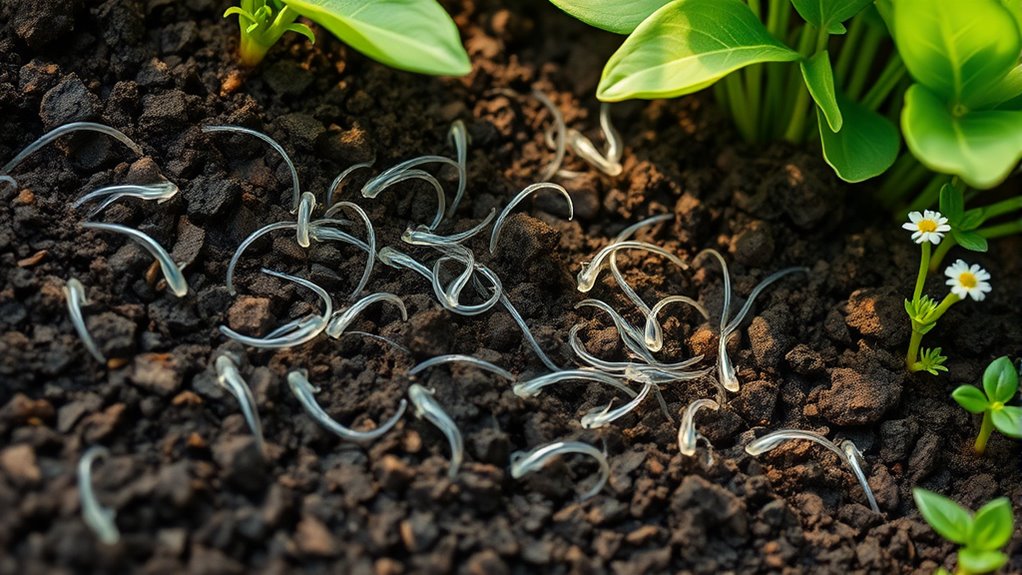
If you’re looking for a natural way to protect your garden from pests, beneficial nematodes offer an effective solution. These microscopic worms are powerful allies in pest control strategies, especially if you favor organic gardening methods. Unlike chemical pesticides, beneficial nematodes target specific pests underground, making them a safe and environmentally friendly option. You simply introduce them into your soil, and they seek out pests like grubs, beetles, and root maggots, infecting and killing them without harming your plants, pets, or beneficial insects.
Using beneficial nematodes is straightforward, but timing and application are key to maximizing their effectiveness. Typically, you’ll want to apply them when soil temperatures are between 55°F and 85°F, usually in early morning or late evening to avoid direct sunlight, which can harm the nematodes. Mix the nematodes with water as per the instructions, then use a sprayer or watering can to evenly distribute them across the affected areas. The nematodes will then actively hunt down pests in the soil, entering their bodies and delivering a lethal bacteria that quickly causes their demise. This process is silent, invisible, and highly efficient, making it a favorite among organic gardeners seeking pest control strategies that respect the environment.
Incorporating beneficial nematodes into your gardening routine also supports a healthier soil ecosystem. Since they target pests underground, they help reduce the need for chemical treatments that can disrupt soil health and harm beneficial organisms like earthworms and pollinators. This aligns perfectly with organic gardening methods that prioritize sustainability and soil vitality. Over time, you’ll notice fewer pest issues, healthier plants, and a more balanced garden environment. Plus, because nematodes reproduce within their host pests, their populations can grow naturally, providing ongoing pest suppression without repeated applications.
Frequently Asked Questions
Are Beneficial Nematodes Safe for Pets and Children?
You might wonder if beneficial nematodes are safe for your pets and children. Rest assured, they’re generally considered safe for pet safety and child protection because they target specific soil pests without harming humans or animals. When used correctly, beneficial nematodes pose minimal risk, making them a safe and eco-friendly choice for your garden. Always follow application instructions to guarantee the best pet safety and child protection.
Can Beneficial Nematodes Be Used With Chemical Pesticides?
You might wonder if beneficial nematodes can be used with chemical pesticides. For example, if you apply a broad-spectrum pesticide during early spring, it may harm nematodes due to chemical incompatibility. To protect them, consider application timing—apply nematodes first, then wait several days before using chemicals. Always check product labels for chemical compatibility to guarantee your nematodes thrive and do their job effectively.
How Long Do Beneficial Nematodes Remain Effective After Application?
Beneficial nematodes typically remain effective for about 2 to 4 weeks after application, though this varies based on environmental factors like soil moisture, temperature, and sunlight. To maximize their application longevity, guarantee you water your garden well after applying and avoid harsh chemicals that can harm them. Regular reapplication may be necessary, especially in hot or dry conditions, to keep pests under control.
Do Beneficial Nematodes Target Specific Pests or All Soil Insects?
Beneficial nematodes are quite specific in their pest targeting, focusing mainly on certain soil insects rather than all soil pests. Their pest specificity means they seek out and infect particular pests like grubs, beetles, or larvae, making them an eco-friendly choice for targeted pest control. If you want to protect your garden without harming beneficial insects, beneficial nematodes are an excellent option because they focus on soil insect targeting without affecting other creatures.
What Environmental Conditions Favor the Survival of Beneficial Nematodes?
Think of beneficial nematodes as tiny warriors thriving in the right environment. They prefer moist soil, where soil moisture is abundant, and temperatures between 55°F to 85°F for ideal survival. Proper temperature regulation keeps them active and effective. If the soil dries out or gets too hot or cold, they struggle. Maintain consistent moisture and moderate temperatures to guarantee your garden’s natural defenders stay strong and ready.
Conclusion
By welcoming beneficial nematodes into your garden, you’re releasing tiny warriors capable of wiping out pests faster than a lightning strike. These microscopic bodyguards work tirelessly, turning your garden into an impenetrable fortress against unwanted invaders. With such powerful allies at your side, you’ll wonder how you ever managed without these almost-magical creatures. Embrace the battle for a healthier, pest-free garden—your plants will thank you, and your neighbors might just start calling you the garden superhero!