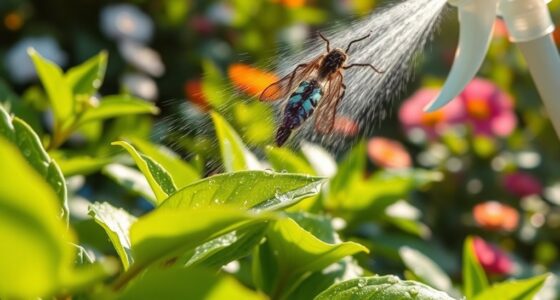
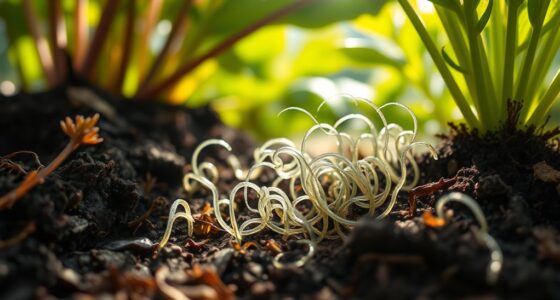
Meet your garden’s natural bodyguards—beneficial nematodes. These tiny predators actively hunt underground pests like grubs, beetle larvae, and root maggots, infecting and killing them efficiently. They’re eco-friendly, safe for beneficial insects, and improve soil health by boosting microbial activity. Applying nematodes is simple: mix with water and water into moist soil conditions. If you continue exploring, you’ll discover how these microscopic allies can help maintain a healthy, pest-free garden naturally.
Key Takeaways
- Beneficial nematodes are microscopic predators that target pest larvae underground, providing an eco-friendly pest control solution.
- They infect and kill pests like beetles, grubs, and root maggots without harming beneficial insects or leaving chemical residues.
- Applying nematodes during cool, moist conditions maximizes their effectiveness and promotes a healthy soil ecosystem.
- They integrate into the soil environment, boosting microbial activity and enhancing soil fertility naturally.
- Regular use supports resilient gardens by reducing pests and fostering sustainable, organic gardening practices.
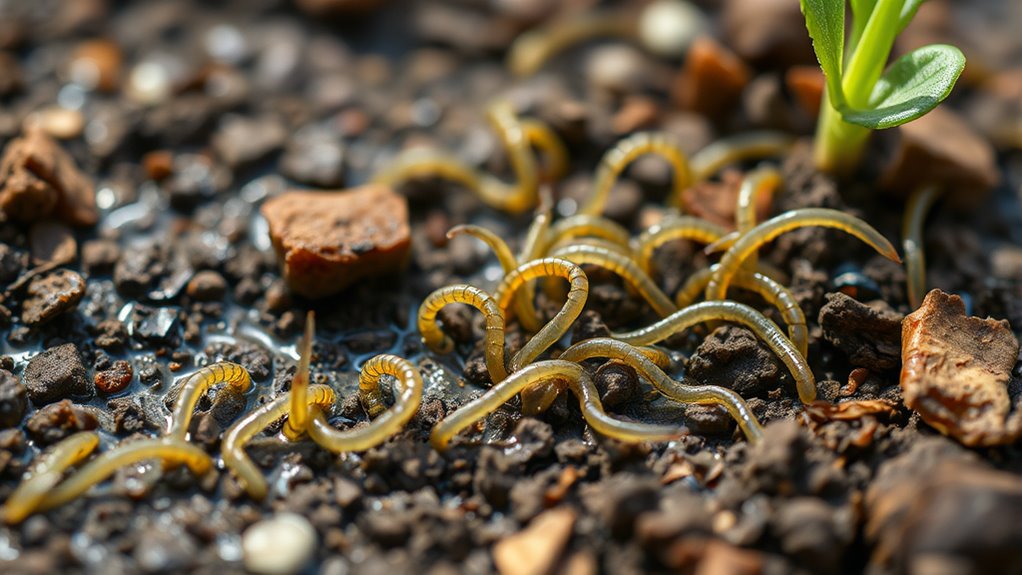
Have you ever considered natural ways to control garden pests? If you’re looking for an eco-friendly and effective method, beneficial nematodes might be just what you need. These tiny, microscopic predators can substantially improve pest control without harming your plants or the environment. When you introduce beneficial nematodes into your garden, you’re taking a step toward healthier soil and more sustainable gardening practices. Pest control doesn’t have to rely on chemical pesticides that can disrupt soil health and harm beneficial insects. Instead, these natural allies target specific pests underground, where many garden problems originate.
Beneficial nematodes are versatile and easy to use, making them a popular choice among gardeners seeking organic solutions. They work by seeking out pest larvae, such as beetles, fleas, grubs, and root maggots, and entering their bodies to infect and eventually kill them. Because they target pests directly at the source—inside the soil—there’s less chance of collateral damage to beneficial insects like bees or ladybugs. This targeted approach supports a balanced ecosystem, which is essential for maintaining soil health and ensuring your garden thrives.
Beneficial nematodes target soil pests with precision, protecting beneficial insects and supporting a healthy garden ecosystem.
Using beneficial nematodes also enhances pest control by promoting a healthier soil environment. Unlike chemical treatments, these nematodes don’t leave residues that could compromise soil quality or plant growth. Instead, they become part of the natural soil ecosystem, encouraging microbial activity and organic matter breakdown. As a result, your soil becomes richer, more fertile, and better equipped to support vigorous plant growth. When soil health improves, your plants are more resistant to pests and diseases, creating a positive feedback loop that benefits your entire garden. Additionally, understanding the soil ecosystem can help you optimize the effectiveness of nematodes by tailoring your gardening practices to support their activity.
Applying beneficial nematodes is straightforward: you typically mix them with water and spray or water them into your garden soil. It’s best to do this during cool, moist conditions and avoid application in direct sunlight or during droughts, as these can reduce their effectiveness. Once introduced, the nematodes actively seek out pests, working silently beneath the surface, often for several weeks or even months. This ongoing pest control not only reduces the need for chemical pesticides but also helps foster a more resilient garden ecosystem.
Frequently Asked Questions
Are Nematodes Safe for Pets and Children?
You might wonder if nematodes are safe for pets and children. Generally, beneficial nematodes are harmless because they target specific soil pests and don’t harm humans or animals. They pose minimal risks to pet safety and children’s health when used properly. Always follow application instructions carefully, and avoid direct contact with the nematodes during application. Proper use ensures your garden stays pest-free without compromising your loved ones’ safety.
How Long Do Beneficial Nematodes Remain Effective?
Like a fleeting shadow, beneficial nematodes don’t stay effective forever. Their pest lifecycle and nematode longevity determine how long they work, typically lasting about 2 to 3 weeks after application. To maintain protection, you might need to reapply them every few weeks, especially in warm weather. Proper watering and soil conditions also help extend their effectiveness, ensuring your garden stays guarded against pests.
Can Nematodes Control All Types of Garden Pests?
You might wonder if nematodes can control all garden pests. The truth is, pest specificity varies among nematode species, so they’re not a one-size-fits-all solution. With diverse nematode species available, you can target specific pests effectively. However, understanding nematode diversity helps you choose the right type for your pest problem, ensuring better control and healthier plants. So, select the right nematodes based on your pest issues for best results.
Do Environmental Conditions Affect Nematode Performance?
Environmental conditions definitely influence nematode performance. You’ll want to pay attention to soil moisture, as nematodes need it to move and infect pests effectively. Temperature sensitivity also matters; extreme heat or cold can reduce their activity and survival rates. For best results, verify your garden has consistent moisture levels and avoid planting during very hot or cold periods. Properly managing these conditions helps nematodes target pests more efficiently.
How Often Should I Apply Beneficial Nematodes?
You should apply beneficial nematodes based on your pest control schedule, typically every 2 to 4 weeks. Application frequency depends on pest pressure and environmental conditions, so monitor your garden regularly. During peak pest activity, more frequent applications might be necessary, but avoid overdoing it. Consistent applications guarantee nematodes stay active and effective, helping you keep pests under control naturally and safely.
Conclusion
Now that you know about beneficial nematodes, you have a powerful tool to protect your garden naturally. Did you know that a single teaspoon of these tiny predators can hunt down up to 100,000 soil pests? By introducing beneficial nematodes, you’re not only safeguarding your plants but also promoting a healthier, chemical-free garden environment. Embrace these natural bodyguards and enjoy a thriving, pest-free oasis right outside your door.