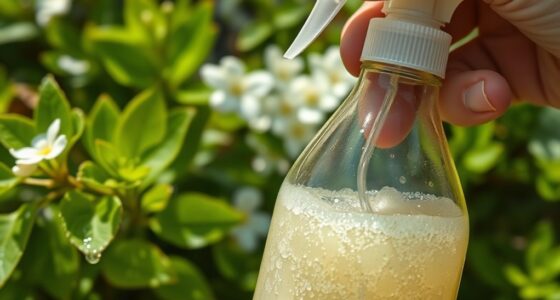
To use neem oil safely, always dilute it according to the label, typically mixing 1-2 teaspoons per quart of water and adding a drop of mild soap for better sticking. Spray thoroughly on both sides of leaves early in the morning or late afternoon, avoiding peak sunlight to prevent leaf burn. Reapply every 7-14 days, especially after rain, to keep pests at bay while protecting beneficial insects. Keep exploring for more tips to maximize your pest control efforts.
Key Takeaways
- Always dilute neem oil according to label instructions, typically 1-2 teaspoons per quart of water, and add a few drops of mild soap.
- Spray thoroughly on both the tops and undersides of leaves during early morning or late afternoon, avoiding midday sun.
- Conduct a spot test on a small plant area before full application to prevent potential plant sensitivity.
- Reapply every 7 to 14 days, especially after rain, to maintain pest control and promote healthy plants.
- Use neem oil responsibly to protect beneficial insects like bees and ladybugs, ensuring safe, eco-friendly gardening practices.
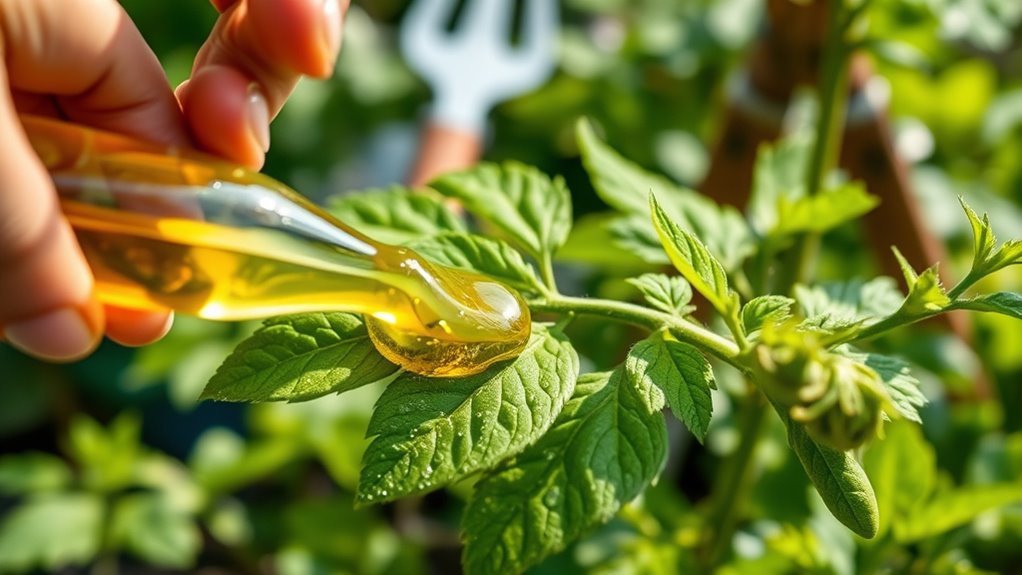
Have you ever wondered how neem oil can transform your gardening and pest control routines? If you’re looking for an effective, natural solution, neem oil benefits are hard to ignore. It’s widely recognized as a powerful tool for organic pest control, helping you manage pests without resorting to harsh chemicals. This natural oil, derived from the seeds of the neem tree, offers a sustainable way to keep your plants healthy and pest-free. Its versatility makes it a favorite among eco-conscious gardeners who want to protect their environment while maintaining lush, thriving plants.
Using neem oil safely is key to maximizing its benefits. First, always dilute the oil according to the instructions on the label. Typically, a mixture of one to two teaspoons of neem oil per quart of water works well. Adding a few drops of mild liquid soap helps the solution adhere better to plant surfaces. Before applying broadly, do a spot test on a small section of your plant to ensure it won’t cause any adverse reactions. Neem oil is generally safe for most plants, but some species may be sensitive, so caution is wise.
Always dilute neem oil and test on a small plant area first for safe, effective pest control.
Spray your plants thoroughly, covering both the tops and undersides of leaves where pests tend to hide. Early morning or late afternoon are the best times to spray, as the sunlight during midday can cause the oil to burn the leaves. Reapply every 7 to 14 days, especially after rain, because water can wash away the oil. Consistent application ensures pests stay at bay and your plants remain healthy.
One of the most notable neem oil benefits is its dual action: it acts as an insect repellent and disrupts the life cycle of pests. It’s effective against aphids, whiteflies, spider mites, and scale insects. Additionally, neem oil is not only safe for beneficial insects like bees and ladybugs when used correctly but also breaks down quickly in the environment, reducing concerns about long-term residues. This makes it an excellent choice for organic pest control, aligning with sustainable gardening practices. Moreover, understanding the variety of pests neem oil can combat helps gardeners tailor their treatments effectively.
Frequently Asked Questions
Can Neem Oil Be Used on Edible Plants Safely?
You can use neem oil on edible plants safely if you follow proper guidelines. While neem oil has culinary uses, it’s essential to apply it carefully to guarantee edible plant safety. Always wash your plants thoroughly before harvesting, and avoid applying neem oil during flowering or close to harvest time. This way, you protect your plants from pests without risking ingestion of residues, making it safe for your food.
How Often Should I Apply Neem Oil to My Plants?
You might wonder how often you should apply neem oil, balancing pest control with plant health. Typically, you apply it every 7 to 14 days, adjusting based on pest activity and weather. During peak seasons, increase application frequency, but for seasonal application, reduce it to prevent overuse. Always monitor your plants and follow label instructions, ensuring you don’t apply too often, which could harm your plants or the environment.
Does Neem Oil Harm Beneficial Insects?
You might wonder if neem oil harms beneficial insects. Generally, neem oil is safe for beneficial insect safety when used correctly. It’s best to apply neem oil during early morning or late evening to minimize impact on helpful insects. Always follow neem oil precautions, such as avoiding over-application and thorough coverage, to protect pollinators and natural predators while controlling pests effectively. This way, you support a healthy, balanced garden environment.
What Are the Signs of Neem Oil Overuse?
You might notice leaf yellowing, curling, or spotting if you’ve overused neem oil. These signs indicate the concentration limits or too-frequent application might be stressing your plants. To prevent this, stick to recommended application frequency and dilute neem oil properly. If you see these symptoms, reduce usage immediately. Proper timing and adhering to guidelines help protect your plants without causing harm from overuse.
Can Neem Oil Be Mixed With Other Pesticides?
Did you know that mixing certain pesticides can increase effectiveness by up to 50%? When considering if neem oil can be combined with other pesticides, always check compatibility first. Follow proper mixing guidelines to avoid phytotoxicity or reduced efficacy. Some pesticides are compatible with neem oil, while others aren’t. Always read labels carefully and conduct a small test patch before full application to ensure safe pesticide compatibility.
Conclusion
By following these simple guidelines, you’ll harness the mighty power of neem oil without risking your beloved plants. Think of it as wielding a gentle yet unstoppable force that can conquer pests and disease alike. With careful use, neem oil becomes your ultimate gardening ally—more potent than a thousand tiny warriors working tirelessly behind the scenes. Embrace its magic responsibly, and watch your garden thrive like never before, a true demonstration to nature’s unmatched prowess.