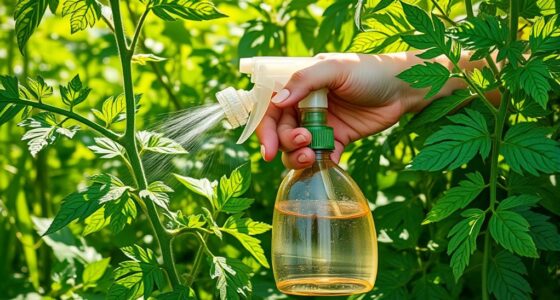
To use neem oil safely on your plants, always dilute it according to the manufacturer’s instructions to prevent damage. Apply during early morning or late afternoon when temperatures are moderate, and guarantee thorough coverage, especially under leaves. Avoid watering or rain immediately after application. Reapply every 7 to 14 days for best results. Using neem oil correctly helps protect your plants naturally—keep going to discover even more tips for safe and effective use.
Key Takeaways
- Always dilute neem oil according to manufacturer instructions to prevent plant damage and ensure safety.
- Apply during early morning or late afternoon to avoid leaf scorching and improve effectiveness.
- Cover all plant surfaces thoroughly, especially undersides of leaves where pests hide.
- Avoid applying before rain or during high heat to prevent wash-off and leaf burn.
- Use consistently every 7 to 14 days as part of an integrated pest management strategy for best results.

Have you ever wondered how a natural oil can transform your gardening and pest control routines? Neem oil is a potent, eco-friendly solution that can make managing pests easier while supporting your commitment to organic gardening. Unlike chemical pesticides, neem oil is derived from the seeds of the neem tree, offering a safe and sustainable alternative. It works by disrupting the life cycle of pests, preventing eggs from hatching and larvae from developing, which makes it highly effective for pest control. Plus, it’s safe for most beneficial insects, including bees, when used correctly, aligning with organic gardening principles.
Using neem oil is straightforward, but it’s essential to follow proper application techniques to ensure safety and effectiveness. Always dilute the oil according to the manufacturer’s instructions—concentrated neem oil can be too potent and may cause plant damage if applied directly. Before applying neem oil broadly, it’s wise to do a spot test on a small section of your plant. This helps you check for any adverse reactions or phytotoxicity, especially if you’re working with sensitive plants. You should apply neem oil during the early morning or late afternoon when the sun isn’t at its peak. This prevents the oil from scorching the leaves and ensures better absorption.
When spraying, make sure to cover all surfaces of your plants, including the undersides of leaves where pests often hide. Consistency is key; applying neem oil every 7 to 14 days can keep pests at bay without overwhelming your plants or disrupting your organic gardening efforts. Be mindful of weather conditions—avoid applying neem oil just before rain, as excessive moisture can wash it away and reduce its effectiveness. Also, avoid applying it during high heat, which can cause leaf burn.
Neem oil isn’t just for pest control—it also acts as a fungicide, helping to prevent fungal issues like powdery mildew. This makes it a versatile addition to your organic gardening toolkit. However, remember that neem oil isn’t a cure-all; it’s most effective when used as part of a broader integrated pest management strategy. Combine it with good gardening practices like crop rotation, encouraging beneficial insects, and maintaining plant health to reduce pest populations naturally. When used properly, neem oil can appreciably reduce your reliance on synthetic chemicals, making your garden safer for you, your family, and the environment. Embrace this natural solution, and you’ll find that pest control and organic gardening become simpler, safer, and more sustainable.
Frequently Asked Questions
Can Neem Oil Be Used on Edible Plants Safely?
You wonder if neem oil safety allows for use on edible plants. Yes, neem oil is generally safe for edible plant treatment when used properly. Always follow the label instructions, applying it during the early morning or late evening to minimize risk. Remember to wash your harvest thoroughly before consumption. With proper application, neem oil offers an effective and safe solution for pest control on your edible plants.
How Often Should I Apply Neem Oil to My Plants?
Think of application frequency like tuning a vintage radio—you want just the right signal. You should apply neem oil every 7 to 14 days, depending on pest presence and plant response. The ideal timing is early morning or late evening, when temperatures are cooler and beneficial insects are active. Keep an eye on your plants, and adjust the frequency as needed to prevent over-application and guarantee safe, effective pest control.
Is Neem Oil Safe for Pollinators Like Bees?
You wonder if neem oil is safe for pollinators like bees. While neem oil is generally considered safe when used properly, it’s important to prioritize pollinator protection and bee safety. Apply neem oil early in the morning or late in the evening when bees aren’t active, and avoid spraying directly on flowers. This helps minimize risk and supports healthy pollinator activity around your plants.
Can Neem Oil Cause Plant Toxicity if Overused?
You might wonder if neem oil causes plant toxicity if overused. Yes, overuse risks neem toxicity, which can damage your plants, leading to leaf burn, wilting, or stunted growth. To prevent this, always follow recommended application rates and intervals. Too much neem oil can overwhelm your plants’ natural defenses, so moderation is key. Proper use ensures your plants stay healthy while benefiting from neem’s pest-repelling properties.
What Are the Signs of Neem Oil Over-Application on Plants?
You might think neem oil is completely safe, but over-application can harm your plants. Watch for leaf discoloration, where leaves turn yellow or brown, and wilting symptoms that indicate stress. Excess neem oil can clog leaf pores or cause burns, leading to these signs. If you notice these symptoms, reduce application frequency and wash affected leaves. Proper use prevents damage and keeps your plants healthy.
Conclusion
Now that you know how to use neem oil safely, you can protect your plants effectively, preserve their health, and promote their growth naturally. Remember to apply it correctly, avoid overuse, and always follow the guidelines. With neem oil, you’re not just fighting pests—you’re nurturing your garden, respecting the environment, and ensuring your plants thrive. So, stay consistent, stay cautious, and enjoy the beauty of a healthy, vibrant garden you’ve cultivated with care.