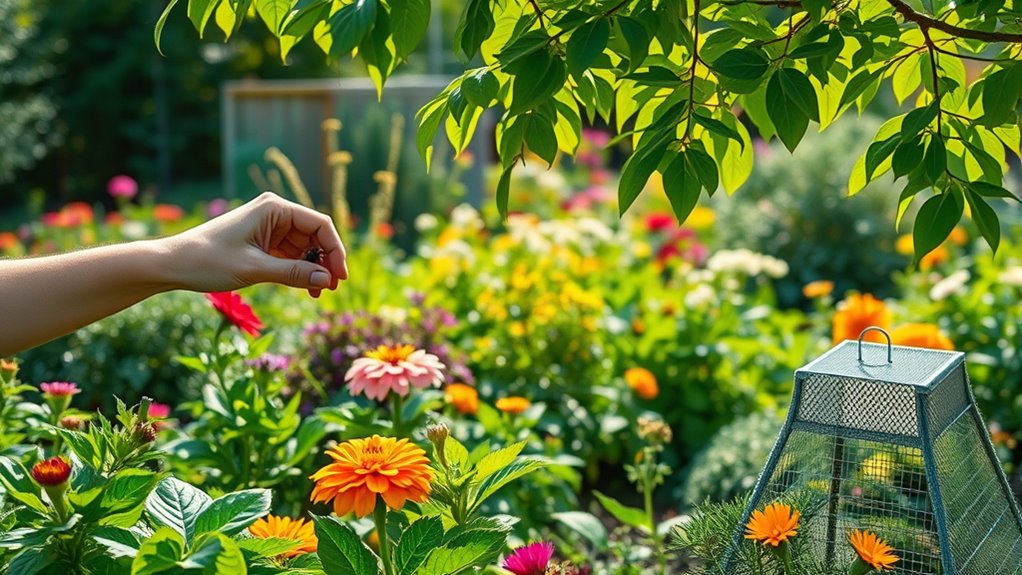
Integrated Pest Management (IPM) is a sustainable way to control pests by combining different strategies that work together. You focus on understanding pest behavior, monitoring their presence, and encouraging natural enemies like ladybugs and parasitic wasps. This approach reduces the need for chemical pesticides and helps protect beneficial insects and the environment. When practiced properly, IPM can keep your garden healthy and productive—if you continue exploring its methods, you’ll discover even more effective ways to apply it.

Get garden gear delivered free with Prime
- Fast, free delivery on millions of items
- Prime Video, Amazon Music and more included
- Member-only deals all year
Key Takeaways
- IPM combines biological, cultural, and chemical strategies to control pests sustainably and reduce environmental impact.
- It emphasizes pest monitoring and understanding pest behavior to implement targeted control measures.
- Natural predators like ladybugs and parasitic wasps are introduced or encouraged to manage pest populations naturally.
- Cultural practices such as crop rotation and habitat management help prevent pest outbreaks proactively.
- Chemical controls are used sparingly and carefully to minimize harm to beneficial insects and the ecosystem.
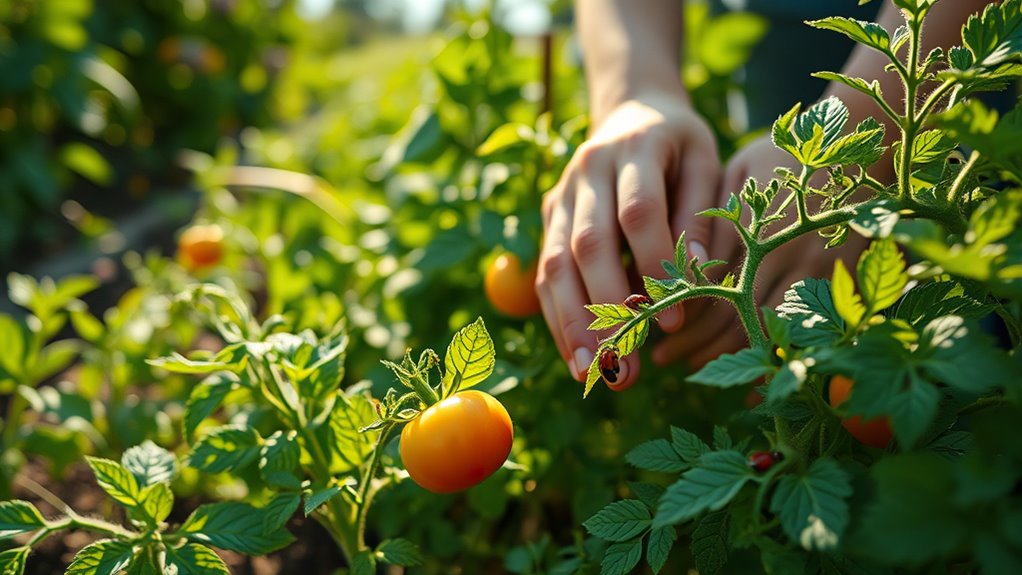
Have you ever wondered how to control pests in your garden without relying solely on chemicals? That’s where integrated pest management, or IPM, comes into play. IPM is a smart, sustainable approach that combines different strategies to keep pests at bay while minimizing environmental impact. Instead of just reaching for chemical pesticides, you focus on understanding pest behavior, monitoring their activity, and using a variety of techniques to manage them effectively. One key component of IPM is biological control, which involves introducing or encouraging natural predators like ladybugs, predatory mites, or parasitic wasps to keep pest populations under control. This method serves as a pesticide alternative because it targets pests specifically, reducing the need for broad-spectrum chemicals that can harm beneficial insects and pollinators.
Implementing biological control requires identifying the pests plaguing your garden and then selecting the appropriate natural enemies to combat them. For example, if aphids are a problem, releasing ladybugs can notably reduce their numbers. These beneficial insects are often available for purchase from garden suppliers or biological control companies. By encouraging their presence—planting nectar-rich flowers or providing habitats—you create a balanced ecosystem where pests are naturally kept in check. This approach not only reduces your reliance on pesticides but also promotes a healthier garden environment. Additionally, understanding the benefits of sustainable practices can help gardeners make more informed decisions about pest control methods.
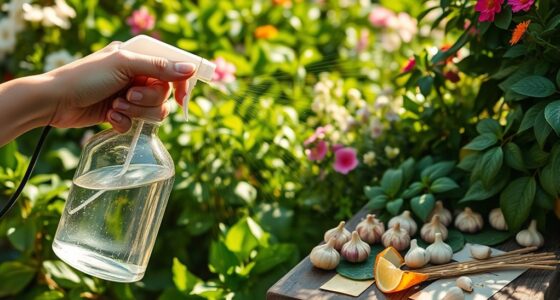
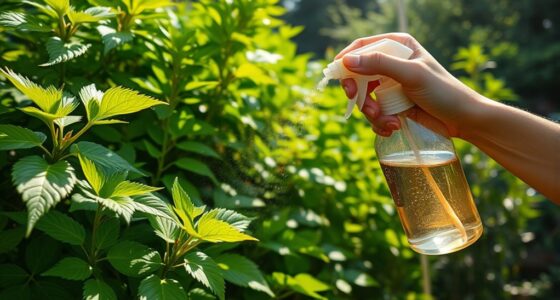
Beyond biological control, IPM emphasizes other pesticide alternatives, such as cultural practices like crop rotation, proper watering, and selecting pest-resistant plant varieties. These methods make your garden less attractive or hospitable to pests, decreasing the likelihood of infestations. Regular monitoring is essential; by inspecting your plants frequently, you can catch pest issues early before they become severe. This proactive approach allows you to target pests precisely and only when necessary, avoiding unnecessary chemical treatments that could disrupt beneficial insects.
When chemical pesticides are unavoidable, IPM encourages choosing the least harmful options and applying them carefully to minimize impact on non-target organisms. The goal isn’t eradication but rather managing pests at acceptable levels while maintaining the health of your garden’s ecosystem. With patience and attention, you’ll find that combining biological control, pesticide alternatives, and good gardening practices creates a resilient garden environment. This integrated approach helps you reduce chemical use, protect beneficial insects, and enjoy a vibrant, healthy garden year-round. Ultimately, IPM empowers you to be a more responsible gardener, fostering sustainability and harmony between your plants, pests, and the environment.
Frequently Asked Questions
How Does IPM Compare to Traditional Pesticide Use?
Compared to traditional pesticide use, IPM reduces chemical reliance by focusing on targeted, eco-friendly methods. You use pest monitoring and natural controls first, which helps prevent pest resistance. This approach minimizes environmental impact and keeps your garden healthier. Unlike conventional methods, IPM balances pest management with sustainability, making it a smarter choice. You’ll enjoy effective pest control while safeguarding beneficial insects and reducing long-term pesticide dependency.
Can IPM Be Used for Organic Gardening?
Yes, you can definitely use IPM in organic gardening. It combines organic methods like beneficial insects, crop rotation, and natural pest suppression techniques to control pests effectively. IPM emphasizes monitoring and early intervention, reducing the need for chemical pesticides. By focusing on pest prevention and environmentally friendly practices, you promote healthier plants and a more sustainable garden, making IPM an excellent choice for organic gardeners seeking effective pest management.
What Are Common Mistakes to Avoid in IPM?
You should avoid common mistakes like overusing pesticides, which can harm your garden’s health and beneficial insects. Ignoring beneficial insects is another error; they naturally control pests and reduce your need for chemical treatments. Instead, monitor pests carefully, encourage beneficial insects, and use targeted solutions. By staying balanced and cautious, you’ll maintain a healthy garden ecosystem and effectively manage pests without unnecessary chemical reliance.
How Long Does It Take to See Results With IPM?
You might expect instant results with IPM, but patience is key—sometimes it feels like your garden’s fighting a war of attrition! Usually, within a few weeks of pest monitoring and introducing beneficial insects, you’ll notice a dramatic decline in pests. The more consistently you implement IPM practices, the faster your garden will recover. Stick with it, and you’ll see nature’s balance restored, often sooner than you think!
Is IPM Cost-Effective for Small Gardens?
Yes, IPM can be cost-effective for small gardens when you use budget-friendly methods and targeted solutions. It helps you avoid unnecessary chemical purchases and reduces damage from pests, saving you money in the long run. By focusing on cost-effective strategies like natural controls and regular monitoring, you can maintain a healthy garden without overspending, making IPM a smart, budget-friendly approach to pest management.
Conclusion
By embracing integrated pest management, you’re planting the seeds for a healthier, thriving garden. Think of IPM as a symphony where every method plays its part in harmony, keeping pests at bay without overwhelming your plants. Remember, it’s not about fighting nature but working with it. With patience and practice, you’ll nurture a lush garden that’s resilient and balanced—your personal paradise blooming in perfect harmony.
Halloween Picks
halloween
As an affiliate, we earn on qualifying purchases.