Kaolin clay particle films can be applied to fruit as a natural, eco-friendly coating that offers multiple benefits. They form a protective barrier that prevents pest attacks, reduces moisture loss, and extends shelf life without the use of harmful chemicals. These films also allow the fruit to breathe, maintaining quality and appearance during storage and transport. If you continue exploring, you’ll discover how this sustainable solution enhances fruit preservation while supporting environmentally conscious practices.
Key Takeaways
- Kaolin clay films form a natural, biodegradable coating that protects fruit and reduces chemical residues.
- They create a physical barrier that deters insects and pests, supporting integrated pest management.
- The films enhance fruit shelf life by reducing moisture loss and physical damage during storage and transport.
- They are breathable, maintaining fruit respiration and ripening while preserving quality and visual appeal.
- Easy to apply and safe, kaolin clay films are an eco-friendly alternative for sustainable post-harvest fruit preservation.
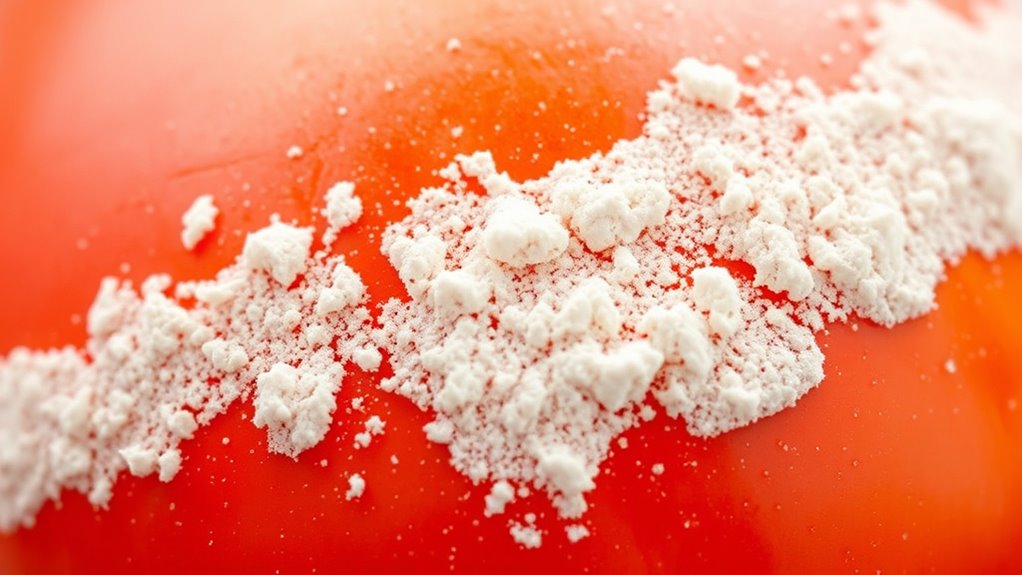
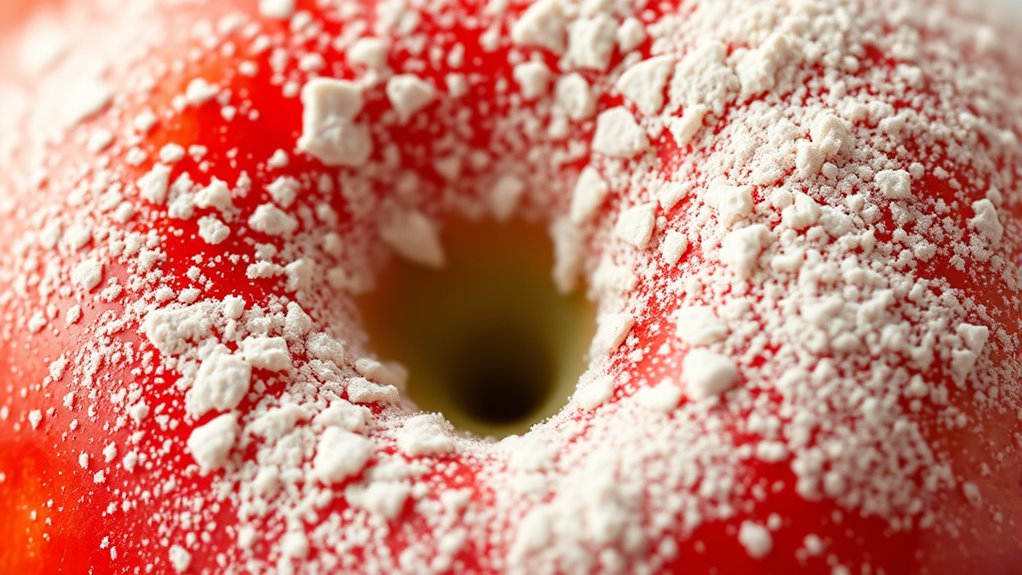
Kaolin clay films are an innovative material gaining attention for their eco-friendly properties and versatile applications. When it comes to protecting fruit, these films offer a sustainable alternative to traditional coatings, helping you reduce chemical use without sacrificing effectiveness. One of the key advantages of kaolin clay films is their natural pest resistance. By forming a thin, white barrier over the fruit’s surface, they act as a physical deterrent against insects and other pests that might harm your crops. This barrier makes it less appealing for pests to land or stay on the fruit, which can considerably decrease pest infestations. As a result, you may find fewer pests on your fruit and rely less on chemical pesticides, aligning with organic and sustainable farming practices.
In addition to pest resistance, coating durability is another important feature that makes kaolin clay films suitable for fruit preservation. These films create a protective layer that adheres well to the fruit’s surface, ensuring the coating remains intact during handling, transport, and storage. This durability helps extend the shelf life of your produce by reducing moisture loss and protecting against physical damage. Because the coating is resilient, it withstands environmental stresses like humidity and mechanical impacts better than some traditional coatings. This means your fruit stays fresh longer, maintains its visual appeal, and reduces waste. The durability also ensures that the film continues to provide pest resistance throughout the critical post-harvest period, giving you peace of mind that your fruit remains protected until it reaches consumers. Moreover, the breathable nature of these films supports natural respiration, which is crucial for maintaining fruit quality during storage.
Applying kaolin clay films is straightforward, and they can be customized depending on your specific needs. The coating forms a uniform, breathable layer that doesn’t interfere with the fruit’s ripening process or natural respiration. This balance is essential because it preserves the fruit’s quality without creating a suffocating environment. Additionally, since kaolin clay is a natural mineral, it’s safe for consumers and environmentally friendly, reducing concerns over chemical residues on your produce. As a part of your integrated pest management strategy, these films can help you minimize pesticide use while maintaining high-quality fruits that appeal to health-conscious customers.
Frequently Asked Questions
How Long Does Kaolin Clay Film Protection Last on Fruit Surfaces?
The kaolin clay film typically lasts around 2 to 4 weeks on fruit surfaces. Its durability depends on environmental factors like rain, humidity, and handling, which can cause environmental degradation and wear down the film faster. To maximize protection, you should reapply the film as needed, especially after heavy rain or frequent handling. Regular reapplication helps maintain a barrier against pests and sun damage, keeping your fruit protected longer.
Are There Any Known Allergenic Effects of Kaolin Clay on Consumers?
While kaolin clay is generally considered safe, you should be aware of potential allergenic reactions in sensitive individuals. Although rare, some consumers might experience skin irritation or respiratory issues from exposure. Overall, kaolin clay particle films are safe for consumers when used properly, prioritizing consumer safety. However, it is crucial to monitor for any allergenic effects and guarantee proper application to minimize risks and protect all consumers.
Can Kaolin Clay Films Be Used on Organic-Certified Fruits?
Yes, you can use kaolin clay films on organic-certified fruits as part of natural preservation. These films meet organic certification standards because they’re derived from natural minerals and don’t contain synthetic additives. Applying kaolin clay helps protect your fruit from pests and sunburn without compromising organic integrity. Just guarantee you follow organic guidelines for application, and you’ll maintain your fruit’s natural quality while extending shelf life.
What Are the Environmental Impacts of Widespread Kaolin Clay Film Application?
You might worry about environmental concerns, but widespread kaolin clay film use can have minimal impact since it’s natural and biodegradable. Unlike synthetic coatings, it breaks down easily, reducing pollution. However, overapplication could disrupt soil and water ecosystems. To balance benefits and risks, consider biodegradable alternatives and responsible application practices, ensuring you protect the environment while enjoying the advantages of natural fruit coatings.
How Does Kaolin Clay Film Affect the Fruit’s Natural Ripening Process?
Applying kaolin clay film causes a ripening delay by suppressing ethylene production, a hormone essential for fruit ripening. You might notice the fruit stays firm and less colorful longer. This ethylene suppression helps extend shelf life, but it can also slow natural ripening processes. If you’re aiming for faster ripening, this film might not be ideal, but for prolonging freshness, it’s quite effective.
Conclusion
In summary, using kaolin clay particle films on fruit is a game-changer. You’ll find your produce staying fresh and protected like a superhero shield, fighting off pests and spoilage with ease. This natural barrier not only extends shelf life but also keeps your fruit safe without harsh chemicals. It’s truly a revolutionary breakthrough—like giving your fruit a suit of armor that’s almost invincible. Embrace this eco-friendly solution and enjoy fresher, healthier fruit every time!