To tackle pests organically, attract beneficial insects like ladybugs and lacewings by planting marigolds and fennel, and give them shelter with insect hotels. Use homemade sprays like garlic and chili, or diluted neem oil to deter pests naturally. Practice crop rotation and handpick bugs to keep populations in check. Combining these methods creates a balanced garden that fights pests effectively without chemicals. Keep exploring to discover even more eco-friendly strategies that really work.

Get garden gear delivered free with Prime
- Fast, free delivery on millions of items
- Prime Video, Amazon Music and more included
- Member-only deals all year
Key Takeaways
- Use homemade garlic and chili spray to repel a wide range of pests naturally.
- Attract beneficial insects with diverse flowers like marigolds, dill, and fennel to control pests biologically.
- Introduce predatory insects such as ladybugs and lacewings to naturally reduce pest populations.
- Apply neem oil as a natural insecticide that disrupts pest life cycles without harming beneficial insects.
- Implement integrated pest management combining cultural, biological, and mechanical methods for effective control.
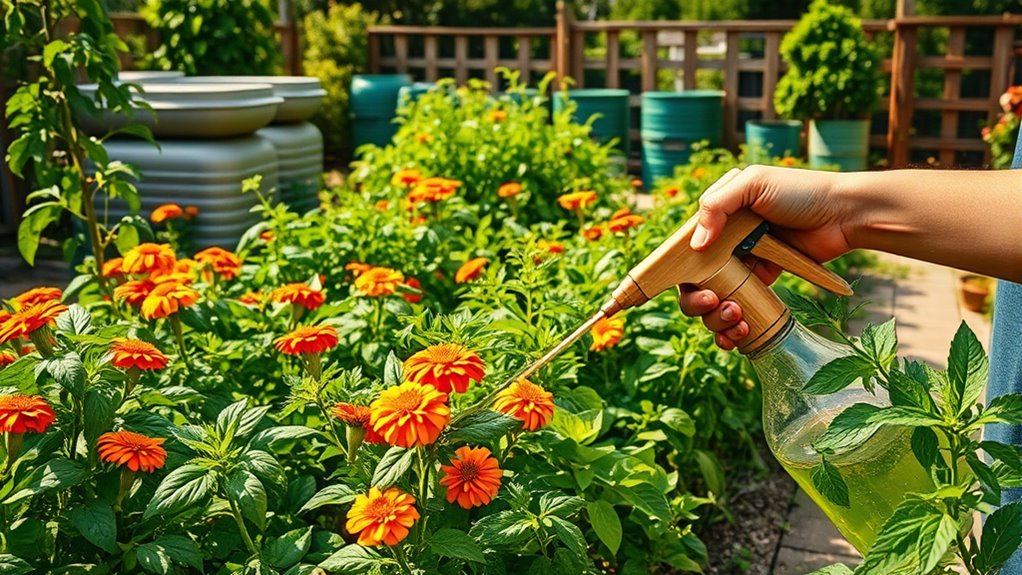
Are you looking for effective ways to manage pests without resorting to chemicals? If so, harnessing the power of beneficial insects and homemade remedies can be a game-changer for your garden or home. Beneficial insects, such as ladybugs, lacewings, and predatory beetles, naturally prey on common pests like aphids, mites, and whiteflies. By encouraging these friendly insects, you create a balanced ecosystem that keeps pest populations in check without harming your plants or the environment. You can attract beneficial insects by planting a diverse range of flowers and herbs, like dill, fennel, or marigolds, which act as natural attractants. Providing shelter, such as small brush piles or insect hotels, also helps sustain these helpful creatures, ensuring they remain a consistent line of defense.
In addition to attracting beneficial insects, homemade remedies offer an affordable and eco-friendly approach to pest control. Many of these solutions are simple to prepare and use ingredients you likely already have at home. For example, a garlic and chili spray can deter a variety of insects. To make it, blend a few garlic cloves and chili peppers with water, strain, and then spray it directly onto affected plants. The strong smell and irritant qualities discourage pests without harming beneficial insects or humans. Another effective homemade remedy is neem oil, which can be diluted with water and applied as a spray. Neem oil acts as a natural insecticide, disrupting the life cycle of pests while being safe for most beneficial insects when used correctly. Incorporating integrated pest management strategies can further enhance your pest control efforts by combining biological, cultural, and mechanical methods for a comprehensive approach.
Using homemade remedies and encouraging beneficial insects work hand-in-hand. While the remedies help repel or reduce pest numbers, beneficial insects provide ongoing biological control. Remember, the key is to be consistent and observant. Apply homemade sprays during early morning or late evening to minimize impact on pollinators and beneficial insects. Avoid broad-spectrum chemical pesticides, which can wipe out these helpful creatures along with pests. Instead, focus on targeted, natural solutions that support a healthy, resilient garden.
As an affiliate, we earn on qualifying purchases.
Frequently Asked Questions
Are Organic Pest Control Methods Safe for Pets and Children?
You’re wondering if organic pest control methods are safe for pets and children. Generally, they’re designed with pet safety and chemical concerns in mind, making them a safer choice than traditional pesticides. However, always read labels carefully and follow instructions to minimize risks. Organic options like neem oil or diatomaceous earth usually pose less danger, but it’s wise to keep pets and kids away during application and until the product dries or settles.
How Long Does It Take to See Results With Organic Pest Control?
You might wonder how long it takes to see results with organic pest control. Timing expectations vary, but generally, you’ll notice changes within a few days to a couple of weeks. Pest lifecycle plays a role, as some pests take longer to eliminate. Consistent application and patience are key, and early intervention helps speed up results. Stay vigilant, and you’ll eventually see a significant reduction in pests.
Can Organic Methods Eliminate All Types of Pests Effectively?
Many believe organic methods can eliminate all pests, but pest diversity and ecological impact suggest otherwise. While organic techniques like neem oil and beneficial insects effectively target specific pests, they might not fully control highly resilient or widespread infestations. Investigating their effectiveness reveals they work best as part of integrated pest management, reducing ecological harm. So, you should combine organic methods with other strategies for all-encompassing pest control.
Do Organic Pest Controls Require Frequent Reapplication?
You might wonder if organic pest controls need frequent reapplication. Typically, they do require regular frequency maintenance, especially after rain or heavy watering. Application timing is vital; applying early in the pest lifecycle or during cooler parts of the day increases effectiveness. While organic methods are generally less intensive than chemical ones, staying consistent with reapplication helps keep pests at bay and guarantees your plants stay healthy.
Are Organic Pest Control Products Cost-Effective Compared to Chemical Options?
You might wonder if organic pest control products are cost-effective compared to chemical options. Generally, organic methods have a favorable cost comparison when you consider their long-term benefits, like safety and environmental impact. While organic products can sometimes be pricier upfront, their effectiveness often means fewer applications and lower overall expenses. Your budget considerations should include these factors, making organic options a smart investment for sustainable pest management.
beneficial insect attractant flowers
As an affiliate, we earn on qualifying purchases.
As an affiliate, we earn on qualifying purchases.
Conclusion
Remember, trying natural pest control methods isn’t just about avoiding chemicals; it’s about trusting nature’s balance. Many believe that natural solutions can’t be as effective as chemical ones, but research shows otherwise. When you use organic methods, you support a healthier environment and a safer home. So, give these techniques a genuine try—nature often has the answer, and trusting its power can make all the difference in keeping pests at bay.
As an affiliate, we earn on qualifying purchases.
As an affiliate, we earn on qualifying purchases.
Fall yard work Picks
leaf blowers
As an affiliate, we earn on qualifying purchases.