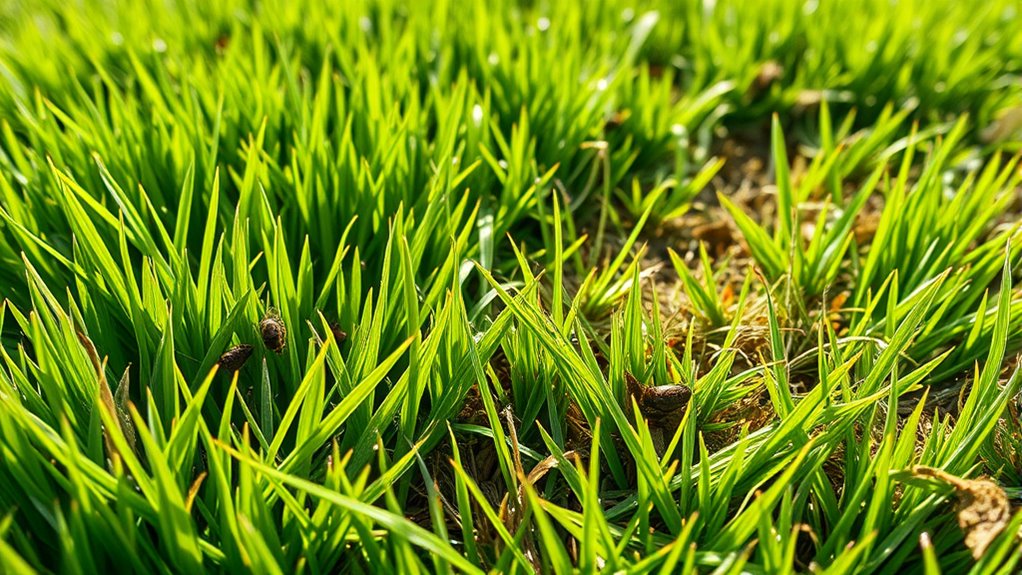

Bluegrass lawns are more prone to pests like chinch bugs and diseases such as dollar spot, especially in hot, humid weather. They also tolerate less drought and heat stress, requiring consistent watering and proper mowing heights. Fescue lawns handle drought and heat better, making them more resilient in stressful conditions, with less pest pressure. To learn how to optimize your lawn’s health and resilience, keep exploring tips tailored for either grass type.
Key Takeaways
- Bluegrass is more susceptible to pests like chinch bugs and diseases such as dollar spot, especially in humid conditions.
- Fescue is more drought and heat tolerant, thriving under stress and requiring less frequent watering.
- Bluegrass needs consistent deep watering and optimal mowing height (2.5-3 inches) to reduce stress and pest vulnerability.
- Tall fescue performs best at 3-4 inches mowing height, promoting healthier, more resilient turf.
- Effective pest and stress management involves tailored watering, mowing, and preventative strategies for each grass type.

When choosing between a bluegrass and a fescue lawn, understanding their differences can help you make an informed decision that suits your climate, maintenance preferences, and aesthetic goals. One key aspect to contemplate is their pest and stress resilience. Bluegrass tends to be more vigorous and dense, but it can be more susceptible to pests like chinch bugs and diseases such as dollar spot, especially in hot, humid conditions. Fescue, particularly tall fescue, often handles drought and heat stress better, making it a good choice for stressful environments. However, it can be prone to fungal diseases if kept too moist or overwatered.
Watering needs play a significant role in how these grasses cope with stress. Bluegrass generally prefers consistent, deep watering to keep its roots healthy and to resist stress, especially during hot summer months. If you neglect watering, bluegrass can become dormant or thin out, making it more vulnerable to pests and disease. Fescue, on the other hand, has a higher tolerance for drought and requires less frequent watering. Its deep root system allows it to survive dry spells, reducing the stress that pests and diseases might exploit. This difference in watering needs directly impacts how you manage your lawn and its health during periods of drought or heavy rain. Additionally, understanding the pest susceptibility of each grass type can help you implement effective prevention strategies.
Mowing height also influences how well each grass resists pests and stress. Bluegrass is best maintained at a mowing height of about 2.5 to 3 inches, which encourages deeper roots and better resilience against heat and drought. Keeping it too short can weaken the grass and make it more susceptible to pests and disease. Fescue, especially tall fescue, thrives when mowed at a slightly higher height of 3 to 4 inches. Higher mowing heights promote a denser turf, which offers better shade and protection from stressors. Proper mowing height helps reduce stress by keeping the grass healthy and vigorous, therefore making it less attractive to pests and less prone to disease.
Frequently Asked Questions
How Do Soil Types Affect Bluegrass and Fescue Lawn Health?
Soil types substantially impact your bluegrass and fescue lawns’ health by affecting soil composition and nutrient availability. Sandy soils drain quickly, making it harder for bluegrass to establish roots, while fescue thrives in loamy soils that hold nutrients well. Clay soils can lead to poor drainage and compacted roots, stressing both grasses. To guarantee a lush lawn, you should amend your soil to optimize composition and nutrient availability based on your grass type.
What Are the Best Lawn Care Practices for Drought Resistance?
You might think watering endlessly is the answer, but drought-resistant grasses and water conservation strategies prove otherwise. To boost drought resistance, aerate your lawn, mow higher to shade roots, and use slow-release fertilizers. Incorporate drought-tolerant grasses like fescue or buffalo grass, and water deeply but infrequently. These practices help your lawn stay healthy during dry spells while conserving water and reducing stress on the environment.
Can Bluegrass or Fescue Lawns Recover From Severe Pest Damage?
Yes, bluegrass and fescue lawns can recover from severe pest damage with proper pest recovery strategies. To boost lawn resilience, you should identify the pests early, apply targeted treatments, and maintain healthy soil conditions. Regular watering and fertilization help speed recovery, but patience is key. Both grasses can bounce back, though bluegrass may need more time and care to regain full vigor after intense pest attacks.
How Do Mowing Heights Influence Stress Levels in These Grasses?
You might think shorter mowing heights boost your lawn’s beauty, but they actually crank up stress levels in bluegrass and fescue. Raising the mowing height allows the grasses to develop deeper roots, improving stress management. So, instead of playing lawn dictator, give your grass some breathing room. Opt for higher mowing heights to reduce stress, promote healthier growth, and enjoy a lush, resilient lawn—irony aside, it really works.
Are There Natural Methods to Reduce Pests in Bluegrass and Fescue?
You can reduce pests naturally by using organic pest control methods like introducing beneficial insects or applying neem oil. Companion planting is also effective; plant herbs like basil or marigolds nearby to deter pests. These approaches help protect your bluegrass and fescue lawns without chemicals, promoting healthier grass and a more eco-friendly yard. Regularly monitoring your lawn and maintaining proper watering and mowing can further minimize pest issues naturally.
Conclusion
When choosing between bluegrass and fescue lawns, understanding their pest and stress differences helps you make the right decision. For example, imagine a homeowner in Kentucky switching from bluegrass to fescue to better withstand drought and pest issues. By selecting the right grass for your climate and needs, you create a healthier, more resilient lawn. So, consider your area’s conditions carefully and choose the turf that’ll keep your yard lush and vibrant all season long.