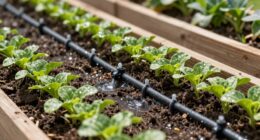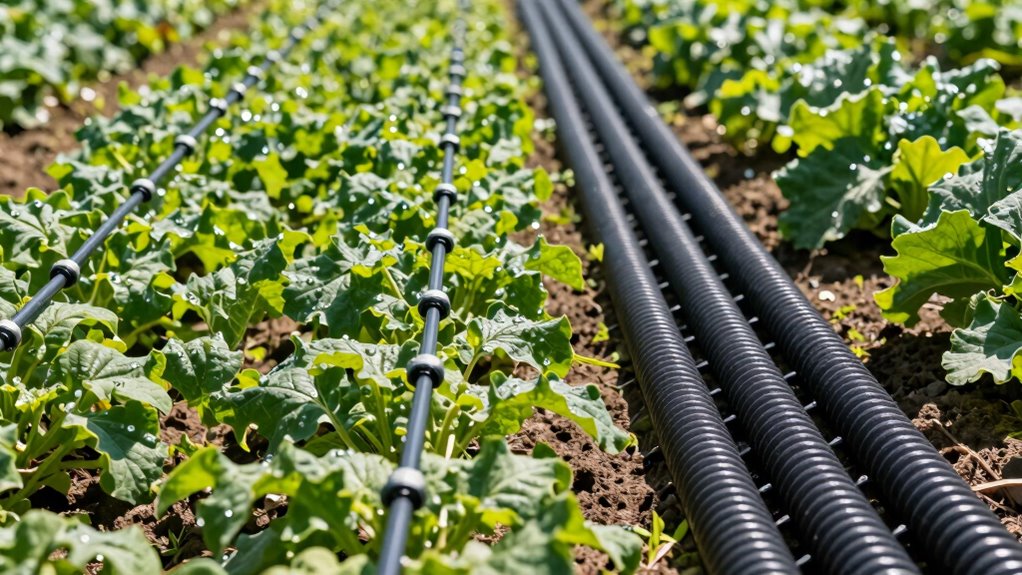
Choosing between drip tape and drip tubing depends on your soil type, planting layout, and long-term needs. Drip tape suits well-drained soils and small, uniform plots like vegetable beds, offering quick installation and low upfront costs. Drip tubing works better for larger, irregular areas like orchards or vineyards, and it handles clay soils and fertigation better, lasting longer. To optimize your irrigation, consider your garden’s specifics—better insights are available if you explore further.
Key Takeaways
- Choose drip tape for small, uniform plots like vegetables and row crops in well-drained soils requiring frequent watering.
- Opt for drip tubing in larger, irregular areas such as orchards or landscapes with wider plant spacing and clay soils.
- Drip tape is cost-effective and quick to install, ideal for short-term or straightforward projects; tubing offers durability for long-term use.
- Consider system maintenance: tape needs regular clog checks; tubing is more robust and suitable for fertigation over time.
- Match soil type and plant needs: sandy soils benefit from tape’s short-distance watering; clay soils favor tubing’s longer, less frequent irrigation.
Drip Tape vs. Drip Tubing: What’s the Difference?

When choosing between drip tape and drip tubing, understanding their key differences is vital. Soil compatibility plays a big role; drip tape is often better for well-drained soils, while drip tubing can handle heavier, clay soils more effectively. Plant compatibility is also essential—drip tape delivers water more evenly over short distances, making it ideal for row crops and vegetables. Drip tubing, with its flexibility and longer runs, suits trees and perennial plants that require consistent moisture over larger areas. Both systems need proper installation to avoid clogging and guarantee efficient watering. Consider your soil type and plant needs to determine which option aligns best with your landscape. Additionally, understanding watering system efficiency can help you select the most effective irrigation method for your garden.
Key Factors to Consider When Choosing Your Drip Irrigation System
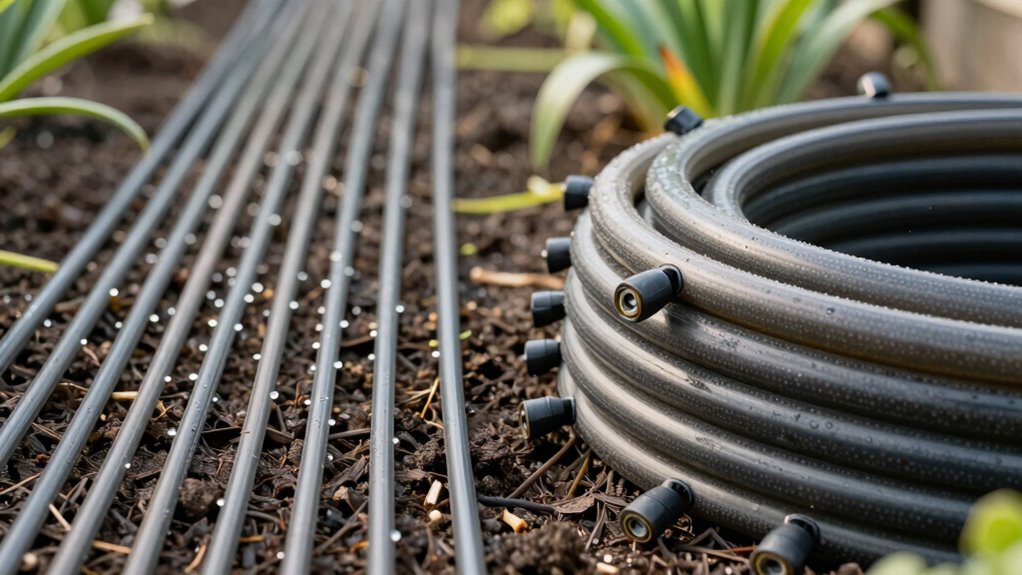
Choosing the right drip irrigation system involves evaluating several key factors to guarantee it meets your landscape’s specific needs. First, consider fertilizer compatibility; some systems, like drip tape, often allow for fertigation, simplifying fertilizer delivery directly through the system. Next, assess climate adaptability—if you experience extreme heat or heavy rainfall, select a system that can handle temperature fluctuations and prevent clogging or damage. Durability and pressure requirements also matter, ensuring the system can withstand your area’s conditions. Additionally, think about your landscape’s size and layout to determine whether flexible tubing or more uniform tape suits your needs. By focusing on fertilizer compatibility and climate adaptability, you’ll choose a system that offers efficiency, longevity, and excellent performance for your garden or crop. Incorporating energy-efficient technology can further enhance sustainability and reduce operational costs over time.
Installation and Maintenance: How Do They Differ?

Installing drip tape is quick and straightforward, often requiring fewer connections and less preparation compared to drip tubing. Drip tubing may involve more fittings and careful placement to guarantee even coverage. Maintenance-wise, drip tape usually needs less attention, while drip tubing might require regular checks for leaks and clogs to keep your system working smoothly. Understanding the watering system components can help you choose the most reliable option for your needs. Additionally, drip tape’s ease of installation makes it a preferred choice for many growers seeking quick setup and minimal maintenance. Moreover, considering the durability of each system can influence long-term performance and cost-effectiveness.
Installation Process Differences
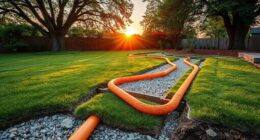
The installation process for drip tape and drip tubing differs markedly in complexity and method. Drip tape is lightweight and easy to lay out, often requiring less planning and fewer fittings. You simply unroll it along your planting beds, secure it, and punch holes if needed. Drip tubing, on the other hand, tends to be more durable and flexible, but installation can be more involved, especially for larger systems. It often requires connectors, pressure regulators, and careful layout planning to ensure even water distribution. When considering fertilizer compatibility, drip tape generally handles soluble fertilizers well but may clog over time, affecting pipe durability. Drip tubing’s sturdiness makes it suitable for long-term use, especially in harsher environments. Overall, your choice affects installation time and system longevity. Additionally, understanding art care and living principles can help you maintain your irrigation system’s effectiveness over time.
Routine Maintenance Requirements
Routine maintenance for drip tape generally involves inspecting for clogs, leaks, and ensuring the system stays securely in place, which is straightforward due to its lightweight design. You should regularly check for clog prevention issues, especially if you’re using fertilizers that can cause buildup. Since drip tape is often compatible with liquid fertilizers, you need to monitor for any blockages that could hinder water flow. Cleaning or flushing the lines periodically helps maintain efficiency. While drip tape is easy to handle, you still need to inspect for leaks and fix them promptly to prevent water loss. Properly securing the tape prevents damage from wind or animals. Overall, routine upkeep is simple but essential to maximize your system’s lifespan and ensure consistent watering.
Cost and Water Efficiency: Which Drip System Saves You More?

When choosing between drip tape and drip tubing, understanding their cost and water efficiency can make a significant difference in your gardening budget and water conservation efforts. Drip tape typically costs less upfront and delivers water directly to roots, reducing waste. It also offers efficient fertilizer delivery, helping nutrients reach plants without runoff. Drip tubing, while more expensive initially, often boasts greater system longevity, needing fewer replacements over time. To evaluate which saves you more, consider:
- Initial investment versus long-term durability
- Water wastage and runoff reduction
- Ease of installation and maintenance
- Compatibility with fertilizer delivery systems
- Overall system lifespan and reliability
Additionally, considering the material durability of each system can influence your choice, as stronger materials may withstand harsh environmental conditions better over time. Properly managing system pressure and flow rates also plays a crucial role in maximizing efficiency and preventing leaks. Ultimately, your choice depends on your budget, crop size, and water conservation goals. Both systems can be efficient if properly managed and suited to your needs.
Best Use Cases for Drip Tape and Drip Tubing

Choosing the right drip system depends on your specific gardening needs and the type of crops you’re growing. Drip tape is ideal for row crops, vegetables, and bedding plants where uniform soil moisture is essential. Its thin design guarantees quick, even watering, which promotes healthy root development and improves plant health. Proper installation and regular maintenance are also crucial for optimal performance and longevity of your drip irrigation system, ensuring consistent water delivery and preventing clogs or damage. Using irrigation efficiency techniques can further enhance water conservation and system performance. Drip tubing, on the other hand, works better for larger areas like orchards, vineyards, or landscaping projects. It provides consistent moisture over a broader area, helping maintain ideal soil moisture levels and supporting vigorous growth. Both systems help you control water delivery precisely, reducing waste. Additionally, selecting the appropriate system can minimize water waste and improve overall irrigation efficiency. Considering factors like irrigation uniformity can help you choose the most effective system for your setup. Consider your crop layout, soil type, and irrigation needs to determine which system best maintains soil moisture and enhances plant health, ensuring your garden thrives efficiently.
How to Decide Which Drip System Is Right for Your Garden
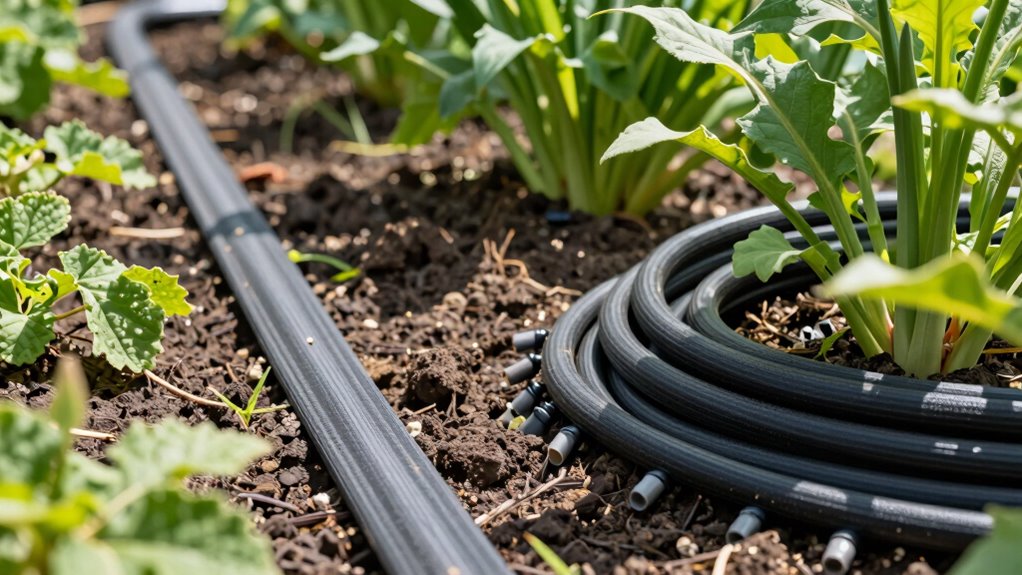
To determine the best drip system for your garden, you need to evaluate your specific watering needs and the layout of your planting area. Consider your plant spacing—closer plants may benefit from drip tape’s uniform coverage, while wider spacing suits drip tubing. Soil compatibility also plays a role; sandy soils drain quickly, requiring more frequent watering, whereas clay soils retain moisture longer. Additionally, understanding the cost-effectiveness of different systems can help you choose a solution that balances budget and durability.
Frequently Asked Questions
How Durable Is Drip Tape Compared to Drip Tubing in Harsh Weather?
Drip tubing generally offers better durability compared to drip tape in harsh weather. Its thicker walls provide superior weather resistance, making it less likely to crack or degrade over time. Drip tape, with its thinner material, is more susceptible to damage from UV rays, wind, and extreme temperatures. If you face harsh weather conditions, you should consider drip tubing for long-lasting performance and reliable irrigation.
Can Drip Tape or Tubing Be Used for Large-Scale Commercial Farming?
Yes, you can use drip tape or tubing for large-scale farming and commercial irrigation. Both options provide efficient water delivery, but drip tubing is often preferred for extensive systems because it’s more durable and easier to maintain over large areas. Drip tape offers quick installation and cost savings, making it suitable for smaller sections. Your choice depends on your farm size, budget, and durability needs.
What Are the Best Practices for Repairing Leaks in Each System?
When repairing leaks in drip tape or tubing, start with leak detection by inspecting your system for wet spots or pressure drops. Use repair techniques like patching small holes with compatible tape or replacing damaged sections. For larger leaks, cut out the damaged area and use couplings or connectors to rejoin the system. Regular maintenance and careful inspection help prevent leaks and guarantee your irrigation runs efficiently.
Are There Environmentally Friendly Options for Drip Irrigation Materials?
Yes, you can choose environmentally friendly drip irrigation options. Look for systems made with biodegradable materials that break down naturally, reducing plastic waste. Eco-friendly coatings on tubing and tape also help minimize environmental impact by decreasing chemical leaching and extending lifespan. These options support sustainable gardening, helping you conserve resources and protect the environment while maintaining efficient watering practices.
How Do Maintenance Requirements Differ Over the System’s Lifespan?
Over the system’s lifespan, drip tape generally requires more frequent maintenance due to its thinner walls and vulnerability to clogging or damage, which can reduce system longevity. Drip tubing tends to need less maintenance, offering longer intervals between checks. You should expect to perform regular flushes and filter cleanings for both systems, but drip tape’s higher maintenance frequency may impact your overall system longevity, especially if environmental factors cause wear.
Conclusion
Choosing between drip tape and drip tubing is like picking the right brush for your painting—each has its perfect stroke. I once switched to drip tape for my vegetable garden, and water savings soared by 30%. Think of your garden as a canvas; selecting the right irrigation system helps your plants thrive with less effort. Whichever you choose, it’s about finding the tool that makes your watering feel effortless and your garden flourish.