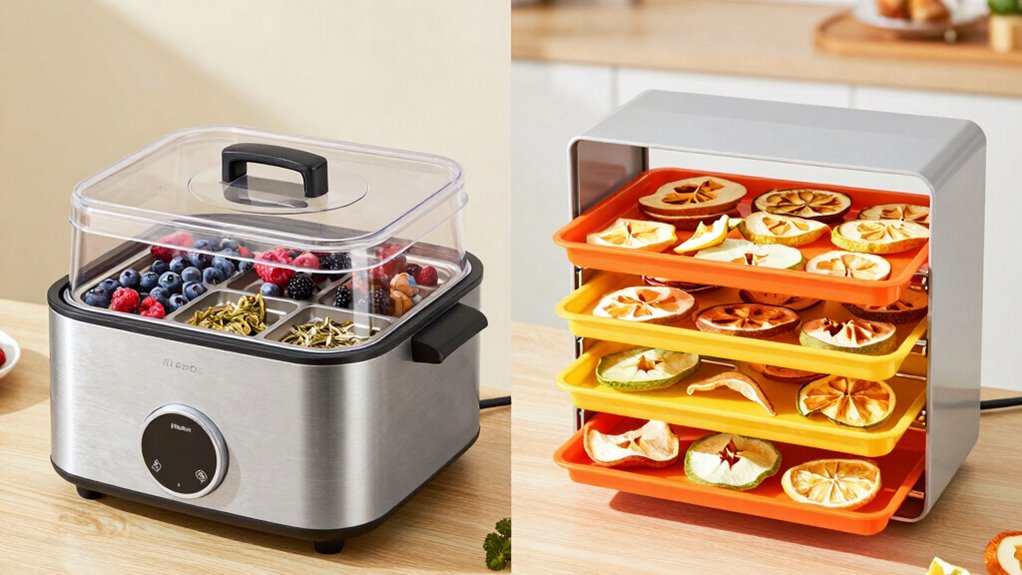

If you want to preserve your garden harvest’s nutrients, flavor, and appearance, a freeze dryer is your best bet. It uses sublimation to lock in freshness, maintaining the shape and color better than dehydration, which relies on heat that can degrade quality. While freeze drying takes longer and costs more, it’s ideal for large batches. Want a quicker, budget-friendly option? Dehydrators work well for small amounts but may compromise some nutrients and appearance. Explore further to find what suits you best.
Key Takeaways
- Freeze dryers better preserve nutrients, flavor, and appearance by sublimating ice without heat damage.
- Dehydrators are faster and more practical for small batches, but may reduce nutrient quality and alter produce appearance.
- Freeze drying maintains the original shape, color, and texture, ideal for fruits and delicate greens.
- Dehydrators are more affordable and energy-efficient, suitable for casual or small-scale preservation.
- Large-scale, high-quality preservation favors freeze drying, while dehydration is better for quick, low-cost drying.
How Do Freeze Dryers and Dehydrators Work?
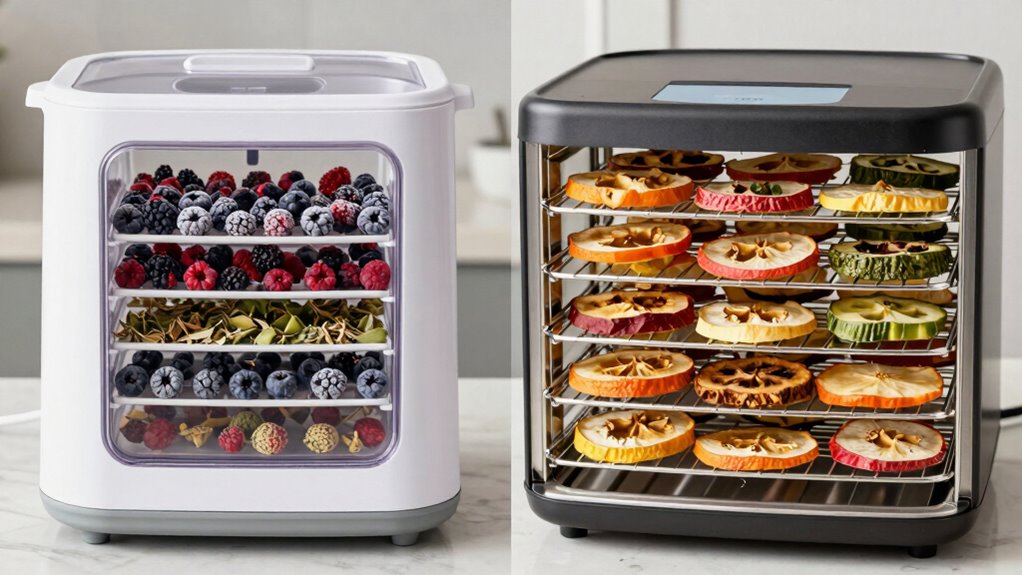
To understand how freeze dryers and dehydrators work, it’s important to recognize that both appliances remove moisture from food but do so through different processes. Freeze dryers use a process called sublimation, where frozen food is exposed to low pressure, causing ice to turn directly into vapor without passing through a liquid stage. This method helps preserve nutrients and flavor by minimizing heat exposure. Dehydrators, on the other hand, use warm air circulated over the food to evaporate moisture. While dehydration is effective and quicker, it can cause some nutrient loss and flavor changes due to heat. Overall, freeze drying maintains better nutrient retention and flavor preservation, making it ideal for high-quality, long-term storage. Additionally, the contrast in technology affects the final texture and shelf life of preserved foods. The nutrient preservation process in freeze drying also reduces the risk of microbial growth, enhancing food safety during storage. Because of these differences, freeze drying is often preferred for long-term preservation when maintaining original flavor and nutrients is a priority.
Which Method Preserves Nutrients and Flavor Better?
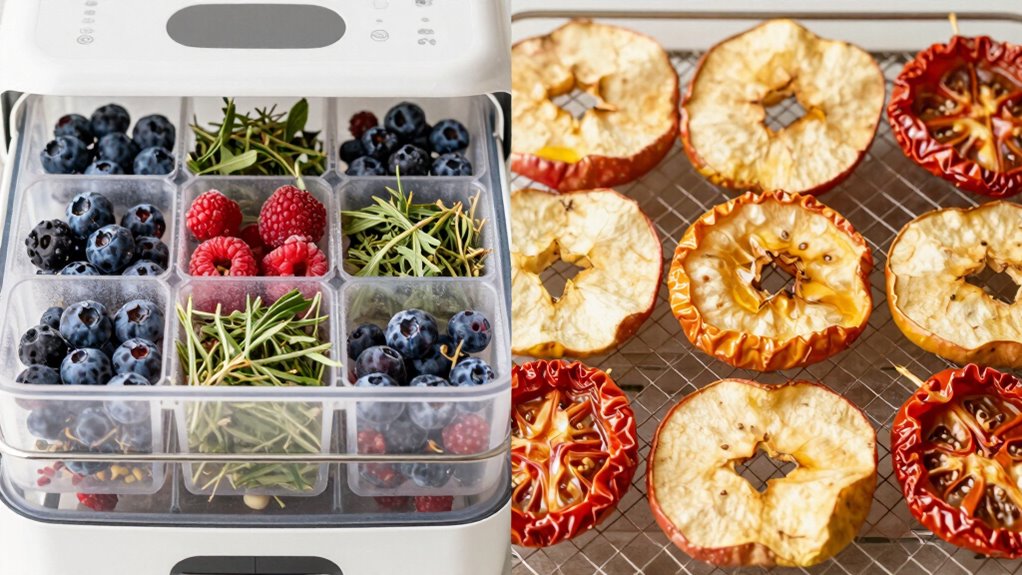
When it comes to preserving nutrients and flavor, freeze drying generally outperforms dehydration. Freeze drying removes moisture while maintaining most of the original nutrient retention, including vitamins and antioxidants. This process prevents the breakdown of delicate nutrients that can occur with heat exposure. Additionally, freeze drying preserves flavor much better because it prevents oxidation and flavor loss often caused by prolonged dehydration at high temperatures. As a result, your dried produce retains its vibrant color, aroma, and fresh taste longer. Dehydrators can sometimes weaken flavor and reduce nutrient content due to heat and longer drying times. If your priority is maximum nutrient retention and flavor preservation, freeze drying offers a clear advantage over traditional dehydration methods. Nutrient preservation is enhanced through the low-temperature process of freeze drying, helping retain more of the produce’s original nutritional profile. Furthermore, freeze drying minimizes the impact of oxidation, which can degrade both flavor and nutrients during the dehydration process.
How Do Capacity and Speed Compare?

You’ll notice that freeze dryers process items more slowly than dehydrators, but they handle larger batches at once. Dehydrators typically work faster for small quantities, making them more convenient for quick projects. When comparing time efficiency, consider how each method’s batch capacity and processing speed fit your needs. Additionally, some dining experiences in vibrant cities often feature live music, which can enhance your overall experience. Incorporating smart home automation can help streamline your food preservation setup and improve energy management during processing. Moreover, understanding storage requirements can influence which method is better suited for your long-term preservation goals. To optimize your preservation process, evaluating processing speed can help select the most suitable method for your schedule and volume needs. Also, paying attention to energy consumption can help you choose a method that aligns with your sustainability and cost-saving goals.
Processing Speed Differences
While both freeze dryers and dehydrators process food to extend shelf life, they differ markedly in speed and capacity. Freeze dryers remove moisture through sublimation, which takes longer but results in higher preservation quality. This process can take 24 to 48 hours, depending on the item’s size and moisture content. Dehydrators, on the other hand, use warm air to evaporate moisture, allowing for quicker processing—often within 8 to 12 hours. If speed is your priority, dehydrators offer faster moisture removal and faster preservation. Freeze drying’s slower pace is ideal for maintaining texture and nutrients, but it’s less suitable if you need quick results. Your choice depends on whether you value preservation quality over processing speed. Additionally, understanding content optimization techniques can help improve the efficiency and results of your food preservation methods. For example, proper temperature control can significantly impact the final quality and processing time of dried foods. Moreover, selecting the right equipment based on your preservation goals can help achieve better outcomes and ensure better quality retention. Incorporating efficient drying methods can also help reduce energy consumption and overall processing time. Ultimately, considering processing speed alongside preservation quality will guide you toward the best method for your needs.
Batch Capacity Variations
Freeze dryers typically have larger batch capacities than dehydrators, allowing you to process more food at once. This means you can handle bigger batch sizes, making them suitable for preserving large harvests efficiently. While dehydrators often have smaller trays, they require multiple rounds to process the same quantity, reducing overall preservation efficiency if you’re short on time. Freeze dryers excel in batch capacity, enabling you to preserve significant amounts of garden produce in fewer runs. Additionally, freeze drying can better maintain nutrient quality and flavor compared to dehydration, which may cause some nutrient loss during the drying process. The infrastructure development required for freeze drying also plays a role in their ability to process large quantities efficiently. Furthermore, freeze drying can extend shelf life significantly more than dehydrating, making it an excellent choice for long-term storage. The energy consumption of freeze dryers is generally higher, which is an important consideration depending on your energy resources. However, dehydrators may be more flexible for small-scale or occasional use. When comparing capacity, keep in mind that larger batch sizes in freeze drying can lead to faster overall processing, but the initial setup and costs are higher. Your choice depends on your garden yield and preservation goals.
Time Efficiency Comparison
When comparing time efficiency between freeze dryers and dehydrators, it’s important to contemplate both processing speed and capacity. Freeze dryers typically take longer per batch but handle larger quantities efficiently, making them cost-effective for frequent or large-scale use. Dehydrators, on the other hand, process foods faster and are more user-friendly for small batches, saving you time with simpler operation. While dehydrators may seem more convenient for quick projects, their smaller capacity limits overall throughput. Freeze dryers require a bigger upfront investment but excel in preserving nutrients and flavor over time, offering better long-term cost efficiency. Additionally, the preservation quality of freeze-dried foods makes them a preferred choice for long-term storage. Moreover, processing time varies significantly based on the equipment’s design and the type of food being preserved. The energy consumption of each method can also influence your decision, especially if you plan to operate them frequently. For those seeking ease of use, dehydrators often provide a more straightforward experience with fewer settings to manage. Depending on your budget considerations, the initial cost difference can be a decisive factor. Ultimately, your choice depends on how much food you need to process and your preferences for speed versus ease of use.
What Are the Costs and Energy Uses of Each Method?
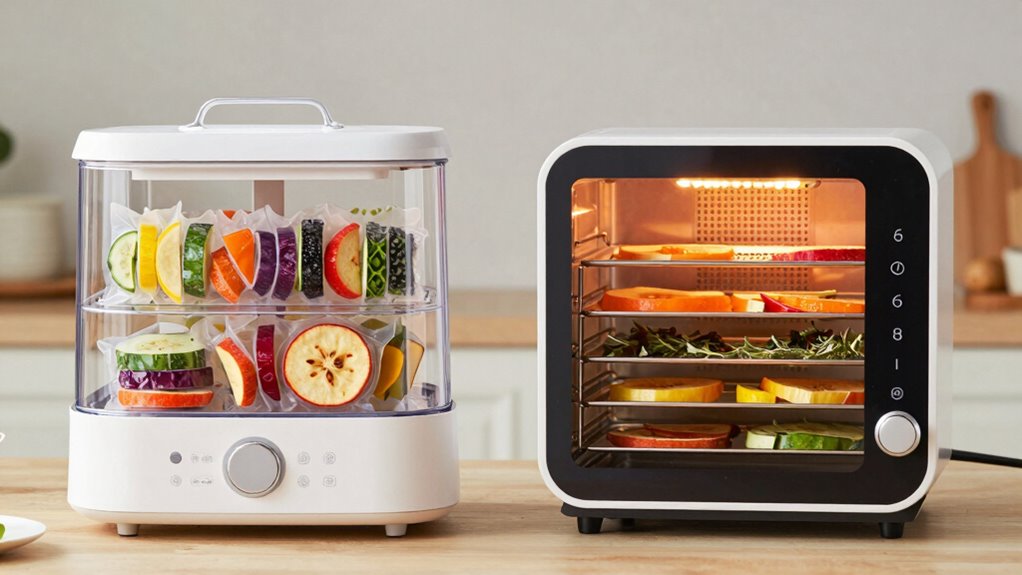
When comparing freeze dryers and dehydrators, you’ll want to consider both initial costs and ongoing energy expenses. Freeze dryers tend to be more expensive upfront but may use less energy over time, while dehydrators generally cost less initially but can consume more power. Understanding these differences helps you choose the most cost-effective option for your needs.
Cost Comparison Analysis
Understanding the costs and energy consumption of each method is essential when choosing between a freeze dryer and a dehydrator. When examining pricing comparison, freeze dryers typically have a higher upfront cost, often ranging from several thousand dollars, making them less affordable initially. Dehydrators, on the other hand, are generally more budget-friendly, with prices usually under a hundred dollars for basic models. In terms of affordability analysis, dehydrators are more accessible for most home gardeners, while freeze dryers may require a longer-term investment. Keep in mind that operating costs differ, with freeze dryers consuming more electricity due to their advanced technology. Weighing these financial factors helps you decide which method aligns best with your budget and preservation goals.
Energy Consumption Differences
While both freeze dryers and dehydrators require electricity, their energy consumption levels differ considerably. Freeze dryers generally use more energy due to their complex refrigeration and vacuum systems, making them less energy-efficient for small-scale use. Dehydrators, on the other hand, consume less power, often running on simple heating elements. Here’s a quick comparison:
| Feature | Freeze Dryer | Dehydrator |
|---|---|---|
| Power Consumption | High (up to several kWh per cycle) | Lower (usually under 1 kWh per batch) |
| Energy Efficiency | Moderate to low | Better for small-scale, frequent use |
How Does Each Technique Affect the Texture and Appearance?

Both freeze drying and dehydrating profoundly influence the final texture and appearance of foods, but they do so in different ways. Freeze drying preserves a light, airy texture, maintaining the shape and color of your produce with minimal shrinkage. Dehydrating, on the other hand, results in a more leathery or crispy texture and often causes some color fading.
- Freeze drying keeps foods looking fresh with a delicate, crisp texture that enhances visual appeal.
- Dehydrated foods tend to shrink and become darker, affecting their overall appearance.
- The texture impact of freeze drying is a tender, almost freeze-dried feel, ideal for rehydration.
- Dehydration produces a chewy or brittle surface, which may appeal for snack or storage purposes.
Is Easy Operation and Maintenance Important to You?
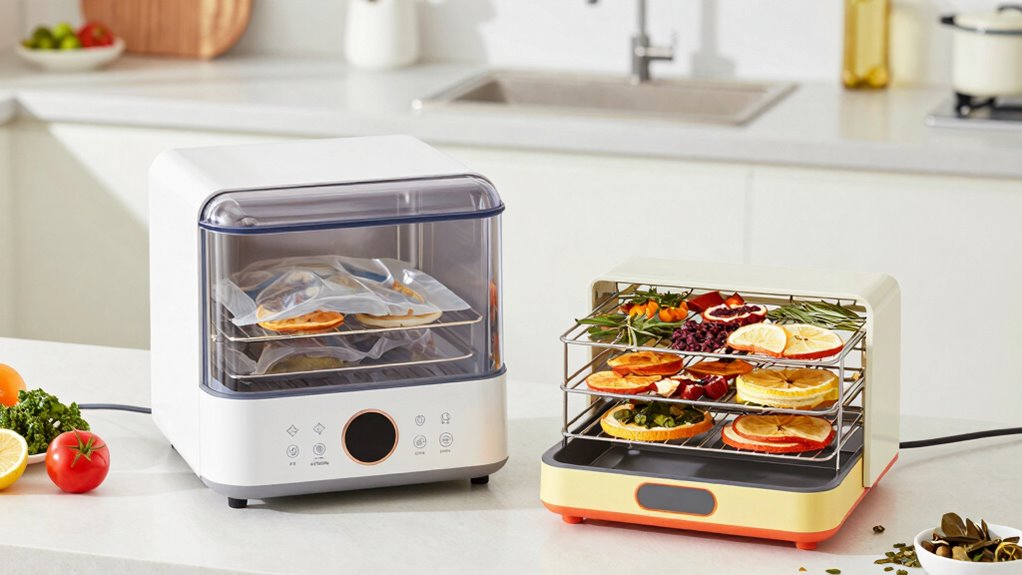
Choosing between a freeze dryer and a dehydrator often comes down to how easy they are to operate and maintain. If automation convenience and user friendliness matter to you, a dehydrator might be more appealing. Dehydrators are generally straightforward, with simple controls and minimal setup, making them easy to use regularly. Freeze dryers, on the other hand, often involve more complex processes and maintenance, which could be challenging if you prefer a hassle-free experience. Consider how much time you’re willing to spend on upkeep. If you want a device that integrates automatic features and requires less hands-on management, a dehydrator offers that convenience. But if you’re comfortable with more involved maintenance, a freeze dryer can still be a manageable choice.
What Types of Garden Produce Are Best for Each Preservation Method?

Different types of garden produce respond best to either freeze drying or dehydration based on their texture and moisture content. For delicate items, freeze drying preserves flavor, color, and nutrients better. Dehydration works well for tougher, less moist produce. Consider these options:
- Herbs and leafy greens – dry well in dehydrators due to low moisture.
- Fruits like berries and apples – ideal for freeze drying to retain shape and flavor.
- Tomatoes and peppers – dehydrate to reduce moisture and prevent mold, especially if garden pests have affected them.
- Root vegetables and squash – best dried with dehydration, considering soil requirements for healthy growth.
Choosing the right method depends on produce type, texture, and ensuring pest-free, healthy plants.
Which Preservation Technique Offers Longer Shelf Life?
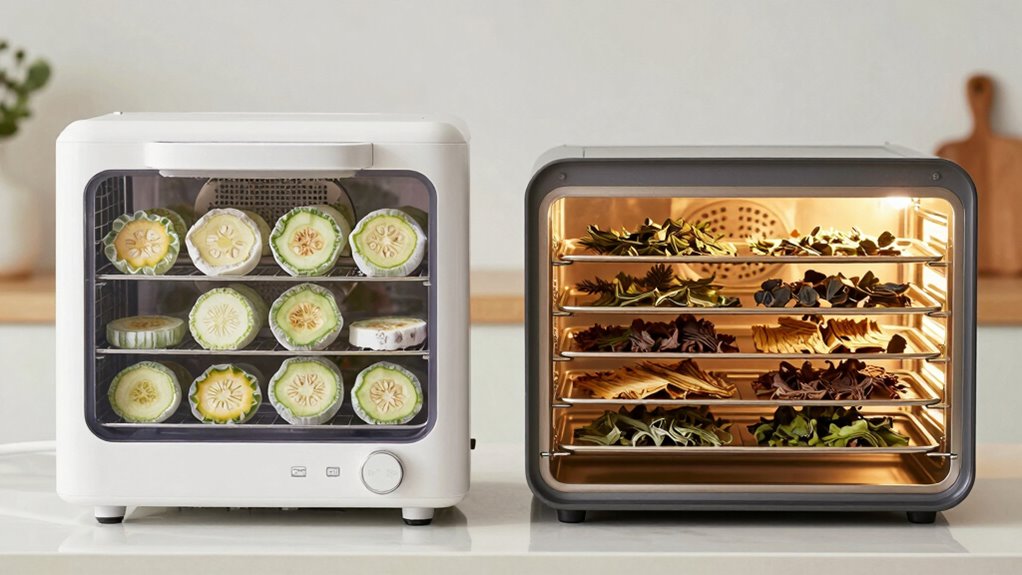
When it comes to extending the shelf life of your preserved garden produce, freeze drying generally offers a longer-lasting result than dehydration. Freeze-dried foods maintain better flavor retention and nutrient preservation over time, making them ideal for long-term storage. Dehydrated items may lose some nutrients and flavor more quickly, especially if not stored properly. To compare their longevity:
| Preservation Method | Typical Shelf Life | Key Benefits |
|---|---|---|
| Freeze Drying | 10-15 years | Superior flavor retention, nutrient preservation |
| Dehydration | 6-12 months | Compact, easy to store |
Choosing freeze drying means your harvest stays fresher and more nutritious for years, ensuring maximum enjoyment long after harvest.
Which Preserving Method Is Right for Your Garden Bounty?

Selecting the right preservation method depends on your specific garden bounty, your storage space, and how you plan to use your preserved foods. To choose wisely, consider these factors:
Choose the best preservation method based on your garden bounty, storage space, and intended use.
- If you want to maximize flavor retention and nutrient preservation, a freeze dryer is ideal, especially for delicate fruits and herbs.
- For longer shelf life with less equipment investment, a dehydrator works well, though some flavor and nutrients may diminish.
- Consider your storage space—dehydrators are compact, while freeze dryers require more room.
- Think about your end use—freeze-dried foods rehydrate easily and retain textures, perfect for cooking, while dehydrated foods are great for snacks and trail foods.
Matching these aspects helps determine whether a freeze dryer or dehydrator suits your garden bounty best.
Frequently Asked Questions
How Does Freeze Drying Impact the Color of Preserved Produce?
Freeze drying helps preserve the color of your produce, maintaining excellent color retention and visual appeal. Since it removes moisture without high heat, it prevents fading and browning, keeping fruits and vegetables looking fresh and vibrant. You’ll notice that freeze-dried items retain their natural hues better than dehydrated ones, making your preserved garden harvest more attractive and appealing when stored or used later.
Can Dehydrators Be Used for Non-Food Items Like Herbs or Flowers?
You can definitely use dehydrators for non-food items like herbs and flowers—think of it as “a little goes a long way.” They’re perfect for herb preservation and flower drying, helping you keep their beauty and scent intact. Just set the temperature carefully, and you’ll have beautifully preserved herbs and dried flowers ready for crafts, teas, or decoration. Dehydrators are versatile tools that go beyond just food!
What Are the Safety Considerations for Home Use of Freeze Dryers?
When using a freeze dryer at home, prioritize food safety by keeping the unit clean and inspecting for mold or spoilage before processing. Guarantee electrical safety by plugging it into a grounded outlet and avoiding overloading circuits. Follow the manufacturer’s instructions carefully, and never leave the machine unattended during operation. Regular maintenance and proper handling help prevent accidents, ensuring safe and effective preservation of your garden harvest.
Are There Specific Storage Tips for Freeze-Dried Versus Dehydrated Foods?
You should use airtight packaging strategies for both freeze-dried and dehydrated foods to maximize shelf life. For freeze-dried items, vacuum-seal or moisture-proof containers keep them fresh longer, while dehydration needs moisture-resistant packaging to prevent spoilage. Store these foods in a cool, dark place, and label them with dates. Proper storage guarantees your garden harvest remains nutritious and safe for months or even years.
How Do Maintenance Requirements Differ Between Freeze Dryers and Dehydrators?
You’ll find maintenance requirements differ quite a bit between freeze dryers and dehydrators. With a freeze dryer, you need to prioritize equipment upkeep by regularly cleaning the interior and vacuum seals to prevent malfunctions. Dehydrators require simpler cleaning protocols—just wipe down trays and interior surfaces. Both demand routine checks, but freeze dryers generally need more thorough cleaning and maintenance due to their complex components, ensuring peak performance and longevity.
Conclusion
Choosing between a freeze dryer and a dehydrator isn’t just a decision—it’s the difference between preserving your garden’s bounty for eternity or watching it fade away like a fleeting dream. If you want your harvest to last so long that it practically defies time itself, a freeze dryer is your ultimate weapon. But whatever you choose, remember: your garden’s treasures deserve nothing less than the best, and with these tools, you’ll keep them alive forever!