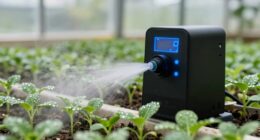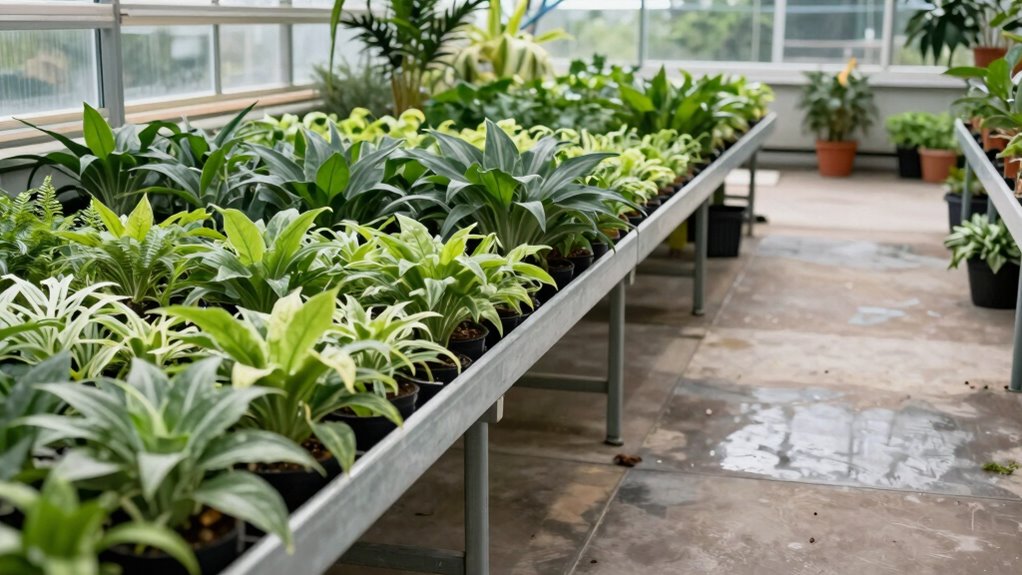

Using greenhouse benches instead of floor growing boosts airflow by elevating plants, reducing stagnant air and humidity buildup, which helps prevent diseases. Benches also make sanitation easier, allowing you to clean beneath and around plants effectively while minimizing soil-borne issues. Pest inspection and treatment become simpler, decreasing reliance on chemicals. If you want to discover how these changes can create a healthier, more manageable greenhouse environment, stay with us to explore more details.
Key Takeaways
- Greenhouse benches elevate plants, enhancing airflow and reducing stagnant air compared to floor growing.
- Elevated benches improve sanitation by enabling easier cleaning underneath and preventing soil-borne diseases.
- Bench systems facilitate better pest inspection and targeted treatments, lowering pest management complexity.
- Floor growing often leads to poorer airflow and sanitation, increasing disease and pest risks.
- Benches support seamless integration with hydroponic systems, promoting healthier crops through improved sanitation and airflow.
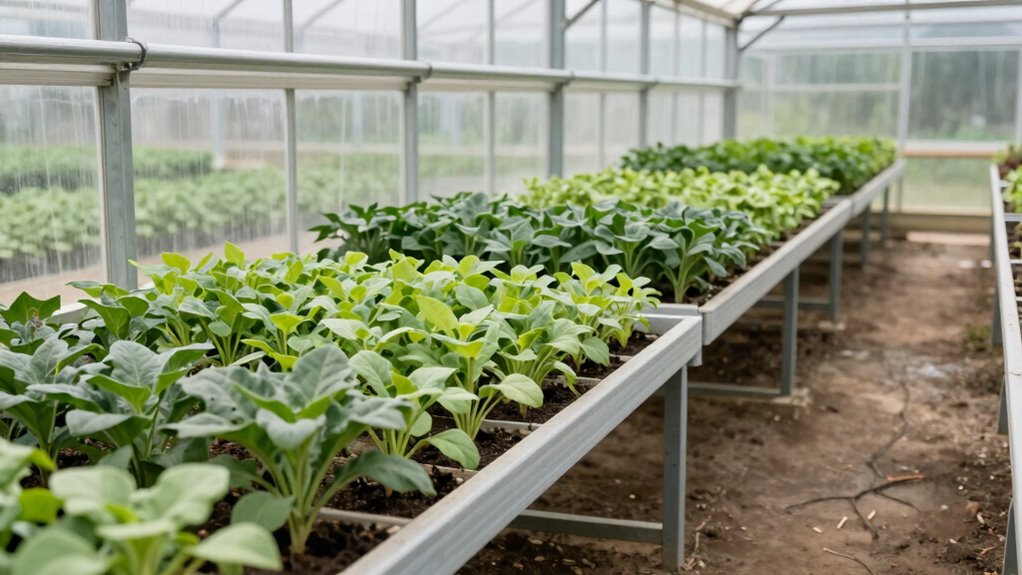
When it comes to optimizing space and increasing efficiency in greenhouse cultivation, choosing between greenhouse benches and floor growing is a critical decision. Your choice impacts not just how plants grow but also how air circulates and how sanitation is maintained. Greenhouse benches elevate plants, creating an organized environment that improves airflow around each crop. This setup allows for better control of temperature and humidity, which is essential for healthy growth. With improved airflow, you reduce the risk of fungal diseases and pests, making pest management more straightforward. Additionally, elevated benches make it easier to monitor plants closely and identify issues early, helping you maintain a cleaner environment overall.
Greenhouse benches improve airflow, enhance plant health, and simplify sanitation and pest management.
In contrast, floor growing involves planting directly on the ground or on a substrate laid over the floor. While this maximizes space utilization, it can complicate airflow. Dense plantings on the floor tend to restrict air movement, creating stagnant pockets that favor the development of pests and diseases. This setup often requires more intensive pest management, including frequent inspections and targeted treatments. If you’re using hydroponic systems, floor growing can pose challenges because water and nutrients can spread contamination more easily across the entire growing area. This makes sanitation more difficult and increases the risk of disease transmission, especially if the system isn’t meticulously maintained. Implementing proper ventilation techniques can help mitigate some of these airflow issues, but they often require additional equipment and maintenance.
Choosing greenhouse benches can significantly improve sanitation practices. Since plants are raised off the ground, you can clean underneath and around them more efficiently, reducing debris accumulation and pest hiding spots. This elevated position also helps prevent soil-borne diseases from infecting your crops. When it comes to pest management, benches give you better access to inspect each plant and apply treatments precisely where needed, minimizing chemical use and promoting a healthier environment. With hydroponic systems, benches streamline the setup, as they’re designed to integrate easily with water and nutrient delivery systems, reducing the chances of contamination and making sanitation routines more manageable. Moreover, the airflow benefits of elevated benches are crucial in maintaining a healthy greenhouse environment. Proper air circulation is essential for preventing the buildup of humidity and reducing the likelihood of disease spread, further emphasizing the advantages of bench systems.
On the other hand, floor growing might seem more straightforward initially, but it demands more vigilant sanitation and pest control measures. You’ll need to implement rigorous cleaning protocols and possibly install barriers to prevent pests from crawling in. The airflow issues associated with floor growing mean you might need additional ventilation or air circulation equipment to mitigate problems. Overall, if your goal is to enhance airflow, streamline pest management, and make sanitation more efficient, greenhouse benches offer clear advantages. They support healthier, more manageable crops, especially when using hydroponic systems, where cleanliness and airflow are vital for success.

Dura-Bench Original Greenhouse Bench Top, 2t x 4ft, Non-Overlap
Durable and Smooth: These panels are made from UV protected, high-impact, abrasion-resistant polypropylene, ensuring long-lasting durability and a…
As an affiliate, we earn on qualifying purchases.
As an affiliate, we earn on qualifying purchases.
Frequently Asked Questions
How Do Greenhouse Benches Impact Humidity Levels Compared to Floor Growing?
Greenhouse benches generally help you better control humidity levels compared to floor growing. They improve air circulation around plants, reducing excess moisture that can lead to mold or disease. By elevating plants, you can manage moisture more effectively, preventing stagnant air and ensuring consistent humidity. This setup makes moisture control easier, helping you maintain a healthier environment for your plants and reducing risks associated with high humidity.
What Are the Cost Differences Between Installing Benches and Floor Growing Setups?
Think of installing greenhouse benches as planting a sturdy seed—initially, the cost comparison reveals higher installation expenses, but they pay off over time. Bench setups usually involve more upfront investment due to materials and installation, whereas floor growing costs are lower initially. However, long-term maintenance and sanitation can influence overall expenses. Ultimately, your choice depends on your budget, space, and how much you prioritize ease of sanitation and airflow improvements.
How Do Benches Affect Pest Control Strategies in Greenhouses?
Benches influence your pest control strategies by making integrated pest management more effective, as you can easily access plants for inspection and treatment. They also simplify bench sanitation, reducing pest habitats and disease spread. With benches, you can implement targeted pest control measures, keep your greenhouse cleaner, and prevent infestations more efficiently. This setup helps you maintain healthier plants and reduces the need for chemical interventions, promoting sustainable growing practices.
Can Benches Be Customized for Specific Crop Types or Sizes?
Yes, you can customize greenhouse benches for specific crop types or sizes. Customization options allow you to tailor the design to suit your needs, whether that means adjusting height, width, or material. Crop-specific design ensures maximum space utilization, improves airflow, and enhances sanitation. By customizing benches, you create a more efficient growing environment, helping your crops thrive while simplifying maintenance and pest control efforts.
What Maintenance Is Required for Greenhouse Benches Versus Floor Growing Areas?
You need to regularly perform cleaning protocols on greenhouse benches to prevent disease buildup and guarantee sanitation. Unlike floor growing areas, benches often require more frequent cleaning due to their material and crop contact. Focus on material durability; choose sturdy, easy-to-clean materials like metal or plastic. Routine maintenance, including disinfecting and inspecting for wear, helps prolong bench lifespan and maintains a healthy growing environment, reducing contamination risks.

Greenhouse Work Bench System Size: 20' W
Size – 8 x 12 ft.
As an affiliate, we earn on qualifying purchases.
As an affiliate, we earn on qualifying purchases.
Conclusion
In the battle between greenhouse benches and floor growing, the choice isn’t just about preference—it’s about transforming your entire cultivation universe. Opt for benches, and watch airflow and sanitation elevate your growing game to celestial heights, making pests and diseases tremble in fear. Floor growing might be traditional, but it’s like trying to tame a wild beast. Embrace the right setup, and you’ll discover a horticultural revolution that will leave your plants thriving in a symphony of perfection!
Dura-Bench Original Greenhouse Bench Top, 2t x 4ft, Non-Overlap
Durable and Smooth: These panels are made from UV protected, high-impact, abrasion-resistant polypropylene, ensuring long-lasting durability and a…
As an affiliate, we earn on qualifying purchases.
As an affiliate, we earn on qualifying purchases.
KONTONTY Plastic Garden Rake for Lawns Heavy-Duty Leaf and Debris Cleaning Tool for Sanitation Agricultural Use Grain Harvesting Greenhouse Snow Removal Easy to Install
Plastic rake rakes–the size is compact, light in weight, easy to use and labor-saving easily clean leaves, pine…
As an affiliate, we earn on qualifying purchases.
As an affiliate, we earn on qualifying purchases.