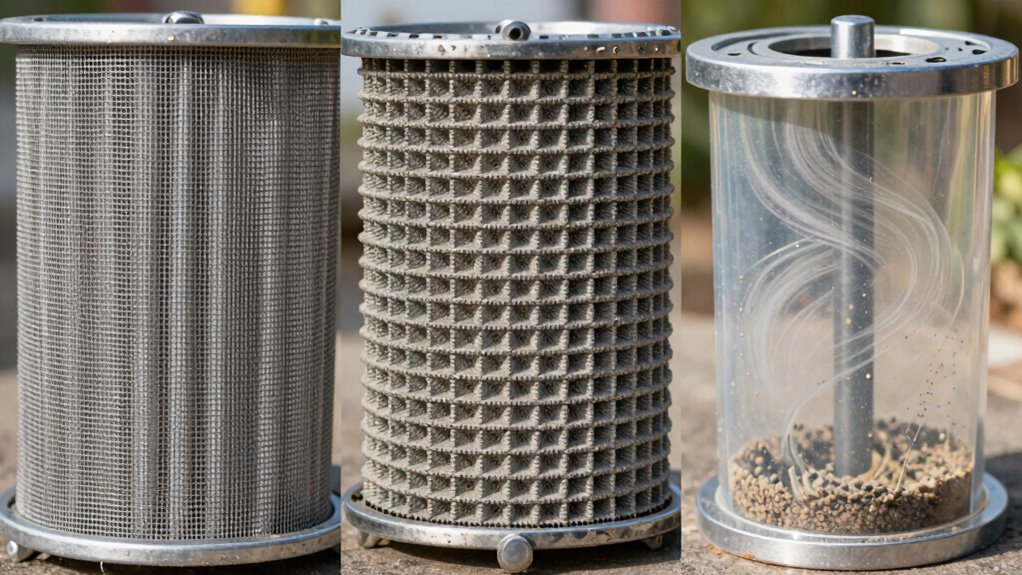
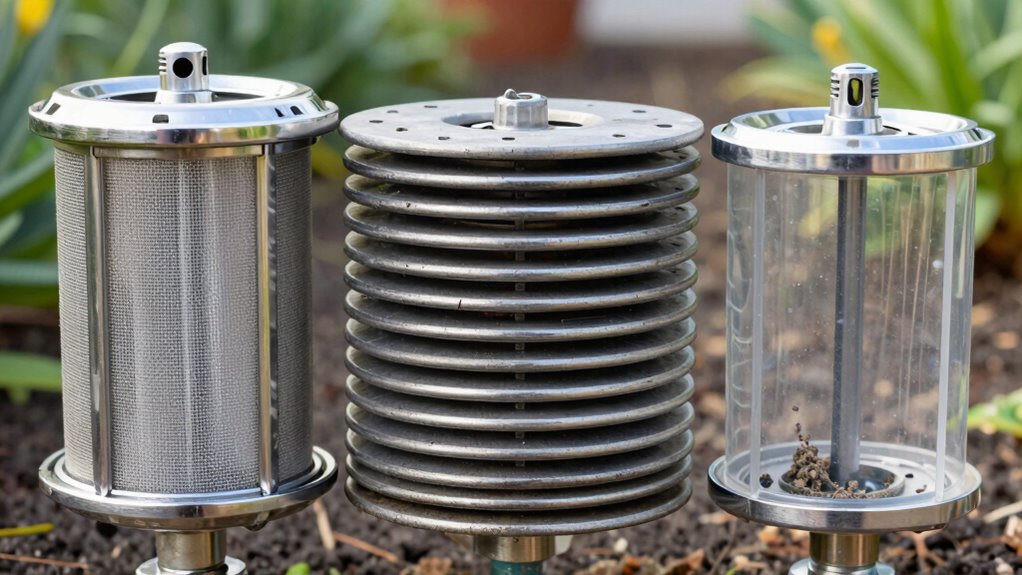
Choosing the right irrigation filter depends on your water quality and system needs. Screen filters are simple and inexpensive, catching large debris but clog quickly, so they need frequent cleaning. Disc filters are durable, with longer life and easy backflushing, ideal for more demanding conditions. Spin-down filters are low-maintenance, great for general use, but less effective against fine particles. Understanding these options helps you select the best filter to prevent clogs—discover more to optimize your system.
Key Takeaways
- Choose filters based on water quality and debris size to prevent clogging and system damage.
- Screen filters are cost-effective for clean water but require frequent cleaning for organic debris.
- Disc filters offer durable, long-lasting filtration with easy backflushing, suitable for moderate to high sediment loads.
- Spin-down filters are low-maintenance and quick to clean, ideal for less contaminated water sources.
- Assess system flow and contaminant types to select the most effective filter, reducing clogging and maintenance needs.

One Stop Outdoor 3/4" Drip Irrigation/Hydroponics Y Filter with 155 Mesh Screen – 3/4" FHT X 3/4" MHT Hose Thread Connections (3/4" Filter)
All-purpose screen filters for use in drip irrigation or micro sprinkler systems
As an affiliate, we earn on qualifying purchases.
As an affiliate, we earn on qualifying purchases.
Why Proper Filtration Is Essential for Your Irrigation System

Proper filtration is essential because it protects your irrigation system from dirt, debris, and other particles that can clog nozzles and emitters. Water mineralization can cause mineral buildup, reducing flow and damaging components if not filtered out. High filtration efficiency ensures these minerals and particles are removed before reaching your system, maintaining excellent performance. Without proper filtration, mineral deposits can accumulate, leading to blockages and increased maintenance costs. Choosing the right filter improves water quality and prevents clogging caused by impurities. Effective filtration keeps your system running smoothly, extending its lifespan and reducing water waste. By prioritizing filtration, you safeguard your investment and ensure your irrigation system functions reliably, regardless of water mineralization levels or contaminant presence. Filtration efficiency is crucial for ensuring consistent water flow and system longevity. Additionally, selecting filters with appropriate filter media can enhance their ability to capture specific contaminants, further protecting your system. Proper cleaning and maintenance of filters also play a significant role in maintaining overall system performance and preventing unexpected failures. Regularly checking and replacing filters helps maintain filter effectiveness and prevents unexpected system downtime.
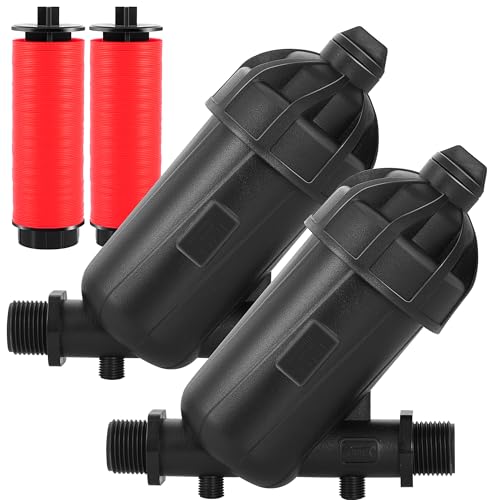
2 PCS US Standard 3/4" Drip Irrigation Disc Y Filter 120 Mesh 130 Micron USA Garden Hose 3/4 Inch GHT Male Thread Inline Irrigation Water Disc Filter Drip Irrigation Filter for Garden
【Pcakage Included】You will get 2 drip irrigation inline disc Y filters. The drip irrigation disc filter fits for…
As an affiliate, we earn on qualifying purchases.
As an affiliate, we earn on qualifying purchases.
How to Assess Your Water Quality and System Needs
To determine your irrigation system’s needs, start by testing your water quality to identify contaminants and understand its composition. Next, assess your system’s capacity to handle the volume and type of water you’ll be using. Additionally, evaluating the presence of airborne particles in your water can help prevent clogging and improve filtration performance. You may also want to consider the natural filtration options available to enhance water quality without relying solely on mechanical filters. Understanding water chemistry is crucial for selecting appropriate filtration solutions. Analyzing filtration requirements can help ensure you choose the most effective system for your specific water conditions. Finally, pinpoint specific contaminants that could affect your plants or equipment, so you can choose the right filtration solutions. Be sure to consider potential infection risks from contaminated water sources to ensure the health of your system and plants.
Water Quality Testing
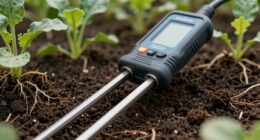
Ever wondered how to determine if your irrigation water is suitable for your plants? The first step is testing your water quality. Focus on pH balance, which affects nutrient availability and plant health; ideally, it should be between 6.0 and 7.5. Also, check the mineral content, including salts and other dissolved solids, because high levels can cause clogging and damage to equipment. You can use simple water testing kits or send samples to a lab for detailed analysis. Understanding these factors helps you choose the right filtration system and avoid future problems. Regular testing ensures your water remains within beneficial ranges, maintaining healthy plants and protecting your irrigation system from unnecessary clogging or damage. Additionally, being aware of water quality standards can guide you in maintaining optimal system performance. To further ensure system longevity, consider implementing preventative maintenance practices based on your water test results.
System Capacity Assessment
Evaluating your system capacity is essential to guarantee your irrigation setup meets your water needs without overloading or underperforming. To do this, you must assess your water flow and ensure your system can handle the volume efficiently. Start by measuring your water flow rate, typically in gallons per minute (GPM). Then, compare it to the demands of your irrigation zones to prevent clogging or insufficient coverage. Use this table to guide your assessment:
| Water Flow (GPM) | System Capacity Needs |
|---|---|
| Less than 10 | Small garden, drip systems |
| 10-20 | Medium yard, multiple zones |
| 20-30 | Large yard, high flow needs |
| 30-50 | Commercial or extensive areas |
| Over 50 | Heavy-duty systems |
This helps you match your water flow to your system’s capacity, ensuring peak performance.
Contaminant Identification
Understanding your system’s capacity helps identify whether your water source is suitable for your irrigation needs. To do this, you need to assess the contaminant types present in your water. Start by identifying particle size, as it determines which filter type is most effective. Fine particles, like silt or clay, require finer filtration, while larger debris such as leaves or dirt need coarser screens. Knowing contaminant types—organic matter, minerals, or bacteria—guides your choice of filter, ensuring it captures what could clog your system. Collect a water sample and examine it closely or test it professionally. This helps you determine the appropriate filtration method, avoiding unnecessary clogging and maintaining ideal system performance. Proper contaminant identification is essential for selecting the right filter and ensuring long-term irrigation efficiency.
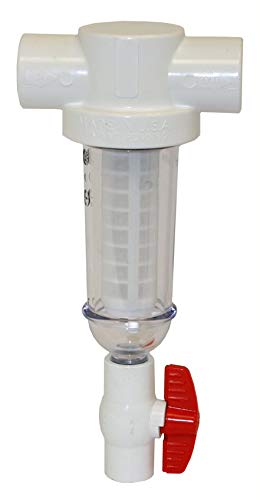
Merrill MFG 1-Inch Spin Down Sediment Water Filter, PVC T-Style with 100 Mesh Screen for Well and Irrigation Filtration
Port size: 1” slip
As an affiliate, we earn on qualifying purchases.
As an affiliate, we earn on qualifying purchases.
Comparing Screen, Disc, and Spin-Down Filters: Features and Suitability

When choosing between screen, disc, and spin-down filters, it’s important to contemplate how much maintenance each one requires and where they work best. Some filters need frequent cleaning, while others are more low-maintenance, making them suitable for different scenarios. Understanding these differences helps you select the right filter for your irrigation system’s needs.
Maintenance Needs Comparison
Choosing the right filter depends heavily on how much maintenance you’re willing to perform. Screen filters typically require frequent cleaning because they catch large debris but can clog quickly, increasing cleaning frequency. You’ll need to perform filter replacement less often, but regular cleaning is essential to prevent clogging. Disc filters are more durable and usually need less frequent cleaning, making them suitable if you prefer lower maintenance. They do, however, require periodic inspection and occasional cleaning to maintain exemplary flow. Spin-down filters are the easiest to maintain—they rely on simple cleaning cycles and often don’t need filter replacement often. Overall, if you want minimal upkeep, spin-down filters are ideal, whereas screens demand more regular attention, especially in dirty water conditions. Additionally, understanding filtration systems can help you select the most suitable option for your irrigation needs.
Best Use Cases
Which filter type best suits your irrigation needs depends on the specific conditions and maintenance preferences you have. Consider these use cases:
- If you need quick filter installation and easy filter replacement for frequent cleaning, a screen filter is ideal, especially for fine debris.
- For systems with variable flow rates and larger particles, disc filters offer durability and straightforward filter replacement without complex maintenance.
- When working with high sediment loads or irregular water sources, spin-down filters excel, as they require minimal filter installation and can be easily cleaned by flushing, reducing downtime.
Each filter type caters to different scenarios, so evaluate your water quality and maintenance capacity to choose the best fit. Properly matching your needs ensures ideal system performance and reduces clogging issues.
One Stop Outdoor 3/4" Drip Irrigation/Hydroponics Y Filter with 155 Mesh Screen – 3/4" FHT X 3/4" MHT Hose Thread Connections (3/4" Filter)
All-purpose screen filters for use in drip irrigation or micro sprinkler systems
As an affiliate, we earn on qualifying purchases.
As an affiliate, we earn on qualifying purchases.
Are Screen Filters Right for Your Irrigation Setup?

Are screen filters a good fit for your irrigation system? Many believe filtration myths, thinking all filters are equally effective or expensive. Screen filters are generally affordable and simple to maintain, making them appealing for small or residential setups. However, their small pore size can clog quickly if your water source contains debris or organic matter, leading to frequent cleaning. Cost considerations also come into play: while initial costs are low, ongoing maintenance could increase expenses if frequent cleaning is needed. If you have a consistent, clean water source, screen filters work well. But if your water contains larger particles or organic debris, they might clog too fast, making other filter types a better choice. Assess your water quality and maintenance capacity before deciding. Additionally, understanding the filtration process can help you select the most suitable filter for your needs.
What Are the Pros and Cons of Disc Filters?

Disc filters offer a reliable option for irrigation systems by providing effective debris removal with minimal maintenance. Their filter lifespan can be impressive, often lasting longer than other types if properly maintained. However, installation challenges can arise, especially if space is limited or plumbing connections are complex. When considering disc filters, imagine:
- A sturdy, compact unit fitting neatly into tight spaces.
- Clean, clog-free water flowing smoothly through your system.
- Regular backflushing keeping debris out without much effort.
- Ease of use makes disc filters a popular choice among users seeking durability and straightforward operation.
While these filters excel in durability and ease of use, the initial setup might require careful planning to avoid delays. Proper installation ensures you maximize filter lifespan and reduce downtime. Additionally, understanding the filter maintenance requirements can help extend the life of your system and prevent unexpected failures. Overall, disc filters are a durable, low-maintenance choice—with some challenges during installation to keep in mind.
Should You Use Spin-Down Filters? Benefits and Limitations

Spin-down filters can be an effective choice for irrigation systems because they’re simple to maintain and provide reliable debris removal. Their main advantage is clog prevention, as they trap larger particles before reaching your system. You’ll appreciate their low maintenance needs and straightforward cleaning process. Regular filter maintenance can help ensure optimal performance and extend the lifespan of your system. Proper filter inspection can further prevent unexpected failures and improve overall system efficiency. However, spin-down filters have limitations—they might not capture fine debris, which can still cause clogs downstream. Consider the table below to weigh the benefits and drawbacks:
| Spin-Down Advantages | Limitations |
|---|---|
| Easy to clean | Less effective against fine particles |
| Low maintenance | Requires regular flushing |
| Reliable debris removal | Not suitable for highly contaminated water |
| Cost-effective | Potential for wear over time |
| Clog prevention | May need supplemental filtration |
Additionally, sound healing science suggests that incorporating regular maintenance of your filters can promote a healthier irrigation system and overall plant health.
How to Choose the Best Filter to Prevent Clogs and Keep Your System Running Smoothly

Choosing the right filter is key to preventing clogs and maintaining a smooth-running irrigation system. To do this effectively, consider filtration efficiency, which determines how well the filter removes debris, and cost considerations, ensuring affordability without sacrificing performance. Picture these options:
- A fine mesh screen capturing tiny particles before they reach your emitters.
- A disc filter that balances debris removal with ease of cleaning.
- A spin-down filter that offers quick maintenance and reliable filtration.
Assess your water source’s quality and debris levels to select the most suitable option. For high sediment water, prioritize filtration efficiency. For budget-conscious setups, consider cost-effective options that require minimal maintenance. Making the right choice keeps your system flowing smoothly and clog-free.
Frequently Asked Questions
How Often Should I Clean or Replace My Irrigation Filter?
You should clean your irrigation filter at least once every month during regular watering, or more often if you notice reduced water flow. Follow a consistent cleaning schedule to prevent clogging and guarantee proper operation. Replace the filter if it shows signs of damage or wear, typically every 1-2 years. Regular maintenance helps maintain ideal water flow and keeps your irrigation system running smoothly.
Can Filters Be Used With Chemical Treatments or Fertilizers?
Think of your filters as gatekeepers, ensuring smooth fertilizer filtration and chemical compatibility. Yes, you can use filters with chemical treatments or fertilizers, but choose ones designed for that purpose—like spin-down or specialized screens—since some may clog or degrade with certain chemicals. Always verify the filter’s specifications to prevent clogging or damage, ensuring your irrigation system remains efficient and protected during fertilizer or chemical applications.
What Is the Typical Lifespan of Each Filter Type?
You can expect the typical lifespan of your irrigation filters to vary based on their durability and your water quality. Screen filters generally last 1 to 3 years with proper maintenance, while disc filters often need replacement every 1 to 2 years. Spin-down filters tend to last around 2 to 4 years, depending on usage and clogging frequency. Regular inspections and cleaning help extend these replacement intervals and keep your system running smoothly.
Are There Any Maintenance Tips for Extending Filter Life?
Wondering how to extend your filter’s lifespan? Stay ahead by setting a regular filter cleaning schedule—depending on your water quality, check it weekly or biweekly. Keep an eye on signs of clogging and clean the screen, disc, or spin-down filter promptly. Using filter lifespan tips like gentle cleaning and avoiding harsh chemicals can prevent damage, ensuring your irrigation system runs smoothly longer and saves you money in the long run.
How Do I Troubleshoot Common Filter Clogging Issues?
To troubleshoot common filter clogging issues, first check the filter material for debris buildup. Clean or replace it if necessary. Confirm the filter is correctly installed and not damaged. Regularly inspect for clog prevention by removing trapped particles and preventing dirt from entering the system. Consider upgrading to a more suitable filter type if clogging persists, and always follow manufacturer guidelines for maintenance to keep your irrigation system running smoothly.
Conclusion
Choosing the right filter can drastically reduce your system’s clogging issues—did you know that improper filtration causes up to 70% of irrigation failures? By understanding your water quality and system needs, you can select the best filter type—screen, disc, or spin-down—that keeps debris out and guarantees reliable operation. Invest in the right filtration now, and enjoy fewer repairs, healthier plants, and a more efficient irrigation system for years to come.