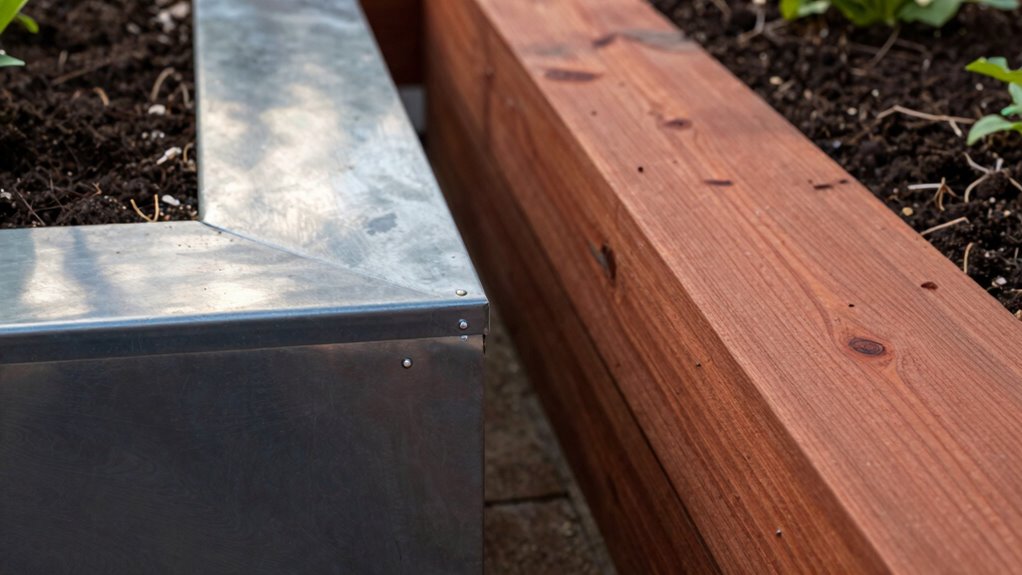

Metal raised beds heat up soil faster because metal conducts heat efficiently, quickly warming the ground for early plant growth. Cedar, on the other hand, warms more slowly but retains heat longer, providing steady temperature regulation. If you want quicker soil warming to start planting early, metal is your best bet. Curious how this impacts your garden’s success? Keep exploring to discover tips for maximizing soil warmth with different materials.
Key Takeaways
- Metal has high thermal conductivity, enabling it to heat up soil faster than cedar.
- Cedar warms more slowly due to its dense, fibrous structure and low thermal conductivity.
- Metal’s rapid heating benefits early planting but can lead to quick cooling after sunset.
- Cedar provides steady, longer-lasting soil warmth, extending the growing season.
- Material choice depends on whether quick soil warming or temperature stability aligns with gardening goals.
Which Raised Bed Material Warms Soil Faster?
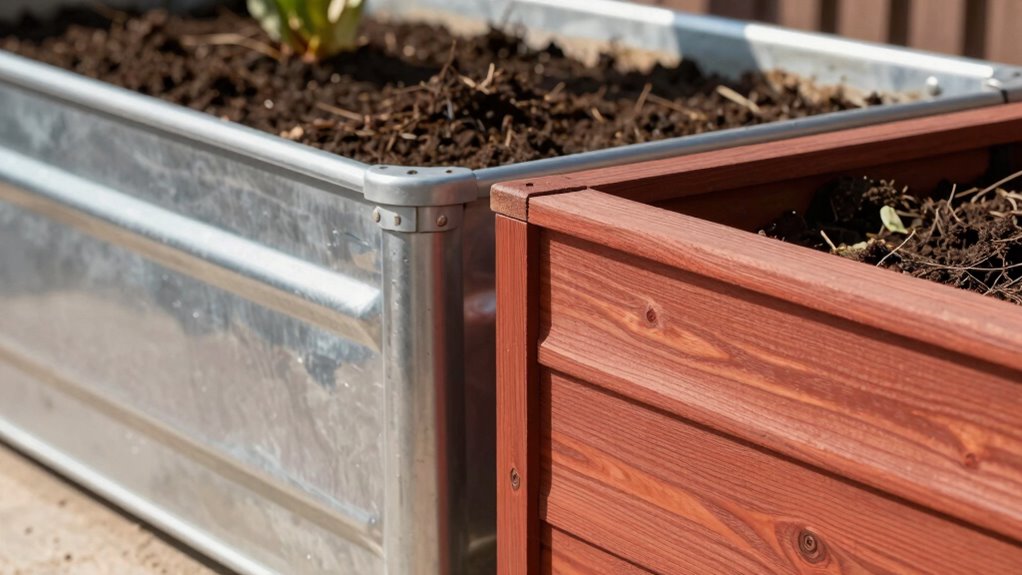
When it comes to warming soil quickly, metal raised beds have a clear advantage over cedar ones. Metal heats up faster in the sun, which helps raise soil temperature earlier in the season. This quick warming can improve soil moisture levels, making it easier for plants to absorb water and nutrients. Additionally, the elevated temperature creates an inhospitable environment for certain pests, aiding in pest control naturally. Unlike cedar, which warms more slowly, metal beds deliver faster soil temperature increases, giving your garden a head start. Just keep in mind that metal can also shed heat quickly at night, so monitoring soil moisture and temperature remains essential. Overall, metal beds optimize soil warmth, moisture, and pest management in a way cedar simply can’t match. Proper sizing and placement of your raised beds can further enhance these benefits for your garden.
Why Metal Heats Up Soil Quickly and What That Means for Your Garden
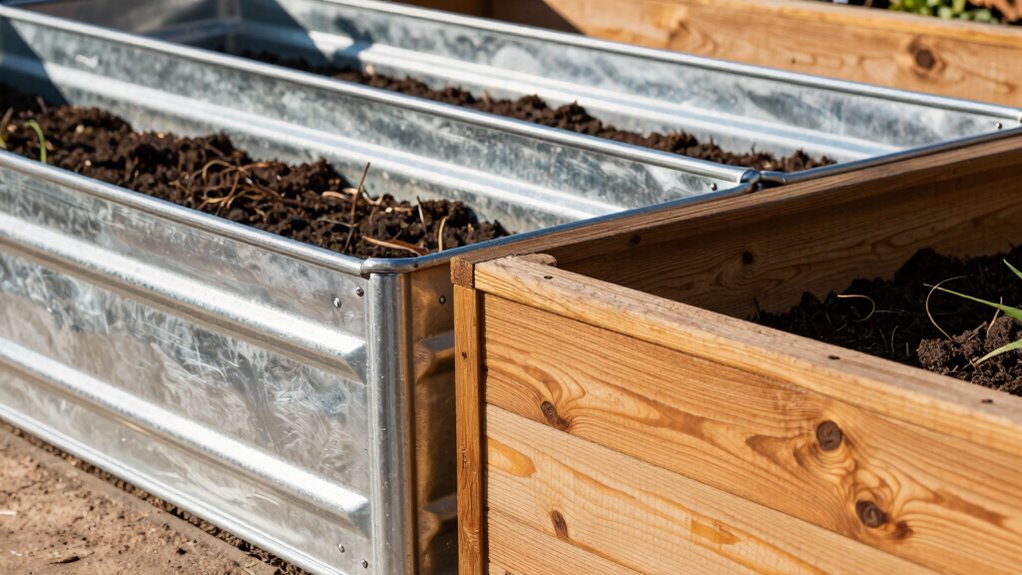
Metal heats up quickly because it has a high thermal conductivity, allowing it to absorb and transfer heat from the sun efficiently. This rapid warming can accelerate soil chemistry processes, promoting faster plant growth and early planting. However, the increased soil temperature may also influence pest resistance, either by deterring certain pests or creating a more favorable environment for others. Because metal heats the soil more intensely, you’ll need to monitor soil conditions closely to prevent overheating or uneven warming. This quick heat transfer can be beneficial in cooler climates, helping your garden get a head start. Additionally, European cloud innovation emphasizes sustainable practices, which can be integrated into modern gardening techniques for eco-friendly solutions. Still, it’s essential to understand how these temperature shifts impact your plants and soil health over time, ensuring you create a balanced growing environment. Understanding the market dynamics of different raised bed materials can help you make better choices for your gardening needs. Furthermore, considering climate adaptation strategies can optimize your garden’s productivity in fluctuating weather conditions.
A deeper understanding of thermal properties can assist you in selecting the best materials for maintaining optimal soil temperatures.
How Cedar Naturally Insulates and Helps Keep Your Soil Warm

Cedar naturally insulates your soil, helping it stay warmer longer. Its dense, fibrous structure minimizes heat loss and provides steady temperature regulation. This means your plants can thrive even during cooler nights, giving you a longer growing season. Additionally, insulation properties of cedar contribute to more consistent soil temperatures throughout the year. The thermal insulation offered by cedar also reduces the need for additional heating methods in your garden. Understanding material insulating qualities can further optimize your gardening setup for better heat retention, especially when combined with other garden insulation techniques. Recognizing the heat retention capabilities of cedar can help gardeners make more informed choices for year-round plant health.
Natural Insulation Properties
Cedar’s natural composition makes it an excellent insulator, helping to maintain consistent soil temperatures in your raised beds. Its low thermal conductivity means heat doesn’t escape easily, keeping soil warmer longer. Cedar also excels at moisture retention, which contributes to better insulation by maintaining a stable environment around plant roots. This moisture-holding ability prevents rapid temperature fluctuations, ensuring your plants stay cozy even during cooler days. Unlike metal, cedar’s fibrous structure creates natural barriers that slow heat transfer. As a result, your soil stays warmer and more consistent, supporting healthy root development. Additionally, natural insulation properties help to create a more resilient environment for your plants against outdoor temperature fluctuations. The fibrous nature of cedar further enhances its thermal resistance, making it especially effective in varying climate conditions. Its ability to naturally resist decay also ensures long-lasting insulation performance over time.
Temperature Regulation Benefits
Thanks to its natural composition, cedar effectively regulates soil temperature by acting as a built-in insulator. This insulation helps keep your soil warmer during cooler months, promoting healthier root growth. Additionally, cedar’s ability to maintain consistent soil moisture levels prevents the soil from drying out too quickly, which benefits plant health. The insulation also creates a less favorable environment for pests, reducing the risk of infestations that can harm your plants. By maintaining steady temperatures and moisture, cedar raised beds help extend the growing season and improve overall plant resilience. soil temperature regulation can contribute to more efficient nutrient uptake by plants, fostering healthier growth. Moreover, cedar’s natural durability ensures these benefits persist over time without significant deterioration. Its thermal properties further enhance its capacity to insulate the soil effectively, making it a smart choice for gardeners seeking reliable temperature control.
Comparing How Metal and Cedar Retain Heat Over Time
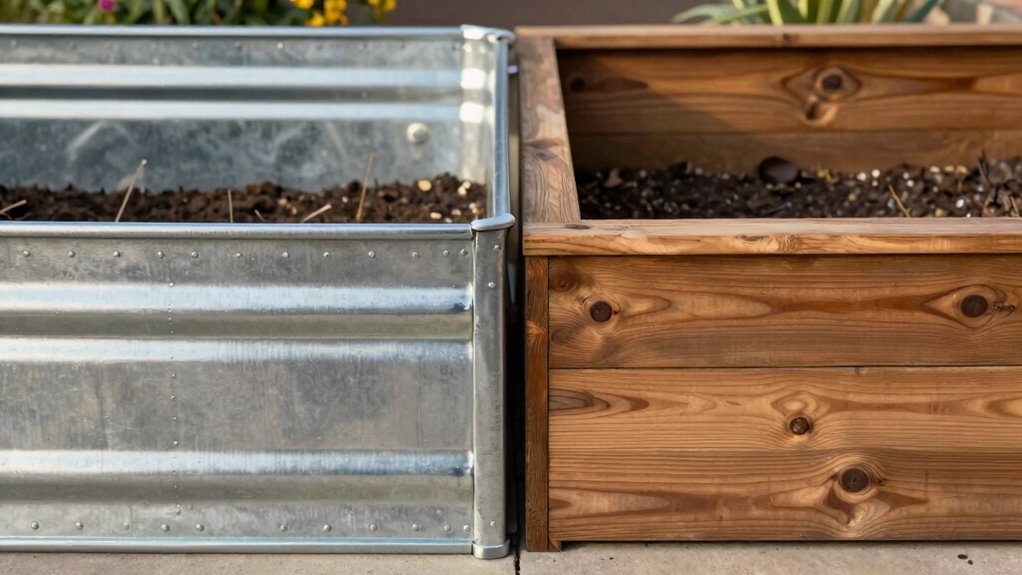
Understanding how metal and cedar retain heat over time is essential for choosing the right material for your raised beds. Metal tends to heat up quickly and hold warmth longer, which can lead to faster soil warming. Cedar, on the other hand, warms gradually and retains heat well, but not as intensely. This difference influences your garden aesthetics and the durability of your setup. Metal beds often add a modern look and are highly durable, resistant to rot and pests. Cedar offers a natural, rustic appearance and ages beautifully, but may require maintenance over time. Material properties also play a crucial role in how each option performs in different climates and seasons. Additionally, the heat retention characteristics of each material can impact plant growth cycles and overall garden productivity. Understanding the thermal conductivity of metal versus cedar can help gardeners optimize soil temperature management for healthier plants. Recognizing the climate adaptability of each material can further enhance your gardening success by selecting the best option for your specific environment. Knowing how material durability affects long-term performance can assist in making a more informed choice suited to your gardening needs.
How Soil Warming Affects Plant Growth and When to Expect Earlier Harvests
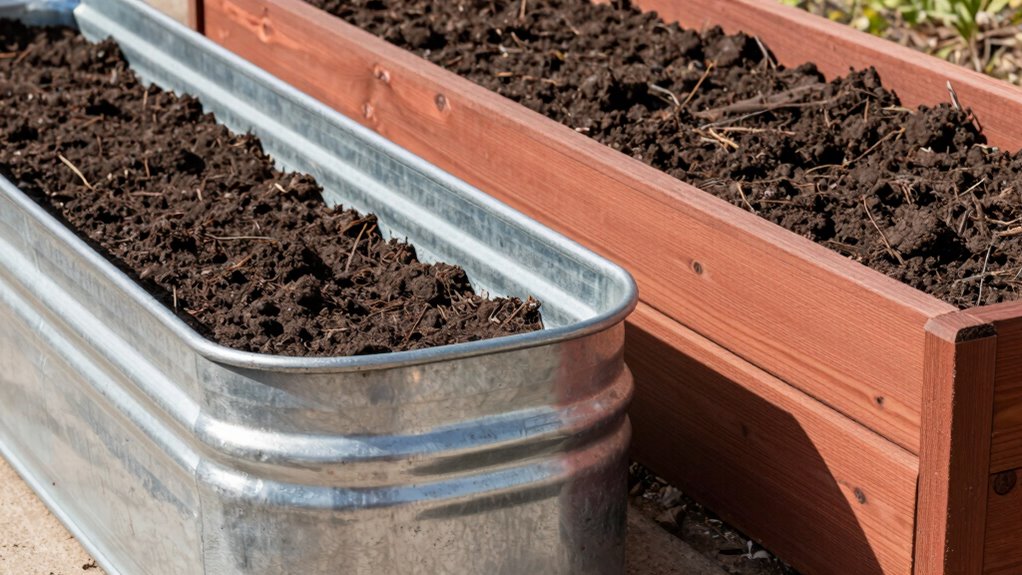
Warm soil is essential for jumpstarting plant growth, and the material of your raised beds plays a significant role in how quickly that warmth develops. When soil warms faster, root development accelerates, allowing plants to establish stronger, healthier roots sooner. This can lead to earlier flowering and harvests. Keep soil moisture balanced, as too much water can cool the soil, while too little can hinder root growth. Metal beds tend to heat up quickly but also cool down faster, impacting plant growth timing. Additionally, understanding soil temperature effects can help gardeners optimize planting schedules and improve crop yields. Recognizing the thermal properties of materials can further assist in selecting the best bed type for your gardening goals. For example, heat retention varies between materials, influencing how long soil stays warm after sunset. Here’s how these materials influence soil warming:
| Material | Soil Temperature Effect |
|---|---|
| Metal | Warms quickly, cools fast |
| Cedar | Warms gradually, retains heat longer |
Tips for Boosting Soil Warmth Regardless of Your Raised Bed Material
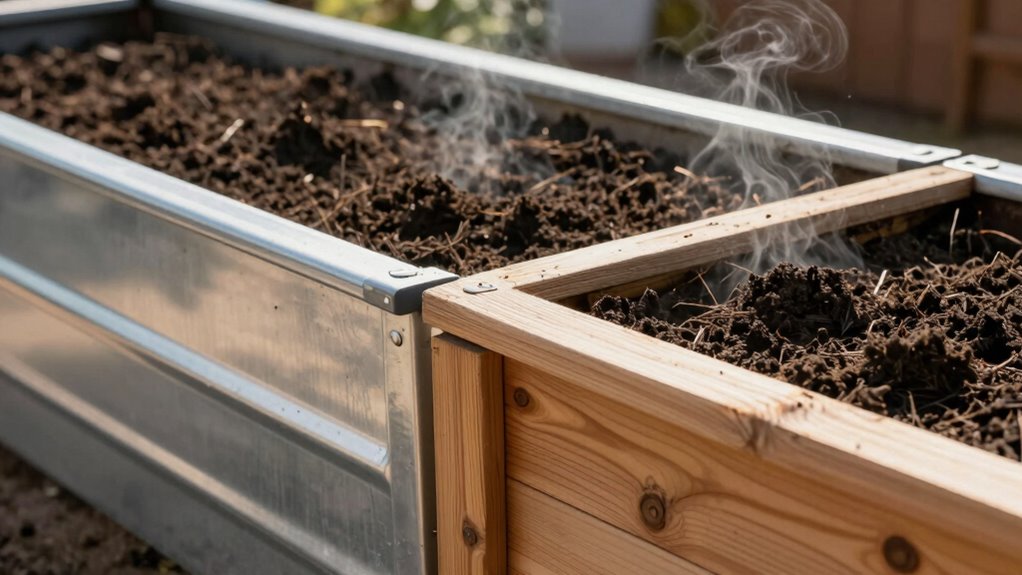
No matter what material your raised beds are made of, there are effective ways to increase soil warmth and give your plants a head start. You can use soil amendments like compost or biochar to improve heat absorption and retention. Implement mulch strategies such as straw, wood chips, or black plastic to trap heat and insulate the soil. Covering your beds with clear plastic or row covers during cooler nights also helps retain warmth. Additionally, adding a layer of organic matter can boost microbial activity, which slightly raises soil temperature. Remember, consistent mulching and soil amendments work together to create a warmer environment for your plants, regardless of whether your beds are metal or cedar. These simple steps can extend your growing season and improve early plant growth.
Which Raised Bed Material Is Best for Your Gardening Goals?
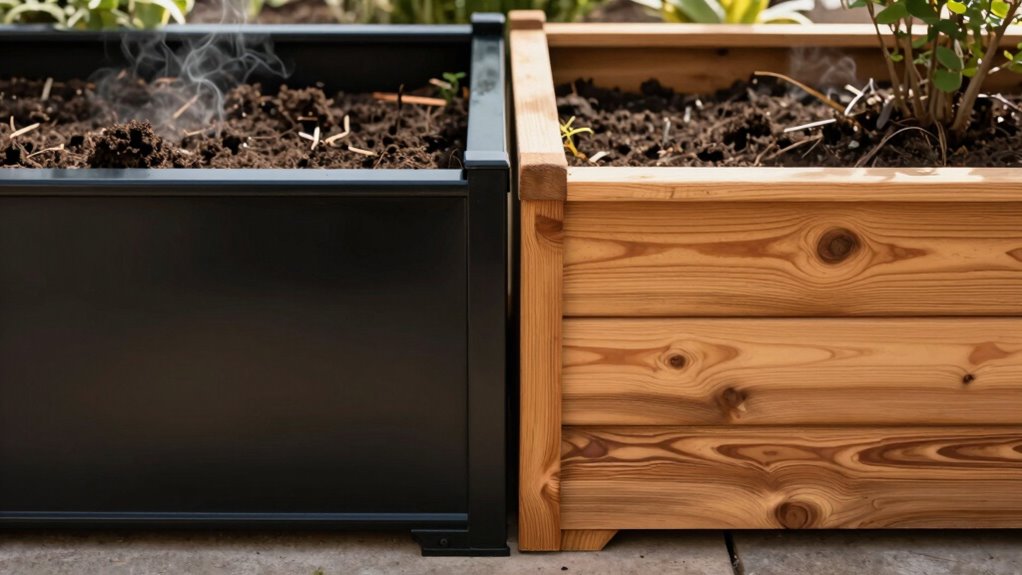
Choosing the right raised bed material depends on your gardening goals, as each option offers distinct advantages. If you want to maximize compost benefits, cedar naturally resists decay and enhances soil health over time. Metal beds, on the other hand, heat up quickly, which can benefit early planting but may require insulation to prevent overheating. For pest control, cedar’s natural oils help deter insects, reducing the need for chemical treatments. Metal beds are durable and low-maintenance but might attract pests like rodents if not properly protected. Consider your priorities—whether it’s faster soil warming, long-term durability, or pest resistance—to select the best material for your garden’s needs. Your choice shapes your gardening success and the health of your plants.
Frequently Asked Questions
How Does Climate Influence the Heating Properties of Raised Bed Materials?
Climate markedly influences how raised bed materials heat up. In warmer climates, metal with high thermal conductivity quickly warms the soil, especially if it has a dark color that absorbs heat. Conversely, in cooler climates, cedar’s lower thermal conductivity keeps the soil cooler longer. Your choice should consider climate conditions, material color, and how quickly you want the soil to heat up, helping your plants thrive.
Can Soil Type Affect How Quickly Beds Warm up Regardless of Material?
Hold onto your bonnet, because soil type really does matter! Your soil composition influences how fast your beds warm up—sandy soils heat quickly, while clay takes longer. Moisture retention also plays a role; wetter soils cool down faster, delaying warming. So, no matter if you choose metal or cedar, understanding your soil’s makeup helps you predict how soon your plants will thrive. Prepare to be amazed!
Do Different Plant Types Benefit From Faster Soil Warming?
Different plant types definitely benefit from faster soil warming, especially those that prefer warm soil for ideal plant growth. Warm soil encourages quicker germination and stronger root development. Keep in mind, soil moisture levels also play a role; too much moisture can slow warming, while well-drained soil helps heat up faster. So, if you want healthy, thriving plants, consider how soil temperature and moisture influence their growth needs.
Are There Environmental Considerations When Choosing Between Metal and Cedar?
Ironically, your choice impacts more than just soil warmth. Metal beds often raise recyclability concerns, as they can be harder to recycle and may contain harmful chemical treatments. Cedar, on the other hand, is naturally rot-resistant and eco-friendly, but may require chemical preservatives that pose environmental risks. So, if going green matters, cedar might be the better choice—just be mindful of any chemical treatments, regardless of material.
How Does Bed Color Impact Soil Temperature in Different Materials?
Your bed’s color considerably impacts soil temperature through heat absorption. Darker colors, like black or deep brown, absorb more heat, warming the soil faster, especially in metal beds that conduct heat efficiently. Lighter colors, such as white or pale shades, reflect sunlight and keep soil cooler. So, choosing a dark-colored bed can help you accelerate soil warming, particularly if you want early planting or faster growth.
Conclusion
If you’re aiming for quicker soil warming, metal raised beds heat up faster, giving your plants an early start. But beware—this rapid heating can lead to quicker soil cooling, so insulation might be needed. Cedar, on the other hand, warms up more slowly but retains heat longer, offering steadier conditions. Ultimately, choose based on your gardening goals—whether you crave early harvests or consistent warmth throughout the season. The truth is, combining materials or adding insulation can optimize your garden’s success.