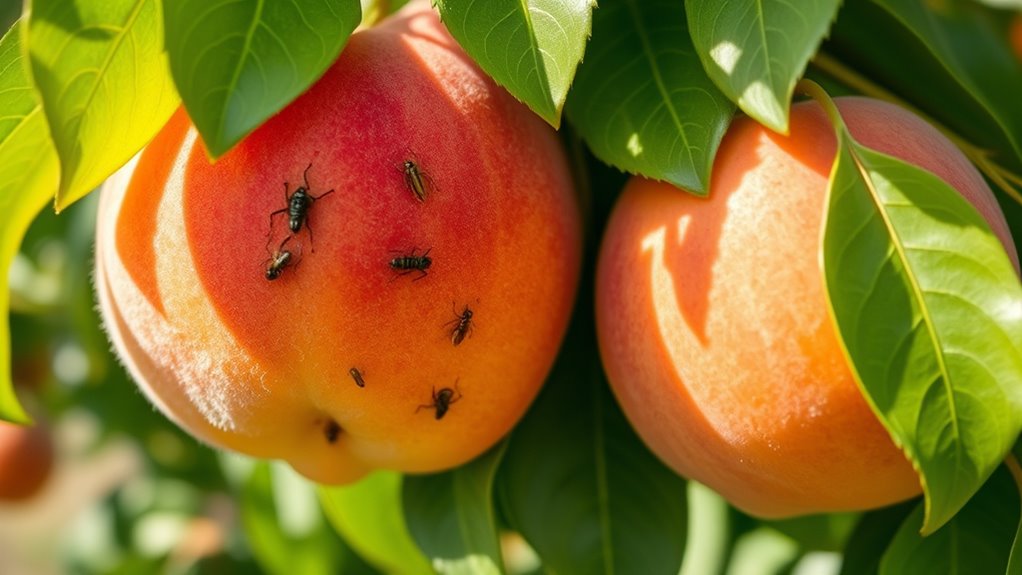

Peaches tend to be more vulnerable to insect pests like borers, aphids, and mites, and are also more prone to fungal diseases such as peach leaf curl and brown rot. Nectarines generally resist pests better and have a lower disease risk, but both benefit from proper management, sanitation, and resistant varieties. If you want to know how to protect your trees effectively and keep pests and diseases at bay, there’s more helpful information to find here.
Key Takeaways
- Peaches are more susceptible to pests like borers, aphids, and mites than nectarines.
- Nectarines generally have lower vulnerability to insect infestations and certain fungal diseases.
- Both fruit types benefit from integrated pest management, including beneficial insects and targeted controls.
- Peaches are more prone to fungal diseases such as peach leaf curl and brown rot, requiring vigilant disease prevention.
- Proper orchard hygiene, resistant varieties, and timely fungicide applications help minimize disease and pest impacts for both.

When comparing peaches and nectarines, many people wonder what sets these two similar fruits apart. One key difference lies in their susceptibility to pests and diseases, which directly impacts how you manage your orchard or backyard trees. Understanding their vulnerabilities can help you implement effective pest management and disease prevention strategies, ensuring healthy fruit production and minimizing crop loss. Peaches tend to be more prone to pest infestations, especially from insects like peach tree borers, aphids, and mites. These pests can quickly damage the tree’s foliage, fruit, and overall health if left unchecked. You need to stay vigilant, regularly inspecting your trees for signs of pest activity. Using integrated pest management (IPM) approaches, such as introducing beneficial insects or applying suitable organic or chemical controls, helps keep pest populations under control. Proper pruning also improves airflow and sunlight penetration, making it less attractive for pests to settle and breed. Additionally, applying dormant oils during winter can smother overwintering pests and eggs, reducing future infestations.
Disease prevention is equally critical. Peaches are more susceptible to fungal diseases like peach leaf curl, brown rot, and bacterial spot. These diseases thrive in humid conditions and can quickly spread if not managed promptly. To prevent such issues, you should choose resistant varieties when planting and practice good sanitation—removing fallen leaves and fruit debris that harbor pathogens. Applying fungicides at key times, such as before bud break or during flowering, can markedly reduce disease occurrence. Proper spacing of trees also enhances air circulation, reducing humidity around the fruit and foliage, which discourages fungal growth. Moreover, selecting disease-resistant varieties can significantly reduce the need for chemical treatments and improve crop success. Proper sanitation and timely treatments are essential to keep your trees healthy and productive.
Frequently Asked Questions
Which Fruit Is More Resistant to Common Pest Infestations?
Nectarines generally have better pest resistance compared to peaches, making them less vulnerable to common pest infestations. You’ll find nectarines often show less disease vulnerability, which means fewer treatments and healthier fruit overall. If you’re looking for a fruit that’s easier to maintain with fewer pest problems, nectarines are your best choice. Their natural pest resistance helps reduce the need for chemical interventions, promoting a more organic and sustainable harvest.
Do Nectarines Require More Chemical Treatments Than Peaches?
Nectarines typically require more chemical treatments than peaches due to their higher susceptibility to pests and diseases. You might find yourself needing to increase chemical treatment frequency to protect nectarines effectively. However, you can opt for organic pest control methods to reduce chemical use, especially if you prefer a more natural approach. Regular monitoring and integrated pest management can help minimize chemical treatments for both fruits.
Are There Specific Diseases That Target Only Peaches or Nectarines?
You’ll find that certain species-specific pathogens prefer peaches or nectarines due to cultivar susceptibility. For example, peach leaf curl mainly targets peaches, while nectarines are more prone to specific fungal issues. These diseases don’t usually cross over, but their presence depends on the cultivar’s genetic makeup. By understanding these nuances, you can better tailor your care and reduce vulnerabilities, ensuring healthier fruit with fewer treatments.
How Does Fruit Maturity Affect Susceptibility to Insects?
You’ll find that the fruit’s maturity stage greatly impacts pest vulnerability. When your fruit is early in its maturity stage, it’s generally less attractive to insects, reducing your risk of infestations. As the fruit ripens, its increased sugar content and softer texture make it more appealing to pests. Monitoring and protecting your fruit during this vulnerable ripeness phase helps minimize insect damage and keeps your harvest healthy.
Can Organic Methods Effectively Manage Insect and Disease Issues?
Organic methods can effectively manage insect and disease issues when you implement organic pest control and natural disease prevention strategies. You should regularly monitor your trees for pests, introduce beneficial insects, and use organic sprays like neem oil or insecticidal soap. Additionally, practicing proper sanitation, crop rotation, and selecting resistant varieties help prevent diseases naturally. Consistency and early intervention are key to maintaining healthy trees using organic methods.
Conclusion
While peaches boast vibrant fuzz and sweet flavor, they’re more vulnerable to insects and diseases, demanding vigilant care. Nectarines, with their smooth skin and resilient nature, often face fewer threats and require less intervention. Imagine a garden where peaches struggle against pests, yet nectarines thrive with minimal fuss. Your choice hinges on your willingness to combat challenges versus enjoying easier maintenance. Ultimately, selecting between them means balancing their alluring qualities against the effort each demands.