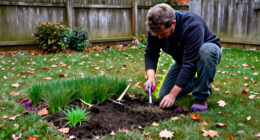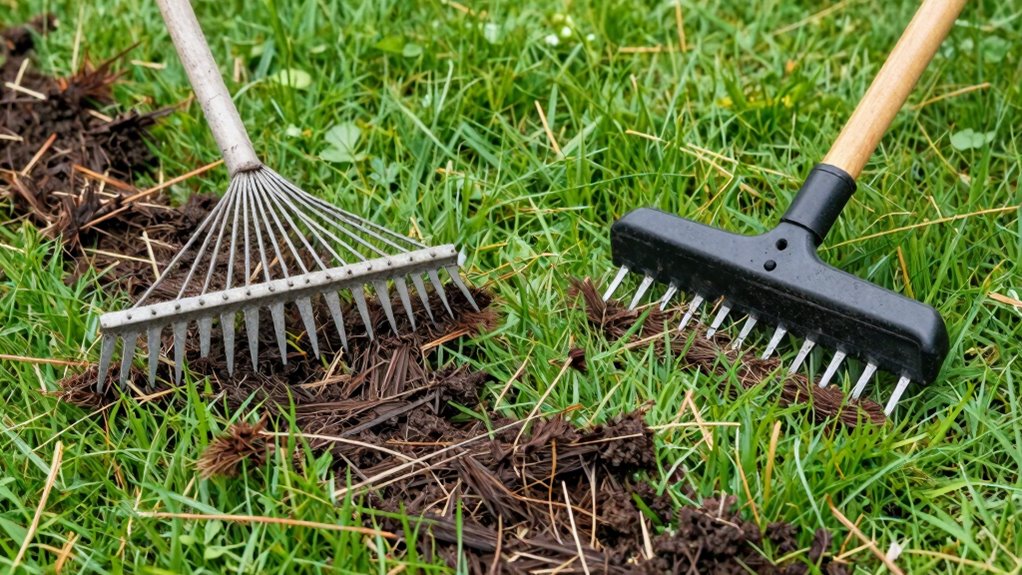

The main difference between scarifying and dethatching lies in the tines and depth of their action. Dethatching uses gentler, straight or slightly curved tines to remove surface thatch, helping air, water, and nutrients reach roots. Scarifying employs sharp, spring-loaded tines that dig deeper into the soil, breaking up compacted layers and promoting better drainage. If you want to understand which method suits your lawn best, keep exploring how each technique targets specific issues.

Get garden gear delivered free with Prime
- Fast, free delivery on millions of items
- Prime Video, Amazon Music and more included
- Member-only deals all year
Key Takeaways
- Dethatching uses gentle rakes or power tools to remove surface thatch, focusing on debris buildup.
- Scarifying employs sharp, spring-loaded tines to cut deeper into soil and break up compacted layers.
- Tines in dethatching are straight or slightly curved for surface-level removal; scarifying tines are sharper and penetrate deeper.
- The tools’ tine design reflects their purpose: gentle removal versus aggressive soil and thatch penetration.
- Choosing between them depends on whether the goal is surface thatch removal or improving soil aeration and drainage.

Dethatching is generally a gentler process that focuses on removing the thatch layer—a mat of dead grass, roots, and debris that accumulates between the grass blades and soil surface. If your lawn has a thatch layer thicker than half an inch, dethatching can help restore air, water, and nutrient flow to the roots. The tools used for dethatching, such as dethatching rakes or power dethatchers, have straight or slightly curved tines that pull up thatch without disturbing the soil too much. This method is ideal if your main concern is a thick thatch build-up that’s preventing proper lawn health.
Dethatching removes surface thatch to improve air, water, and nutrient flow for healthier lawns.
In contrast, scarifying digs deeper into the soil, using specialized scarifiers with sharp, often spring-loaded tines that cut through thatch and loosen compacted soil. Scarifying isn’t just about removing debris; it’s about breaking up soil compression solutions that inhibit root growth and water penetration. By penetrating deeper, scarifiers create small channels that allow air, water, and nutrients to infiltrate more effectively. This process is more aggressive and is often employed when soil compression is a significant issue, which can happen after heavy foot traffic or on clay soils. It also helps to improve the overall soil aeration, making it easier for roots to grow and absorb nutrients. It’s a form of lawn aeration technique that improves overall soil health and encourages new growth. Additionally, soil compaction can be addressed more effectively through scarifying, helping to prevent issues like poor drainage and shallow roots. Regular maintenance and understanding your lawn’s specific conditions can help you choose the right approach and maximize results.
Adding to this, understanding the soil type of your lawn can also influence whether scarifying or dethatching will be more effective in the long run. Deciding between scarifying and dethatching depends on your lawn’s specific needs. If the problem lies mainly in excess thatch, dethatching is usually sufficient. But if you notice poor drainage, shallow roots, or compacted soil, scarifying can be the better choice. Sometimes, combining both methods can give your lawn a complete boost—dethatching first to remove surface debris and scarifying afterward to relieve deeper soil issues. Keep in mind that both processes can stimulate your lawn’s natural recovery, but scarifying offers a more intensive approach to tackling soil compression solutions. Proper timing, seasonal considerations, and technique will ensure your lawn gets the aeration and care it needs to thrive.
As an affiliate, we earn on qualifying purchases.
Frequently Asked Questions
Can Both Scarifying and Dethatching Be Done Manually?
Yes, you can both scarify and dethatch manually using manual tools like rake-like dethatchers or scarifying tools. These aeration techniques involve physically removing thatch or loosening soil to improve grass health. Manual methods work well for small areas or lawns needing light dethatching. They’re cost-effective, eco-friendly, and give you precise control. Just make certain you use the right tool for the task to avoid damaging your lawn.
How Often Should I Perform Scarifying or Dethatching?
A stitch in time saves nine, so you should scarify or dethatch your lawn when it shows signs of soil compaction or thatch buildup, typically once or twice a year. Regular lawn aeration helps maintain healthy roots and prevents thatch from choking out nutrients. Keep an eye on your grass’s health, and if it looks dull or patchy, it’s time to take action. Don’t wait for problems to worsen!
Are There Specific Grass Types That Benefit More From These Techniques?
Certain grass types, like cool-season grasses such as Kentucky bluegrass and fescues, benefit more from scarifying and dethatching because their thatch accumulates quickly, hindering growth. Warm-season grasses like Bermuda or Zoysia respond well too, but their tine effectiveness depends on the specific grass compatibility. You’ll notice better results when you match your techniques to your grass type, ensuring the tine design effectively penetrates the thatch layer without damaging healthy turf.
What Safety Precautions Should I Take During the Process?
You shouldn’t skip safety precautions during lawn equipment use. Always prioritize lawn equipment safety by wearing protective gear essentials like gloves, goggles, and sturdy footwear. To prevent injuries, keep bystanders away, guarantee the equipment is in good condition, and operate it carefully. Remember, taking these precautions protects you from flying debris or accidental contact with sharp tines, making your scarifying or dethatching process safer and more effective.
Can These Methods Be Combined for Better Lawn Health?
Yes, combining scarifying and dethatching can improve your lawn’s health. Start with lawn aeration to reduce soil compaction, which allows better penetration of nutrients. Then, use scarifying to break up thatch buildup, promoting healthy grass growth. This integrated approach guarantees your lawn gets better airflow, water absorption, and nutrient access, leading to a lush, healthier yard. Just be sure to follow safety precautions during each process.
As an affiliate, we earn on qualifying purchases.
Conclusion
So, next time you’re deciding between scarifying and dethatching, remember—they’re not just different tools, but different solutions for your lawn’s health. Think of scarifying as a deep clean that promotes new growth, while dethatching removes the old, dead thatch. Don’t believe the myth that one is universally better; instead, choose based on your lawn’s specific needs. Properly understanding their differences guarantees you give your yard the best care it deserves.
As an affiliate, we earn on qualifying purchases.
As an affiliate, we earn on qualifying purchases.
Halloween Picks
halloween
As an affiliate, we earn on qualifying purchases.