
If you want quick algae clearance, a UV clarifier is your best choice because it destroys algae cells directly with ultraviolet light, providing rapid water clarity. Filters, on the other hand, improve water quality over time by removing debris and nutrients that fuel algae growth, but they don’t kill existing algae quickly. Combining both offers the fastest, most effective results. Continue exploring to discover how these tools work together for sparkling, algae-free water.
Key Takeaways
- UV clarifiers quickly inactivate free-floating algae cells by damaging their DNA, providing immediate algae bloom reduction.
- Filters remove debris and nutrients that fuel algae growth, supporting long-term water clarity and preventing future blooms.
- Combining UV clarifiers with filters offers the fastest and most effective algae control by targeting both algae cells and nutrient sources.
- UV systems deliver rapid results without chemicals but require regular maintenance; filters sustain water quality over time.
- The fastest algae clearing approach involves using UV for immediate control and filters for ongoing prevention and ecosystem health.
Which Method Clears Pond and Aquarium Algae Faster?
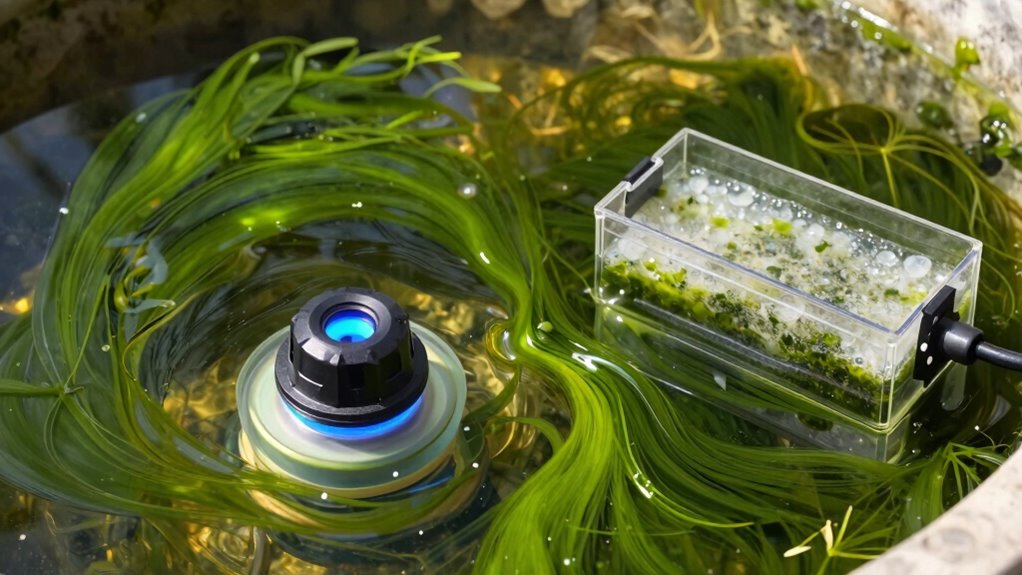
When it comes to clearing algae quickly from ponds and aquariums, UV clarifiers generally work faster than traditional filters. They effectively promote algae suppression by targeting free-floating algae spores, preventing blooms before they fully develop. UV clarifiers improve water clarity rapidly because they directly neutralize algae cells, reducing cloudiness caused by algae. Unlike standard filters that rely on mechanical or biological processes, UV systems actively eliminate algae at the cellular level, resulting in clearer water in a shorter time. They are particularly effective for algae prevention because they can stop algae before it becomes a visible problem. Additionally, UV clarifiers are highly compatible with smart‑home integrations, allowing for automated operation and monitoring. Their ability to provide immediate results makes them a preferred choice for rapid algae control. If your goal is swift algae control and enhanced water clarity, UV clarifiers are often the more efficient choice. They provide immediate results by reducing algae populations, helping you maintain a cleaner, healthier pond or aquarium environment. Furthermore, using UV sterilization technology ensures a more comprehensive approach to water treatment, targeting not just algae but also harmful microorganisms that can affect water quality. Additionally, Natural Pools utilize eco-friendly filtration methods that support sustainable backyard design while maintaining water quality.
How Do UV Clarifiers Kill Algae and Clarify Water Quickly?

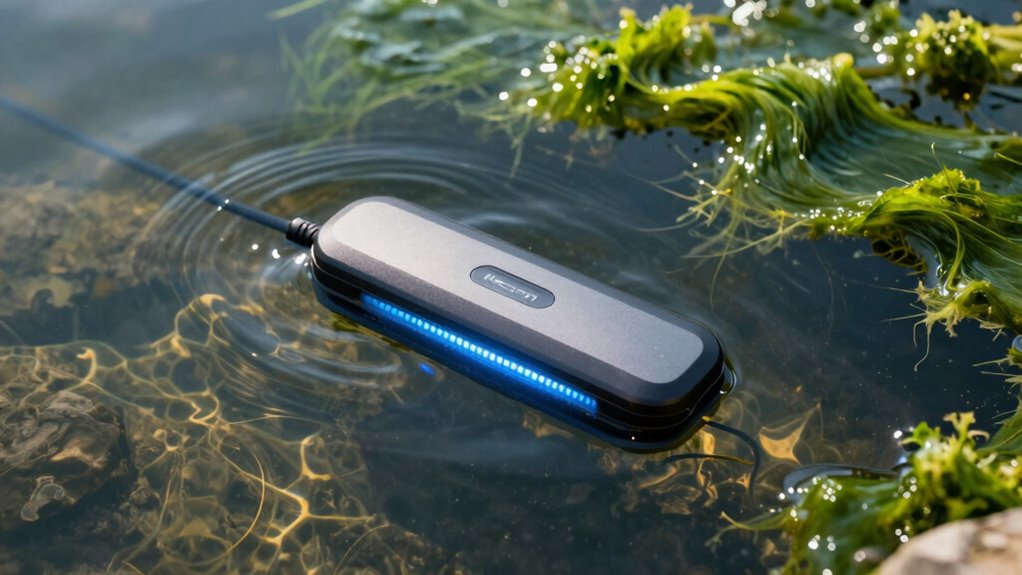
UV clarifiers kill algae and clarify water quickly by exposing free-floating algae cells to ultraviolet light, which damages their DNA and prevents reproduction. This process, known as UV sterilization, effectively halts algae growth at a cellular level. When water passes through the UV clarifier, the intense UV light penetrates the algae cells, disrupting their ability to multiply. This rapid algae suppression results in clearer water in a short time. Unlike chemical treatments, UV sterilization doesn’t introduce any additives, making it a safe and eco-friendly option. By targeting algae directly, UV clarifiers prevent future blooms and improve water clarity efficiently. Additionally, understanding filtration systems can help optimize overall water quality and prevent algae from returning. Implementing proper water circulation can further enhance the effectiveness of UV sterilization and reduce stagnant areas where algae might thrive. Regular system maintenance is essential to ensure the UV system continues to operate at peak efficiency and effectively combat algae growth over time.
How Pond and Aquarium Filters Help Reduce Algae Growth
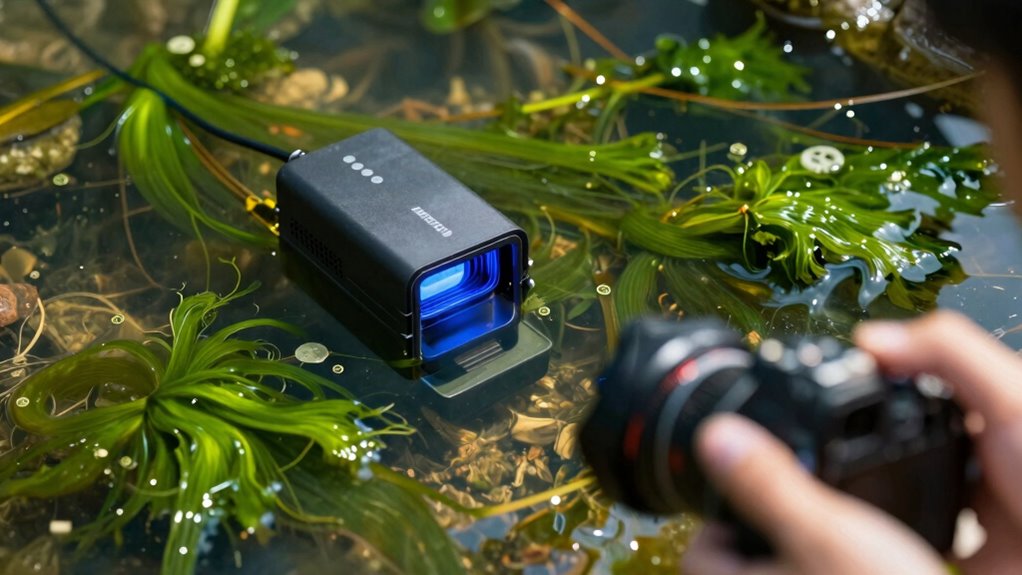
Pond and aquarium filters enhance water quality by effectively eliminating debris and surplus nutrients that promote algae growth. Their biological filtration processes also encourage beneficial bacteria that break down waste, keeping algae in check. Regular maintenance guarantees these filters operate at peak performance, helping you reduce algae without extra chemicals. Incorporating eco-friendly materials into filter design aligns with current trends towards sustainable and ethical practices. Additionally, selecting filters with advanced filtration technology can further improve algae control and water clarity. Using proper filtration methods is essential for maintaining a healthy aquatic environment and preventing recurring algae issues. Employing innovative filtration systems can optimize the removal of nutrients that feed algae, offering a more comprehensive solution. For optimal results, choosing filters with customizable features ensures compatibility with various pond and aquarium setups.
Mechanical Filtration Efficiency
Mechanical filtration plays a crucial role in reducing algae growth by physically trapping debris, algae spores, and other particles before they can circulate in your pond or aquarium. The effectiveness of this process depends on the filtration capacity, which determines how much water the filter can process efficiently. A well-designed mechanical filter features a robust mechanical design that maximizes surface area and flow rate, ensuring debris is captured quickly and thoroughly. This prevents nutrient buildup that fuels algae blooms. Regular maintenance of filters with high filtration capacity keeps debris from bypassing the system. By efficiently removing organic matter and spores, mechanical filtration minimizes the conditions that promote algae growth, helping maintain clear, healthy water in your pond or aquarium. Additionally, utilizing high-capacity filters enhances overall filtration efficiency, leading to faster clear water results. Proper filter placement also ensures optimal water flow and filtration performance, further reducing algae-promoting nutrients. Selecting filters with high flow rates is essential for maintaining consistent water circulation and preventing dead spots where algae can thrive. Furthermore, using supportive biological filtration can enhance algae control by promoting beneficial bacteria that consume nutrients, which in turn improves the overall filtration process and supports a healthier aquatic environment.
Biological Filtration Processes
Biological filtration processes play a vital role in controlling algae growth by promoting beneficial bacteria that break down organic waste. These bacteria thrive in your filter media, converting fish waste, uneaten food, and decaying plant matter into less harmful substances. This biological filtration supports nutrient cycling, reducing excess nutrients like ammonia, nitrites, and nitrates that algae feed on. Proper biological filtration guarantees stable water quality and prevents nutrient buildup, creating an environment less inviting for algae. Additionally, regular maintenance of your filtration system ensures that beneficial bacteria continue to function effectively, preventing potential imbalances. Supporting and nurturing these beneficial bacteria helps keep your water clear and balanced, making biological filtration an essential part of algae control. Effective filtration is critical to maintaining a healthy ecosystem and preventing algae outbreaks. Additionally, maintaining optimal filtration capacity ensures that beneficial bacteria can efficiently process waste without becoming overwhelmed, thereby enhancing overall water quality and algae prevention. Proper water circulation further helps distribute beneficial bacteria evenly throughout your pond or aquarium, maximizing biological filtration efficiency.
Regular Maintenance Benefits
Regular maintenance of your pond or aquarium filters is essential for controlling algae growth. When you regularly clean and check your filters, you improve algae prevention by ensuring they function effectively. Clean filters promote better water circulation, which prevents stagnant areas where algae thrive. Proper maintenance also removes debris and excess nutrients that algae feed on, reducing their growth potential. By maintaining your filters, you ensure consistent water flow, which helps distribute oxygen and nutrients evenly throughout your pond or tank. This balance discourages algae blooms and keeps your aquatic environment healthier. Neglecting maintenance allows dirt and organic waste to accumulate, creating ideal conditions for algae to flourish. Regularly caring for your filtration system is one of the most effective steps you can take to keep algae at bay. Additionally, understanding the role of biological filtration can help optimize your algae control strategies. Incorporating proper filtration techniques can further enhance water quality and algae prevention efforts.
What Are the Pros and Cons of Using UV Clarifiers for Fast Algae Removal?
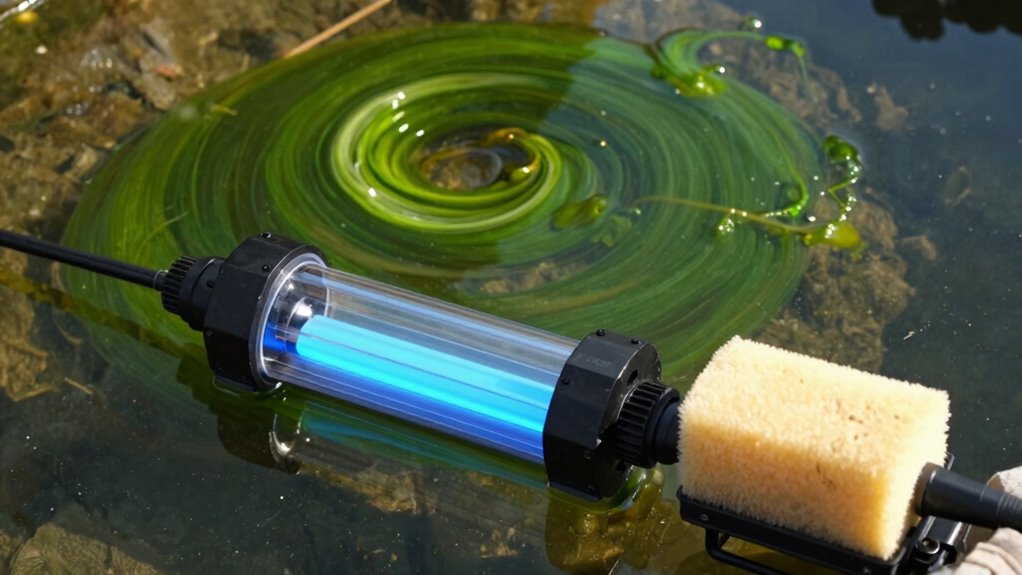
Using UV clarifiers can quickly control algae growth, giving you faster results than other methods. They offer a chemical-free solution, which is safer for your pond or aquarium. However, you should also consider maintenance needs and whether they fit into your overall system.
Rapid Algae Control
Are UV clarifiers an effective solution for rapid algae control? Yes, they can quickly target algae cells, reducing blooms and improving water clarity. UV clarifiers work by passing water through a UV light, neutralizing algae and other microorganisms on contact. While they don’t prevent algae growth directly, they complement algae prevention strategies by controlling existing blooms. Consistent water circulation ensures that algae cells come into contact with the UV light, maximizing effectiveness. This method provides a chemical-free way to rapidly clear algae without introducing harmful substances into your pond or aquarium. However, UV clarifiers don’t address nutrient levels that cause algae to thrive, so they’re best used alongside other maintenance practices. Overall, they’re a fast, efficient tool for controlling algae blooms when water circulation is adequate.
Chemical-Free Solution
Because UV clarifiers offer a chemical-free approach to algae control, they appeal to those seeking eco-friendly and safe water treatment options. They work by disrupting the DNA of algae and bacteria through ultraviolet light, avoiding chemical reactions that alter water chemistry. This means you won’t introduce harmful substances into your water, making it safer for swimmers and plants.
Here are some benefits:
- No chemicals needed, preserving natural water balance.
- No impact on water chemistry or pH levels.
- Reduced risk of chemical buildup or residue.
- Eco-friendly solution that minimizes environmental harm.
However, remember that UV clarifiers don’t remove debris or nutrients contributing to algae growth. They focus solely on inactivating microorganisms without changing chemical reactions in your water.
Maintenance Considerations
While UV clarifiers offer an effective and chemical-free way to quickly eliminate algae, they do require regular maintenance to keep functioning at their best. You need to guarantee proper water circulation so that all water passes through the UV unit evenly, preventing algae from bypassing the system. Additionally, maintaining the correct pH balance is vital; if the water’s pH is off, the UV’s effectiveness can diminish, leading to incomplete algae removal. The UV lamp itself needs periodic replacement, typically every 12 months, to maintain peak performance. Regular cleaning of the quartz sleeve is also indispensable to prevent buildup that can reduce UV transmission. By staying on top of these maintenance tasks, you’ll guarantee your UV clarifier continues to deliver clear, algae-free water efficiently.
Are Pond Filters or UV Clarifiers Better for Rapid Algae Control?
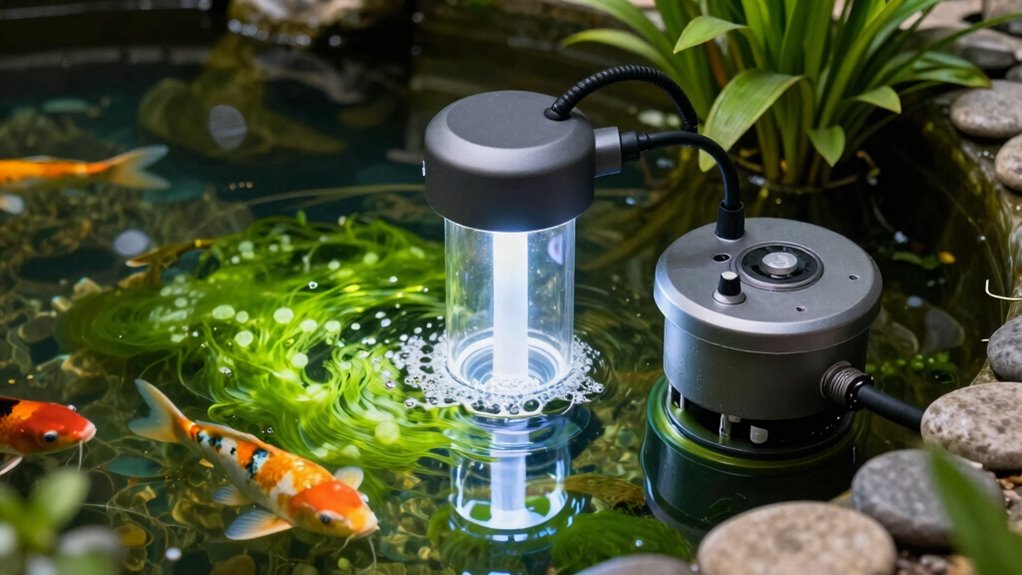
When rapidly controlling algae in your pond, choosing between a pond filter and a UV clarifier depends on your specific needs. A UV clarifier offers quick algae prevention by targeting free-floating algae cells directly, clearing the water fast. Pond filters, on the other hand, improve water circulation and trap debris, helping prevent algae growth over time. To decide:
- Use a UV clarifier if you need immediate algae control.
- Opt for a pond filter to support long-term algae prevention.
- Combine both for ideal results.
- Ensure your system promotes good water circulation to reduce stagnation.
While UV clarifiers excel at rapid algae removal, pond filters contribute to overall water quality and prevent future blooms through improved circulation. Your choice hinges on whether you prioritize quick results or ongoing algae prevention.
Can Combining UV Clarifiers and Filters Speed Up Algae Clearing?

Combining UV clarifiers and pond filters can substantially speed up algae clearing by addressing different aspects of water quality simultaneously. UV clarifiers target algae and pathogens directly, reducing their numbers quickly, while pond filters improve biological balance by removing debris and excess nutrients. This synergy helps prevent algae from regrowing, making chemical treatments more effective if needed. Using both systems together creates a cleaner, clearer environment faster than relying on one alone. The UV clarifier destroys free-floating algae, while the filter supports beneficial bacteria that break down organic matter. This dual approach minimizes algae blooms and supports long-term water health, reducing the need for chemical treatments and promoting a balanced pond ecosystem. Overall, combining these tools accelerates algae removal efficiently.
Tips to Choose the Best Algae Control Solution for Your Pond or Aquarium
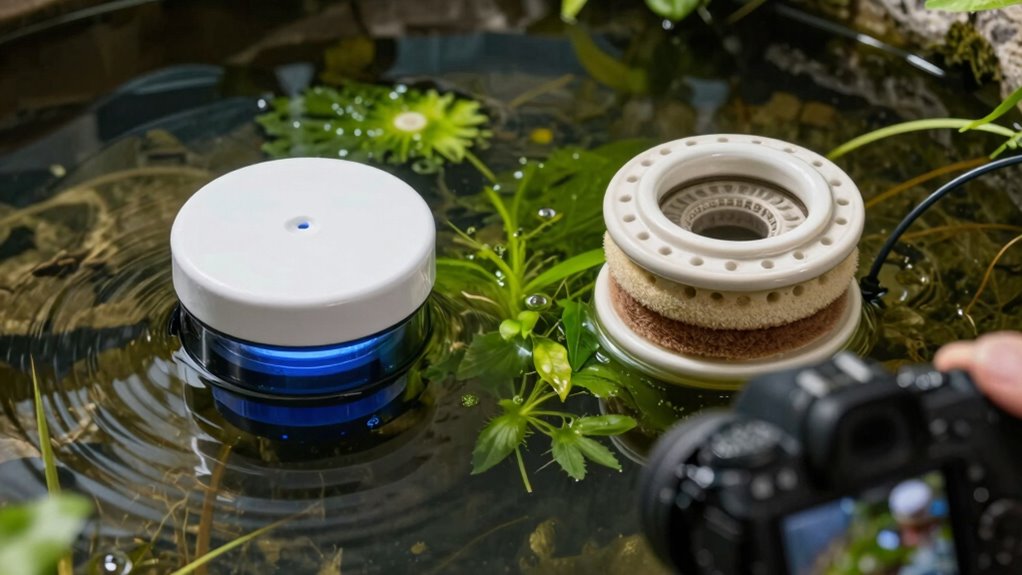
Choosing the right algae control solution depends on your pond or aquarium’s specific needs and conditions. To make the best choice, consider these factors:
- Water circulation – Proper flow prevents stagnation, reducing algae growth.
- pH balance – Maintaining a stable pH keeps algae in check and promotes healthy aquatic life.
- Type of algae – Identify whether you’re dealing with filamentous or green water algae to select an effective treatment.
- System compatibility – Confirm your filter or UV clarifier suits your pond or aquarium size and setup.
Frequently Asked Questions
What Maintenance Is Required for UV Clarifiers and Filters?
You need to perform regular maintenance on your UV clarifier and filter to guarantee peak performance. This includes cleaning the filter media and replacing UV bulbs as recommended, usually every 6-12 months, to prevent chemical buildup that can reduce effectiveness. Proper maintenance extends the equipment lifespan and keeps algae blooms at bay. Additionally, monitor water flow and check for any signs of wear to keep your system running smoothly.
How Long Does It Typically Take for Each Method to Clear Algae?
Think of algae eradication like a race—UV clarifiers often clear algae in just 24 to 48 hours, acting swiftly like a hero from a myth. Filters take longer, usually around a week, as they physically trap algae particles. The treatment duration depends on algae severity and system efficiency. For quick results, UV clarifiers are your best bet, but patience and proper maintenance guarantee lasting clarity with filters.
Are UV Clarifiers Safe for All Aquatic Life?
UV clarifiers are generally safe for aquatic life when used correctly, but you should consider aquarium safety and aquatic compatibility. Make certain the UV sterilizer is properly maintained and run at appropriate settings to avoid harming beneficial bacteria or sensitive species. While most aquatic life tolerates UV exposure, always monitor your tank’s inhabitants for any signs of stress or adverse reactions, especially in delicate ecosystems.
Can UV and Filter Systems Be Used Together Permanently?
Yes, you can use combined systems permanently. Integrating UV clarifiers with filters offers long-term benefits, such as clearer water and better algae control. By using both, you maximize filtration and sterilization, reducing maintenance and algae blooms. Just guarantee your system is properly maintained, and monitor water quality regularly. This combination provides an efficient, sustainable solution, helping your aquatic environment stay healthy and visually appealing over time.
Do Algae Types Affect the Effectiveness of UV Clarifiers?
Algae resistance can make UV clarifiers seem like magic, but it’s not a cure-all. Different algae types can markedly affect clarifier effectiveness, exposing clarifier limitations. Some algae, especially resistant strains, withstand UV light, rendering the clarifier less effective. So, you’ll need to combine treatments or use additional methods for stubborn algae. Don’t rely solely on UV clarifiers; understanding algae types helps you choose the best approach.
Conclusion
To clear algae blooms quickly, think of your pond or aquarium as a battle zone where UV clarifiers and filters are your powerful allies. UV clarifiers act like a superhero, zapping algae at lightning speed, while filters are the steady guardians, catching debris and slowing algae’s advance. For rapid results, consider combining both—like a dynamic tag team. With the right duo, you’ll turn murky waters into crystal-clear paradise faster than you can say “algae gone.”