
TL;DR

Get garden gear delivered free with Prime
- Fast, free delivery on millions of items
- Prime Video, Amazon Music and more included
- Member-only deals all year
Amateur Gardening has published a safety guide identifying nine common garden plants — including oleander, foxglove, yew, sago palm and lilies — that can poison people or pets if eaten or mishandled. The guide, drawing on UGA Extension and Poison Control classifications, recommends gloves, prompt cleanup of fallen material and immediate contact with poison centers or veterinarians after suspected exposure.
A newly published guide from Amateur Gardening warns that nine plants commonly found in ordinary gardens — including oleander, foxglove, yew, sago palm and lilies — can cause serious poisoning in people or pets if eaten or handled incorrectly. The report draws on toxicity classifications from UGA Extension and warnings from Poison Control, and sets out practical steps gardeners can take without removing every hazardous plant.
The nine plants identified are oleander, foxglove, yew, sago palm, castor bean, lilies, autumn crocus, azaleas and rhododendrons, and poison ivy, which causes skin reactions on contact. Several are staples of cottage gardens and formal landscaping, which the report says makes their risks easy to overlook — a reminder to double-check what’s growing alongside your edible garden plants. According to the guide, UGA Extension classifies oleander and yew as plants with major toxicity, while Poison Control warns that swallowing castor beans — which contain ricin — can cause serious poisoning.
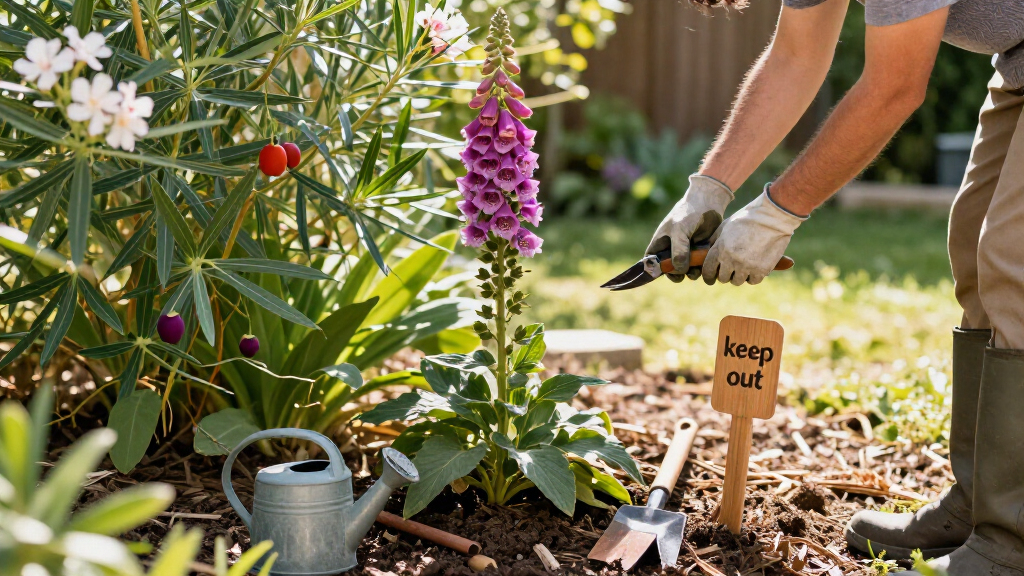
The risks vary by plant. Foxglove (Digitalis purpurea) is poisonous in every part and can affect the heart. Sago palm seeds pose a serious danger to dogs and cats, with ingestion potentially causing vomiting, liver damage, seizures and death. True lilies (Lilium) and daylilies (Hemerocallis) can cause acute kidney injury in cats, even from small exposures, including pollen ingested during grooming. Azaleas and rhododendrons can cause gastrointestinal problems, abnormal heart rhythms and seizures in larger ingestions.
The recommended precautions are consistent across plants: wear gloves when pruning or handling, keep pets and children away from fallen leaves, flowers and clippings, pick up fallen seeds promptly, and never burn oleander because the smoke can be hazardous. The report also advises against using foxglove in homemade teas or remedies, and urges anyone who suspects ingestion to contact a poison center, veterinarian or animal poison-control service immediately rather than waiting for symptoms to appear.
The guide’s central point is that ordinary, widely sold garden plants account for many poisoning hazards, not rare exotics. Yew is a common hedge plant; azaleas and rhododendrons are described as among the most familiar flowering shrubs in American gardens; lilies are popular cut flowers. Because these plants are so common, the report argues, their toxicity is frequently underestimated by homeowners.
Pet owners face particular risks. The report highlights that cats can be exposed to lily toxins simply by brushing against flowers and grooming themselves, meaning an owner does not need to see an animal eat a plant for a dangerous exposure to occur. Similarly, fallen oleander trimmings and yew clippings left within reach can poison dogs. The report stresses that removal is not always necessary — informed planting, barriers and prompt cleanup are presented as the sensible middle ground.
Toxicity Classifications Behind the Warning
The guide is grounded in established advisory sources. UGA Extension, the University of Georgia’s cooperative extension service, maintains toxicity ratings for garden plants and classifies both oleander and yew as major toxicity risks for pets. Poison Control, the U.S. poison center service, has issued warnings about castor beans and the toxin ricin, which is released when seeds are chewed or crushed.
The report also notes points of confusion that can lead to mistakes. Autumn crocus (Colchicum autumnale) is unrelated to the spring crocuses commonly grown in gardens, so gardeners may not realize it is toxic, and confusing common plant names — especially around lilies — can lead cat owners to buy hazardous varieties by accident. The advice to check labels carefully reflects this.
“That doesn’t mean you need to remove every potentially dangerous plant. The important thing is knowing what you’re growing, understanding the risk and taking sensible precautions when planting, pruning or clearing it.”
— Amateur Gardening guide
Risks Vary by Exposure and Plant Part
The guide does not claim that all listed plants are equally dangerous in all situations. Severity depends on the amount ingested, the plant part and the person or animal involved — sago palm seeds, for example, are singled out as riskier than other parts of the plant, and lily toxicity is described as a primarily feline concern. The report also does not provide incidence data on how often these plants cause poisoning, so the frequency of actual harm is not established in the source material. Readers with specific health concerns should consult local poison services, medical professionals or veterinarians rather than relying on the guide alone.
How Gardeners Should Respond
Gardeners are advised to identify what is already growing in their gardens, particularly in areas accessible to children and pets, and to verify labels before buying new plants. Practical next steps include wearing gloves during pruning, clearing fallen flowers, leaves and seeds regularly, fencing off or relocating high-risk plants such as sago palm and foxglove, and never burning toxic trimmings. Pet owners are advised to keep veterinarian and animal poison-control hotline numbers accessible, and parents to keep their local poison center number on hand, so that suspected exposures can be reported immediately.
Key Questions
Do I need to remove toxic plants from my garden?
No. According to the Amateur Gardening guide, removal is not necessary if you know what you are growing and take precautions such as gloves, barriers and prompt cleanup of fallen plant material.
Which plants are most dangerous to cats?
True lilies (Lilium) and daylilies (Hemerocallis) can cause acute kidney injury in cats even from small exposures, including pollen ingested during grooming. Sago palm seeds are also highly dangerous to cats and dogs.
What should I do if someone eats part of a toxic plant?
Contact a poison center, doctor or veterinarian immediately rather than waiting for symptoms to appear. The guide stresses prompt action for all nine plants listed.
Is it safe to burn oleander or other toxic plant clippings?
No. The guide warns never to burn oleander because smoke from poisonous plants can be hazardous. Clippings should be cleared away where pets cannot reach them.
Why are common plants like yew and azalea considered risky?
Because they are so widely grown as hedges and flowering shrubs, their toxicity is easy to overlook. UGA Extension classifies yew as a major toxicity risk, and azalea and rhododendron ingestion can cause gastrointestinal problems, abnormal heart rhythms and seizures in larger amounts.
Source: rss
Fall yard work Picks
leaf blowers
As an affiliate, we earn on qualifying purchases.