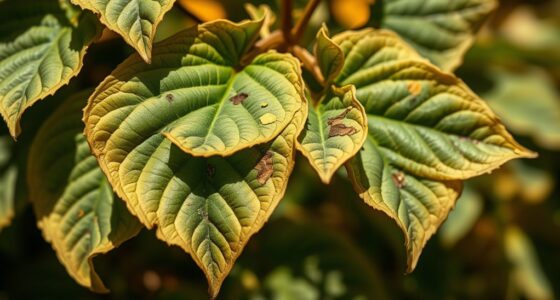
If your shade trees show dark, sunken lesions on leaves, twigs, or branches, they may have anthracnose. This fungal disease can cause leaf drop and branch dieback, especially in wet, humid conditions. To manage it, remove infected parts promptly, improve air circulation with pruning, and apply fungicides early. Proper care and prevention can keep your trees healthy. Keep exploring to discover effective strategies to protect your shade trees from this common disease.
Key Takeaways
- Anthracnose causes dark, sunken lesions on leaves, twigs, and branches, leading to leaf loss and dead wood in shade trees.
- Prevent by watering at the base, pruning diseased branches, and maintaining overall tree health to reduce humidity and fungal growth.
- Detect early signs like leaf spots and branch lesions; treat promptly with proper pruning and fungicides applied at initial symptoms.
- Regular monitoring and timely intervention improve tree recovery, especially during wet, humid conditions when symptoms are most evident.
- Combining cultural practices with chemical treatments and consulting arborists ensures effective management of anthracnose on shade trees.

Anthracnose is a common fungal disease that can substantially weaken shade trees, especially during wet and humid conditions. If you notice dark, sunken lesions on leaves, twigs, or branches, it’s a sign that your tree might be battling this problem. To protect your trees, understanding disease prevention is essential. Proper maintenance practices, such as watering at the base rather than overhead, can reduce humidity around the foliage, making the environment less hospitable for fungi. Pruning dead or diseased branches also improves air circulation, which helps keep moisture levels down. Additionally, ensuring your trees are healthy overall through proper fertilization and mulching strengthens their natural defenses against infections.
Prevent anthracnose by proper watering, pruning, and maintaining tree health to reduce fungal infection risks.
When it comes to treatment options, early intervention is vital. If you spot symptoms early, you can remove infected leaves and branches to prevent the disease from spreading further. Use clean, sharp tools to make cuts and disinfect them afterward to avoid transferring pathogens. In some cases, applying fungicides can help control the spread of anthracnose. Look for products labeled for use on shade trees and follow the manufacturer’s instructions carefully. Fungicides are most effective when applied preventively or at the first sign of disease, so don’t delay treatment once symptoms appear. Keep in mind that chemical treatments alone won’t solve the problem; combining them with good cultural practices yields the best results.
It’s important to recognize that not all trees respond equally to treatment, and some might be more susceptible due to species or overall health. Regular monitoring throughout the growing season helps catch issues early before they cause extensive damage. If your tree shows severe symptoms, such as widespread leaf loss or dead branches, consulting a certified arborist might be necessary. They can assess the extent of the infection and recommend the most effective course of action, which could include more aggressive treatments or even removal in extreme cases.
Preventing anthracnose is always preferable to dealing with its effects. By implementing good disease prevention strategies and acting promptly with appropriate treatment options, you can help guarantee your shade trees stay healthy and vibrant. Maintaining a balanced approach that combines cultural practices, timely pruning, and, if needed, fungicide applications gives your trees the best chance to resist and recover from this fungal threat. Remember, attentive care and early response are your best tools in managing anthracnose on shade trees.
Frequently Asked Questions
Can Anthracnose Affect Fruit Production on Shade Trees?
Yes, anthracnose can affect fruit production on shade trees. It weakens the tree’s overall health, leading to reduced fruit yield and compromised vigor. When your shade trees are infected, they may develop leaf spots, dieback, and fruit deformities. By managing the disease early and maintaining proper tree health, you can help safeguard fruit production and ensure your trees remain strong and productive throughout the season.
Are There Organic Treatments Effective Against Anthracnose?
Think of organic treatments like a gentle rain washing away trouble. You can effectively combat anthracnose with natural remedies, such as applying copper-based fungicides, neem oil, or compost teas. These organic options strengthen your tree’s defenses without harsh chemicals. Regular pruning and proper sanitation also help. While organic methods may take longer, they’re eco-friendly and safer for your landscape, making them a wise choice for long-term health.
How Long Does It Take for Symptoms to Appear After Infection?
You’ll typically see symptoms of anthracnose develop within 7 to 14 days after infection, depending on weather conditions and tree health. The infection timeline varies, but usually, the first signs include dark, sunken spots on leaves or twig dieback. Warm, moist conditions accelerate symptom development, so stay vigilant during rainy seasons. Regular inspections help catch issues early, allowing you to manage the disease more effectively.
Is There a Way to Prevent Anthracnose From Spreading to Other Trees?
Of course, you can stop anthracnose from spreading—just become the tree’s superhero! Start with preventive measures like applying fungicides and ensuring proper tree spacing to promote airflow. Avoid overcrowding, prune infected branches, and keep your trees healthy with proper watering and fertilization. These simple acts act as your shield, preventing the disease from hopping from one tree to another and turning your green oasis into a fungal free zone.
Can Anthracnose Be Mistaken for Other Leaf Spot Diseases?
Yes, anthracnose can be mistaken for other leaf spot diseases because of diagnostic challenges. You might notice similar symptoms like leaf spots, blotches, or wilting, making it hard to differentiate without close inspection. To accurately identify the disease, examine the pattern, color, and progression of symptoms, and consider consulting an arborist or plant pathologist for proper disease differentiation. Proper identification guarantees effective treatment and management.
Conclusion
Understanding anthracnose helps you protect your shade trees effectively. By recognizing early signs and applying proper treatments, you can keep your trees healthy and vibrant. Did you know that certain species, like sycamores, are more susceptible, with infection rates reaching up to 60% in affected areas? Staying vigilant and proactive can considerably reduce damage, ensuring your shade trees continue to provide comfort and beauty for years to come.