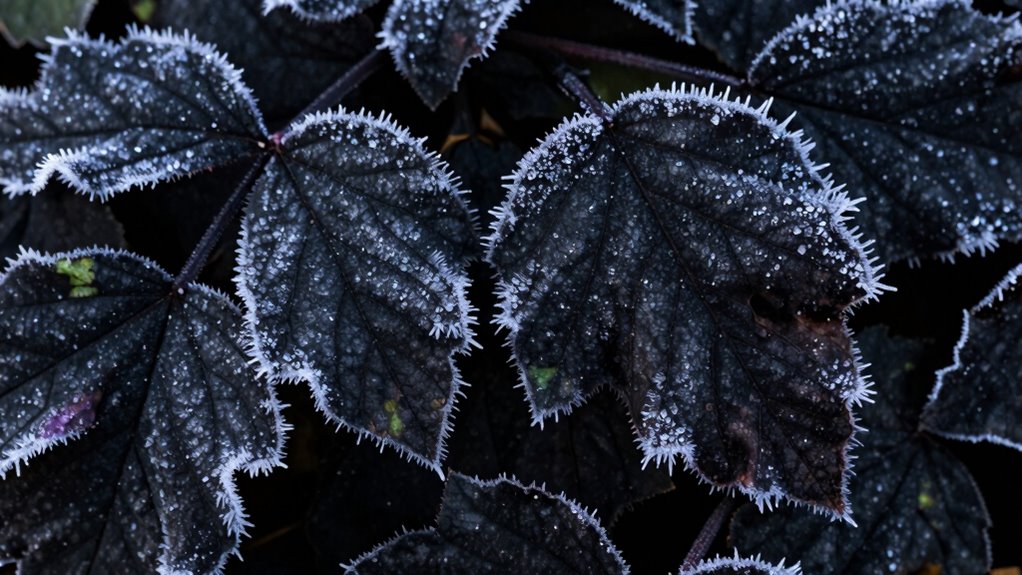

Black leaves after frost don’t tell the whole story because this discoloration can be temporary or superficial, not always indicating permanent damage. Other issues like disease, overwatering, or nutrient deficiencies can cause blackening too. Your plant’s roots and stems might still be healthy, which means recovery is possible. To truly understand your plant’s condition, it’s important to look beyond the black leaves. Keep exploring to uncover the full story behind frost damage and plant resilience.

Get garden gear delivered free — and shop member deals
- Fast, free delivery on millions of items
- Access to Prime Big Deal Days deals on October 6–7
- Prime Video, Amazon Music and more included
Key Takeaways
- Blackening may be superficial and temporary, not necessarily indicating permanent plant tissue death.
- Other stress factors like disease or overwatering can cause black leaves, mimicking frost damage.
- Leaves can recover or be replaced if roots and stems remain healthy, despite blackened foliage.
- The overall health and resilience of the plant are better indicators of recovery than leaf color alone.
- Proper assessment of root and stem health is essential before concluding the plant’s prognosis after frost.
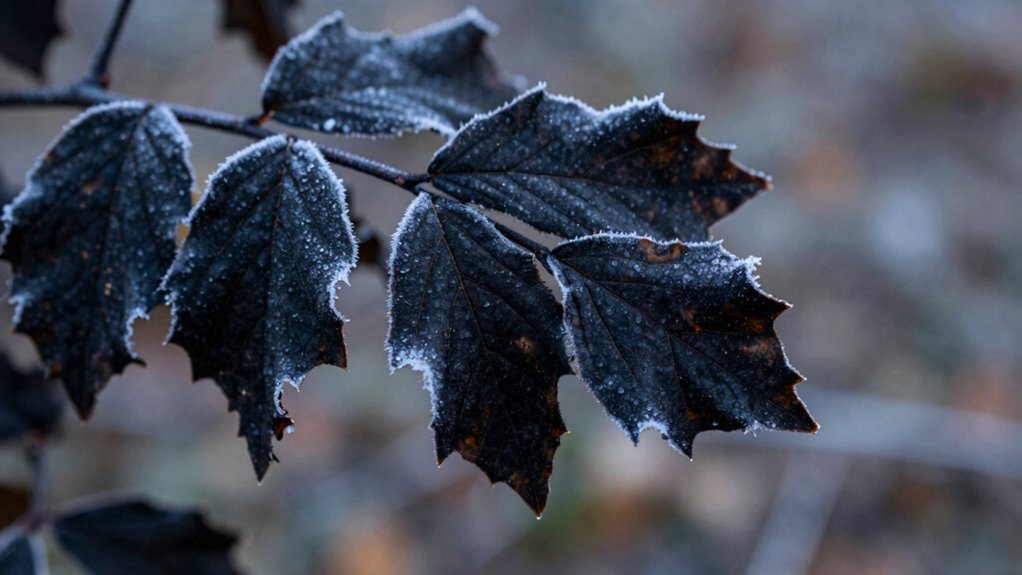
When frost hits your garden, you might notice that some of your leaves turn black, signaling damage that can affect plant health. It’s easy to assume that these black leaves are a clear sign of severe frost damage, but the story isn’t always that simple. Leaf discoloration after a frost can be misleading, and understanding the full picture helps you avoid unnecessary panic or misdiagnosis. Just because your leaves turn black doesn’t necessarily mean your plant is beyond saving or that the damage is permanent.
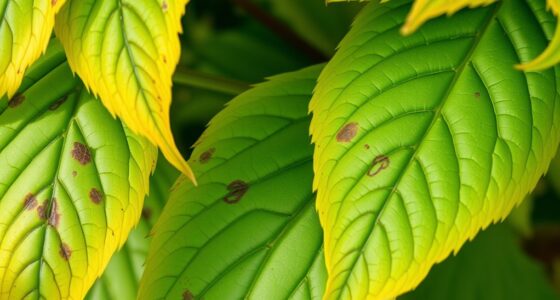
Frost damage often leads to visible changes like blackened or wilted leaves. However, this blackening can be a temporary reaction to cold stress rather than outright death of the tissue. Sometimes, the blackening results from cell death caused by the cold, but other times, it’s simply a symptom of the plant’s response to stress. The discoloration might be superficial, affecting only the surface or certain parts of the leaf, while other parts could still be healthy. You need to assess the overall health of the plant, not just the blackened leaves. If the plant’s roots and stems are intact and healthy, there’s a chance it can recover, even if the leaves look grim. Recognizing frost damage symptoms can help you make better decisions about recovery.
Blackened leaves after frost may be temporary; assess roots and stems for signs of recovery.
It’s also important to recognize that leaf discoloration may not be solely due to frost damage. Other factors like overwatering, poor drainage, or disease can cause leaves to turn black or develop spots that resemble frost injury. Sometimes, plants already stressed by drought or nutrient deficiencies react more severely to cold, amplifying the blackening effect. Additionally, understanding plant resilience and frost hardiness can guide you in protecting your garden in future seasons. Proper garden care practices can also minimize such damage and support recovery. Moreover, different plant species have varying thresholds for cold tolerance, so knowing your specific plants’ cold tolerance can help prevent or mitigate damage. Consequently, black leaves after frost don’t tell the whole story about your plant’s health; they’re just one piece of a larger puzzle.
A key point is that leaves can sometimes recover or produce new growth after a frost, especially if the damage isn’t too severe. Cutting away the blackened parts might help the plant redirect energy toward healthy growth. However, if you notice that most of the foliage is blackened and the stems feel mushy or soft, it’s a sign that the plant might have suffered irreversible damage and needs to be replaced.
As an affiliate, we earn on qualifying purchases.
Frequently Asked Questions
Can Black Leaves Recover After Frost Damage?
Black leaves after frost can sometimes recover, depending on their frost tolerance. If the damage is limited to the leaf pigmentation and the plant’s overall health, new growth might emerge once conditions improve. However, if frost causes extensive tissue damage, recovery becomes unlikely. Keep in mind that frost tolerance varies among plants, and blackening leaves often signal stress or damage, so monitor your plant closely to support its recovery.
Are Certain Plants More Prone to Blackening From Frost?
Yes, certain plants are more prone to blackening from frost due to differences in frost tolerance and plant pigmentation. Plants with less frost tolerance or lighter pigmentation tend to blacken more easily because their tissues can’t withstand cold stress. You’ll notice that plants with darker pigmentation might resist frost better, but it’s always wise to contemplate their specific frost tolerance levels for ideal protection and care during cold weather.
How Can I Prevent Black Leaves in Future Frosts?
You can prevent black leaves in future frosts by choosing frost-resistant varieties suited to your climate. Additionally, using protective coverings like frost blankets or old sheets provides an effective barrier against cold damage. Don’t think these measures are complicated; they’re simple, affordable, and highly effective. By combining selecting the right plants and offering them protection, you’ll greatly reduce the risk of blackening leaves after frost.
Does Blackening Affect the Plant’s Overall Health Long-Term?
Blackening from frost impact doesn’t usually harm your plant’s long-term health if it’s just leaf pigmentation change. The blackened leaves are often a temporary response to cold stress, not a sign of deep damage. However, if the blackening spreads or causes decay, it could weaken the plant over time. Keep an eye on new growth, and guarantee proper winter protection to minimize frost impact and support healthy development.
Is Black Leaf Coloration Reversible or Permanent?
Black leaf coloration isn’t necessarily permanent; it’s like a temporary scar on leaf anatomy. The color change from blackening after frost can often be reversed if the plant recovers, as new, healthy leaves grow and replace affected ones. However, if the damage is severe, some leaves may stay dark. So, monitor your plant’s overall health, and with proper care, the blackening might fade, restoring its natural appearance.
As an affiliate, we earn on qualifying purchases.
Conclusion
When black leaves curl and darken after frost, don’t see them as the end of the story. Instead, imagine them as the night’s quiet lullaby, whispering that even in darkness, life’s potential waits beneath the surface. Just as the dawn promises new light, your garden holds the promise of renewal. So, embrace these darkened leaves as a sign to nurture patience, for beneath the blackened exterior, life patiently prepares to bloom again, brighter than before.
cold weather plant protection cover
As an affiliate, we earn on qualifying purchases.
As an affiliate, we earn on qualifying purchases.
plant nutrient deficiency treatment
As an affiliate, we earn on qualifying purchases.
As an affiliate, we earn on qualifying purchases.
Halloween Picks
halloween
As an affiliate, we earn on qualifying purchases.