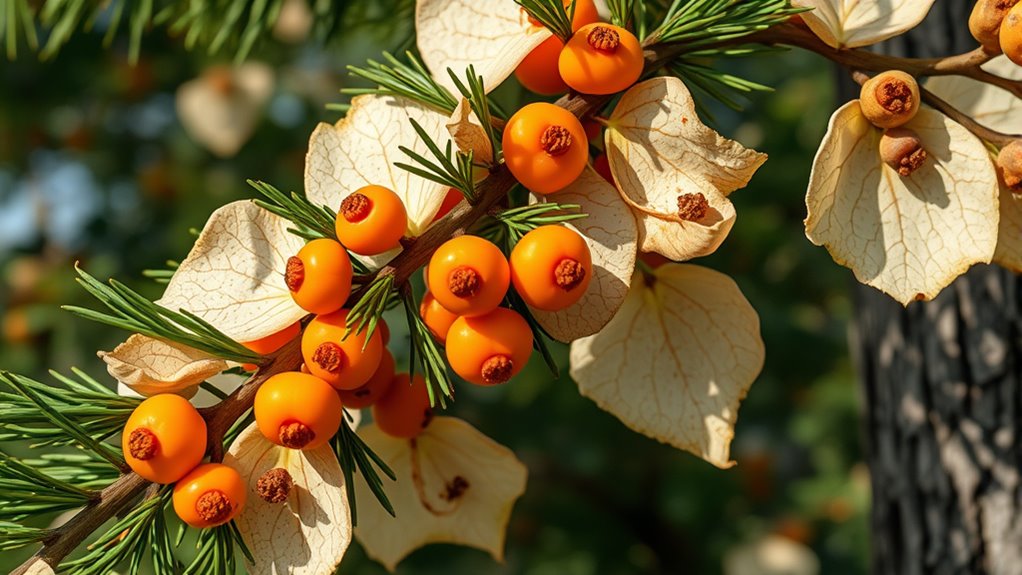

Cedar-apple rust starts with spores from infected cedar or juniper trees, which are released during warm, humid weather. These spores are carried by the wind to nearby apple or crabapple trees, where they infect the tissue and produce pustules that generate more spores. This cycle of spore production and dispersal continues, often aided by weather conditions. To understand how to prevent or manage this disease effectively, keep exploring how different strategies disrupt this life cycle.
Key Takeaways
- The life cycle starts with spores on infected cedar or juniper trees, which produce airborne spores during warm, humid conditions.
- Spores disperse through the air and land on apple trees, where they germinate and infect the tissues.
- Rust pustules develop on infected leaves and fruit, producing new spores for further dispersal.
- The cycle continues as spores from cedar trees infect apples, and spores from apples can reinfect cedar hosts.
- Managing cedar/juniper hosts and applying fungicides early help disrupt spore production and prevent disease spread.
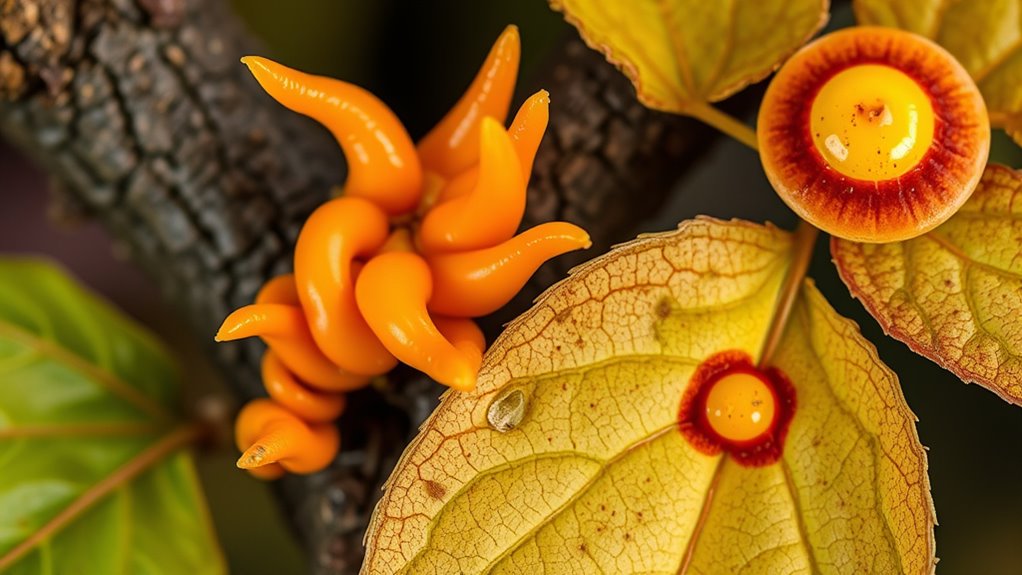
Have you ever noticed orange or rust-colored spots on your apple trees or nearby cedar trees? If so, you might be dealing with cedar-apple rust, a common fungal disease that affects both types of trees. To understand how this disease spreads and how to manage it effectively, it’s important to grasp its life cycle. Cedar-apple rust relies heavily on spore dispersal, which allows it to move from one host to another, making it particularly tricky to control once it’s established.
Cedar-apple rust spreads through spore dispersal between cedar and apple trees.
The life cycle begins when the rust fungus produces spores on infected cedar trees, specifically on the juniper hosts. These spores are released into the air during certain weather conditions, especially when it’s warm and humid. Once airborne, the spores travel and land on nearby apple trees or related host plants. This spore dispersal is essential because it enables the disease to spread rapidly across orchards and landscapes, often causing visible damage like the orange spots you see on leaves and fruit.
After landing on susceptible apple or crabapple trees, the spores germinate and penetrate the plant tissue, leading to the formation of rust pustules. These pustules produce more spores that can either reinfect the same host or be dispersed again to other hosts, perpetuating the cycle. The presence of alternate hosts—cedar or juniper trees—means the disease can persist in the environment year-round, especially if both hosts are in proximity.
Managing cedar-apple rust involves interrupting this cycle at key points. Disease management strategies focus on reducing spore dispersal and preventing infection. One effective approach is to remove or prune cedar and juniper trees near apple orchards or home gardens, limiting the source of initial spores. Applying fungicides at the right time—usually early in the season—can also protect susceptible tissues from infection. Regular monitoring for rust pustules helps in timely application and reduces the spread.
Since spore dispersal is driven by weather conditions, understanding when spores are most likely to travel is essential. Cloudy, humid days and nights with wind are prime times for spores to disperse, so staying alert during these periods allows you to implement preventive measures. Additionally, vetted informational resources can provide guidance on effective disease control practices. By combining host removal, fungicide use, and vigilant monitoring, you can improve disease management and minimize damage caused by cedar-apple rust. Ultimately, controlling spore dispersal and disrupting the disease cycle are key to keeping your trees healthy and productive.
Frequently Asked Questions
How Long Does the Cedar-Apple Rust Life Cycle Typically Last?
The cedar-apple rust life cycle typically lasts about six to eight weeks, depending on weather conditions. During this time, rust spore dispersal occurs mainly in spring and early summer, with infection timing influenced by moisture and temperature. You’ll notice new infections emerging as spores spread from infected cedar trees to nearby apple or crabapple trees, completing the cycle and prompting new spore production for the next season.
Can Cedar-Apple Rust Infect Other Tree Species Besides Cedar and Apple?
You might wonder if cedar-apple rust can infect other tree species besides cedar and apple. It primarily targets these hosts, but alternative hosts like certain junipers can also be infected, aiding disease spread. While other tree species are generally resistant, the presence of alternative hosts increases the risk of infection and helps maintain the rust’s life cycle. Managing these hosts reduces the likelihood of widespread disease.
What Environmental Conditions Promote Cedar-Apple Rust Development?
Think of the weather as the artist’s brush, painting the perfect scene for cedar-apple rust to thrive. Humid conditions and mild temperatures are its favorite palette, fueling spore germination and infection. When the air’s moist and warm, it’s like an open invitation for the rust to spread, allowing spores to travel and infect new hosts. Keep watch during these ideal conditions to prevent the rust from taking hold.
Are There Natural Predators or Biological Controls for Cedar-Apple Rust?
You won’t find many natural predators or biological controls that effectively target cedar-apple rust directly. Instead, managing it often involves cultural practices like removing infected plant material and applying resistant varieties. Some biological controls, like certain fungicides, can help reduce its spread, but natural predators typically don’t play a significant role in controlling this rust. Relying on integrated management strategies remains your best approach.
How Can Homeowners Identify Early Signs of Cedar-Apple Rust Infection?
Imagine spotting tiny, orange-yellow spots on your tree’s leaves—a clear sign of early symptoms. You notice leaf spotting, where small lesions appear with a powdery or fuzzy look, often on the underside. These are your first clues that cedar-apple rust is starting to take hold. Keep a close eye on new growth and leaf surfaces, catching these early signs helps you manage and prevent further spread effectively.
Conclusion
Think of cedar-apple rust as a mischievous traveler, constantly moving between its hosts like a restless explorer. By understanding its journey, you become a wise guardian, knowing when to stand watch and how to break its path. Just as a clever traveler avoids certain roads, you can take steps to protect your trees. With this knowledge, you hold the power to keep your landscape healthy, turning the rust’s wandering into a story of resilience and hope.