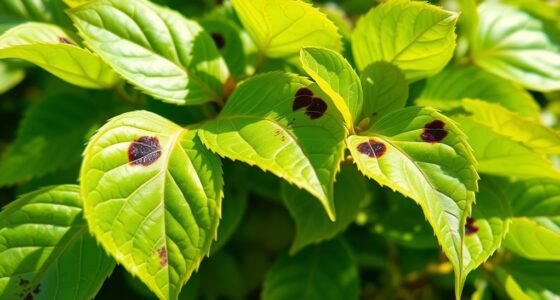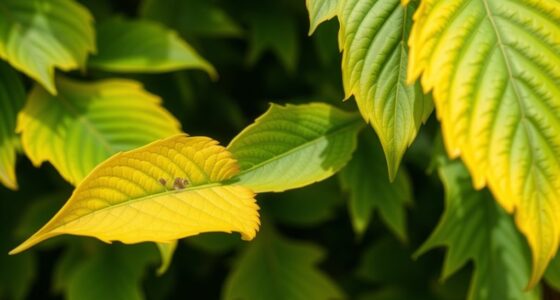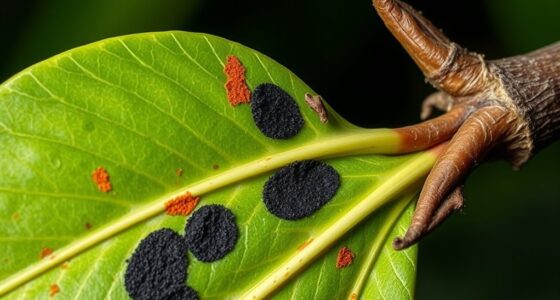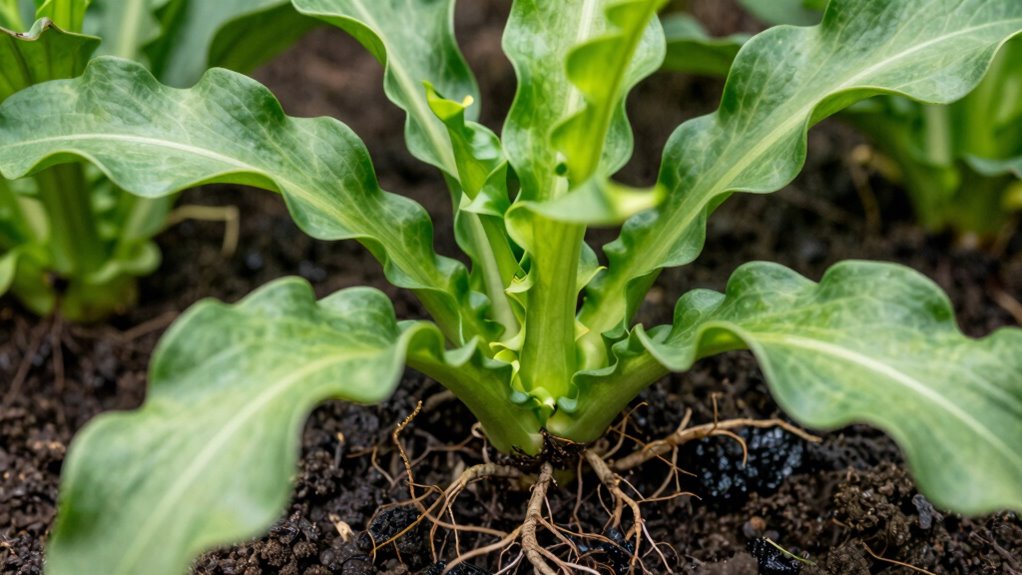
If your plant’s leaves start curling from the edges, it’s usually a sign of root issues like pests or nutrient shortages that affect the plant below the surface. Pests like root aphids or nematodes can damage roots, impeding water and nutrient uptake, while deficiencies in nitrogen or magnesium disrupt growth from the roots up. By inspecting the roots early and addressing these problems, you can help your plant recover. Keep exploring to discover more ways to protect your plant’s health.

Get garden gear delivered free — and shop member deals
- Fast, free delivery on millions of items
- Access to Prime Big Deal Days deals on October 6–7
- Prime Video, Amazon Music and more included
Key Takeaways
- Leaf curling is often an early sign of root problems like pests or nutrient deficiencies.
- Root pests such as aphids and nematodes impair water and nutrient uptake, causing leaf curl.
- Nutrient deficiencies originating from root issues can lead to abnormal leaf development and curling.
- Regular root inspections help detect pests or damage before visible leaf symptoms appear.
- Addressing underlying root problems promptly prevents further leaf curling and plant stress.
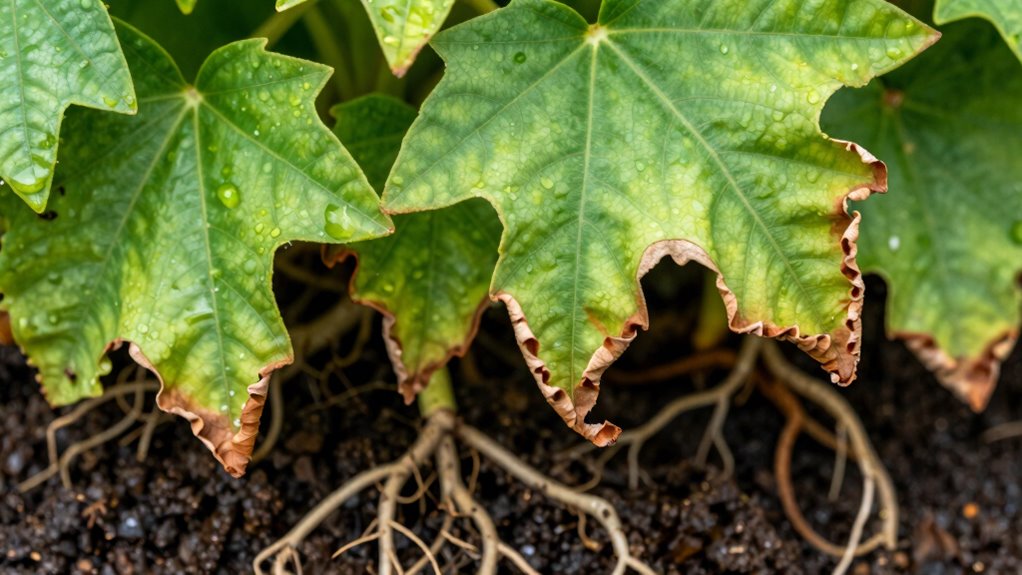
Have you ever noticed how certain leaves curl at the edges, creating a distinctive, twisting shape? It’s a common sign that something’s wrong with your plant, and the root of the problem often lies below the surface. When leaves curl, it’s easy to assume it’s just a matter of water or weather, but more often, it’s linked to issues like pest infestation or nutrient deficiency that start at the roots. Recognizing these early signs can help you take action before the damage worsens.
Leaf curling signals underlying root issues like pests or deficiencies; early detection helps protect your plant’s health.
If pests have decided to invade your plant, they usually begin their attack at the roots or the lower parts of the plant, where they’re less obvious. Many pests, such as root aphids or nematodes, feed directly on the roots, disrupting the plant’s ability to absorb water and nutrients. This stress causes the leaves to curl as the plant struggles to stay healthy. You might notice other clues like a sticky residue, small insects, or a foul smell near the soil. Pests weaken the plant, making it more vulnerable to other issues, and if left unchecked, the damage can spread quickly, causing widespread leaf curling and even plant death.
On the other hand, nutrient deficiency is another common culprit that begins its assault at the roots. When vital nutrients like nitrogen, potassium, or magnesium are lacking, the plant can’t produce the necessary enzymes or chlorophyll to stay vigorous. This deficiency hampers the plant’s growth and results in abnormal leaf development, including curling. You might also see discoloration, spotting, or stunted growth, but the curling is a clear sign that your plant isn’t getting what it needs from the soil. Since nutrients are absorbed through the roots, any problem there directly impacts how the leaves develop, leading to the twisting, curling edges you observe. Understanding how soil health impacts root function can help prevent these issues before they appear.
Both pest infestation and nutrient deficiency start at the roots but manifest visibly in the leaves. The key is to inspect your plant’s roots regularly, checking for signs of pests or damaged, unhealthy roots. Addressing pest problems involves careful treatment with insecticidal soap or natural predators, while correcting nutrient deficiencies requires soil testing and appropriate fertilization. A comprehensive understanding of plant health can also help you identify the early warning signs and take preventative measures. Recognizing the root cause early on allows you to act swiftly, preventing the problem from escalating. Ultimately, understanding how issues at the roots influence leaf health gives you a better chance to nurture your plant back to full vitality.
As an affiliate, we earn on qualifying purchases.
Frequently Asked Questions
Can Diet Affect Curling Leaves at the Roots?
Yes, your diet can affect curling leaves at the roots. Poor nutrition leads to nutritional deficiencies that weaken root health, making leaves curl as they struggle to absorb essential nutrients. Consuming a balanced diet rich in vitamins, minerals, and organic matter helps strengthen roots, preventing curling leaves. Focus on proper fertilization and soil health to support overall plant importance and reduce curling caused by nutritional issues.
Are Specific Hair Products Better for Preventing Root Curling?
Yes, certain hair products can help prevent root curling by considering product formulations and your hair porosity. Look for lightweight, moisture-rich products that suit your hair’s porosity level—high porosity hair benefits from heavier, sealing formulations, while low porosity hair needs lighter, water-based products. Avoid heavy oils or silicones near the roots, as they can weigh hair down and promote curling. Choose products designed to maintain smoothness and control at the roots.
How Long Does It Take to See Improvements?
You’ll notice improvements in your root hair curling within 2 to 4 weeks, especially if you address nutrient deficiencies. Coincidentally, as you start nourishing your roots with the right nutrients, the root hair’s health improves, reducing curling. Consistency is key; use targeted treatments regularly. Over time, your roots become stronger and less prone to curling, revealing healthier, more resilient hair that responds better to styling.
Is Heat Styling the Main Cause of Root Curling?
Heat styling can be a main cause of root curling because it often leads to root damage, weakening hair strands and causing them to curl or bend at the roots. Environmental factors like humidity and exposure to sun can also contribute, exacerbating the problem. To prevent root curling, you should limit heat styling, use heat protectants, and shield your hair from harsh environmental elements, promoting healthier roots and reducing curling issues.
Can Trimming Roots Stop the Curling From Worsening?
Yes, trimming roots can help stop the curling from worsening, but only if it improves root health. Use proper trimming techniques to remove damaged or overgrown roots carefully, encouraging healthy growth. Healthy roots support better moisture and nutrient absorption, which can reduce curling. Regularly inspecting your roots and trimming as needed promotes overall plant health, helping to prevent the problem from progressing further and maintaining stronger, less curly leaves.
nutrient deficiency soil test kit
As an affiliate, we earn on qualifying purchases.
As an affiliate, we earn on qualifying purchases.
Conclusion
Don’t let the curling leaves at the roots discourage you. With patience and the right care, you can restore your plant’s health and beauty. Remember, plants are resilient and often bounce back from minor issues when given proper attention. So, enjoy the process of nurturing your plant—each small effort brings you closer to a lush, vibrant garden. Embrace the challenge, and your green thumb will thank you in the end.
As an affiliate, we earn on qualifying purchases.
organic pest treatment for roots
As an affiliate, we earn on qualifying purchases.
As an affiliate, we earn on qualifying purchases.
Fall Picks
fall essentials
As an affiliate, we earn on qualifying purchases.