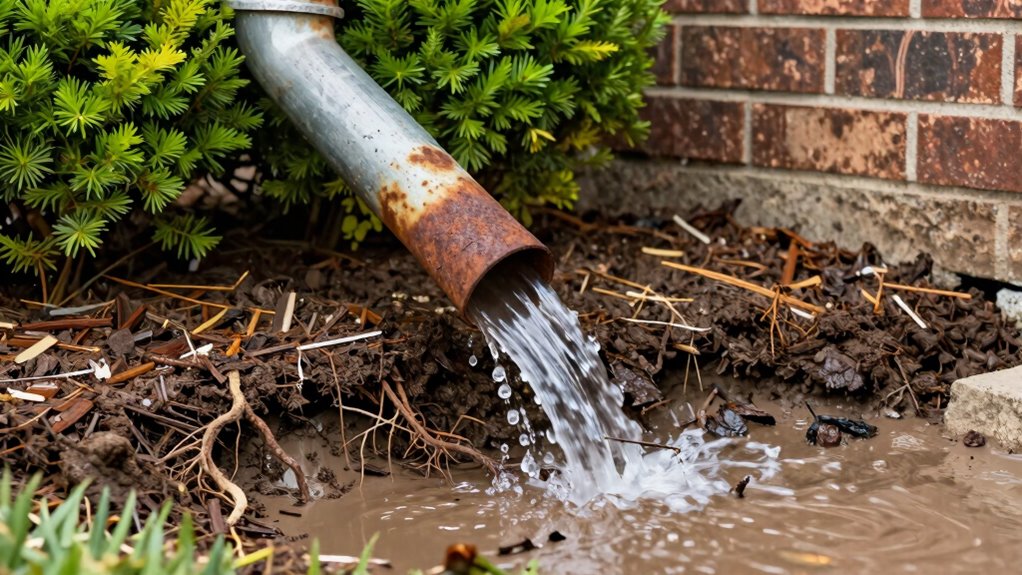

One common mistake that floods foundation beds is directing downspouts too close to your home’s foundation. When water is discharged near the base, it can pool around the foundation, causing erosion, water seepage, and potential structural damage. Proper water diversion is essential, so extending downspouts away from the foundation and ensuring proper grading can make a big difference. Keep going to find out more about fixing this issue and protecting your property.

Get garden gear delivered free with Prime
- Fast, free delivery on millions of items
- Prime Video, Amazon Music and more included
- Member-only deals all year
Key Takeaways
- Placing downspouts too close to the foundation causes water pooling and foundation bed flooding.
- Improper downspout extension prevents water from being diverted far enough away from the house.
- Neglecting gutter maintenance leads to overflow, increasing water runoff near the foundation.
- Poor landscape grading directs water toward the foundation instead of away from it.
- Failing to create effective drainage pathways allows water to accumulate around the foundation.
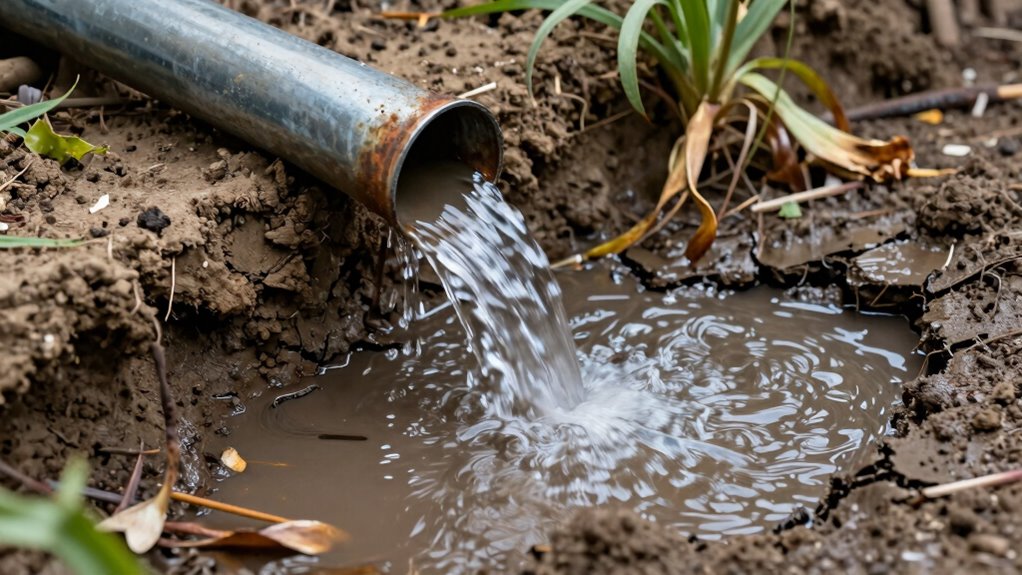
A common mistake homeowners make is directing downspouts too close to their foundation, which can lead to flooding in foundation beds. When rainwater from your roof isn’t properly diverted away, it tends to pool near your home’s base, causing water to seep into the foundation and damage your property. This not only affects your home’s structural integrity but also disrupts your garden drainage, creating soggy spots and muddy patches that are difficult to manage. To prevent this, you need to pay close attention to how you direct your downspouts and ensure they extend far enough from your house.
Proper gutter maintenance plays an essential role in avoiding these issues. Clogged gutters can cause overflow, leading to excessive water pouring out near your foundation instead of being channeled away properly. Regularly cleaning your gutters and downspouts is vital to keep water flowing smoothly. When your gutter system functions correctly, it minimizes the risk of water spilling over near your foundation, helping maintain healthy garden drainage and preventing pooling that can cause foundation flooding. Additionally, proper drainage management involves grading the landscape around your house so that water naturally flows away from the foundation. Creating efficient drainage pathways can significantly reduce the chances of water accumulation and protect your property from potential damage. Properly managing your landscape not only prevents water from pooling but also contributes to the overall health of your garden ecosystem. Ensuring your yard has a well-designed drainage system can make a significant difference in protecting your home from water damage.
As an affiliate, we earn on qualifying purchases.
Frequently Asked Questions
How Can I Tell if My Downspout Drainage Is Ineffective?
You can tell if your rain gutter drainage is ineffective by checking if water pools around your foundation after rain. Inspect the drainage slope; if the downspout directs water straight down or toward the house, it may cause flooding. Confirm gutters are clean and the downspout extends away from the foundation. Poor drainage often results from improper slope, so adjusting the downspout to direct water away helps prevent flooding.
What Are the Signs of Foundation Bed Flooding?
You’ll notice signs of foundation bed flooding through soil erosion around your yard and landscaping damage near your foundation. Water pooling or soggy spots indicate excess moisture, and cracked or shifting soil shows the ground’s instability. You might also observe plant stress or dying plants, which result from poor drainage. These signs suggest your foundation bed isn’t draining properly, often caused by downspout issues that direct water too close to your home.
Can Downspout Placement Affect Basement Moisture Levels?
Yes, downspout placement can considerably affect your basement moisture levels. When rain gutters direct water too close to your foundation, it causes soil erosion and allows excess moisture to seep into your basement. Properly extending downspouts away from your foundation prevents water accumulation, reduces moisture buildup, and helps keep your basement dry. Ensuring your rain gutter system directs water at least 3-4 feet away from your home is essential for basement health.
Are There Specific Materials Best for Preventing This Mistake?
Don’t put all your eggs in one basket—choose the right materials to prevent foundation flooding. Copper, galvanized steel, and high-quality PVC are your best bets for downspouts, as they resist corrosion and withstand weather. Pair these with effective drainage solutions like extensions and splash blocks to direct water away from your foundation. Using the right downspout materials and drainage solutions keeps moisture out and protects your home’s foundation long-term.
How Often Should I Inspect My Downspouts and Drainage System?
You should inspect your downspouts and drainage system at least twice a year, ideally in spring and fall. During inspections, focus on gutter cleaning to remove leaves and debris, which can block water flow. Also, check landscaping drainage around your foundation to guarantee water’s directed away from your home. Regular maintenance prevents clogs and foundation flooding, ensuring your drainage system functions effectively during heavy rains.
As an affiliate, we earn on qualifying purchases.
Conclusion
By ensuring your downspouts direct water away from your foundation beds, you prevent costly flooding and structural damage. While it might seem minor, overlooking this detail can lead to significant issues over time. Investing in proper downspout extensions or splash blocks is a simple step that offers long-term peace of mind. Remember, proactive maintenance not only preserves your home’s integrity but also saves you money—so don’t ignore this essential aspect of your drainage system.
As an affiliate, we earn on qualifying purchases.
As an affiliate, we earn on qualifying purchases.
Fall yard work Picks
leaf blowers
As an affiliate, we earn on qualifying purchases.