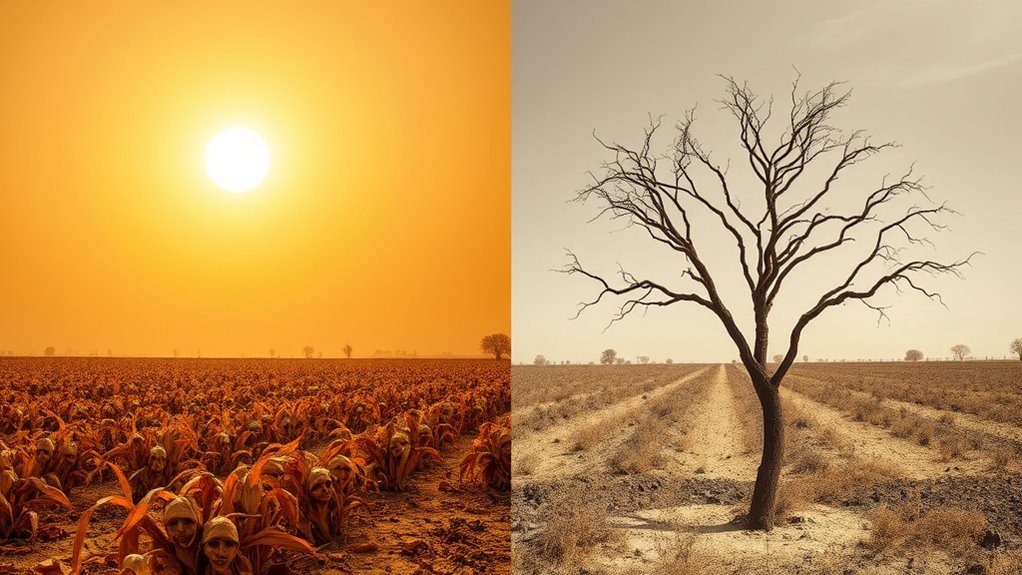

Heat stress causes plants to activate heat shock proteins and adjust membrane fluidity to protect cellular functions, while drought stress leads plants to close stomata, develop deeper roots, and accumulate osmolytes to conserve water. Both stresses impair nutrient uptake and create oxidative stress but trigger different long-term adaptations. Understanding these distinct and overlapping responses can help you develop effective management strategies. Keep exploring further insights to better manage these challenging conditions.
Key Takeaways
- Heat stress triggers rapid heat shock protein production, while drought stress develops gradually through water deficiency.
- Heat stress affects membrane fluidity and photosynthesis; drought stress causes water conservation and root system adjustments.
- Both stresses induce oxidative damage, but their physiological responses and molecular mechanisms differ.
- Drought resilience emphasizes root architecture and osmolyte accumulation; heat tolerance focuses on heat shock proteins and maintaining photosynthesis.
- Managing both stresses involves tailored crop management practices and breeding for combined stress tolerance traits.

Both heat stress and drought stress pose important threats to plant health and crop productivity, but they affect plants in different ways. When faced with rising temperatures, plants must activate heat adaptation mechanisms to survive. This involves producing heat shock proteins that protect cellular structures, adjusting membrane fluidity, and enhancing antioxidant defenses to combat oxidative damage. These responses help plants maintain their physiological functions despite the thermal challenge. In contrast, drought stress primarily disrupts water availability, forcing plants to develop drought resilience strategies. These include closing stomata to reduce water loss, accumulating osmolytes like proline and sugars to maintain cell turgor, and altering root architecture to access deeper water sources. Both types of stress demand different physiological and molecular adjustments, but they share the goal of safeguarding essential processes.
Understanding heat adaptation is essential if you want your crops to endure high-temperature periods. Breeding or selecting varieties with superior heat tolerance can improve resilience during heatwaves, reducing yield losses. Such plants often exhibit enhanced expression of heat shock proteins and better-maintained photosynthetic activity under stress. On the other hand, drought resilience requires a different set of traits. Drought-tolerant plants typically have deep or extensive root systems that explore soil moisture more efficiently. They also tend to exhibit increased leaf waxiness or altered stomatal behavior to minimize water loss. If you’re managing crops in drought-prone areas, fostering these traits in your plants can considerably improve their survival chances during prolonged dry spells.
Both stresses can also cause overlapping effects, such as oxidative stress and impaired nutrient uptake. However, their primary triggers and adaptive responses differ. Heat stress often leads to rapid physiological changes, with plants quickly activating heat shock responses, whereas drought stress tends to develop gradually, requiring longer-term adjustments like root growth and osmolyte accumulation. To effectively mitigate these stresses, you should consider integrated management practices that enhance both heat adaptation and drought resilience. This may include selecting stress-tolerant varieties, optimizing irrigation schedules, and employing soil amendments that improve water retention and thermal regulation. Additionally, incorporating crop management techniques inspired by plant tuning strategies can optimize plant performance under these stresses.
Frequently Asked Questions
How Do Heat and Drought Stresses Affect Crop Yields Differently?
Heat and drought stresses impact your crop yields differently. Heat stress often causes rapid damage, leading to reduced photosynthesis and increased stress biomarkers, signaling plant distress. Drought stress limits water availability, causing early crop failure and stunted growth. To combat these issues, you should focus on crop adaptation strategies, like selecting drought-tolerant varieties and monitoring stress biomarkers to optimize irrigation and improve resilience against both stresses.
What Are the Early Signs of Heat Stress in Plants?
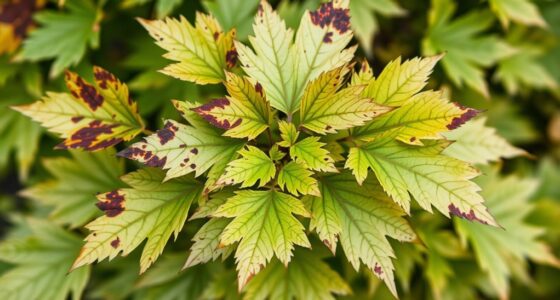
Imagine your plant wearing a sweater on a hot day—that’s like early heat stress. You’ll notice leaf curling, wilting, and increased leaf temperature, which disrupt plant hormone signaling. These signs show the plant struggles to regulate its internal temperature and maintain normal functions. If you see leaves turning a dull, crispy green, it’s a warning that heat stress is setting in, affecting growth and overall health.
How Can Farmers Mitigate Drought Stress Effectively?
To mitigate drought stress effectively, you should adopt efficient irrigation techniques like drip or sprinkler systems that target roots directly. Additionally, focus on soil moisture conservation by mulching and improving soil organic matter. These practices help retain water, reduce evaporation, and keep roots hydrated. Regularly monitor soil moisture levels and adjust your irrigation schedule accordingly, ensuring your crops receive adequate water without waste.
Are Certain Plant Species More Resistant to Heat or Drought Stress?
Some plant species are like fortresses against the storm, showing greater resilience to heat or drought stress. You’ll find that those with adaptive traits—deep roots, waxy coatings, or efficient water use—stand stronger. For example, succulents thrive in drought conditions, while heat-tolerant grasses endure scorching temps. By understanding these traits, you can choose species better suited to withstand the specific stresses your area faces, boosting your farm’s resilience.
What Long-Term Ecological Impacts Result From Prolonged Heat or Drought Stress?
Prolonged heat or drought stress can weaken ecological resilience, making ecosystems more vulnerable to changes. You might see biodiversity loss as species struggle to survive or adapt, leading to reduced habitat variety. Over time, these stresses can cause shifts in community composition, disrupt food webs, and diminish ecosystem services. If you’re concerned about long-term impacts, conserving biodiversity and promoting adaptive strategies become essential to maintain ecological stability.
Conclusion
So, while you might think heat and drought stress seem like separate villains, they actually team up to challenge your plants in unexpected ways. Ironically, what feels like a sunny, harmless day can turn into a silent threat, pushing your crops to the brink. Instead of easing up, these stresses often intensify each other, proving that nature’s greatest tricks are the ones you never saw coming. Sometimes, the biggest threat comes from the very environment you love.