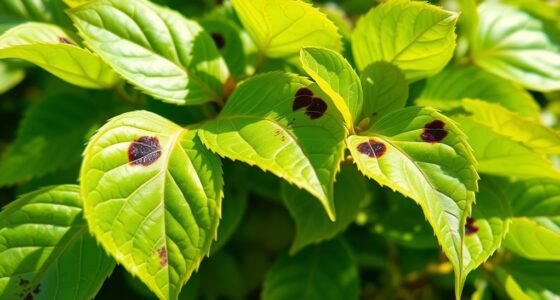
If you notice orange or rust-colored spots on your ornamental plants, it could be rust disease. Look for powdery, fuzzy pustules often on the undersides of leaves, stems, or flowers. To manage it, remove infected debris, improve airflow, and avoid overhead watering. Organic sprays like neem oil or sulfur can help prevent its spread. Acting quickly and keeping your plants healthy are key—discover more ways to protect your garden below.
Key Takeaways
- Rust diseases appear as orange or rust-colored pustules mainly on leaf undersides of ornamentals.
- Early detection through visual inspection is crucial for effective management of rust infections.
- Maintaining good air circulation, proper watering, and removing infected debris help prevent rust development.
- Organic fungicides like neem oil or sulfur sprays can control rust if applied early.
- Promptly removing and disposing of infected plant material reduces spore spread and promotes plant health.

Have you noticed orange or rust-colored spots on your ornamental plants? If so, you’re likely dealing with a rust disease, a common fungal issue that can quickly spread if not addressed promptly. Recognizing the signs early is vital, and understanding identification techniques can help you confirm the problem. Rust fungi typically appear as powdery, orange, or rust-colored pustules on the undersides of leaves, stems, or even flowers. These pustules may be raised or slightly fuzzy and often develop in circular or irregular patches. When you gently brush these spots, a powdery material might come off, indicating a fungal presence. Sometimes, yellowing or premature leaf drop accompanies these spots, signaling that the plant’s health is deteriorating. To accurately identify rust, examine the affected plant carefully and compare the symptoms with trusted guides or resources. Microscopic examination can confirm the presence of rust spores, but for most gardeners, visual identification suffices. Regular inspection and proper plant maintenance are essential components of rust prevention and management. Once you’ve identified rust symptoms, it’s vital to act swiftly to control the disease. Implementing organic control methods is often the safest and most sustainable way to manage rust on your ornamentals. Start by removing and disposing of all infected leaves and plant debris to reduce the fungal spores in your garden. Improve air circulation around your plants by pruning overcrowded branches; this helps keep foliage dry and makes it less hospitable for the fungus. Applying organic fungicides, such as neem oil or sulfur-based sprays, can also help suppress rust development. These treatments work best when applied preventatively or at the first signs of infection. Additionally, you can encourage natural enemies like beneficial insects, which may help keep rust spores in check. Regularly inspect your plants so you catch any new outbreaks early, and avoid overhead watering, since moisture on leaves fosters fungal growth. Keep your plants healthy with proper watering, fertilizing, and spacing—they’re better equipped to resist diseases when they’re vigorous.
Frequently Asked Questions
Can Rust Diseases Affect Edible Parts of Ornamental Plants?
Rust diseases can affect edible parts of ornamental plants, leading to potential edible contamination. If you consume these affected parts, it might impact the nutritional value and introduce harmful spores or toxins. Always inspect your plants carefully and remove any rust-infected areas to prevent health risks. Maintaining good plant health and hygiene minimizes the chance of rust spreading to edible sections, ensuring your plants remain safe and nutritious.
Are There Natural Predators That Control Rust Fungi on Ornamentals?
Yes, beneficial insects can help control rust fungi on ornamentals through biological control. You might find predatory insects like ladybugs or certain parasitic wasps that naturally keep rust spores in check. By encouraging these beneficial insects in your garden, you promote a balanced ecosystem that suppresses rust development without relying on chemical treatments. Creating diverse plantings and avoiding broad-spectrum pesticides will support these helpful predators, reducing rust problems effectively.
How Do Climate Changes Influence Rust Disease Outbreaks?
Climate change substantially impacts rust disease outbreaks by creating favorable conditions for the fungi’s emergence. As temperatures rise and humidity increases, you’ll notice more frequent and severe outbreaks on your ornamentals. Warmer, wetter weather accelerates disease development and spreads, making it harder to control. Staying alert to these climate impacts allows you to take proactive measures, like adjusting watering practices and choosing resistant plants, to better protect your garden.
Can Rust Diseases Spread Through Pruning Tools?
Think of your pruning tools as potential carriers of rust diseases—yes, they can spread these pathogens if not properly sanitized. When you perform pruning practices, it’s essential to clean and disinfect your tools between cuts, especially when moving from infected to healthy plants. This simple step acts like a shield, preventing rust spores from hitching a ride and infecting your ornamentals, keeping your garden healthy and vibrant.
What Are the Long-Term Effects of Rust Infections on Plant Health?
Rust infections can cause long-term plant decline if left untreated, weakening the plant’s systemic health. Over time, you might notice reduced vigor, fewer blooms, and increased susceptibility to other diseases. These systemic health impacts compromise the plant’s ability to absorb nutrients and resist stress, leading to further deterioration. To protect your ornamentals, address rust infections promptly, and sustain proper care to prevent lasting damage and ensure healthy growth.
Conclusion
By staying vigilant and recognizing rust diseases early, you can protect your ornamentals from irreversible damage. Remember, neglect is the silent partner of disease, quietly eroding your garden’s beauty. With proper identification and timely treatment, you hold the power to keep your plants healthy and vibrant. Don’t let rust take the spotlight—be the gardener who fights back, turning your garden into a lush, resilient haven that stands strong against nature’s threats.