Seedlings stretch under good lights because their natural growth process makes them seek more light, even when your setup is ideal. They do this to maximize photosynthesis by reaching for the best light angle and intensity. Hormonal signals, like auxins, trigger elongation when they sense insufficient light, causing stems to stretch. However, with proper spectrum and placement, you can encourage healthier, sturdier growth. Want to discover how to optimize your lighting for stronger seedlings? Keep exploring to find out more.

Get garden gear delivered free — and shop member deals
- Fast, free delivery on millions of items
- Access to Prime Big Deal Days deals on October 6–7
- Prime Video, Amazon Music and more included
Key Takeaways
- Seedlings naturally stretch to maximize light absorption, even under optimal lighting conditions, as part of their growth behavior.
- Hormonal signals like auxins promote elongation when light perception indicates insufficient light or uneven spectrum.
- A balanced spectrum reduces stretch; improper spectrum can still trigger elongation despite good lighting.
- Light intensity and placement influence hormonal responses, with low or uneven light causing seedlings to stretch.
- Proper lighting encourages sturdy, compact growth by minimizing hormonal cues that trigger elongation.
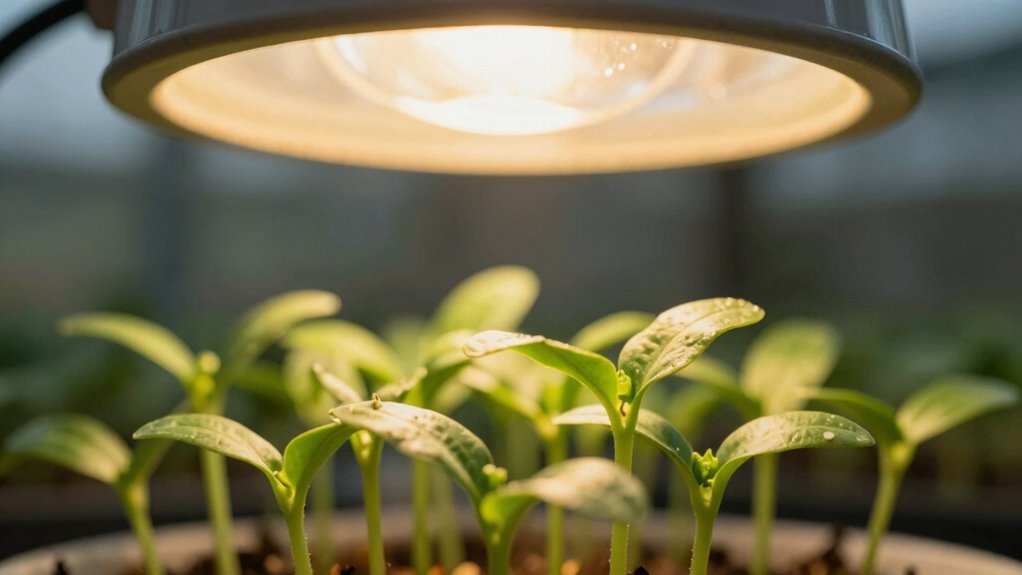
When seedlings are placed under quality grow lights, they begin to stretch and reach upward with renewed vigor. This natural response is driven by the plant’s attempt to maximize light absorption, which is essential for photosynthesis and healthy growth. Even under the best lighting setups, you might notice your seedlings elongate more than you’d expect. Understanding why this happens involves looking at how growth hormones and light spectrum influence plant development.
Plants produce growth hormones like auxins, which are responsible for cell elongation. When seedlings sense that light is insufficient or coming from a limited direction, they produce more auxins on the shaded side. This causes cells on that side to stretch more, making the plant bend or stretch upward in an effort to find better light. Good grow lights, especially those with the right light spectrum, can help mitigate this stretching by providing a balanced spectrum that closely mimics natural sunlight. When the light spectrum includes a healthy mix of blue and red wavelengths, it signals the plant that it’s in an optimal environment for growth, reducing the need for excessive elongation driven by hormonal imbalance.
However, even high-quality grow lights can’t entirely prevent stretching if they’re not positioned correctly or if the light intensity is too low. When the seedlings aren’t receiving enough light, their internal signaling systems trigger growth hormones to stretch the stems in search of more light. This is why proper placement and intensity are crucial. The goal is to provide a light spectrum that encourages compact, healthy growth rather than tall, spindly seedlings. Blue light, in particular, plays a vital role here because it promotes bushier growth and stronger stems, helping seedlings stay sturdy.
Your choice of grow lights should also consider the light spectrum. Full-spectrum LED grow lights, for example, deliver a range of wavelengths that support all stages of growth, reducing the plant’s need to stretch excessively. When seedlings are under lights with the right spectrum and intensity, they receive signals that tell them they’re in a suitable environment, which minimizes the production of growth hormones that cause stretching. Instead, they focus their energy on developing strong roots and sturdy stems. Proper light distribution is just as important as spectrum and intensity for preventing unwanted stretching.
In the end, the stretching of seedlings under good lights isn’t just a flaw but a natural response to their environment. By understanding how growth hormones and the light spectrum influence this process, you can adjust your lighting setup to promote healthy, compact growth. Providing the right light spectrum and ensuring the correct light intensity helps your seedlings grow strong and resilient, reducing unnecessary stretching and setting the stage for successful transplantation. Additionally, understanding how growth hormones respond to light can help you optimize your lighting conditions for healthier seedlings. Recognizing the role of light spectrum can make a significant difference in how well your seedlings develop. Moreover, monitoring light intensity and adjusting your setup accordingly ensures optimal growth conditions.
full spectrum LED grow lights for seedlings
As an affiliate, we earn on qualifying purchases.
As an affiliate, we earn on qualifying purchases.
Frequently Asked Questions
How Close Should Grow Lights Be Positioned Above Seedlings?
You should place your grow lights about 2-4 inches above your seedlings, adjusting as they grow. Keep in mind that light intensity and duration impact plant health—too close can cause heat stress, while too far reduces light effectiveness. Aim for around 12-16 hours of light daily, ensuring your seedlings get enough energy without stretching. Regularly monitor your plants and adjust the height to maintain ideal growth conditions.
Do Different Light Colors Affect Seedling Stretching Differently?
Different light colors do affect seedling stretching because the light spectrum influences seedling growth. Blue light promotes compact, healthy growth, reducing stretching, while red or far-red light can encourage elongation, making seedlings stretch more. You should choose a full spectrum or specific blue and red lights to optimize seedling development. Proper light spectrum guarantees your seedlings grow strong and stay compact, preventing excessive stretching and promoting healthy, robust growth.
Can Too Much Light Cause Seedling Stress or Damage?
Think of light as a double-edged sword—powerful yet potentially harmful if mishandled. Too much light intensity can stress your seedlings, causing damage and hindering their growth. This overload may delay seedling maturation or cause leaf burn. To avoid setbacks, monitor light levels carefully, ensuring they’re strong enough to promote healthy growth without overwhelming your plants. Balance is key; give your seedlings the right amount of light for ideal development.
How Long Should Seedlings Be Exposed to Grow Lights Daily?
You should expose seedlings to grow lights for about 12 to 16 hours daily, depending on their light needs. Keep an eye on seedling height; if they stretch too much, it indicates insufficient light, so increase light intensity or duration. Proper light exposure promotes healthy growth, preventing legginess. Make certain lights are kept at an appropriate distance to avoid stress or damage, fostering sturdy, well-developed seedlings.
Are There Specific Light Spectrums That Prevent Stretching?
You’ll find that a full-spectrum light, especially one rich in blue wavelengths, helps prevent stretching. Studies show blue light substantially influences compact growth, reducing leggy seedlings. The right light spectrum mimics natural sunlight, encouraging healthy, sturdy stems. By choosing grow lights with ideal spectrum for stretch prevention, you give your seedlings the best chance to develop strong, well-formed leaves without unnecessary elongation.
plant grow light spectrum for healthy seedlings
As an affiliate, we earn on qualifying purchases.
As an affiliate, we earn on qualifying purchases.
Conclusion
So, now you know why seedlings stretch even under good lights — it’s their way of reaching for what they need. When they show these signs, don’t ignore them; it’s a signal to adjust your lighting setup. Remember, a little attention goes a long way, and if you don’t address their needs, they might just grow tall and lanky before you know it. Keep a close eye, and your seedlings will stay strong and healthy, no matter what.
compact grow lights for indoor seedlings
As an affiliate, we earn on qualifying purchases.
As an affiliate, we earn on qualifying purchases.
blue and red LED grow lights for plants
As an affiliate, we earn on qualifying purchases.
As an affiliate, we earn on qualifying purchases.
Halloween Picks
halloween
As an affiliate, we earn on qualifying purchases.