If you notice water accumulating below your self-watering container’s reservoir, it likely points to a design flaw or maintenance issue. Poor aeration, clogged channels, or improper drainage can cause water to back up and leak out. Over time, material degradation may worsen these problems. Regularly inspect and clean the system to keep water flowing properly. Keep in mind, understanding these issues more deeply can help you find lasting solutions.

Get garden gear delivered free with Prime
- Fast, free delivery on millions of items
- Prime Video, Amazon Music and more included
- Member-only deals all year
Key Takeaways
- Blockages or clogs in water channels below the reservoir prevent proper water flow to the plant roots.
- Poor reservoir design or inadequate water pressure can cause water to stay below the reservoir, limiting root access.
- Debris or sediment buildup beneath the reservoir can obstruct water movement and cause dry spots.
- Material deterioration or cracks in the container may disrupt water distribution from below the reservoir.
- Insufficient aeration or water circulation underneath can lead to root rot and plant stress.
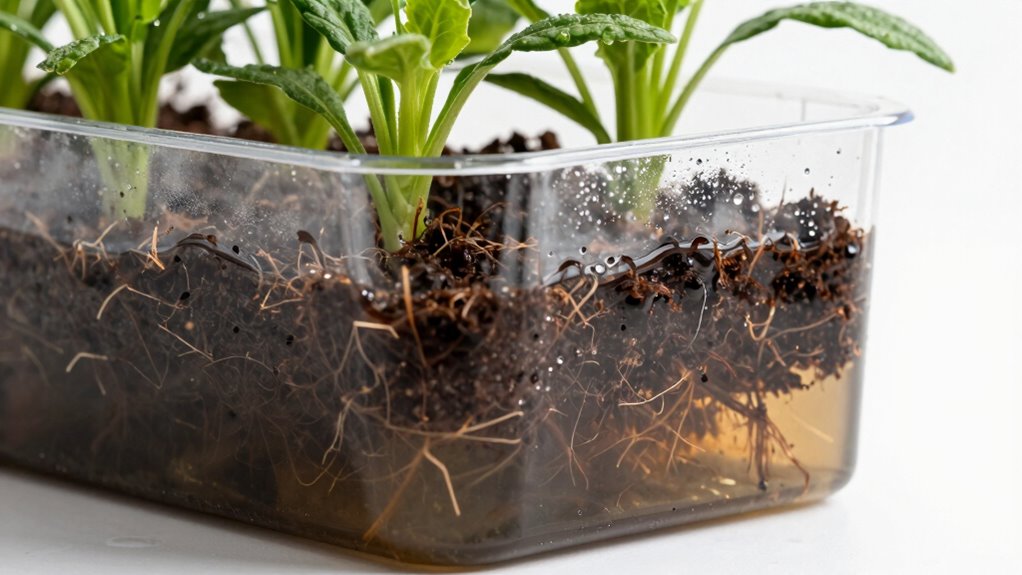
Have you ever wondered why your self-watering containers aren’t working as expected? You fill them up, watch your plants thrive for a few days, and then suddenly, they seem to struggle or even wilt. The issue often starts below the reservoir, where the water delivery system can become clogged or inefficient. One common cause is poor root aeration. When roots sit in waterlogged soil for too long, they struggle to get enough oxygen, which hampers their ability to absorb nutrients and can lead to root rot. If your container’s design doesn’t allow for proper root aeration, your plants will suffer, regardless of how much water you provide. Making certain that roots have access to fresh air is essential for healthy growth, so look for containers that promote good airflow or incorporate features that prevent water from stagnating around the roots. Ensuring material durability is maintained over time can also prevent structural issues that disrupt water flow. material durability also plays an indispensable role in the effectiveness of your self-watering system. Many containers are made from plastics or other materials that wear down over time, especially when exposed to sunlight, temperature fluctuations, or constant moisture. When the material degrades, it can develop cracks or become brittle, leading to leaks or blockages that disrupt water flow. This deterioration not only hampers root aeration but also shortens the lifespan of your container. Choosing high-quality, UV-resistant materials can help guarantee your container remains functional longer and maintains its integrity. Durability isn’t just about lasting longer; it’s about maintaining a stable environment for your plants, preventing issues like water contamination or uneven watering. Additionally, the design of the reservoir system itself impacts both root aeration and material durability. If the reservoir is too low or the water delivery channels are narrow or clogged, water won’t flow evenly, creating pockets of excess water or dry spots. This inconsistency stresses your plants and can lead to root-related problems. Regularly inspecting and cleaning these channels helps sustain proper water movement. Proper design minimizes the risk of root suffocation and ensures the container’s parts withstand regular use without breaking down. Being aware of potential clogging issues can help you troubleshoot and maintain your system more effectively. It’s also important to consider proper drainage to prevent water from stagnating and causing root health issues. Incorporating preventative maintenance routines into your care can further reduce the likelihood of blockages or damage. A well-designed system with adequate airflow can significantly improve root health and overall container performance. In the end, understanding that the problem begins below the reservoir can save you frustration. By paying attention to root aeration and selecting containers made from durable materials, you can repair or even prevent many issues. Think of your self-watering system as a delicate balance—good design and quality materials keep water flowing smoothly, roots breathing freely, and your plants thriving.
self-watering container water channel cleaning kit
As an affiliate, we earn on qualifying purchases.
As an affiliate, we earn on qualifying purchases.
Frequently Asked Questions
How Can I Prevent Mold Growth in the Container?
To prevent mold growth in your container, guarantee proper container ventilation by allowing airflow around the soil and avoiding excess moisture. Use well-draining soil and don’t overwater your plants, as too much moisture fosters mold. Regularly check for and remove any moldy spots, and consider placing the container in a well-ventilated area. Good ventilation and mold prevention practices keep your container healthy and mold-free.
What Are the Best Plants for Self-Watering Containers?
You should choose plants like herbs, lettuce, or small flowers that thrive in self-watering containers. Focus on plant placement to guarantee they receive appropriate sunlight and avoid overcrowding. Check soil compatibility, selecting well-draining, moisture-retentive soil suited for your plants. These choices help your plants grow healthy and strong, making the most of your container’s watering system while preventing issues like mold or root rot.
How Often Should I Check the Water Reservoir?
You should check the water reservoir daily, especially during hot weather, as some containers lose up to 20% of their water in a day. Water level monitoring helps prevent plants from drying out, so make it a habit. Regular reservoir maintenance guarantees the system functions smoothly, avoiding blockages or mold. By staying on top of these checks, you’ll keep your plants healthy and thriving with minimal effort.
Can Self-Watering Containers Be Used Outdoors Year-Round?
Yes, you can use self-watering containers outdoors year-round, but you need to take into account container maintenance and reservoir design. During winter, protect the containers from freezing temperatures, as ice can damage the reservoir and roots. Regularly check the reservoir for clogs or algae, and ensure the design allows proper drainage and air circulation. With proper care, your self-watering containers can thrive outdoors throughout all seasons.
What Signs Indicate My Container Is Overwatering?
Did you know overwatering affects about 80% of container plants? If your container’s soil feels consistently soggy, shows poor soil aeration, or develops a foul smell, you’re likely overwatering. Watch for yellowing leaves, root rot, or mold around the soil surface. These signs indicate excess moisture, which can suffocate roots and promote diseases. Adjust your watering habits to keep soil moist but not waterlogged for healthy plants.
UV-resistant self-watering plant containers
As an affiliate, we earn on qualifying purchases.
As an affiliate, we earn on qualifying purchases.
Conclusion
So, while your self-watering container may seem like a perfect solution, remember that even the best systems have their quiet challenges. Sometimes, what’s hidden beneath the surface requires gentle attention and patience. Embrace the small, unseen adjustments, for they often lead to the healthiest growth—both in your plants and in your understanding. In nurturing patience, you’ll find that the true beauty lies not just in the blooms, but in the quiet mastery of care.
self-watering planter with good aeration
As an affiliate, we earn on qualifying purchases.
As an affiliate, we earn on qualifying purchases.
reservoir leak repair for self-watering planters
As an affiliate, we earn on qualifying purchases.
As an affiliate, we earn on qualifying purchases.
Fall yard work Picks
leaf blowers
As an affiliate, we earn on qualifying purchases.