
Landscape fabric can fail due to installation mistakes or material deterioration over time, not just weed growth. If the fabric isn’t secured properly or has gaps, soil erosion and plant damage can occur even without weeds. Exposure to sun causes fabric to become brittle, tearing or breaking down faster. Poor maintenance and aging materials further reduce fabric effectiveness, leading to plant health problems. Keep exploring to learn how proper installation and care can extend your landscape fabric’s lifespan.
Key Takeaways
- Soil erosion beneath the fabric can occur due to improper installation, leading to exposed roots and plant instability.
- Material degradation from sun exposure causes fabric to become brittle and tear, reducing effectiveness over time.
- Poor sealing or overlapping allows soil and water to bypass the fabric, resulting in erosion and plant stress.
- Non-permeable fabrics restrict airflow and water movement, creating soggy conditions that harm plant roots.
- Environmental factors and aging weaken fabric integrity, leading to failure independent of weed growth.
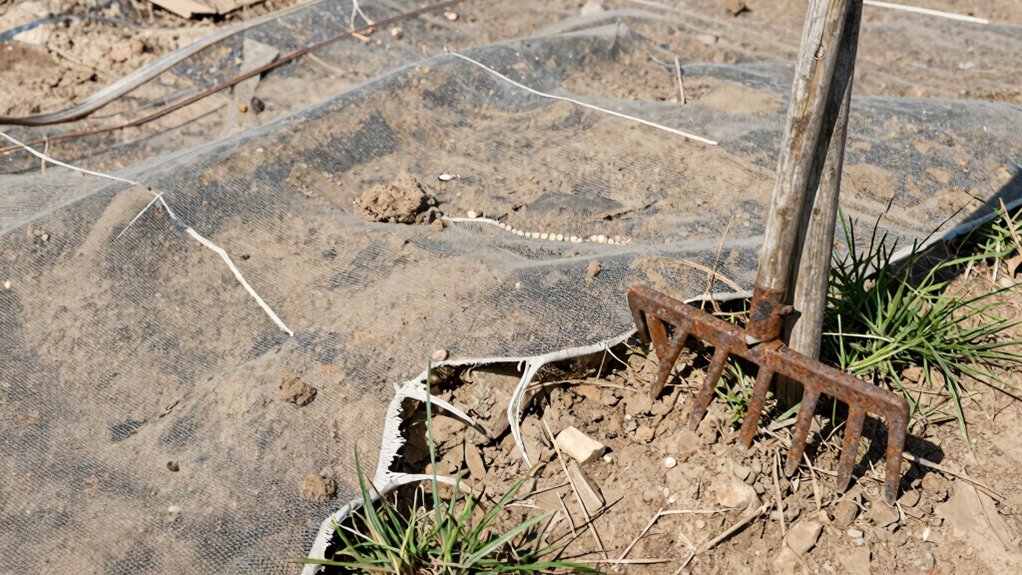
Landscape fabric often promises an easy solution for weed control and soil separation, but in reality, it can fail unexpectedly. One common issue is soil erosion. When the fabric isn’t installed properly or isn’t made from durable material, it can shift or break down over time. This allows wind and rain to wash away the soil beneath, exposing roots and destabilizing plants. Instead of protecting your garden, the fabric ends up contributing to soil loss, which can be especially damaging in areas with heavy rainfall or strong winds. As the soil erodes, plants struggle to establish strong roots, leading to weakened plant health or even death. You might notice your plants looking weak, with stunted growth or wilting leaves, long before weeds take hold.
Another reason landscape fabric can fail has nothing to do with weeds but directly impacts the health of your plants. If the fabric isn’t permeable enough, it can suffocate roots by limiting airflow and water penetration. Over time, this causes water to pool on the surface, creating a soggy environment that encourages root rot and fungal diseases. When plants aren’t getting the right amount of air and moisture, their overall health declines. You may see yellowing leaves, poor flowering, or even dieback, which makes it clear the fabric is doing more harm than good. Poor installation can also contribute to these problems. If the fabric isn’t secured tightly or overlaps aren’t sealed properly, gaps develop, allowing weeds to grow through and soil erosion to occur beneath. These gaps also hinder water movement, further stressing plants. An improper installation technique can significantly increase the risk of fabric failure, making it even more important to follow best practices. Additionally, material durability plays a crucial role in how long the fabric can effectively serve its purpose.
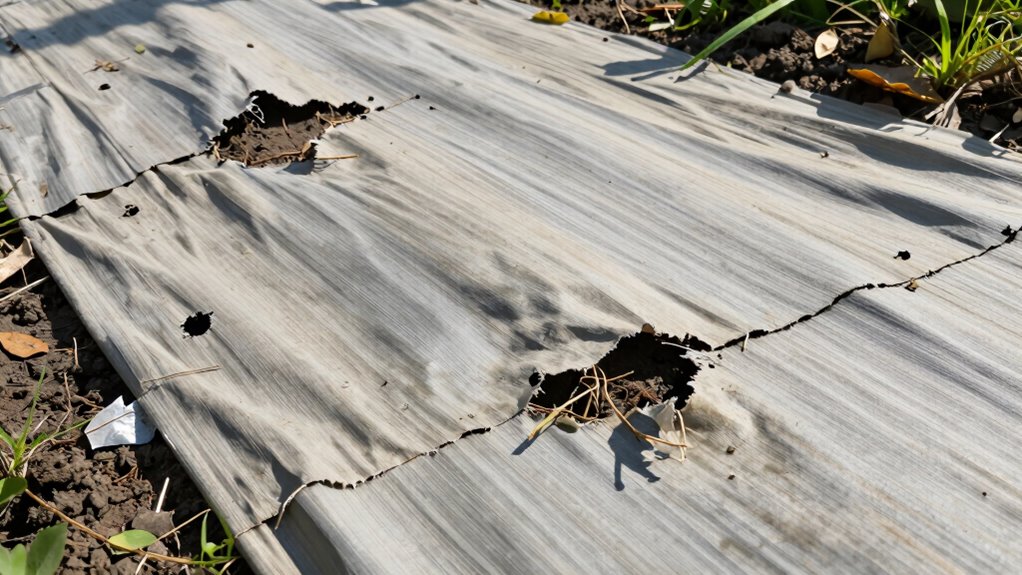
Furthermore, many landscape fabrics are not meant to last forever. Sun exposure causes degradation, making the material brittle and prone to tearing. As the fabric ages, it becomes less effective at controlling soil movement and plant growth. This deterioration accelerates soil erosion and compromises plant health, leaving you with a patchy, unmanageable landscape. When you notice plants declining or soil washing away, it’s often because the fabric has reached the end of its lifespan. In such cases, removal and replacement become necessary, which can be more costly and labor-intensive than anticipated. Proper installation techniques can help mitigate some of these issues, but ultimately, environmental factors and material quality determine longevity. Recognizing the signs of fabric deterioration early can save you time and resources in the long run. Proper maintenance practices, including timely replacement, are essential to prevent further damage.
landscape fabric installation tools
As an affiliate, we earn on qualifying purchases.
As an affiliate, we earn on qualifying purchases.
Frequently Asked Questions
Can Landscape Fabric Be Reused After Removal?
Yes, you can reuse landscape fabric after removal if it’s still in good condition. Check the fabric’s material durability; if it’s intact, free of tears, and flexible, it’s suitable for fabric reuse. Carefully clean off dirt and debris, and store it properly to prevent damage. Reusing fabric saves money and reduces waste, but make certain it remains durable enough for your new landscaping project to avoid future failures.
How Long Does Landscape Fabric Typically Last?
You can expect landscape fabric to last about 5 to 10 years, depending on quality, installation, and exposure to sunlight. During fabric installation, make sure it’s properly stretched and secured to maximize its weed suppression abilities. Over time, UV rays and environmental factors can degrade the fabric, reducing effectiveness. Regular inspections and proper maintenance help extend its lifespan, but eventually, it may need replacing to keep weeds at bay.
Are There Eco-Friendly Alternatives to Traditional Landscape Fabric?
You want eco-friendly alternatives to traditional landscape fabric. Biodegradable options and organic mulches stand out, breaking down naturally and enriching your soil. Unlike synthetic fabrics, these choices promote healthy plant growth and reduce environmental impact. By switching to organic mulches or biodegradable materials, you embrace sustainability, ensuring your garden remains vibrant while supporting eco-conscious practices. This contrast highlights how you can nurture your landscape without harming the planet.
Does Landscape Fabric Affect Soil Health Over Time?
Yes, landscape fabric can affect soil health over time. You might notice soil nutrient degradation because the fabric blocks organic matter and water flow, limiting nutrient cycling. It can also disrupt microbial activity, which is essential for healthy soil. Over time, these effects can hinder plant growth and soil robustness. To preserve soil health, consider eco-friendly alternatives like compost or organic mulches that support natural soil processes.
What Are Common Signs of Landscape Fabric Failure?
Ever wonder if your landscape fabric is really doing its job? Signs of failure include poor weed suppression, as weeds start poking through, and visible fabric degradation, where the material breaks down or frays. You might also notice uneven plant growth or soil erosion, indicating the fabric isn’t holding up. These issues reveal that your fabric’s effectiveness is waning, and it’s time to replace or fix it before problems worsen.
durable landscape fabric for weed control
As an affiliate, we earn on qualifying purchases.
As an affiliate, we earn on qualifying purchases.
Conclusion
So, next time your landscape fabric seems to fail, remember it’s not always about weeds. Poor installation, soil conditions, or even UV damage could be to blame. Are you prepared to troubleshoot beyond the surface? By understanding the real reasons behind fabric failure, you can take better steps to guarantee your garden stays beautiful and weed-free. Don’t let hidden issues catch you off guard—your landscape deserves a thoughtful, lasting solution.
permeable landscape fabric for gardens
As an affiliate, we earn on qualifying purchases.
As an affiliate, we earn on qualifying purchases.
As an affiliate, we earn on qualifying purchases.