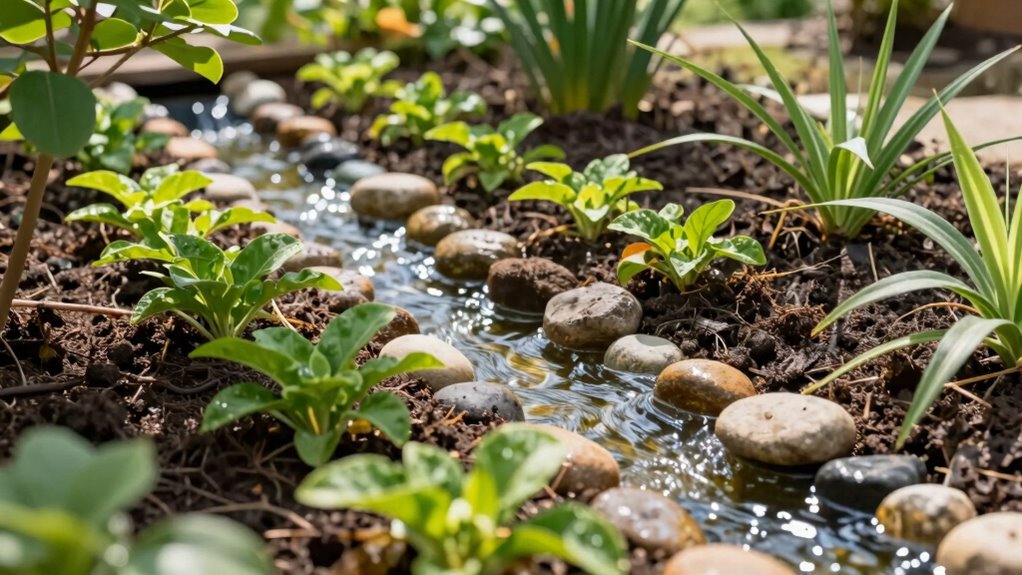

To fix yard drainage without overdrying your soil, focus on gentle solutions like soil aeration to improve airflow and water absorption, and shaping the land with grading to direct excess water away from plants and your foundation. Installing French drains or dry wells can help manage stubborn water, while adding organic matter enriches the soil and improves porosity. Keeping an eye on your system’s maintenance ensures your plants stay healthy, and there’s more to discover for peak results.
Key Takeaways
- Incorporate soil aeration to improve drainage without overly drying roots.
- Use organic matter and mulch to maintain consistent moisture levels around plants.
- Install French drains or dry wells to channel excess water away safely.
- Grade the yard to create gentle slopes, preventing water pooling and soil saturation.
- Regularly inspect and adjust drainage systems to balance soil moisture and prevent overdrying.
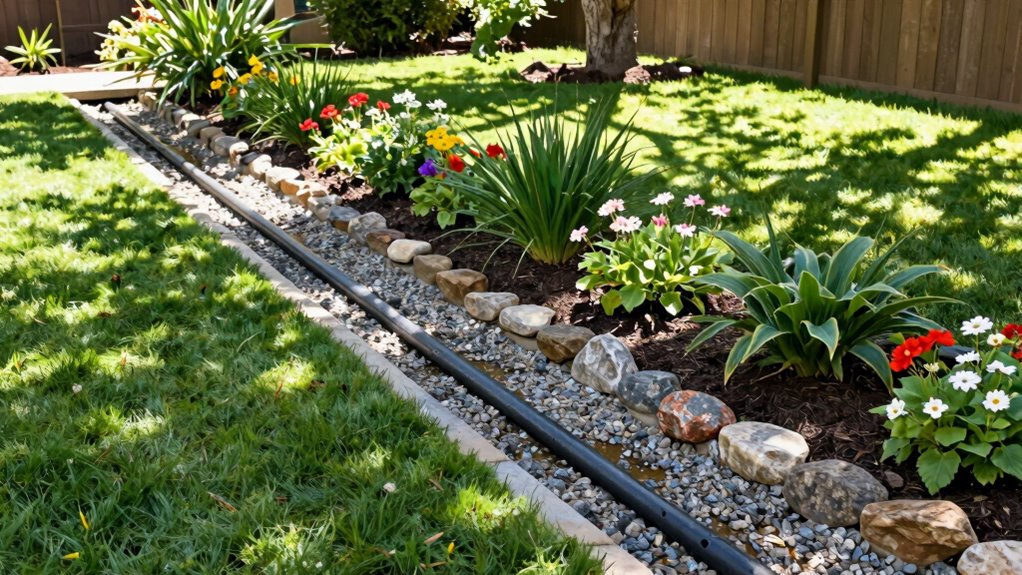
Poor yard drainage can lead to soggy lawns, muddy patches, and even foundation problems if left unaddressed. When water doesn’t drain properly, it saturates the soil, creating conditions that can harm your plants and compromise your home’s stability. To fix this, you need effective solutions that improve water movement without drying out your soil. One key step is soil aeration. By poking small holes into the ground, you allow air, water, and nutrients to reach plant roots more efficiently. Aeration helps break up compacted soil, which is often a cause of poor drainage, and encourages healthy root growth. It’s especially useful if you notice that your soil feels dense or water tends to pool after rain. Combined with soil aeration, grading techniques play an essential role in managing water flow. Proper grading involves shaping the land so that water naturally moves away from your house and garden beds. You can do this by creating gentle slopes that direct runoff toward designated drainage areas or storm drains. Ensuring the land slopes away from your foundation helps prevent water accumulation that can cause structural damage over time. When performing grading, focus on smooth, consistent slopes rather than abrupt changes that may cause erosion or pooling. Sometimes, simply adding soil to low spots to elevate the terrain can make a significant difference. It’s best to use materials that match your existing soil to avoid creating barriers to drainage or plant growth. For stubborn areas where water tends to collect, installing drainage solutions like French drains or dry wells can be highly effective. These systems channel excess water away from problem zones, maintaining a balance where soil stays moist enough for plants but not overly saturated. Incorporating proper soil structure techniques can further enhance drainage and plant health. You can also consider incorporating organic matter into your soil, which improves its structure and capacity to drain properly. Organic amendments increase porosity, giving roots room to breathe and preventing water from stagnating. Additionally, using mulch around plants can help regulate soil moisture and reduce surface runoff. Remember, the goal isn’t just to move water away but to create an environment where plants can thrive without risking over-drying or drowning. Proper soil structure and drainage systems work together to promote healthy plant growth and protect your home’s foundation. Regular maintenance, such as inspecting and adjusting grading or aeration, keeps these systems functioning efficiently. By taking these steps, you’ll foster a balanced moisture level in your soil, supporting vibrant plant growth while avoiding the pitfalls of waterlogged or overly dry conditions.
French drain kit for yard drainage
As an affiliate, we earn on qualifying purchases.
As an affiliate, we earn on qualifying purchases.
Frequently Asked Questions
How Often Should Yard Drainage Systems Be Inspected?
You should inspect your yard drainage system at least once a year, especially after heavy rains. Regular inspections help you identify issues with soil aeration and guarantee water absorption remains effective. Check for clogs, erosion, or pooling water, and clear any debris. Proper maintenance prevents overwatering or dry patches, promoting healthy plant growth. By staying proactive, you’ll keep your yard well-drained, supporting lush, thriving plants without risking soil overdrying.
Can Drainage Fixes Prevent Root Rot in Plants?
Yes, drainage fixes can prevent root rot in plants. By improving soil aeration through proper drainage, you allow excess water to escape, reducing overly wet conditions that foster rot. Installing drainage barriers helps direct water away from plant roots, maintaining ideal moisture levels. Together, these fixes promote healthy roots, prevent waterlogging, and keep plants thriving without risking root rot. Regular inspections guarantee these systems continue functioning effectively.
Are There Eco-Friendly Drainage Solutions Available?
Yes, eco-friendly drainage solutions like rainwater harvesting and permeable paving are available. Rainwater harvesting captures excess water, reducing runoff and promoting soil health, while permeable paving allows water to seep into the ground naturally, preventing oversaturation. These methods help manage yard drainage effectively without harming the environment, ensuring your plants stay healthy and your soil stays balanced. You can implement these solutions easily for sustainable yard care.
How Much Does Professional Yard Drainage Installation Cost?
You’re probably wondering how much professional yard drainage costs, right? Well, it varies based on the drainage materials used and the installation techniques your landscaper chooses. Typically, prices range from $1,000 to $5,000, depending on yard size and complexity. Expect to pay for quality pipes, gravel, and expert labor. Investing in good drainage guarantees your plants thrive without risking costly water damage or soggy soil, so it’s worth every penny.
Will Drainage Improvements Increase Property Value?
Yes, drainage improvements can boost your property value. When you enhance soil aeration and improve drainage grading, your yard becomes healthier, more attractive, and easier to maintain. These upgrades reduce standing water and prevent soil erosion, making your landscape more appealing to potential buyers. Investing in proper drainage not only protects your plants but also adds long-term value to your property, making it a smart and attractive upgrade.
As an affiliate, we earn on qualifying purchases.
Conclusion
By implementing these yard drainage fixes, you’ll create a healthier environment for your plants and prevent soil from drying out too quickly. Did you know that proper drainage can increase plant growth by up to 30%? Taking steps like installing French drains or adjusting grading guarantees your garden stays moist and vibrant. With just a few simple adjustments, you’ll enjoy a lush, thriving yard that’s both beautiful and sustainable.
As an affiliate, we earn on qualifying purchases.

Brut Organic Aspen Mulch 10 QT – Natural Moisture Retainer & Root Protector – Odor-Free, Nutrient-Rich Bark Mulch for Landscaping, Garden Beds & Potted Plants
- Natural Garden Cover: Minimizes weeds and supports healthy soil
- High Carbon Organic Mulch: Contains 30% natural carbon for soil vitality
- Moisture-Retaining & Water-Efficient: Helps retain soil moisture and reduce watering
As an affiliate, we earn on qualifying purchases.
As an affiliate, we earn on qualifying purchases.