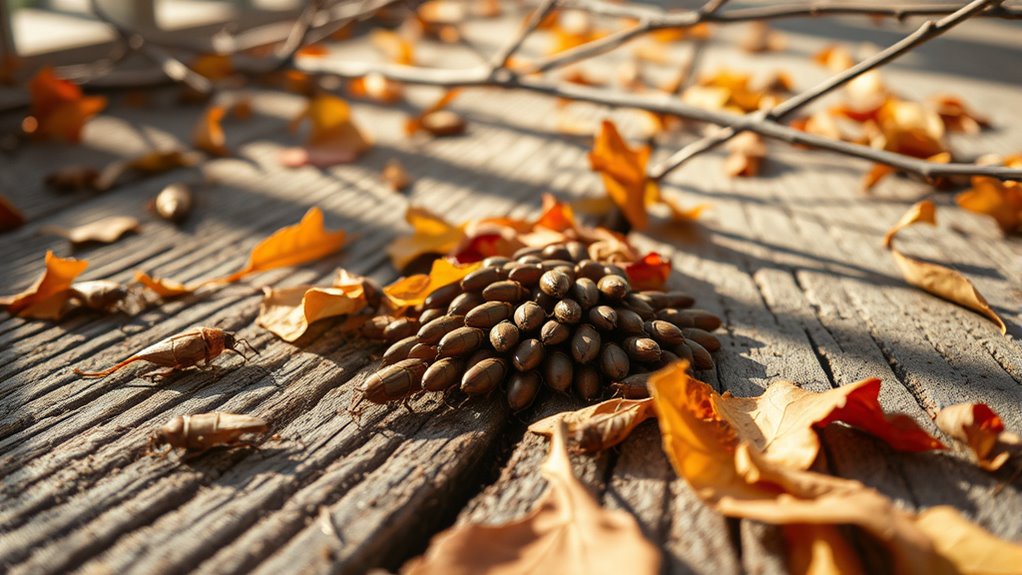

In fall, you should check for overwintering pests like cockroaches, mice, and stink bugs by sealing cracks, gaps, and holes around your home’s foundation, windows, and doors. Reduce clutter and keep food stored in airtight containers to prevent attracting pests, and fix any leaks to control moisture that draws them inside. Regularly monitor your space for signs of activity. Staying proactive helps keep pests out, and if you keep exploring, you’ll discover even more effective tips to protect your home during colder months.
Key Takeaways
- Seal cracks, gaps, and entry points around windows, doors, and foundation to prevent overwintering pests from entering.
- Remove clutter and store food securely to reduce indoor attractants for pests seeking shelter.
- Fix leaks and manage indoor humidity to create less inviting environments for overwintering pests.
- Install door sweeps and weatherproof window frames to block potential pest entry routes.
- Regularly inspect and set traps in storage areas, basements, and attics for early pest detection.

Have you thought about how pests can sneak into your home as the seasons change? Fall signals a shift in weather, and pests instinctively seek warm, sheltered places to overwinter. To protect your home, it’s essential to focus on indoor pest prevention and implement effective pest proofing strategies now. These steps can help you avoid unwelcome guests like mice, cockroaches, and spiders that are looking for cozy spots to survive the winter months.
Start by inspecting the exterior of your home carefully. Seal cracks, gaps, and holes around windows, doors, and the foundation. Even tiny openings can serve as entry points for pests. Use weather stripping and door sweeps to block gaps at the bottom of doors, and consider installing door seals if needed. These simple pest proofing strategies create a barrier that pests find difficult to penetrate, greatly reducing the risk of indoor infestation.
Seal cracks and gaps around windows, doors, and the foundation to prevent pest entry.
Inside, focus on eliminating attractants. Clear out clutter in storage areas, basements, and attics, as these become perfect overwintering habitats. Store food in airtight containers and clean up crumbs and spills promptly—these are small but vital steps in indoor pest prevention. Regularly vacuum and dust to remove pest eggs and debris that may harbor insects or pests. Pay special attention to cracks around pipes, vents, and utility lines—these are common entry points that can be easily overlooked. Additionally, STEM toys can encourage children to learn about science and safety, including pest prevention, in an engaging way.
Another key aspect of pest proofing involves managing moisture. Many overwintering pests thrive in humid environments, so fix leaky pipes, ensure proper drainage around your home, and use dehumidifiers if needed. Keeping indoor spaces dry makes them less inviting for pests seeking shelter. Additionally, consider installing door sweeps and weatherproofing window frames to prevent pests from slipping inside when doors or windows are opened.
Monitoring is equally important. Set traps in strategic spots to catch pests before they establish a foothold. Regularly inspect storage areas, basements, and attics for signs of pests—early detection allows you to act before an infestation gets out of control. If you find pests or signs of their presence, don’t hesitate to contact a professional pest control service to determine the best course of action.
Frequently Asked Questions
How Can I Identify Hidden Overwintering Pests in My Home?
To identify hidden overwintering pests in your home, perform a thorough DIY inspection focusing on pest signs like droppings, shed skins, or tiny holes in walls and stored items. Look behind appliances, inside cabinets, and in dark, undisturbed areas. Be attentive to musty smells or unusual sounds. Catching these signs early helps prevent infestations, so stay vigilant and regularly check hidden spots where pests tend to hide during winter.
Are There Eco-Friendly Methods to Prevent Pest Overwintering?
Imagine you’re using natural repellents like citronella or peppermint oil in your home, which can deter pests without harsh chemicals. You can also modify habitats by sealing cracks and reducing clutter to make your home less inviting for overwintering pests. These eco-friendly methods work together to prevent pests from settling in, helping you protect your home sustainably while keeping harmful chemicals out of your environment.
When Is the Best Time for Fall Pest Inspections?
You should schedule your fall pest inspections in late September to early October, aligning with seasonal pest activity. This timing guarantees you catch pests preparing to overwinter and identify potential entry points before they become a bigger problem. Proper home inspection timing helps you address vulnerabilities early, reducing the risk of infestations. Act now to protect your home and prevent pests from establishing overwintering sites.
Do Outdoor Pests Migrate Indoors During Winter?
Imagine outdoor pests as winter travelers, seeking shelter from the cold. Yes, outdoor pest migration is common during winter as they move indoors to escape freezing temperatures. You might notice increased pest activity inside your home during winter pest movement, especially if cracks and gaps are present. To prevent unwelcome visitors, seal entry points and prepare your home ahead of the season’s shift. Stay vigilant to keep winter’s chill outside, where it belongs.
How Do I Differentiate Between Pests and Harmless Overwintering Organisms?
You can tell pests apart from harmless overwintering organisms by looking for signs of pest activity, like droppings, gnaw marks, or unusual damage. Harmless overwintering creatures often don’t cause harm or leave these signs. If you see movement or damage near food or in hidden spots, it’s likely pests. Regular inspection helps you identify these signs early, so you can take appropriate action and keep your home pest-free.
Conclusion
As you prepare for winter, think of your home as a fortress guarding against unwelcome invaders. By staying vigilant and sealing those tiny cracks, you’re guiding the pests to find warmer hideouts elsewhere. Consider this fall pest check your shield, keeping your cozy haven pest-free. With a little effort now, you’ll enjoy a peaceful, pest-free winter—like a castle untouched by invaders, your home remains a safe haven all season long.