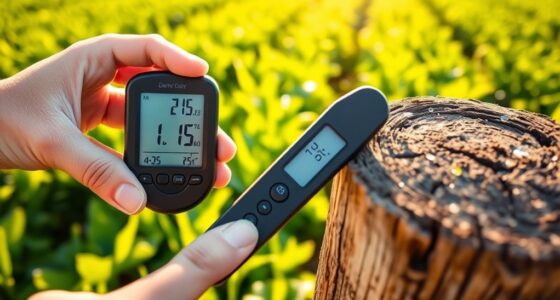

You should prioritize backup power for your climate control systems, like heating and cooling, to keep the environment stable. Next, focus on lighting to guarantee plants continue photosynthesis, especially during outages. Irrigation systems are also critical, as consistent watering supports healthy growth. Ventilation helps prevent mold and pests, so keep that running too. By managing these priorities, you’ll better protect your greenhouse from disruptions. Keep exploring to learn more about creating a resilient backup plan.

Get garden gear delivered free with Prime
- Fast, free delivery on millions of items
- Prime Video, Amazon Music and more included
- Member-only deals all year
Key Takeaways
- Maintain continuous temperature and humidity control to prevent plant stress and damage.
- Prioritize backup lighting to ensure optimal photosynthesis and growth cycles.
- Keep irrigation systems operational to prevent water stress and root health issues.
- Ensure ventilation and air circulation systems run continuously to prevent mold and pests.
- Use monitoring systems to quickly respond to environmental changes and manage critical backups efficiently.
Have you ever considered what happens to your greenhouse plants during a power outage? When the power goes out unexpectedly, your plants lose essential temperature regulation, lighting, and irrigation systems. Without a backup power plan, they’re vulnerable to stress, disease, and even death if the outage lasts long enough. That’s why determining what needs priority first becomes imperative for maintaining a healthy, productive greenhouse environment.
Your first concern should be maintaining consistent temperature and humidity levels. Sudden drops or rises in temperature can shock your plants, impairing their growth or causing damage. To guarantee these conditions remain stable, you need a reliable source of power that can kick in immediately when the grid fails. Solar energy combined with energy storage solutions offers a sustainable, efficient way to achieve this. Solar panels can generate power during daylight hours, and with energy storage systems, you can store excess energy to use when the sun isn’t shining. This setup provides a steady, renewable power supply, reducing your reliance on diesel generators or grid power, which can be noisy, costly, and less environmentally friendly.
Prioritize stable temperature and humidity with solar-powered backup systems for a resilient greenhouse environment.
Prioritizing lighting is also essential, especially if you grow plants that require specific light cycles or if you’re extending daylight hours through artificial lighting. During a blackout, your solar energy system, paired with batteries, can supply enough power to keep your grow lights running. This ensures photosynthesis continues smoothly, and your plants don’t experience growth setbacks. Proper energy storage means you can store excess solar power during the day, making it available at night or during prolonged outages, safeguarding your lighting needs.
Irrigation systems are another critical element. Without power, automated watering systems may stop, risking underwatering or overwatering, both of which can harm your plants. With a well-designed backup, your energy storage system can keep your irrigation running, ensuring your plants receive consistent watering regardless of external power disruptions. This consistency is essential for healthy root development and overall plant health. Additionally, incorporating biodiversity-friendly practices in your greenhouse management can enhance resilience and promote sustainable growth during such disruptions. Using energy-efficient equipment can further extend your backup capacity and reduce overall energy demands, making your system more resilient during outages. Incorporating monitoring systems can help you keep track of environmental conditions and respond quickly to changes, increasing your greenhouse’s resilience. Furthermore, selecting durable backup systems designed for continuous operation can ensure your critical systems remain functional through extended outages.
Finally, don’t forget ventilation and air circulation systems. Poor airflow can lead to humidity buildup, mold, or pests. When your main power is out, a backup power source should prioritize these systems to maintain air quality and prevent disease. Using solar-powered ventilation fans and other equipment can significantly reduce your reliance on stored energy and help sustain a stable environment. Incorporating solar energy and energy storage here helps keep your greenhouse environment stable, even during extended outages.
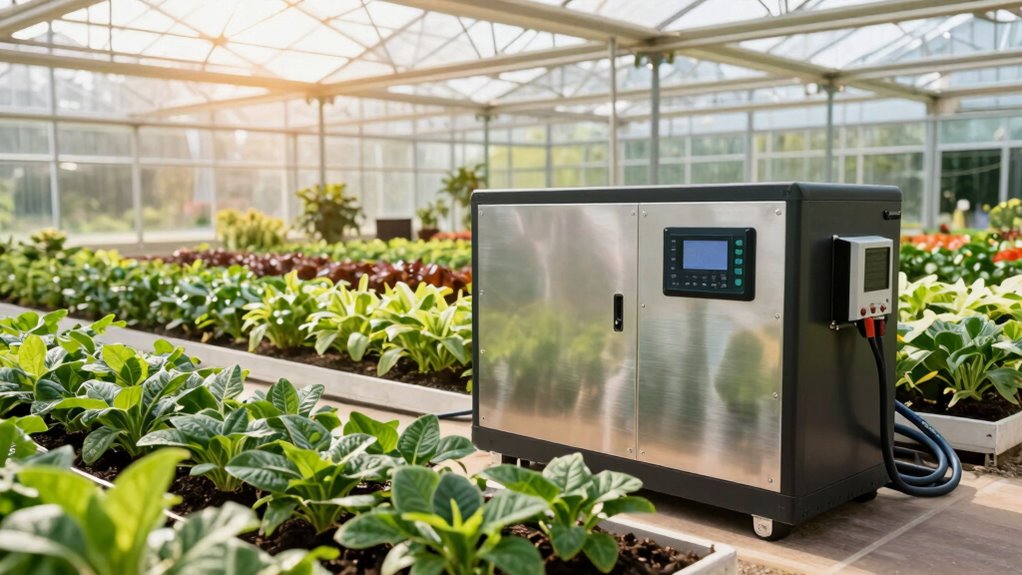
solar backup power system for greenhouse
As an affiliate, we earn on qualifying purchases.
As an affiliate, we earn on qualifying purchases.
Frequently Asked Questions
How Long Should Backup Power Last During Outages?
You should plan for backup power to last at least 24 to 48 hours during outages. This guarantees emergency protocols can be followed, keeping your plants safe and maintaining essential systems. Incorporate power outage planning into your overall strategy, including testing your backup systems regularly. Prioritizing a reliable power supply prevents damage to your greenhouse, giving you peace of mind and protecting your investment during unexpected outages.
What Are the Most Cost-Effective Backup Power Options?
You’ll find that battery storage and fuel generators are your best bets for cost-effective backup power. Battery storage offers quiet, maintenance-free energy, ideal for short outages and powering essential systems. Fuel generators, though slightly pricier upfront, provide longer-lasting power and can handle higher loads. Combining both allows you to optimize costs, ensuring your greenhouse remains productive without overspending, especially during unexpected outages.
How Does Backup Power Impact Greenhouse Crop Health?
Backup power helps maintain stable temperature and humidity, which directly benefits your crop health. It prevents pest outbreaks that thrive in stress conditions and guarantees nutrient management remains consistent, avoiding deficiencies. By keeping systems running during outages, you reduce plant stress, promote healthy growth, and protect your investment. Prioritizing backup power keeps your greenhouse resilient, supporting both pest control efforts and ideal nutrient delivery for thriving crops.
Can Solar Power Be a Reliable Backup Solution?
Yes, solar power can be a reliable backup solution if you use high-quality solar batteries and power inverters. Solar batteries store energy generated during sunlight, ensuring a steady power supply when the sun isn’t shining. Power inverters convert the stored DC power into AC, compatible with your greenhouse equipment. Properly sized and maintained, this system provides consistent backup power, helping you protect your crops during outages.
What Maintenance Is Required for Backup Power Systems?
Maintaining your backup power system means regularly revisiting and revitalizing your routines. You should routinely check your battery maintenance, ensuring batteries stay charged and corrosion-free. Generator testing is vital too; run your generator periodically to confirm it starts smoothly and runs properly. Properly performing these tasks prevents potential failures, preserves power reliability, and prolongs system lifespan, so you can confidently keep your greenhouse thriving even during outages.
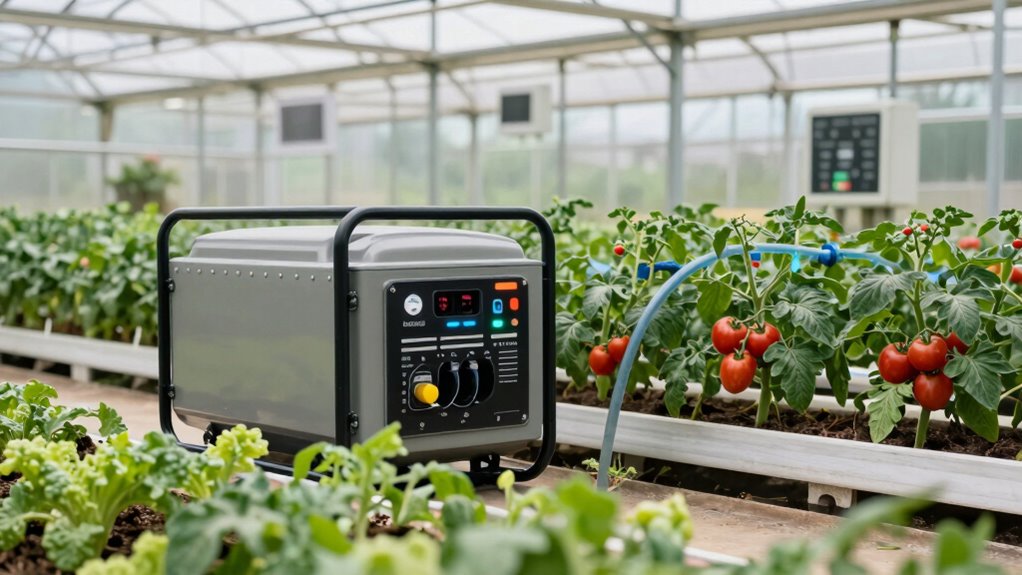
automated irrigation system with backup power
As an affiliate, we earn on qualifying purchases.
As an affiliate, we earn on qualifying purchases.
Conclusion
Prioritizing backup power in your greenhouse means you’re safeguarding your plants against unpredictable outages. Imagine a sudden blackout—without backup, essential systems like heating, irrigation, and lighting could falter, risking your entire crop. But with a reliable backup plan, you keep the warmth and nourishment steady, like a steady heartbeat for your greenery. Think of it as planting a resilient shield around your greenhouse—giving your plants the security they need to thrive, no matter what.
solar-powered grow lights for greenhouse
As an affiliate, we earn on qualifying purchases.
As an affiliate, we earn on qualifying purchases.
energy storage batteries for greenhouse
As an affiliate, we earn on qualifying purchases.
As an affiliate, we earn on qualifying purchases.
Fall yard work Picks
leaf blowers
As an affiliate, we earn on qualifying purchases.