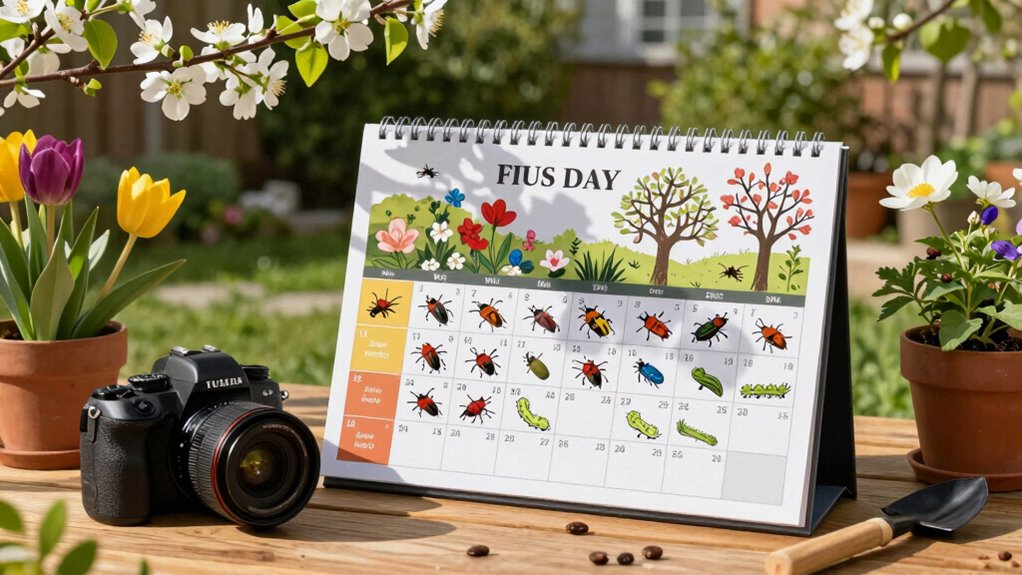

To build a seasonal pest calendar for your backyard, start by tracking pest activity for each season and noting common local pests like Japanese beetles, mosquitoes, or rodents. Schedule preventative actions such as inspecting plants in spring, removing standing water in summer, sealing cracks in fall, and tidying up debris in winter. Combine these steps with integrated pest management and natural controls. Continue exploring these strategies to develop a tailored plan that keeps pests at bay all year round.

Get garden gear delivered free — and shop member deals
- Fast, free delivery on millions of items
- Access to Prime Big Deal Days deals on October 6–7
- Prime Video, Amazon Music and more included
Key Takeaways
- Identify common pests in your region and their peak activity periods throughout the year.
- Track pest lifecycle stages to schedule targeted prevention and control measures effectively.
- Record seasonal garden activities and maintenance tasks that influence pest presence.
- Use local weather patterns to anticipate pest emergence and reproductive cycles.
- Incorporate regular inspections and adjust treatments based on pest activity and environmental conditions.
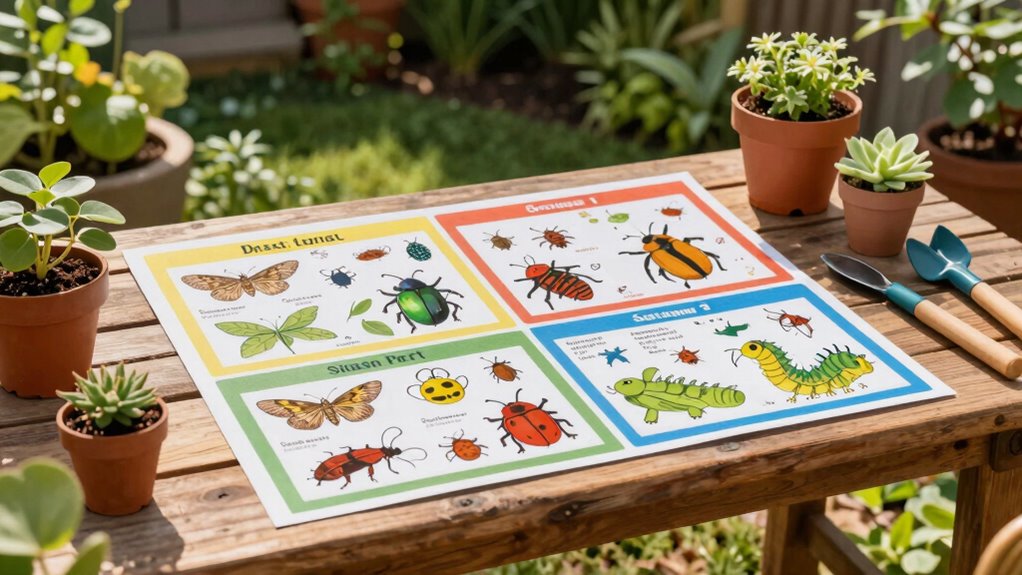
Begin by noting the peak times for different pests in your region. For example, in early spring, focus on preventing pests like Japanese beetles and slugs by inspecting your plants regularly and removing any early signs of infestation. As temperatures rise, be vigilant against mosquitoes, which breed in standing water, so empty or treat containers, birdbaths, and clogged gutters to eliminate breeding sites. During summer, pests like ants and wasps become more prominent, so sealing entry points around your home and maintaining clean, debris-free garden beds can help minimize their presence. Incorporating integrated pest management techniques can further enhance your efforts by combining cultural, biological, and mechanical controls to reduce reliance on chemicals.
Monitor pests seasonally, from Japanese beetles in spring to ants and wasps in summer, for proactive garden protection.
Fall is a critical period for pest prevention because many pests seek shelter indoors as temperatures drop. You should monitor for signs of rodents or spiders and take steps to seal cracks and gaps around your house foundation. Clearing fallen leaves and compost piles reduces hiding spots for pests and discourages their return. Additionally, understanding the role of biodiversity in pest control can enhance your efforts by attracting beneficial insects that naturally keep pest populations in check. Creating a diverse habitat in your garden encourages these beneficial species to thrive and helps keep pest levels balanced. Moreover, planting native plants can support this natural pest regulation by providing food and shelter for beneficial insects. A pest lifecycle understanding can help you anticipate and disrupt the breeding cycles of common pests more effectively.
In winter, focus on maintaining your yard by removing debris and preventing pests from over-wintering in sheltered spots. Keeping your garden tidy and free of clutter supports ongoing garden maintenance and reduces pest harborage. Regularly inspecting your home for entry points can also prevent pests from gaining access during colder months. Keeping a detailed calendar helps you remember when to perform specific pest prevention actions, like applying organic barriers or introducing beneficial insects. By staying organized and consistent, you’ll build a reliable plan that minimizes pest problems before they escalate.
In conclusion, a well-structured seasonal pest calendar empowers you to stay ahead of infestations with timely interventions. It helps you combine pest prevention with regular garden maintenance, creating a healthier, more vibrant backyard. When you understand the pest patterns in your area, you can implement targeted strategies, reducing the need for chemical treatments and fostering a balanced, pest-resistant environment.
As an affiliate, we earn on qualifying purchases.
Frequently Asked Questions
How Do Weather Changes Affect Pest Activity Timelines?
Weather changes substantially influence pest activity timelines by affecting climate impacts and pest lifecycle stages. As temperatures warm, pests become more active and reproduce faster, while cooler weather slows them down. Rain and humidity can also boost pest populations, encouraging breeding and survival. By understanding these climate impacts, you can better anticipate peak pest times in your backyard, helping you plan effective prevention and control measures throughout the year.
What Are the Most Common Pests in My Specific Region?
In your region, common pests include aphids, mosquitoes, and beetles. To manage them effectively, focus on pest identification so you know what you’re dealing with. Implement pest prevention strategies like removing standing water, planting pest-repellent plants, and maintaining healthy soil. Regularly inspecting your plants helps catch infestations early, reducing damage. Staying proactive with these methods keeps your backyard pest-free and thriving throughout the seasons.
How Often Should I Update My Pest Calendar Annually?
You should update your pest calendar at least once a year, ideally in early spring before pests become active. Regular updates guarantee your pest prevention strategies stay effective and reflect any new pest trends or changes in your garden. Incorporate garden maintenance practices like pruning and cleaning to reduce pest habitats. Staying proactive helps protect your plants, keeps pests at bay, and maintains a healthy, thriving backyard environment year-round.
Are There Eco-Friendly Methods to Manage Pests Seasonally?
Yes, you can manage pests seasonally with eco-friendly methods. Use natural repellents like neem oil or garlic spray to deter pests without harming beneficial insects. Encourage beneficial insects such as ladybugs and bees in your backyard, as they naturally control pest populations. These methods help maintain a healthy ecosystem, protect your plants, and reduce the need for chemical pesticides, making your garden safer and more sustainable year-round.
How Can I Track Pest Population Fluctuations Over Time?
You can track pest population fluctuations by observing their pest lifecycle and habitat changes throughout the seasons. Regularly check your yard for signs of pests, noting when they appear and multiply. Keep a detailed log of these observations, focusing on pest habitat conditions like moisture or plant type. This ongoing monitoring helps you identify trends, anticipate infestations, and implement eco-friendly control methods at the right times.
As an affiliate, we earn on qualifying purchases.
Conclusion
By crafting your seasonal pest calendar, you become the gardener steering a ship through changing tides. With each month’s forecast, you’re better equipped to anticipate storms and calm the waters before pests take hold. Think of it as planting a shield of knowledge around your backyard, turning chaos into harmony. When you understand your pests’ rhythm, you hold the power to nurture a thriving, pest-free sanctuary—your very own oasis amid the seasons’ dance.
As an affiliate, we earn on qualifying purchases.
As an affiliate, we earn on qualifying purchases.
Fall yard work Picks
leaf blowers
As an affiliate, we earn on qualifying purchases.