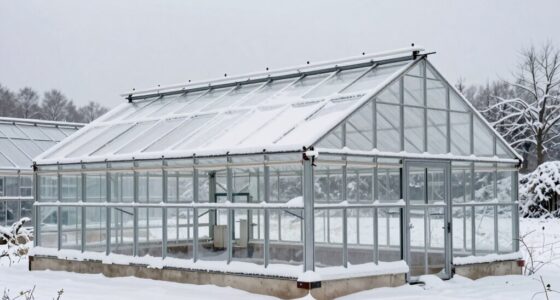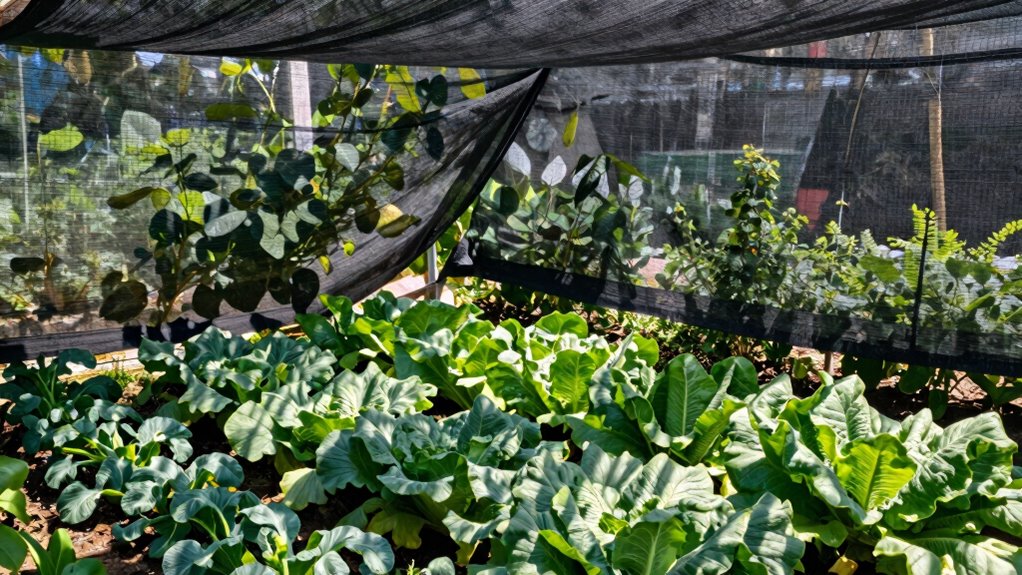
You should install shade cloth when your plants show signs of heat stress, sunburn, or increased wilting, especially during hot seasons. It helps by regulating temperature, reducing water loss, and protecting delicate tissues, but installing too early can block essential sunlight needed for healthy growth. If you wait too long, plants risk sun damage and stress. Getting the timing right boosts plant health and pest control. Keep exploring to uncover the best strategies for your climate and garden.
Key Takeaways
- Extra shade helps when plants show signs of heat stress or sunburn during hot periods.
- Installing shade cloth too early can block essential sunlight, hindering plant growth and development.
- Timing shade cloth use based on regional climate and weather patterns ensures optimal plant health.
- Use plant stress indicators like wilting or leaf scorch to determine when shading is necessary.
- Properly timed shading stabilizes temperature, reduces water loss, and prevents pest issues without delaying growth.
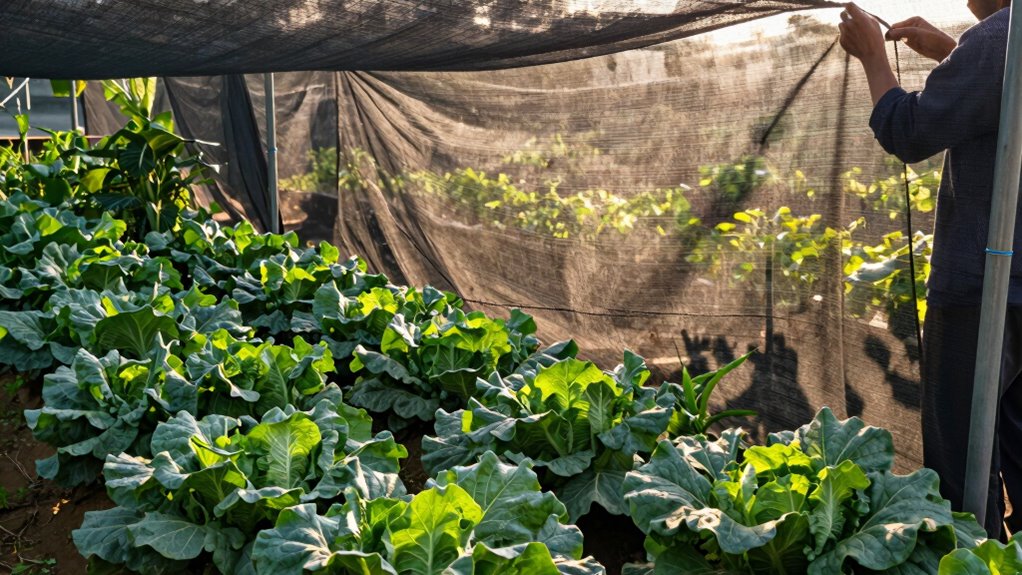
Timing is essential when installing shade cloth to guarantee your plants and outdoor spaces get the protection they need without unnecessary waste. Knowing the right moment to put up shade cloth can significantly influence plant growth and pest control. If you install shade cloth too early, you might hinder the plants’ ability to develop strong, healthy leaves and stems because they won’t receive enough sunlight. Conversely, waiting too long can expose your plants to excessive heat and sun stress, stunting their growth and making them more vulnerable to pests.
When the weather starts to heat up, and the sun’s intensity increases, it’s usually the right time to consider adding shade cloth. During this period, plants begin to experience heat stress, which can slow down growth and lead to wilting or leaf scorch. Shade cloth can help regulate temperature and reduce water loss, creating a more stable environment for your plants to thrive. It also provides a physical barrier that can disrupt the flight paths of pests like whiteflies, aphids, and spider mites, enhancing pest control naturally. Proper timing ensures you’re not prematurely blocking vital sunlight that young plants need for photosynthesis or, on the other hand, leaving them exposed to harmful rays that can damage delicate tissues.
On the other hand, if you install shade cloth prematurely, your plants may not receive enough sunlight to produce the energy they need for rapid growth. This can delay flowering, fruiting, or other critical stages of development. It’s best to wait until your plants show signs of heat stress or sunburn before deploying shade cloth. This way, you support plant growth without sacrificing the necessary light they need to develop fully. Additionally, timing your shade cloth installation correctly can improve pest control. By providing shade at the right moment, you create a less hospitable environment for pests that thrive in hot, dry conditions, reducing the need for chemical interventions. Recognizing plant stress signals early can help you determine the optimal timing for shade cloth installation. Proper understanding of regional climate patterns can also guide you in planning shade cloth use more effectively. Being aware of seasonal weather fluctuations can further help in making timely adjustments to shading strategies, which is essential for climate-adapted gardening. Understanding the local microclimate of your garden can also fine-tune your shading approach for better results.

Cool Area 55% 6.5x10ft Sunblock Shade Cloth Cover Mesh UV Resistant Net for Garden Flower Plant Greenhouse, Black
【2-3 Years Service Life】Refuse to use recycled materials, tear resistant, high temperature resistance, glossy, safe and odorless, lightweight…
As an affiliate, we earn on qualifying purchases.
As an affiliate, we earn on qualifying purchases.
Frequently Asked Questions
How Does Climate Affect Shade Cloth Effectiveness?
Climate plays a key role in how effective shade cloth is for you. In hot, sunny climates, shade cloth reduces sunlight, helping with temperature regulation and preventing overheating. However, in cooler or cloudier areas, too much shade can limit necessary sunlight, reducing warmth and affecting plant growth or comfort. You need to evaluate your local climate to balance sunlight reduction and temperature regulation for ideal shade cloth benefits.
Can Shade Cloth Impact Plant Growth Negatively?
Yes, shade cloth can impact plant growth negatively if it causes plant stress or increases pest attraction. When plants don’t receive enough light, they become stressed, hindering growth and flowering. Conversely, excessive shade can create a damp environment, attracting pests and fostering diseases. You need to strike a balance—using shade cloth to protect plants without creating conditions that lead to stress or pest issues.
What Materials Are Best for Different Shade Cloths?
For different shade cloths, you should choose materials based on durability and breathability. Polyethylene fabrics are popular for their high durability and UV resistance, making them ideal for long-term use. Fabric with good breathability, like knitted polyethylene or certain woven fabrics, helps prevent overheating and allows airflow. Consider your climate and purpose when selecting, ensuring the material offers the right balance of strength and ventilation for your needs.
How Do I Measure the Right Shade Cloth Density?
Think of measuring shade cloth density like tuning a guitar for perfect sound. To get the ideal shade percentage, first determine how much sunlight your plants need—say, 50-70%. Use a light meter during shade cloth installation to gauge how much sunlight filters through. Aim for a balance that protects without over-shading. Adjust accordingly to guarantee your plants thrive without unnecessary stress.
Are There Seasonal Considerations for Installing Shade Cloth?
Yes, seasonal considerations matter when installing shade cloth. During seasons with rapid growth, like spring and summer, you might want more UV protection and shade to shield plants from harsh sunlight. In cooler or less intense sunlight seasons, less dense shade cloth can prevent overheating while still offering protection. Adjust your shade cloth to match seasonal growth patterns, ensuring your plants get ideal UV protection without unnecessary shading that could hinder growth.

Keten 70% Garden Shade Cloth, 10x12FT HDPE Mesh Tarp with Upgraded Grommets, UV-Resistant Outdoor Sun Shades for Greenhouse, Garden, Patio Plants, Pergola
Specification: 70% sun shade, 10x12ft mesh tarp, HDPE material, every 3.3ft One Grommet
As an affiliate, we earn on qualifying purchases.
As an affiliate, we earn on qualifying purchases.
Conclusion
Remember, knowing when to add shade isn’t just about blocking the sun—it’s about respecting the delicate balance of nature and your plants’ needs. Sometimes, a little extra cover can nurture growth; other times, it might gently stifle it. Trust your instincts and observe how your plants respond. By tuning in to their subtle cues, you’ll find the sweet spot that allows your garden to flourish, quietly reminding you that patience and observation are your best tools.
Cool Area 55% 6.5x10ft Sunblock Shade Cloth Cover Mesh UV Resistant Net for Garden Flower Plant Greenhouse, Black
【2-3 Years Service Life】Refuse to use recycled materials, tear resistant, high temperature resistance, glossy, safe and odorless, lightweight…
As an affiliate, we earn on qualifying purchases.
As an affiliate, we earn on qualifying purchases.
Cool Area 55% 6.5x10ft Sunblock Shade Cloth Cover Mesh UV Resistant Net for Garden Flower Plant Greenhouse, Black
【2-3 Years Service Life】Refuse to use recycled materials, tear resistant, high temperature resistance, glossy, safe and odorless, lightweight…
As an affiliate, we earn on qualifying purchases.
As an affiliate, we earn on qualifying purchases.