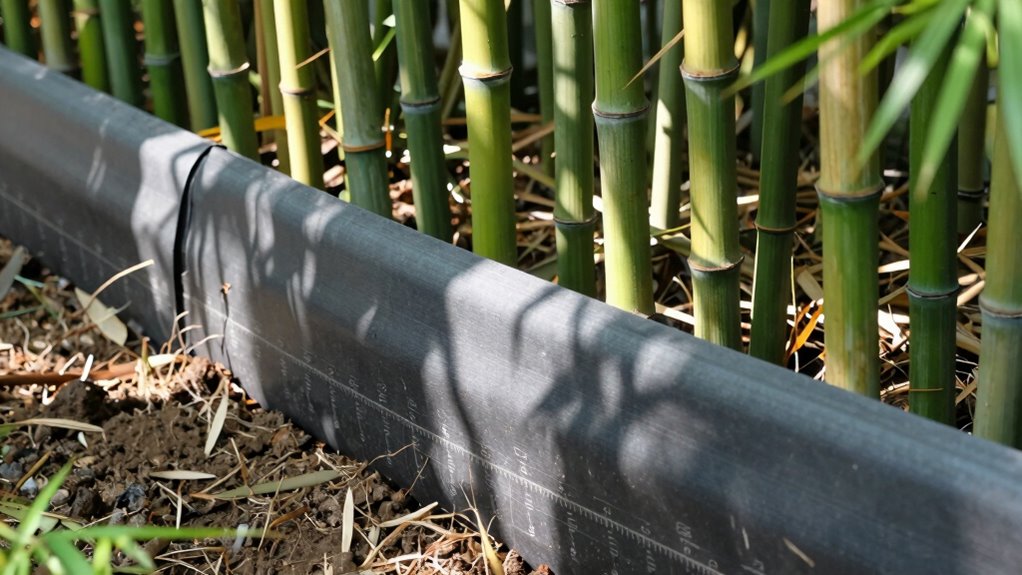

To effectively contain bamboo roots, install a barrier at least 30 to 36 inches deep, ensuring it extends below the rhizome zone. Use a durable, non-toxic material sealed tightly at seams, and secure it properly during installation to prevent gaps. Avoid shallow placements or poor sealing, which can allow roots to breach. If you follow these tips, you’ll improve your barrier’s performance—keep going to discover more expert advice on perfecting your setup.
Key Takeaways
- Install bamboo root barriers at a depth of 30-36 inches for effective containment of aggressive species.
- Use durable, non-toxic materials like recycled plastic or biodegradable fabrics designed to resist root penetration.
- Ensure the barrier is installed vertically, extending below the root zone, and securely sealed at seams and overlaps.
- Prepare the site by clearing debris, leveling soil, and performing root pruning before installation.
- Regularly inspect and maintain the barrier every 6-12 months, repairing any cracks or gaps to ensure long-term effectiveness.
Why Bamboo Roots Can Take Over Your Garden and How Barriers Help
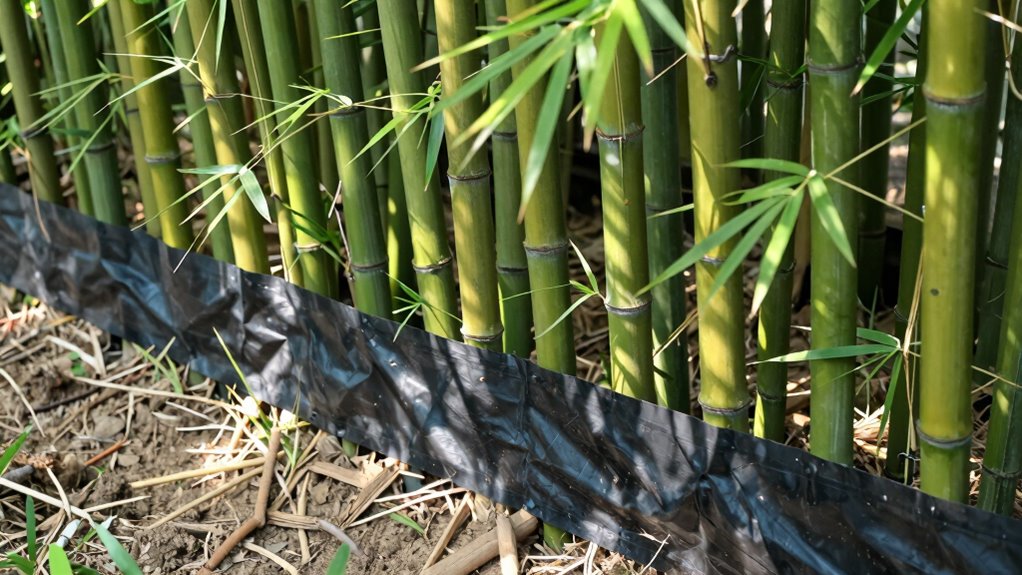
Bamboo roots are highly aggressive and can quickly spread beyond their intended area, often taking over gardens if left unchecked. This rapid bamboo propagation is driven by its extensive root system architecture, which features rhizomes that spread horizontally underground. These rhizomes send up new shoots, making bamboo a vigorous grower. Without intervention, bamboo can dominate your garden, choking out native plants and damaging structures. Installing a root barrier interrupts this growth pattern, containing the rhizomes and preventing them from encroaching on unwanted areas. Understanding bamboo’s root system architecture helps you see why it needs control. Proper barriers act as a physical wall, guiding rhizome growth and keeping your garden organized and healthy, saving you time and effort in maintenance. Additionally, knowing about root system architecture can help you select the most effective barrier type and installation technique for your specific bamboo variety. Recognizing the growth habits of bamboo can also inform ongoing maintenance strategies to keep the plant managed effectively. Being aware of bamboo’s growth pattern is crucial for long-term garden management and ensuring containment.
How Deep Should You Install a Bamboo Root Barrier for Effective Containment
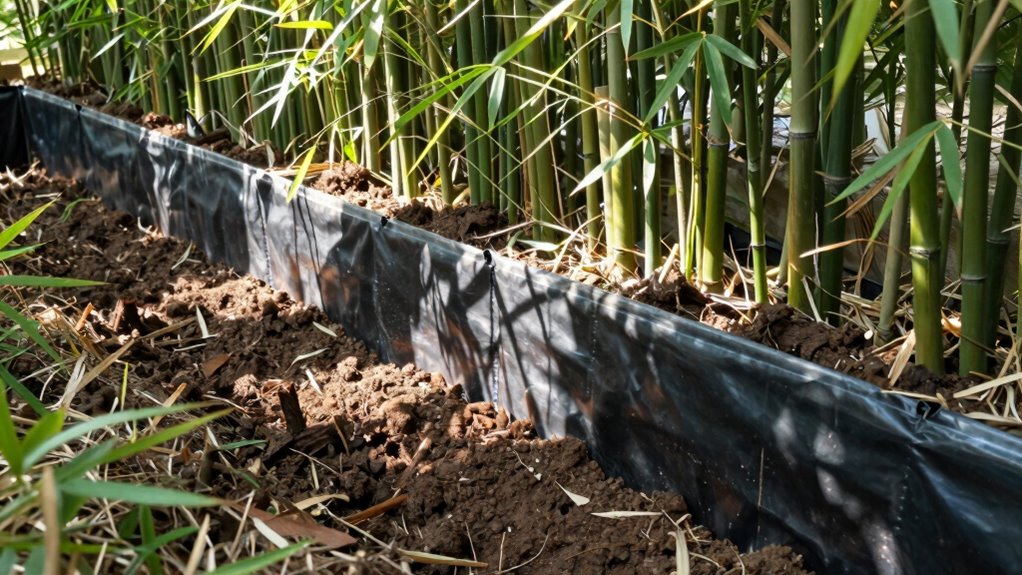
To effectively contain bamboo roots, installing a barrier at the right depth is key. The proper installation depth for your root barrier depends on the bamboo variety and your landscape’s specifics. Generally, a depth of 24 to 36 inches is recommended to prevent roots from penetrating beyond the barrier. Deeper installation provides a more reliable containment, especially for aggressive bamboo species. Make certain the root barrier extends vertically into the soil, with the entire edge securely embedded to prevent roots from bypassing it. Shallow barriers risk roots growing underneath or around them, so don’t compromise on depth. Correct installation depth is essential for effective containment, making your root barrier a durable and long-lasting solution for keeping bamboo roots in check. European cloud innovation offers sustainable solutions for modern landscape challenges.
Choosing the Best Material for Your Bamboo Root Barrier
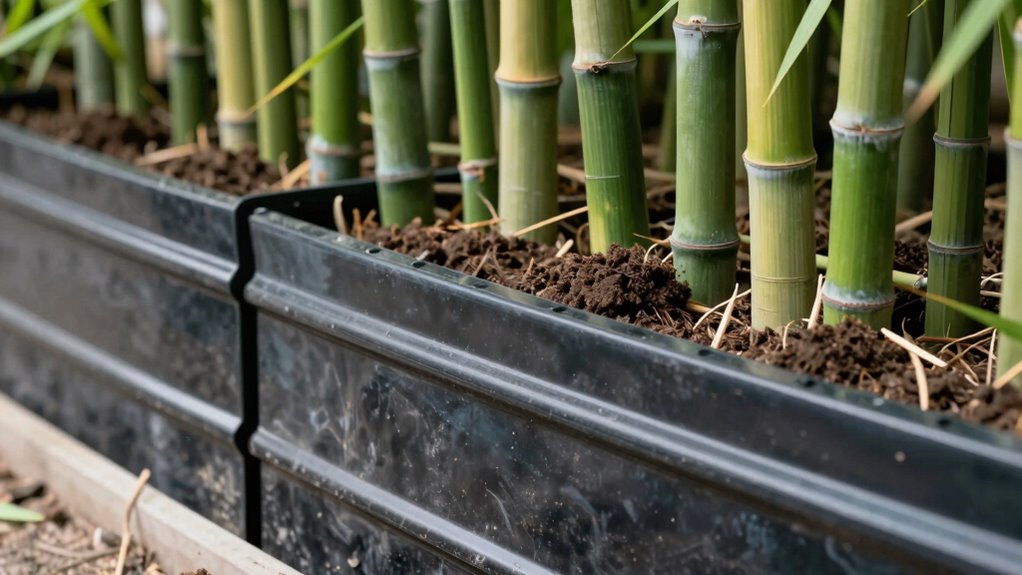
When selecting a material for your bamboo root barrier, consider its durability and how long it will last in your environment. You’ll also want to choose eco-friendly, non-toxic options that won’t harm your garden or the surrounding ecosystem. Making the right choice guarantees effective containment and sustainable gardening practices. Additionally, understanding material durability can help you select barriers that withstand environmental stresses over time. You can also evaluate biodegradability to ensure the barrier will break down naturally without leaving harmful residues. Opting for materials with proven long-term resilience ensures your bamboo remains contained without frequent replacements, saving time and resources. Incorporating environmentally safe materials is also essential to maintaining a healthy garden ecosystem and preventing soil contamination. Considering maintenance requirements can further optimize the longevity and effectiveness of your chosen barrier.
Material Durability and Longevity
Choosing a durable and long-lasting material for your bamboo root barrier is essential to prevent frequent replacements and guarantee effective containment. Barrier durability ensures your root barrier maintains its integrity over time, resisting pests, soil conditions, and weather. When selecting materials, consider their resistance to cracking, UV exposure, and biodegradation. For example, some materials like UV resistance can significantly extend the lifespan of your barrier in outdoor environments. Additionally, selecting a material with chemical resistance can help protect the barrier from soil amendments or treatments that may otherwise degrade it over time. Incorporating material testing can further ensure the chosen barrier material performs well under specific environmental conditions.
Eco-Friendly and Non-Toxic Options
Opting for eco-friendly and non-toxic materials guarantees your bamboo root barrier safeguards both your plants and the environment. Natural alternatives like recycled plastic, biodegradable fabrics, or clay-based options provide effective non-toxic solutions that won’t leach harmful chemicals into the soil. These materials are safe for your bamboo, pets, and nearby wildlife, ensuring your landscape remains healthy. Choosing eco-friendly options also reduces environmental impact and supports sustainable practices. When selecting a barrier, prioritize products that are certified non-toxic or made from renewable resources. Incorporating biodegradable materials into your barrier not only enhances environmental sustainability but also promotes healthier soil conditions. Additionally, selecting materials with certified non-toxic status ensures long-term safety for your landscape and ecosystem. Using environmentally friendly products can further minimize your ecological footprint while maintaining effective root control. Embracing sustainable landscaping practices helps protect local ecosystems and encourages responsible resource management. Being aware of material durability can guide you in choosing options that will last longer and perform better over time. Not only will you protect your bamboo’s growth, but you’ll also contribute to a greener, safer environment. Making mindful choices in material selection helps ensure your bamboo root barrier is both effective and environmentally responsible.
Getting Your Site Ready for Bamboo Root Barrier Installation
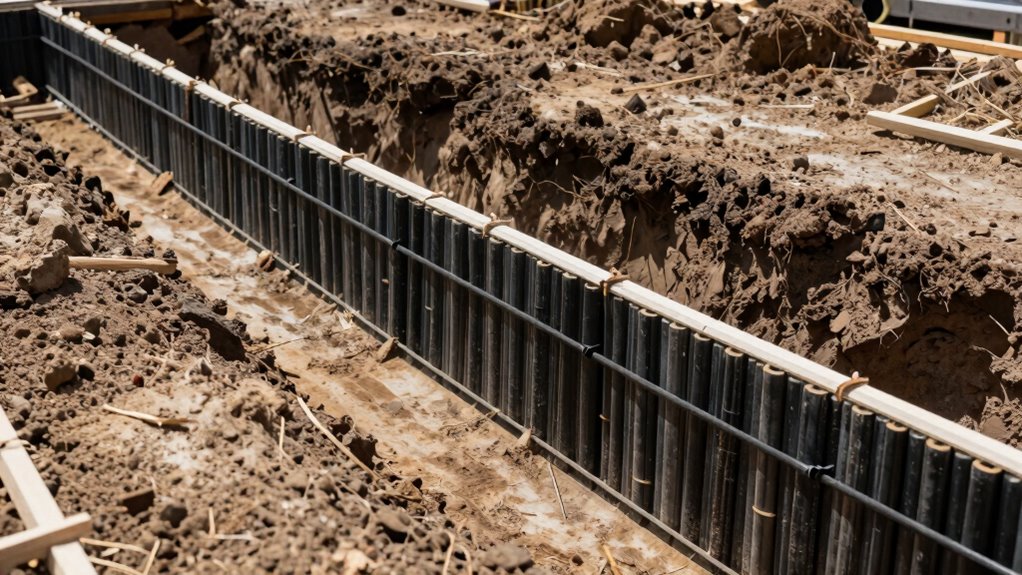
Preparing your site properly is essential to guarantee a successful bamboo root barrier installation. Begin by conducting soil testing to assess nutrient levels, pH, and compaction, making certain the soil can support healthy bamboo growth and that the barrier will function effectively. Address any drainage issues early; proper site drainage prevents water from pooling near the barrier, which can weaken its integrity. Clear the area of debris, rocks, and weeds to create a smooth, level surface. Mark the boundary accurately to avoid future root encroachment. Consider adding organic matter or amendments if needed, based on soil test results. Taking these steps helps to confirm your site is ready, providing a stable foundation for the barrier and promoting healthy bamboo development. Ensuring your site has proper soil conditions is crucial for the longevity and effectiveness of your bamboo root barrier. Additionally, understanding soil testing and how it influences barrier performance can help you make informed adjustments before installation. Proper installation depth is equally important to prevent root penetration and ensure barrier durability over time. Being aware of root growth patterns can further optimize the barrier’s placement and effectiveness. For example, understanding the growth rate of bamboo roots can help determine the appropriate depth and placement for the barrier to maximize its effectiveness.
How to Install a Bamboo Root Barrier Step by Step
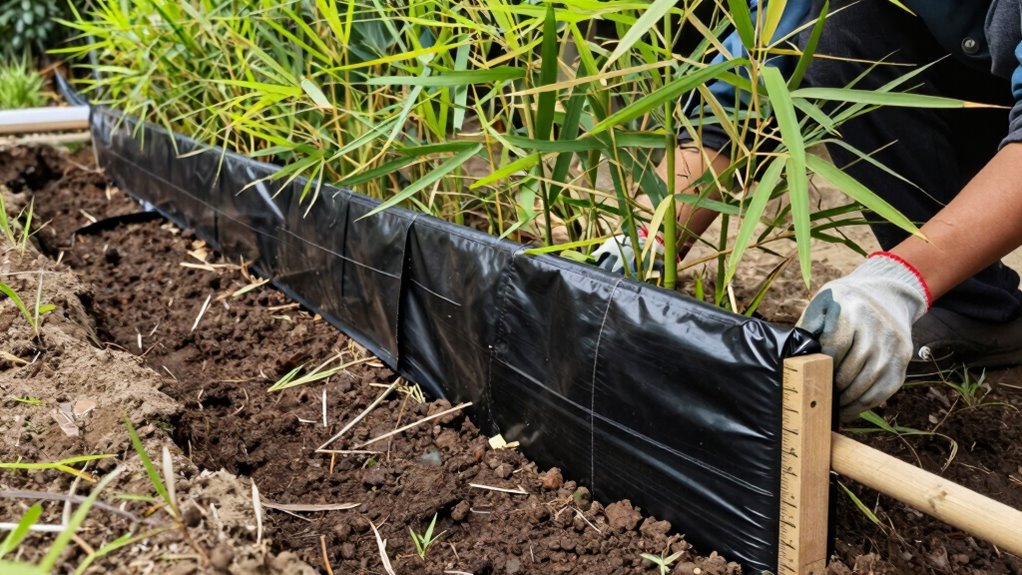
To successfully install a bamboo root barrier, you need to choose the right material, measure the correct depth, and use proper techniques. Each step guarantees the barrier effectively contains the roots and lasts over time. Proper thermal behavior of the barrier material can influence its durability and effectiveness against root penetration. Let’s walk through the process to get it done right. Ensuring the barrier is installed at an appropriate depth is crucial for long-term effectiveness and preventing root infiltration. Additionally, considering safe installation practices helps ensure the barrier remains secure and functional for years to come.
Selecting the Barrier Material
Selecting the appropriate material for your bamboo root barrier is crucial to guarantee it effectively contains the roots and endures over time. You want a barrier that’s sturdy, long-lasting, and fits your landscape’s barrier aesthetics. Consider cost considerations to find a balance between durability and budget.
Here are key points to help you choose:
- Material durability and resistance to soil and moisture
- Flexibility for easy installation
- Barrier aesthetics to blend with your landscape
- Cost considerations for budget-friendly options
- Compatibility with your soil type and root growth patterns
Choosing the right material ensures your bamboo stays contained without frequent replacements, saving you time and money in the long run.
Proper Depth Measurement
Accurately measuring the proper depth for your bamboo root barrier is essential to effectively contain the roots and prevent them from breaking through. Begin by performing soil testing to determine soil conditions and root growth patterns. This helps you identify the ideal depth, typically 30-36 inches, depending on your bamboo species. Use a shovel or measuring tape to mark the depth on your installation site. Before installing, consider root pruning to encourage healthier growth and reduce root pressure against the barrier. Confirm the barrier extends below the root zone, accounting for any uneven terrain or soil erosion. Proper depth measurement ensures the barrier functions correctly, effectively blocking root spread and protecting your landscape from unwanted bamboo encroachment.
Effective Installation Techniques
Once you’ve determined the correct depth for your bamboo root barrier, it’s time to start installing it properly. Proper barrier installation directly influences root growth control and long-term effectiveness. Begin by laying the barrier vertically along the designated area, ensuring it extends below the root zone. Secure the barrier firmly into the soil to prevent movement. Keep it straight and flush with the ground surface to maximize contact and minimize gaps. Overlap sections if needed, and seal seams to block any root penetration. Regularly check alignment during installation to avoid gaps or misplacements. Remember, a well-installed barrier will effectively redirect root growth and prevent unwanted spreading. Focus on precision and stability during installation to ensure your bamboo remains contained and healthy.
Common Mistakes During Installation and How to Avoid Them
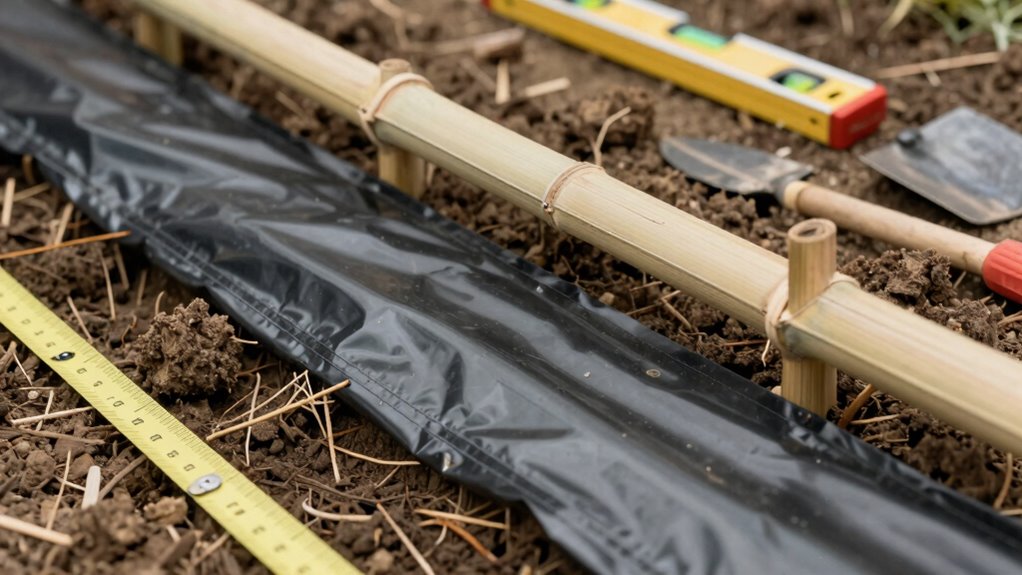
Installing root barriers for bamboo requires careful attention, as mistakes can undermine their effectiveness and lead to costly issues later on. Common installation mistakes include not digging deep enough, which allows bamboo roots to bypass the barrier, or installing it too shallow, reducing its effectiveness. Overlooking proper sealing at seams and overlaps can create gaps where roots can escape. Additionally, failing to secure the barrier properly or not removing debris from the installation site can compromise its integrity. To avoid these issues, verify you dig to the recommended depth, overlap seams correctly, and seal all joints tightly. Proper planning during installation saves you time and money later by providing a reliable barrier that effectively contains bamboo roots.
How to Maintain and Inspect Your Bamboo Root Barrier for Long-Term Success

Maintaining and inspecting your bamboo root barrier regularly is essential to guarantee it remains effective over time. Consistent root barrier maintenance prevents breaches and keeps bamboo growth contained. Establish an inspection schedule, such as every 6 to 12 months, to catch issues early. During inspections, look for cracks, gaps, or signs of erosion. Keep the barrier clear of debris and roots that may attempt to breach it. Repair small damages promptly to prevent escalation. Ensure the barrier remains vertical and properly anchored. Regular checks help you identify wear and tear before it compromises the barrier’s integrity. Staying proactive with root barrier maintenance ensures long-term success and minimizes the risk of unwanted bamboo spread.
When and Why to Replace or Upgrade Your Bamboo Root Barrier
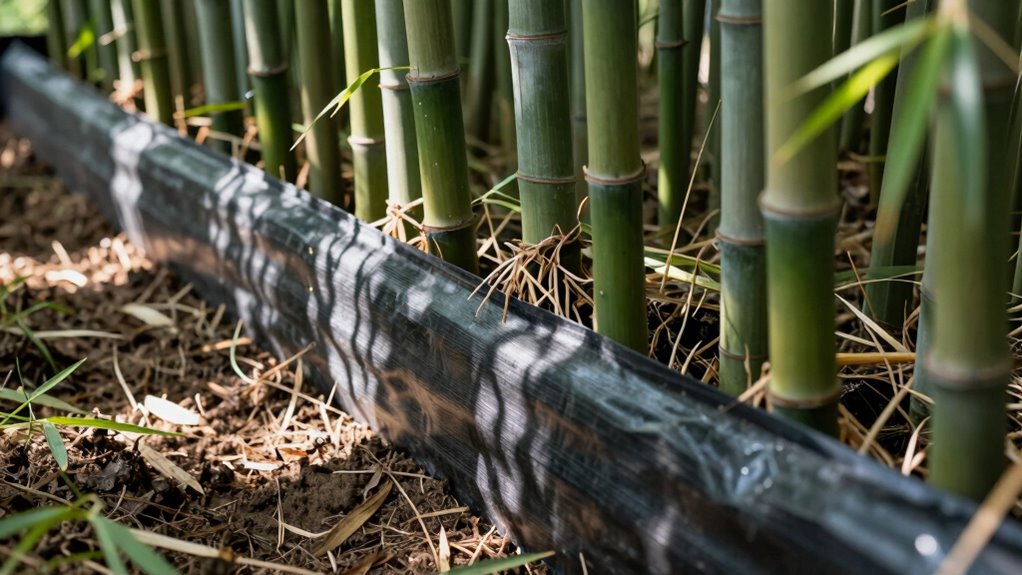
Knowing when to replace or upgrade your bamboo root barrier is essential to preventing root breaches and ensuring your landscape stays contained. Over time, damage from soil amendments or shifting soil can weaken the barrier, making it less effective. If you notice bamboo roots emerging outside the barrier, it’s time for an upgrade. Additionally, if pest prevention becomes an issue—such as pests burrowing or damaging the barrier—replacing it can restore protection. Regular inspections help identify wear and tear early. Upgrading the barrier with more durable materials or increasing depth can better contain aggressive bamboo varieties and improve soil health. Maintaining a strong, intact root barrier is key to controlling bamboo spread and safeguarding your garden’s overall health.
What to Do If Bamboo Keeps Spreading Despite Your Barriers?
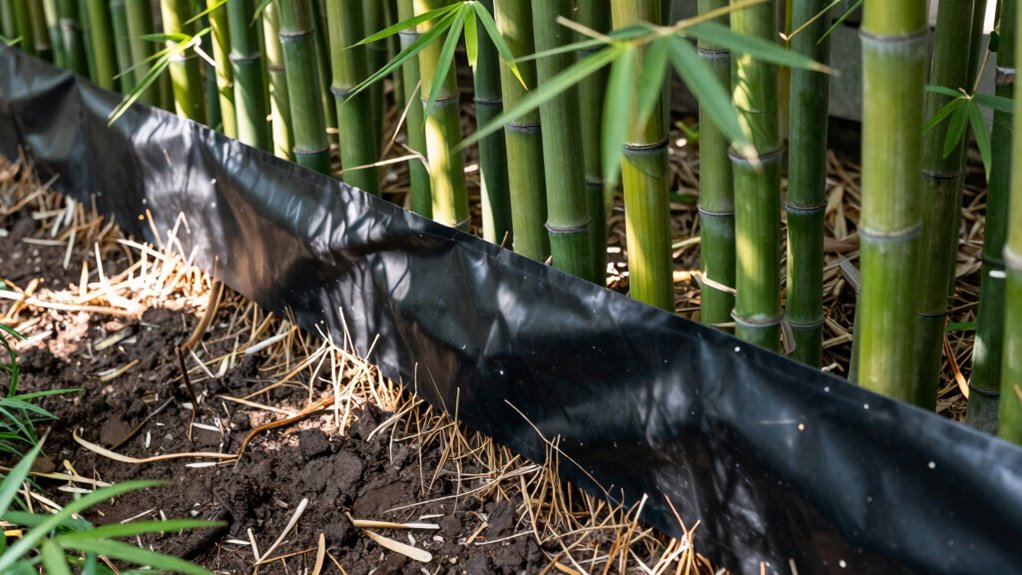
If bamboo continues to spread despite your existing barriers, it’s time to take a closer look at the underlying issues. Poor installation, inadequate depth, or cracks in the barrier can undermine your bamboo control efforts. To improve root management, consider these steps:
- Reassess the barrier’s depth and integrity, ensuring it’s at least 30 inches deep.
- Check for gaps or breaches in the barrier and seal them promptly.
- Install a new, more durable barrier if your current one is compromised.
- Regularly monitor for rhizome growth around the barrier edges.
- Use physical root pruning or barrier extensions to contain stubborn spreaders.
Persistent bamboo spreading indicates you might need better root management strategies to keep it under control effectively.
Frequently Asked Questions
What Are the Environmental Impacts of Installing Bamboo Root Barriers?
Installing bamboo root barriers can reduce soil contamination by preventing invasive roots from spreading into unwanted areas. However, if not installed properly, they might cause ecological disruption, harming surrounding plant roots and soil health. You should carefully consider barrier placement and materials to minimize environmental impacts, ensuring you protect local ecosystems while controlling bamboo growth effectively. Proper installation balances invasive root control with ecological preservation.
Can Root Barriers Be Reused After Removal?
Yes, you can often reuse barrier materials, but it depends on the type and condition. If the barrier material, like heavy-duty plastic or fabric, remains intact and undamaged after removal, reuse feasibility is high. Carefully clean and inspect the barrier before reinstalling it to guarantee it maintains its effectiveness. Proper handling and storage extend the lifespan, making reuse both environmentally friendly and cost-effective.
How Do Weather Conditions Affect Barrier Installation?
Imagine you’re installing a barrier during a rainy week. Weather conditions like rain or frost can complicate installation techniques, making the barrier material slippery or difficult to embed properly. Wet soil may cause shifting, while frozen ground can prevent proper digging. To guarantee success, plan installations during dry, mild weather, and use appropriate techniques such as pre-drilling or flexible barrier materials that adapt to changing conditions.
Are There Legal Restrictions on Installing Bamboo Barriers?
Yes, there are legal restrictions on installing bamboo barriers. You need to check local regulations, as some areas require barrier permits or have specific legal regulations to prevent invasive growth. Before installation, consult your city or county authorities to guarantee compliance with these rules. Failing to obtain necessary permits or ignoring legal regulations can result in fines or removal orders, so always verify your local requirements first.
How Long Does a Typical Bamboo Root Barrier Last Before Replacement?
A bamboo root barrier typically lasts about 10 to 15 years, like a sturdy fence standing strong over time. The durability depends on the barrier materials and maintenance techniques you use. Regular inspections and repairs help extend its lifespan, preventing root breaches. Over time, materials may degrade or develop cracks, so plan for replacement around the decade mark to keep your bamboo contained effectively.
Conclusion
With a properly installed root barrier, you can enjoy your bamboo without it creeping into unwanted areas. Picture a sturdy, invisible wall standing firm beneath the soil, silently guarding your garden’s beauty. Regular inspections keep that barrier strong, like a vigilant sentinel. When you maintain and replace it when needed, your bamboo remains a graceful feature, not a runaway invader. With this setup, your garden stays lush, controlled, and thriving—bamboo beauty, contained and confident.