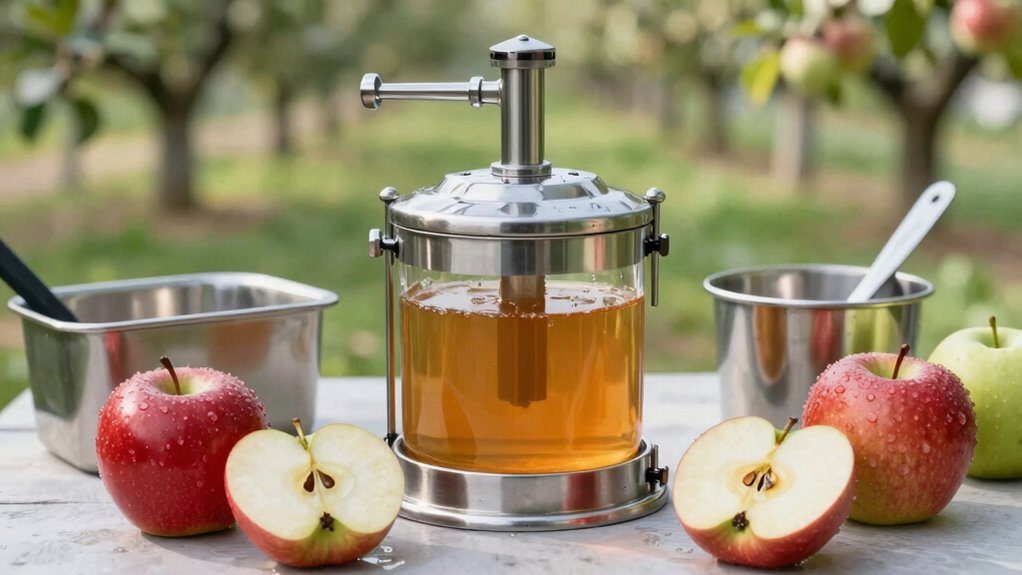

To turn windfalls into clean, flavorful cider without funk, prioritize proper sanitation throughout your process. Start by thoroughly cleaning and sanitizing your press, tools, and work surface using food-safe cleaners like vinegar or eco-friendly sanitizers, paying special attention to crevices. Wash apples carefully, removing damaged fruit and sanitizing surfaces that contact them. Maintaining a clean environment reduces bacteria and wild yeasts that cause off-flavors. Keep infection at bay, and you’ll craft fresher, better cider every time—learn how to master sanitation steps for perfect results.

Get garden gear delivered free with Prime
- Fast, free delivery on millions of items
- Prime Video, Amazon Music and more included
- Member-only deals all year
Key Takeaways
- Thoroughly disassemble, rinse, scrub, sanitize, and dry all cider press components to prevent contamination and off-flavors.
- Use food-safe sanitizers on all equipment and surfaces, paying special attention to crevices and hinges.
- Inspect windfalls carefully, removing bruised or damaged fruit, and consider dipping in vinegar solution for extra cleanliness.
- Keep the pressing environment clean and organized to prevent cross-contamination from pests or wild yeasts.
- Regularly monitor and maintain a stable fermentation temperature and pH to support healthy yeast activity and cider clarity.
As an affiliate, we earn on qualifying purchases.
Why Sanitation Is Essential for Good Cider Flavor

Cleanliness is the foundation of great cider flavor because any leftover bacteria or wild yeast can quickly spoil the batch. Pest prevention is vital, as insects or rodents can introduce unwanted contaminants that ruin your cider. Store your equipment properly in a clean, dry space to prevent mold, dust, and pests from settling on surfaces. Proper equipment storage not only keeps tools free of debris but also minimizes the risk of cross-contamination. When your tools are sanitized and stored correctly, you reduce the chance of bacteria or wild yeast interfering with fermentation. Maintaining a tidy environment ensures your cider develops its intended flavor profile without off-flavors or spoilage, making your process more efficient and your final product consistently delicious. Additionally, paying attention to natural filtration systems can help maintain water quality and prevent spoilage during processing. Implementing proper environmental control measures also helps sustain a clean fermenting environment and prevents unwanted microbial growth. Regular monitoring of microbial activity can further ensure the safety and quality of your cider throughout fermentation. Incorporating effective sanitation practices is crucial for preventing contamination and achieving a high-quality final product.
As an affiliate, we earn on qualifying purchases.
How to Prepare and Sanitize Your Apple Press Step-by-Step
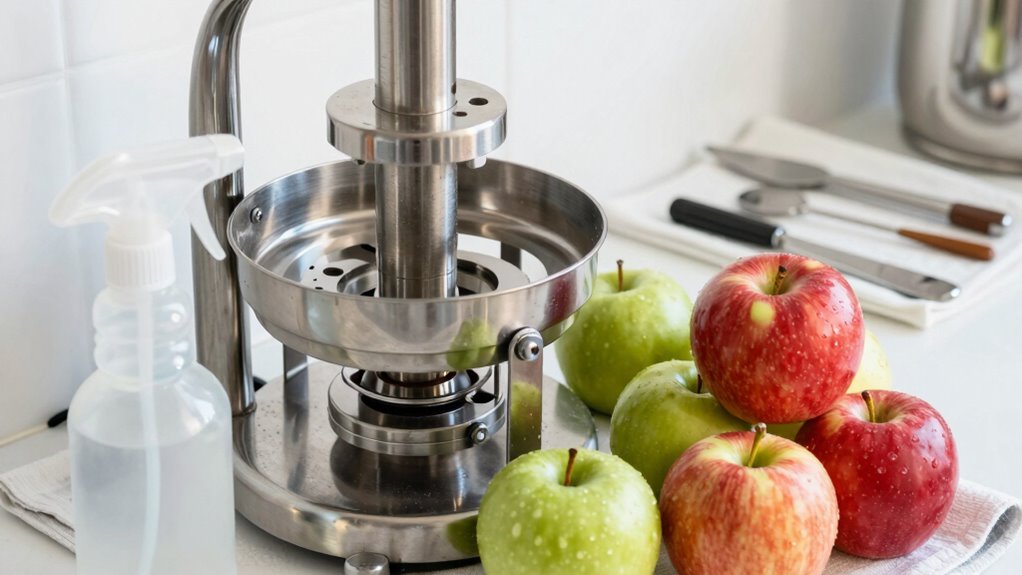
Before you start pressing apples, it’s important to thoroughly prepare and sanitize your apple press to guarantee the best possible cider. Begin by disassembling your cider equipment and inspecting your apple storage area. Rinse all parts with hot water, then scrub with a brush and a food-grade sanitizer. Pay close attention to crevices and hinges where residue can hide. Use the following table as a quick reference:
| Step | Action | Notes |
|---|---|---|
| Disassemble | Break down the press | Remove all removable parts |
| Rinse | Use hot water | Remove loose debris |
| Scrub | Use a brush | Clean all surfaces |
| Sanitize | Apply food-grade sanitizer | Ensure contact time as instructed |
| Dry | Air dry thoroughly | Prevent mold and bacteria growth |
Proper prep keeps your cider fresh and free from funk. Incorporating proper sanitation practices also helps prevent bacterial contamination, which is essential for safe cider production. Regular cleaning and sanitation are essential components of proper cider press maintenance. Additionally, using approved sanitizers helps ensure safety and effectiveness during the cleaning process.
As an affiliate, we earn on qualifying purchases.
Choosing the Best Cleaning Products for Your Equipment
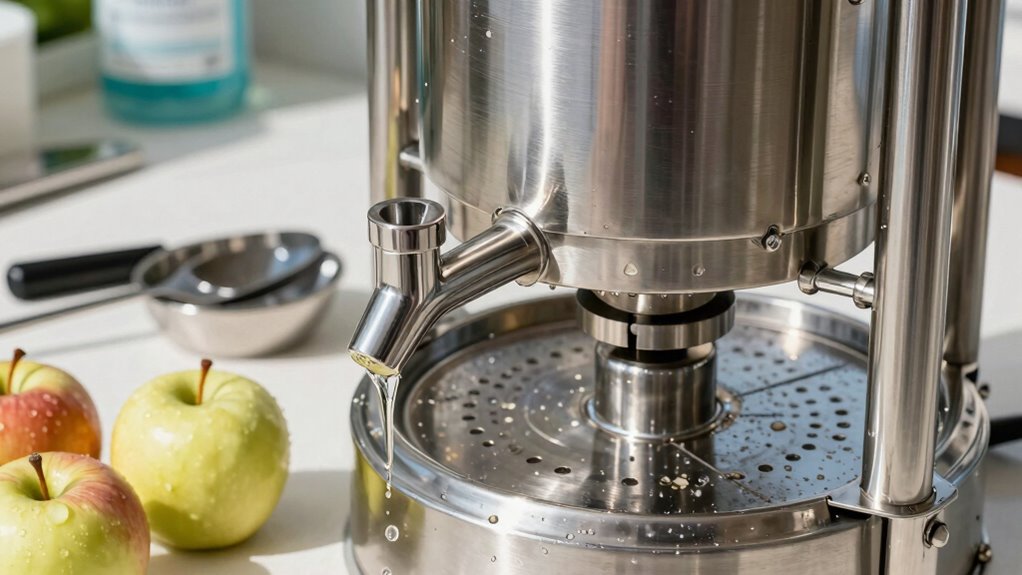
Selecting the right cleaning products is essential to guarantee your equipment stays in top condition and your cider remains pure. Natural cleaning options are a great choice because they’re effective without introducing harsh chemicals that could affect your cider’s flavor. Look for eco-friendly sanitizers that are safe for food-contact surfaces and won’t leave harmful residues. These environmentally conscious products help you maintain a clean, safe environment while protecting the planet. Avoid harsh chemicals that can damage your equipment or cause off-flavors in your cider. Instead, opt for natural cleaning agents like vinegar, baking soda, or specially formulated eco-friendly sanitizers. Proper sanitation is crucial to prevent contamination and ensure high-quality results. Incorporating water-based cleaning techniques can further enhance your sanitation process, ensuring a thorough and safe clean. Additionally, choosing products with minimal chemical residues can help maintain the integrity of your cider’s flavor profile. Regularly inspecting and maintaining equipment can prevent buildup and ensure consistent cider quality, making your process more efficient and reliable.
As an affiliate, we earn on qualifying purchases.
Simple Tips for Sanitizing Apples, Tools, and Surfaces
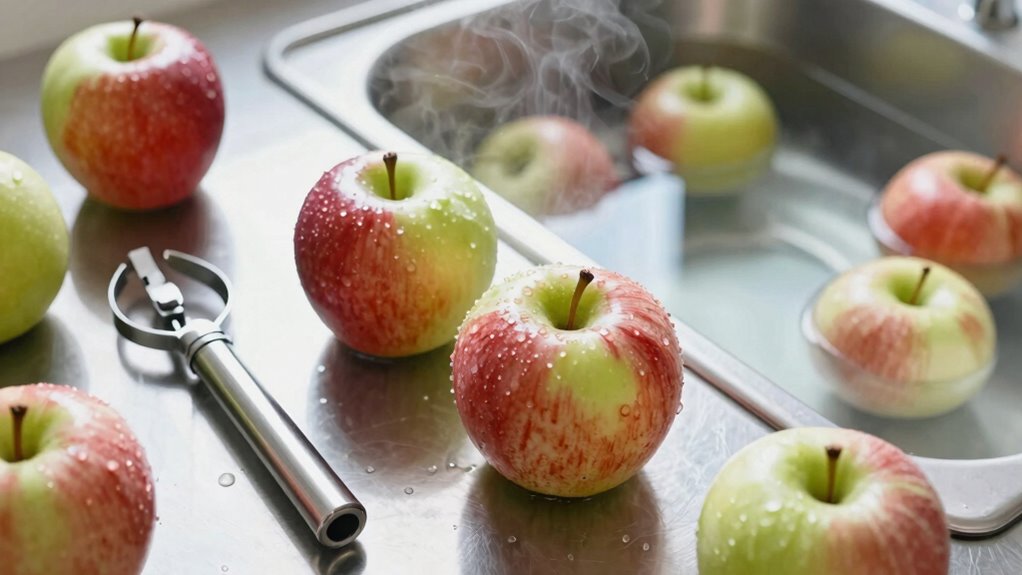
To keep your cider safe, it is crucial to sanitize apples, tools, and surfaces thoroughly. Properly disinfecting apples removes bacteria and wild yeasts, ensuring a clean fermentation. Additionally, using the right methods to disinfect your tools and surfaces prevents contamination and preserves the quality of your cider. Implementing simple organizing strategies can help you keep your workspace tidy and efficient, making sanitation easier and more effective.
Sanitizing Apples Properly
Properly sanitizing apples is essential to guarantee your cider is safe and free from unwanted bacteria or contaminants. Start by inspecting apples at your apple orchard, removing any that are bruised or damaged, as these can harbor bacteria. Rinse the apples thoroughly with cold water to wash away dirt and surface residues. For extra sanitation, you can dip the apples in a vinegar solution (one part vinegar to three parts water) for a few minutes, then rinse again with water. Avoid using soap or chemical cleaners. Once sanitized, store the apples in a clean, cool area until pressing. Proper sanitation ensures your apples stay fresh and reduces the risk of spoilage during cider storage, giving you a cleaner, better-tasting final product. Incorporating at-home sanitizing techniques can further enhance the safety of your cider-making process.
Tools and Surface Disinfection
When working with apples, tools, and surfaces, keeping everything sanitized is essential to prevent contamination. Regular equipment maintenance ensures your tools stay in good condition and are easier to clean. Choose a sanitizer suitable for food contact surfaces, such as an EPA-registered sanitizer or a diluted bleach solution, to effectively kill bacteria and wild yeasts. Proper sanitation also helps maintain the microbial balance necessary for high-quality cider production. Before starting, thoroughly wash all tools, presses, and surfaces with hot water and soap, then apply your sanitizer according to the manufacturer’s instructions. Pay special attention to crevices and joints where residue can hide. Rinsing with clean water if necessary helps remove any sanitizer residue and ensures no chemicals remain that could affect your cider. Use a food-safe sanitizer to ensure safety and effectiveness. Proper equipment maintenance combined with proper sanitizer selection keeps your cider production safe and free from off-flavors caused by unwanted microbes. Maintaining your equipment with regular inspections and cleanings is also crucial for long-term sanitation.
Common Mistakes That Lead to Off-Flavors and How to Avoid Them
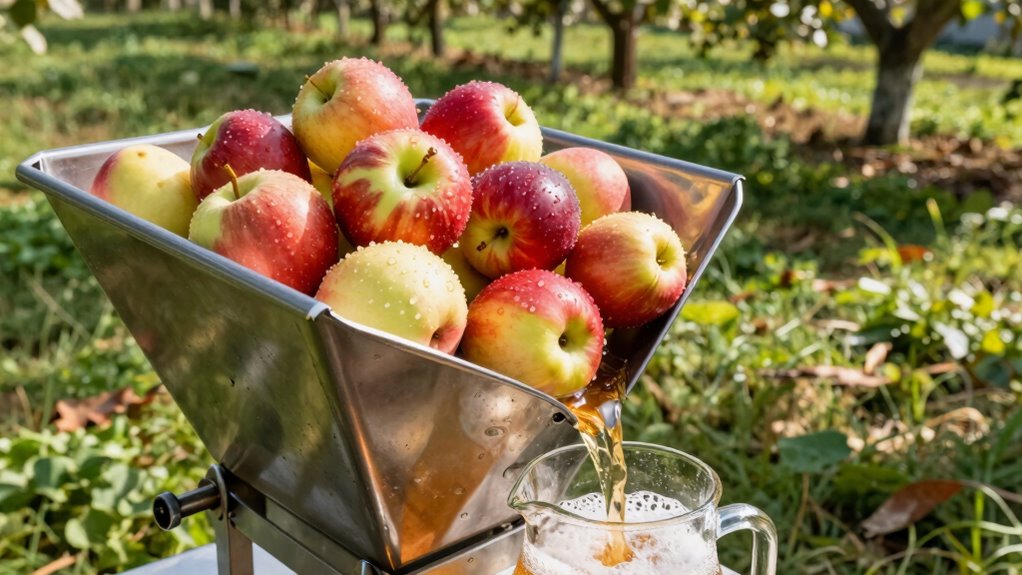
One common mistake is neglecting proper sanitization, which can introduce bacteria and cause off-flavors. You also need to be careful to avoid cross-contamination between your tools and ingredients. Additionally, managing your fermentation environment is vital to prevent unwanted microbes that can spoil your cider’s taste. Using automated cleaning solutions can help ensure your equipment remains sanitized and free of microbial buildup throughout the process. Implementing consistent sanitation practices further reduces the risk of contamination and off-flavors. To ensure reliable and safe sanitation, consulting safe cleaning protocols aligned with industry standards is highly recommended.
Proper Sanitization Practices
Many cider makers make the mistake of skipping thorough cleaning, which can leave residues and bacteria that cause off-flavors. Proper sanitization starts with bottle sterilization; always soak bottles and equipment in a sanitizer solution to eliminate lingering microbes. Inadequate sterilization can lead to contamination, resulting in sour or funky tastes. Yeast hygiene is equally important—ensure your yeast is healthy and free from wild strains by using fresh, properly stored yeast and avoiding exposure to unclean surfaces. Before fermentation, sanitize all tools and containers that will contact the cider. Skipping these steps or rushing through them increases the risk of off-flavors. Consistent, diligent sanitization creates a clean environment that supports healthy fermentation and produces crisp, flavorful cider.
Avoiding Cross-Contamination
Cross-contamination is a common cause of off-flavors in cider, and it often occurs when cleaning tools, equipment, or surfaces without proper precautions. To prevent this, prioritize thorough equipment maintenance and avoid mixing fruit storage areas. Cross-contact between different batches or contaminated tools can introduce bacteria or wild yeasts that ruin your cider.
| Step | Best Practice |
|---|---|
| 1 | Clean all equipment after each use |
| 2 | Store fruit separately and sanitized |
| 3 | Use dedicated tools for different tasks |
| 4 | Regularly inspect for mold or residue |
| 5 | Maintain a clean workspace at all times |
Managing Fermentation Environment
Maintaining a stable fermentation environment is key to producing clean, flavorful cider. Fluctuating fermentation temperature can stress your yeast, leading to off-flavors and sluggish fermentation. Keep your cider within the ideal temperature range—usually between 60-70°F (15-21°C)—to support healthy yeast activity. Too high, and you risk over-ester production or fusel alcohols; too low, and fermentation stalls. Additionally, ensure your fermentation vessel is kept in a consistent location away from temperature swings, direct sunlight, and drafts. Proper temperature control helps maintain yeast health, leading to complete fermentation and crisp cider. Regularly monitor your temperature and avoid sudden changes, which can cause off-flavors and spoil your cider’s intended profile. Managing these factors guarantees your cider develops its best flavor.
How to Keep Your Cider Environment Sanitary During Fermentation

To keep your cider environment sanitary during fermentation, it’s essential to start with thoroughly cleaned and sanitized equipment. This prevents unwanted bacteria and wild yeasts from contaminating your cider, which can affect yeast health and fermentation quality. Maintaining proper pH balance is also vital; a slightly acidic environment inhibits harmful microbes while supporting healthy yeast activity. Regularly monitor your cider’s pH and adjust if necessary to ensure ideal conditions. Keep fermentation vessels sealed tightly to prevent airborne contaminants from entering. Minimize handling and avoid introducing unclean tools or ingredients during this stage. Consistent sanitation practices help preserve yeast vitality and create a stable environment, reducing the risk of off-flavors or spoilage. Proper sanitation during fermentation is key to achieving a clean, delicious cider.
Troubleshooting Funky Flavors: The Role of Proper Sanitation
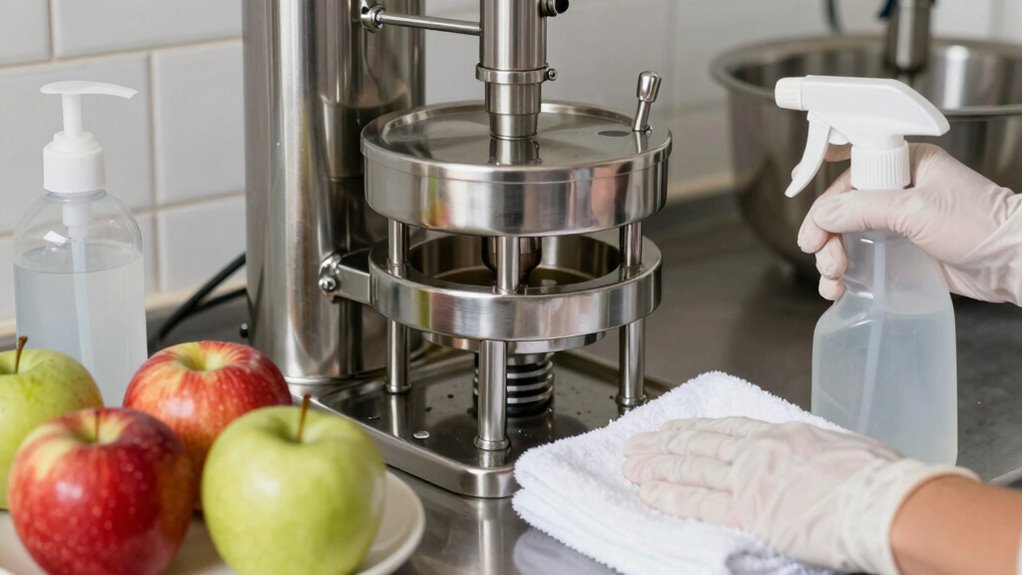
Funky flavors in cider often stem from sanitation lapses that allow undesirable microbes to thrive. When sanitation isn’t thorough, bacteria or wild yeasts can compete with your yeast, impacting yeast health and causing off-flavors. Maintaining proper sanitation helps guarantee the yeast can ferment effectively at the right temperature, preventing unwanted microbial activity. If fermentation temperature is too high, it encourages the growth of spoilage microbes, worsening funk. Regularly sanitize all equipment, including fermenters, airlocks, and utensils, to minimize contamination risks. Monitoring fermentation temperature is equally crucial—keeping it within the ideal range supports healthy yeast activity and suppresses harmful microbes. By prioritizing sanitation and temperature control, you can troubleshoot funky flavors and produce clean, delicious cider.
Frequently Asked Questions
How Often Should I Sanitize My Cider Equipment?
You should sanitize your cider equipment after every use to guarantee it’s clean and safe. Regular cleaning frequency helps prevent contamination and off-flavors. Always inspect your equipment for any residue or damage, especially before each pressing session. If you notice buildup or leaks, clean and sanitize immediately. Proper sanitation keeps your cider tasting fresh and prevents funk or spoilage, so make it a routine part of your cider-making process.
Can Homemade Sanitizers Be as Effective as Commercial Products?
Sure, homemade sanitizers can be as effective as commercial ones, if you’re willing to embrace the magic of natural alternatives and secret homemade recipes. Just remember, a splash of bleach or vinegar might do the trick, but don’t expect lab-grade sterilization. You get the thrill of DIY, but for consistent safety, commercial products are often more reliable. So, choose your adventure wisely—kitchen chemistry or trusted brand?
What Signs Indicate My Equipment Needs More Thorough Cleaning?
You’ll notice signs like residue buildup, off-odor, or mold during equipment inspection, indicating it needs a thorough cleaning. If you see sticky or cloudy liquid, that’s a sign to increase cleaning frequency. Regularly inspect your equipment, especially after each use, to prevent funk and guarantee sanitation. Proper cleaning not only keeps your cider tasting great but also extends the lifespan of your equipment, so don’t skip these vital steps.
Are There Eco-Friendly Sanitation Options for Cider Making?
Yes, you can use eco-friendly sanitation options for cider making. Opt for natural cleaning methods like vinegar or lemon juice, which effectively sanitize without harsh chemicals. Additionally, bio-friendly disinfectants derived from plant extracts are available and safe for your equipment. These options help maintain a clean, safe environment for your cider while protecting the environment, ensuring your cider tastes great and your equipment stays in top condition.
How Do I Prevent Contamination During Storage After Sanitizing?
Did you know that improper storage hygiene can lead to spoilage in over 30% of cider batches? To prevent contamination during storage, always guarantee your equipment and containers are thoroughly sanitized. Use sanitized, airtight containers to block airborne contaminants, and store cider in a cool, dark place. Regularly inspect your storage to catch any signs of spoilage early, maintaining ideal hygiene and contamination prevention throughout the process.
Conclusion
By prioritizing sanitation, you turn windfalls into crisp, pure cider instead of a funky mess. It’s easy to overlook cleanliness, but neglecting it can spoil your batch just like dirt spoils a perfect apple. Think of sanitation as your secret ingredient—without it, your cider’s flavor can quickly turn sour. So, clean thoroughly and stay vigilant; because in cider-making, purity isn’t just a goal, it’s the foundation for delicious results.
Fall yard work Picks
leaf blowers
As an affiliate, we earn on qualifying purchases.