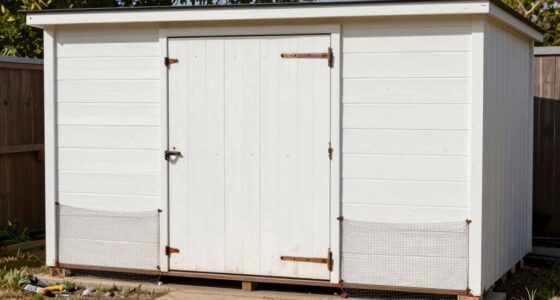
To create an electric garden fence that truly deters deer, guarantee the fence is about 8 feet high using sturdy materials like wire mesh or vinyl. Incorporate high-quality energizers, secure grounding rods in moist soil, and run a continuous loop of conductive wire with no gaps. Reinforce entry points with extra strands and add visual deterrents like signage. Proper layout, maintenance, and landscaping tips make your fence more effective—continue for expert strategies that work.
Key Takeaways
- Use an 8-foot-high electric fence with multiple strands to effectively deter jumping deer.
- Ensure proper grounding with copper or galvanized steel rods driven deep into moist soil for reliable current flow.
- Maintain continuous, seamless wiring around the entire garden perimeter, checking for gaps or loose connections.
- Incorporate visual deterrents like decor or signage at eye level to reinforce the electric fence’s warning.
- Combine electric fencing with landscaping features such as thorny bushes and scent deterrents for enhanced protection.
Are Deer Eating Your Plants? Why Traditional Fences Fail

Deer can quickly turn your beautiful garden into their personal buffet, but traditional fences often fall short in keeping them out. Understanding deer behavior is key—these animals are highly alert and can easily detect weak spots in fences, sneaking through gaps or over the top. They’re also clever at testing plant resistance; they tend to prefer tender, young shoots and easily browse on less resistant plants. Standard fences, especially those under six feet tall, rarely discourage deer, as they often jump over or push through flimsy barriers. Deer are persistent, and their behavior shows they adapt quickly to obstacles that don’t pose a real challenge. To effectively protect your garden, you need a barrier that leverages their tendencies and deters them entirely. Physical barriers remain the most effective deterrent against deer intrusion, especially when designed with their behaviors in mind. Incorporating energy-efficient solutions can further enhance deterrence while maintaining sustainable practices.
What Are the Essential Parts of an Electric Deer Fence?

To establish an effective electric deer fence, you need a reliable power supply and proper conductive materials. The power source keeps the fence energized, while conductive wires deliver the shock to deter deer. Understanding these essential parts ensures your fence works efficiently and keeps your garden safe. Additionally, selecting the right projector technology can improve visibility and effectiveness of your fencing setup.
Power Supply Components
Have you ever wondered what keeps an electric garden fence energized and effective? The power supply components are essential for consistent performance. A reliable energizer or charger converts mains electricity into a high-voltage pulse that zaps the fence wire. To keep this system safe and functional, you need to regularly perform battery maintenance if using a battery-powered unit. Properly maintaining batteries ensures the fence remains energized even during power outages. Regular inspection of the circuit safety components helps prevent electrical hazards and prolongs the system’s lifespan. circuit safety is also critical; installing a fuse or circuit breaker protects against electrical surges or faults that could damage components or pose hazards. These elements work together to provide a steady, safe, and durable power source, ensuring your fence effectively deters deer without risking electrical issues. Understanding electrical safety helps prevent accidents and prolongs the lifespan of your fencing system.
Fence Conductive Materials
The essential parts of an electric deer fence are the conductive materials that carry the electrical pulse along the wire. These conductive materials form the core of your fence wire, enabling electricity to flow efficiently and deliver a clear deterrent to deer. Typically, galvanized steel or aluminum are used because of their excellent conductivity and durability. When selecting fence wire, confirm it’s designed specifically for electric fencing to maintain proper voltage levels. The conductive material must be continuous and well-connected, so avoid using non-conductive insulators or poor connections that can cause voltage drops. Properly chosen fence wire with reliable conductive materials guarantees your electric fence functions effectively, keeping deer out and protecting your garden. Additionally, incorporating smart monitoring systems can help you ensure the fence remains operational and effective over time. Using high-quality conductive materials is essential for maintaining consistent voltage and ensuring the fence’s deterrent effectiveness, especially considering electric fencing standards that specify safety and performance requirements. Regular inspection and maintenance of the connection points help prevent voltage loss and ensure consistent performance over the fencing’s lifespan. Ensuring all components are properly installed and maintained can also minimize voltage leakage, further enhancing the fence’s reliability.
How to Choose the Best Layout to Keep Deer Out

Choosing the right layout is key to keeping deer out of your garden. You should focus on setting an ideal fence height, using proper grounding techniques, and placing the fence strategically. These elements work together to create an effective barrier that deters deer effectively. Incorporating aviation-themed decor can also serve as a visual deterrent by making the fence appear more intimidating. Additionally, understanding deer behavior patterns can help in designing a layout that is more likely to be successful in keeping them away. For example, selecting the appropriate fence height based on deer jumping abilities can significantly improve effectiveness. Knowing about plant properties that deer tend to avoid can also enhance your fencing strategy. Moreover, considering fence material durability ensures your barrier remains effective over time against weather and deer pressure.
Optimal Fence Height
To effectively keep deer out of your garden, selecting the right fence height is essential. A fence that’s too short won’t deter deer, while one that’s too tall might compromise fence aesthetics. Ideally, aim for a height of 8 feet, which is demonstrated to be effective. Consider solar energy-powered lights to enhance visibility at night without sacrificing style. The right height also ensures solar panels and fencing blend seamlessly, maintaining your garden’s appeal. Additionally, understanding fence effectiveness can help you choose the most practical height for your needs. Proper fence sizing and load‑planning can further optimize your deer deterrent strategy. Recognizing deer behavior patterns can also inform your fencing approach, making it more likely to succeed. For added durability, using essential oils like lavender or eucalyptus around the perimeter may also help discourage deer from approaching your garden. Incorporating fence maintenance routines can prolong the effectiveness of your deer deterrent system and prevent damage over time.
Proper Grounding Techniques
Proper grounding is essential for guaranteeing your electric garden fence effectively deters deer. Good grounding safety prevents electrical hazards and ensures the fence delivers a reliable shock. To achieve this, use high-quality grounding rods made of conductive materials like copper or galvanized steel, driven deep into moist soil for ideal wire conductivity. Connect the grounding wire securely to the rods, avoiding loose or corroded connections that could weaken the circuit. Regularly inspect and maintain the grounding system, especially after heavy rain or snow, to ensure consistent performance. Proper grounding not only enhances the fence’s deterrent power but also keeps you safe from electrical shock. Additionally, understanding the benefits of glycolic acid exfoliating toner can help improve your skin’s texture after working outdoors. By prioritizing grounding safety and ensuring excellent wire conductivity, you create a more effective, reliable barrier that keeps deer out of your garden. Ensuring proper grounding practices also involves understanding the importance of grounding techniques for safety and performance.
Strategic Fence Placement
Effective fence placement is key to preventing deer from slipping into your garden. To maximize effectiveness while maintaining attractive fence aesthetics, you should consider strategic placement. First, position the fence around the entire garden perimeter to create a solid barrier. Second, focus on high-traffic entry points, reinforcing these areas with additional electric strands. Third, select decorative options that blend with your landscape but don’t compromise security, such as stylish posts or natural materials. Proper placement ensures the electric fence deters deer without disrupting the visual appeal of your yard. Remember, a well-placed fence combines function and style, making your garden both protected and inviting. Additionally, incorporating sustainable fencing techniques for installation and maintenance helps ensure your fence remains effective and durable over time.
How to Measure and Set the Perfect Fence Height

Measuring and setting the right fence height is essential to guarantee your electric garden fence keeps animals in or out without causing unnecessary issues. To do this, start by choosing the appropriate fence material, considering the size of the animals you’re deterring. Use reliable installation tools like a measuring tape, level, and marker to ensure accuracy. Generally, a height of 3 to 4 feet works well for deer, but adjust if needed. Remember, the correct height influences the fence’s effectiveness and safety.
| Fence Material | Suitable Height Range |
|---|---|
| Wire Mesh | 3-4 feet |
| Vinyl | 3-4 feet |
| Wooden | 3-4 feet |
| Installation Tools | Purpose |
| Measuring Tape | Measure fence height |
| Level | Ensure fence is even |
| Marker | Mark fence placement points |
This approach helps you set the *ideal* height for a durable, effective electric garden fence.
How to Create a Continuous Electric Fence Perimeter

Creating a continuous electric fence perimeter is essential for ensuring your entire garden is protected without gaps that animals can slip through. To achieve this, follow these steps:
- Use high-quality fence insulators to keep the wire securely in place and prevent shorts.
- Connect your solar energizer to the fence, ensuring it provides a consistent, reliable charge along the entire perimeter.
- Carefully run the wire in a continuous loop, checking for breaks or weak points at corners and intersections.
Grounding and Wiring Tips for a Reliable Electric Fence
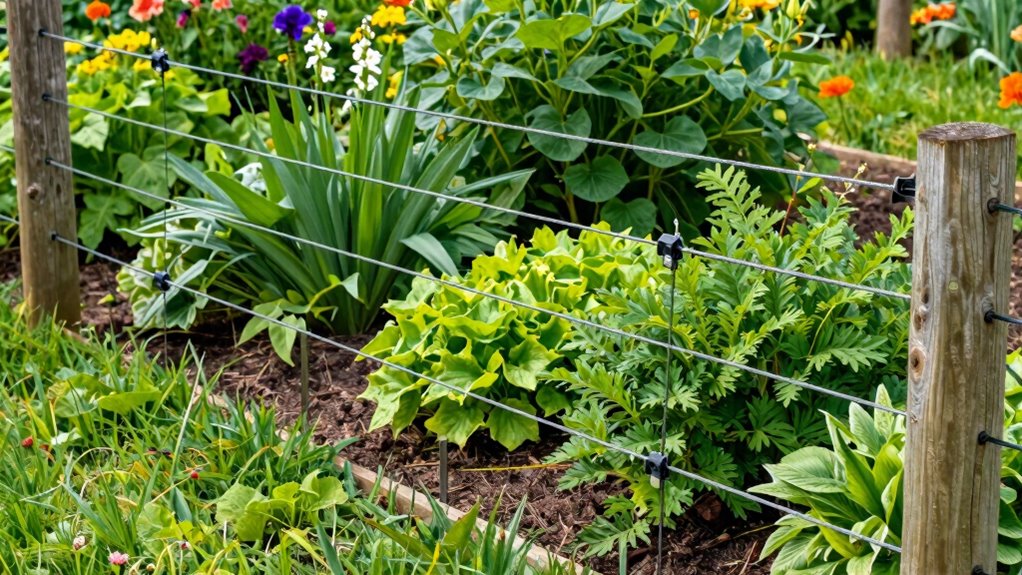
To guarantee your electric fence delivers a strong, reliable shock, paying close attention to grounding safety and wiring insulation is essential. Proper grounding ensures the fence functions effectively and reduces the risk of electrical hazards. Use grounding rods made of copper or galvanized steel, driven deep into moist soil, and connect them securely to your energizer with thick, insulated wire. When wiring, always opt for high-quality wiring insulation to prevent shorts and electrical leaks. Keep wires tight and protected from weather exposure, and avoid crossing or tangling connections. Regularly inspect your wiring for wear or damage, replacing any compromised sections. Proper grounding safety and wiring practices create a consistent electric flow, deterring deer and safeguarding your garden efficiently.
Troubleshooting Common Issues With Your Electric Deer Fence
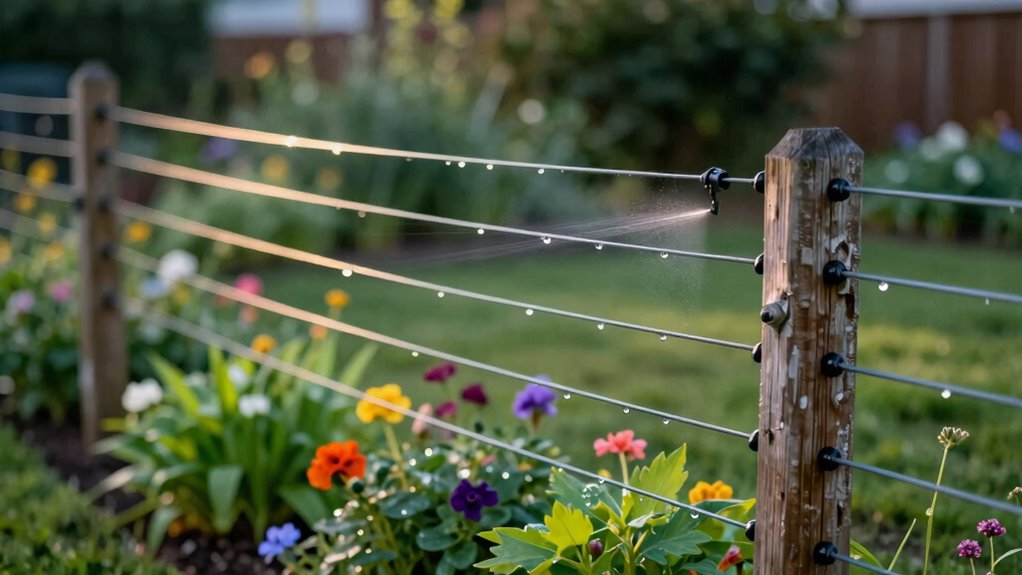
Even the best electric deer fences can encounter issues that disrupt their performance, but many problems are straightforward to identify and fix. First, check your battery maintenance; a weak or dead battery can prevent the fence from delivering an effective shock. Make sure it’s fully charged and replace it if necessary. Second, consider wildlife behavior—deer may learn to avoid the fence if there are gaps, poor grounding, or inconsistent voltage. Inspect wiring connections for damage or loose contacts. Finally, verify the fence’s voltage output with a tester; low readings indicate a problem with energizer performance or grounding. Regular maintenance and understanding wildlife behavior are key to ensuring your electric fence continues deterring deer effectively.
Boost Your Deer Deterrence With Landscaping and Signage

Enhancing your electric fence with strategic landscaping and clear signage can substantially improve its effectiveness in deterring deer. Well-planned landscaping strategies, like planting thorny bushes or low-lying shrubs near the fence, create physical barriers that complement the electric deterrent. Additionally, visible signage enhances signage effectiveness by warning deer of the fence, discouraging approach. Proper placement of signs, such as at eye level and along the entire perimeter, ensures they’re noticed. Consider the table below to optimize your efforts:
| Landscaping Strategies | Signage Effectiveness |
|---|---|
| Planting dense, prickly bushes | Clear, visible warning signs |
| Using low, natural barriers | Strategically placing signs around the fence |
| Creating visual obstructions | Adding reflective or bright signs |
Combining these tactics strengthens your overall deer deterrence system.
Frequently Asked Questions
How Long Does It Take to Install an Electric Deer Fence?
You can typically complete the installation timeline of an electric deer fence in a day or two, depending on your fencing materials and yard size. First, gather your fencing materials, set up the posts, and run the wire. Then, install the energizer and test the system. If you prep everything beforehand, you’ll find the process straightforward and quick, allowing you to have a deer deterrent fence ready in just a weekend.
What Safety Precautions Should I Follow With Electric Fencing?
Think of electric fencing as a silent guardian—you must treat it with respect. Always follow safety precautions by properly grounding the fence to prevent shocks and installing visible warning signs to alert people. Keep children and pets away and avoid touching the wires. Regularly inspect the fence for damages, and turn off the power before maintenance. Staying vigilant protects everyone and keeps your fence effective and safe.
Can Electric Fences Be Used for Other Pests Besides Deer?
Yes, electric fences can help deter other pests like rabbits and birds. You can set up electric rabbit barriers around vegetable gardens to prevent burrowing, and use electric bird deterrents to protect fruit trees or crops. Make sure the fence’s voltage is appropriate and safe, and combine it with visual or auditory scare devices for better effectiveness. Always follow safety precautions to avoid harming non-target animals or people.
How Often Should I Check and Maintain My Electric Fence?
You should check your electric fence regularly, ideally once a week, to verify it’s functioning properly. Conduct routine inspections for any damage, loose wires, or vegetation touching the fence that could cause shorts. Additionally, perform seasonal maintenance, especially before harsh weather, to replace worn components and ensure the energizer is working efficiently. Consistent upkeep keeps your fence effective and your garden protected from pests.
Are There Legal Restrictions for Installing Electric Fences in Residential Areas?
You should check local zoning regulations and neighborhood restrictions before installing an electric fence. In fact, about 60% of residential areas have specific rules governing fence types and heights. Some neighborhoods ban electric fences altogether, while others require permits or setback distances. To avoid fines or removal, verify and adhere to your local ordinances, and consult your homeowners’ association if applicable.
Conclusion
A well-designed electric fence can be your best defense against deer. For example, imagine installing a continuous, properly grounded fence around your garden, combined with strategic landscaping and clear signage. This setup not only deters deer effectively but also creates a reliable barrier that lasts. When you invest time in proper layout and maintenance, you turn your garden into a deer-proof haven, ensuring your plants stay safe and thriving all season long.