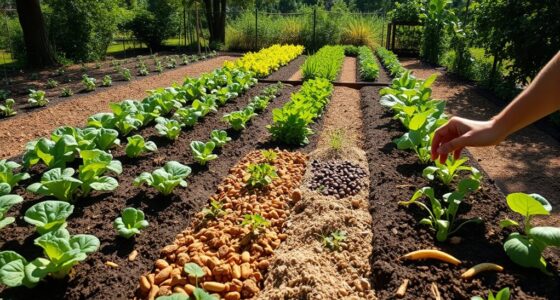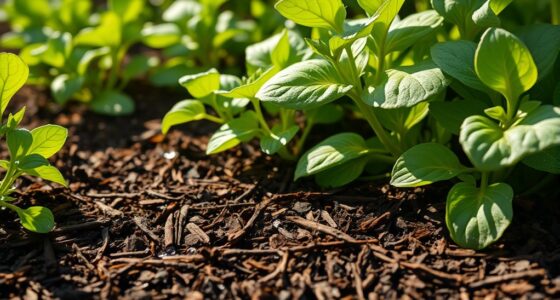

Proper bench spacing is key to limiting disease and pest spread in your crops. By allowing good airflow and reducing humidity, you create less favorable conditions for mold, fungi, and pests to thrive. Avoid overcrowding to enable quick soil drying and minimize moisture buildup. Planning your layout carefully and adjusting spacing based on crop type helps maintain plant health. Stay with us to discover more secrets for optimizing your crop layout for disease prevention.
Key Takeaways
- Proper bench spacing enhances airflow, reducing humidity and moisture that promote mold, fungi, and pest proliferation.
- Strategic layout prevents overcrowding, minimizing the rapid spread of pests and diseases between plants.
- Adjusting spacing based on crop type and growth stage optimizes microclimates and disrupts pest movement.
- Incorporating pathways and vertical gardening improves circulation and access, lowering disease and pest risks.
- Regularly monitoring and modifying spacing helps maintain plant health and prevents conditions favorable to pests and diseases.
Why Proper Bench Spacing Is Essential for Disease Prevention
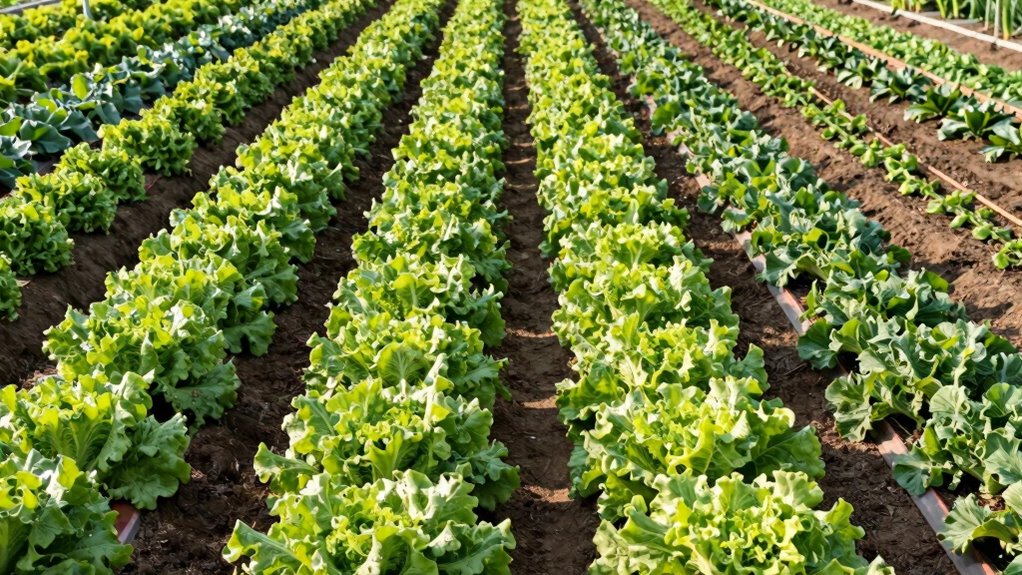
Have you ever wondered how the spacing between your garden benches can impact plant health? Proper spacing allows air to circulate freely, reducing excess moisture that can lead to disease. When benches are too close, plants can create a humid environment, encouraging mold and fungal growth. This humidity can also contribute to energy-efficient cooling by promoting better airflow around your plants. This can also affect soil nutrients by promoting runoff or uneven watering, making it harder to maintain consistent watering schedules. When you space benches correctly, you give plants room to breathe and grow vigorously, which boosts their resistance to pests and diseases. Better airflow ensures soil dries faster after watering, preventing root rot. Incorporating garden layout techniques can further enhance airflow and plant health, supporting plant vitality and overall garden productivity. Additionally, understanding air circulation principles helps optimize plant spacing for healthier growth. Ultimately, thoughtful bench placement supports healthier plants by maintaining balanced soil nutrients and facilitating effective watering, reducing the risk of disease.
How Close Planting Can Spread Pests and What to Do About It
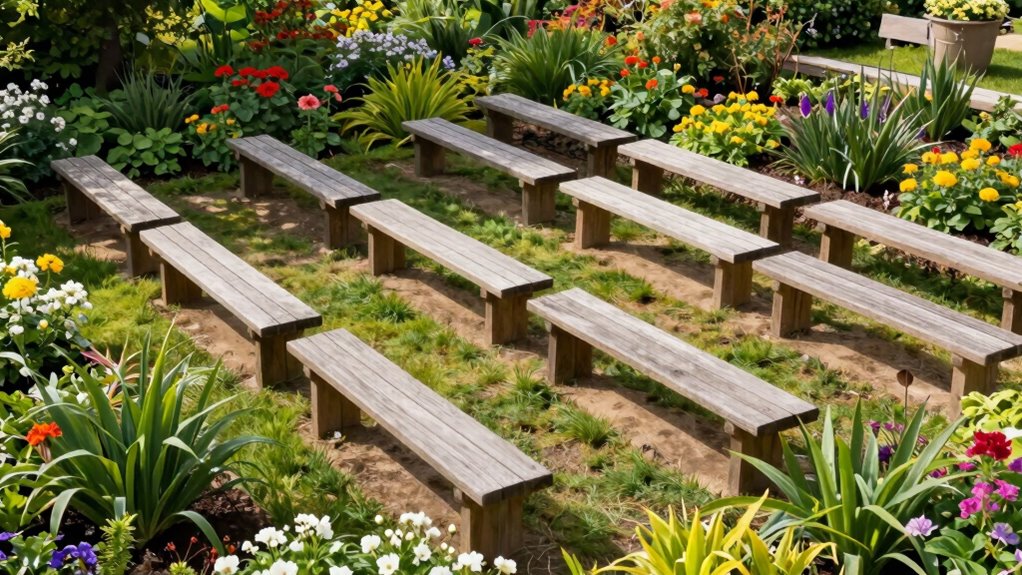
When plants are spaced too closely, pests can spread rapidly from one to another, turning a minor infestation into a major problem. Close planting creates a perfect environment for pest transmission and plant disease. Pests like aphids or beetles can easily move between plants, increasing the risk of severe damage. To combat this, consider the following table for better pest management:
| Action | Effect |
|---|---|
| Increase spacing between plants | Reduces pest transmission and disease spread |
| Use pest barriers or netting | Limits pest access and movement |
| Remove infected plants | Stops pest propagation |
| Rotate crops regularly | Disrupts pest life cycles |
| Maintain healthy plants | Strengthens resistance against pests |
How to Calculate the Best Bed and Row Spacing for Your Crops
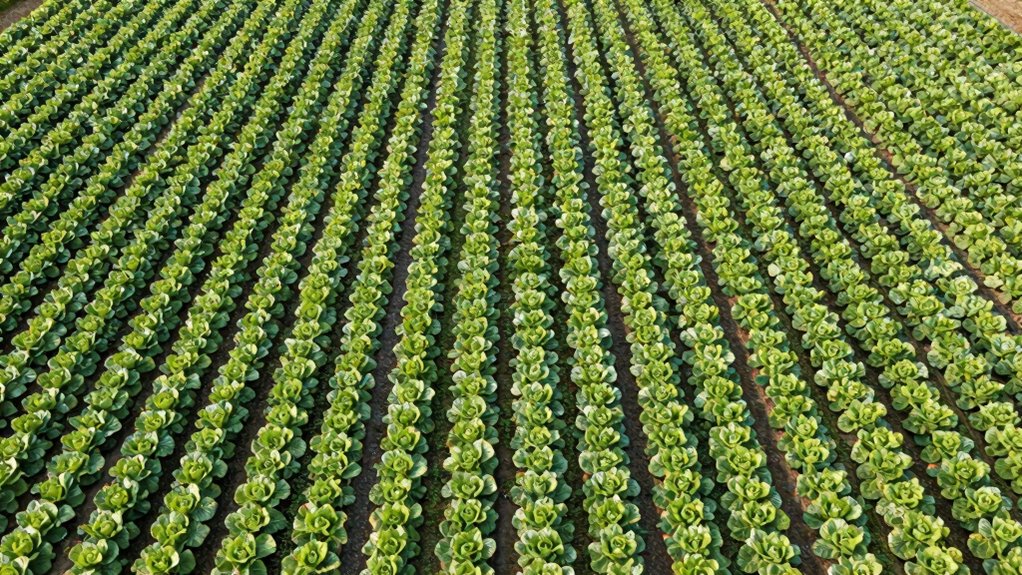
Calculating the ideal bed and row spacing is essential to maximize crop growth and health. Proper spacing guarantees you optimize soil nutrients, allowing roots to access necessary minerals without competition. It also improves irrigation efficiency by reducing water runoff and ensuring even moisture distribution. To determine the best layout, consider your crop’s growth habits and mature size. For example, larger plants need wider beds and rows, while smaller varieties can be planted closer together. Measure your available space carefully, factoring in pathways for easy access and maintenance. Keep in mind that spreading plants appropriately minimizes disease and pest spread by reducing overcrowding. Additionally, understanding crop rotation can influence your planning by helping to maintain soil fertility and prevent pest buildup throughout the growing season. Incorporating integrated pest management practices alongside proper spacing further enhances crop health and reduces reliance on chemical controls. Proper layout planning also takes into account soil health, ensuring that your soil remains fertile and resilient over multiple growing seasons. Being aware of plant spacing guidelines specific to your crops can further optimize yields and plant vigor. Ultimately, well-planned spacing helps you achieve strong growth, better yields, and healthier crops.
Adjusting Bench Spacing for Different Crops and Growing Conditions

To get the most out of your crops, you need to adjust bench spacing based on their specific needs and your local climate. Narrower spacing can boost yields for smaller plants, while wider gaps help larger crops thrive. Keep air circulation in mind to prevent disease and promote healthy growth. Incorporating visual and auditory cues can also support better plant health and pest management strategies. Additionally, understanding the history of agricultural practices can provide insights into optimizing your layout for both efficiency and sustainability. Recognizing the impact of electric tools on reducing soil disturbance can further enhance sustainable farming efforts. Considering pest prevention methods in your layout planning can also minimize crop damage and reduce reliance on chemical controls.
Crop-Specific Spacing Needs
Different crops have unique space requirements that influence their growth and yield potential. Proper crop spacing ensures ideal plant density, reducing disease risk and promoting airflow. For instance, leafy greens need tight spacing, while tomatoes require more room to prevent overcrowding. Adjusting bench spacing based on crop type and conditions maximizes yields and minimizes pest spread. Use this guide to tailor your plant density:
| Crop Type | Recommended Spacing | Notes |
|---|---|---|
| Leafy greens | 6-8 inches apart | Dense planting boosts yield, but adequate spacing helps prevent disease spread. |
| Tomatoes | 18-24 inches apart | Allows airflow and supports fruit |
| Root crops | 4-6 inches apart | Prevents competition for nutrients |
| Cucumbers | 12 inches apart | Supports vine growth |
| Herbs | 8-10 inches apart | Ensures healthy growth |
Adjusting your crop spacing enhances health and productivity, making your layout more effective. Proper spacing also aligns with best practices in disease prevention, helping to keep your plants healthy.
Adjusting for Climate Conditions
Adjusting bench spacing based on climate conditions is essential for optimizing plant health and yield. You need to take into account climate adaptation strategies and seasonal adjustments to create the ideal environment for your crops. During cooler seasons, you might reduce spacing to maximize warmth retention, while in hot, dry periods, increasing spacing can improve airflow and prevent disease. Incorporating natural pools and sustainable landscaping practices can further enhance microclimates and support healthier growth conditions. To fine-tune your layout, consider these factors:
- Local temperature fluctuations and humidity levels
- The crop’s tolerance to moisture and temperature stress
- Seasonal variations in sunlight and wind patterns
- The potential for pest and disease development under specific climate conditions
Implementing climate-resilient techniques and leveraging insights from Vetted electric bike conversion kits can help mitigate unexpected weather challenges and promote consistent crop health. Additionally, selecting appropriate crop varieties that are well-suited to your climate zone can significantly reduce disease and pest issues.
Optimizing Air Circulation
Optimizing air circulation is essential for healthy plant growth and disease prevention. Proper airflow enhancement reduces humidity around plants, making conditions less favorable for fungi and bacteria. To achieve this, adjust bench spacing based on crop type and growing conditions; wider gaps promote better airflow, especially for taller or denser plants. Good airflow also aids pest management by dispersing odors and reducing stagnant zones where pests thrive. Consider the specific needs of your crops—some require more space for airflow, while others tolerate tighter layouts. Regularly monitor the airflow patterns in your setup and make adjustments as plants grow or conditions change. Incorporating architectural solutions such as strategic bench placement can further optimize airflow and environmental control. By fine-tuning bench spacing for ideal air circulation, you create a healthier environment that minimizes disease risks and keeps pests at bay.
How Spacing Improves Airflow and Reduces Humidity to Keep Plants Healthy

When plants are spaced appropriately, good airflow becomes much easier to achieve, which plays an essential role in maintaining healthy growth. Proper spacing enhances airflow efficiency, allowing air to circulate freely around each plant. This circulation helps prevent excess humidity, reducing the risk of mold and disease. Additionally, improved airflow aids in the quick evaporation of moisture on plant surfaces, keeping foliage dry and healthy. When you increase spacing, you also promote uniform humidity control, ensuring no spot remains overly damp. This balance minimizes pest attraction and disease development. To optimize these benefits, consider the following:
- Maintain consistent gaps between plants
- Use vertical and horizontal spacing strategies
- Regularly prune to improve airflow paths
- Monitor humidity levels closely
- Handcrafted wooden products can be used to create supports or barriers that improve plant organization and airflow management. Implementing proper spacing is a fundamental step in sustainable plant care and disease prevention. Proper spacing not only supports plant health but also aligns with integrated pest management practices that promote environmentally friendly gardening.
Common Spacing Mistakes That Increase Disease and Pest Risks

When your plants are too crowded or clumped together, airflow decreases, and humidity rises, creating a perfect environment for diseases and pests. Ignoring proper gaps between plants only worsens these issues, making it easier for problems to spread. Inconsistent spacing practices can undermine your efforts, leaving your garden vulnerable to avoidable threats. Additionally, proper plant spacing helps ensure that each plant receives adequate nutrients and sunlight, further promoting healthy growth.
Overcrowding and Clumping
Overcrowding and clumping in your garden beds can silently invite problems. When plant density is too high, overcrowding issues arise, creating a perfect environment for disease and pests to thrive. Dense planting restricts airflow, traps moisture, and makes it harder for plants to resist infections. It also hampers natural pest predators from reaching affected areas, worsening infestations. To avoid these problems, consider the following:
- Maintain proper spacing between plants to promote airflow
- Avoid clustering seedlings too tightly
- Remove dead or crowded foliage promptly
- Opt for wider beds when planting high-density crops
Ignoring Proper Gaps
Ignoring proper gaps between plants can quickly lead to increased disease and pest problems, as crowded conditions create ideal environments for these issues to thrive. When you neglect adequate spacing, bench overcrowding occurs, hindering airflow and promoting humidity buildup. This risks spreading fungal infections and attracting pests. Uniform planting may look neat, but if you plant too close together, you overlook essential gaps that reduce disease spread. To optimize plant health, maintain proper spacing. Here’s a quick guide:
| Spacing Type | Benefits | Risks of Ignoring |
|---|---|---|
| Adequate gaps | Better airflow, fewer diseases | Increased bench overcrowding, pests |
| Planting uniformity | Visual consistency | Disease spread, pest attraction |
| Proper gaps | Disease and pest control | Overcrowding, poor plant health |
Inconsistent Spacing Practices
Inconsistent spacing practices are among the most common mistakes growers make, often because they prioritize garden aesthetics over plant health. When spacing varies widely, it hampers airflow and creates hiding spots for pests, increasing disease risk. Proper, uniform spacing ensures consistent exposure to sunlight and effective air circulation. Material considerations, like choosing appropriate containers or ground cover, influence spacing quality and plant growth. Ignoring these factors can lead to overcrowding or overly sparse arrangements.
- Failing to measure spacing accurately before planting
- Using inconsistent row or bench distances
- Overlooking plant size growth over time
- Neglecting how material choices affect space management
Tips for Planning Your Layout to Keep Your Crops Healthy Long-Term
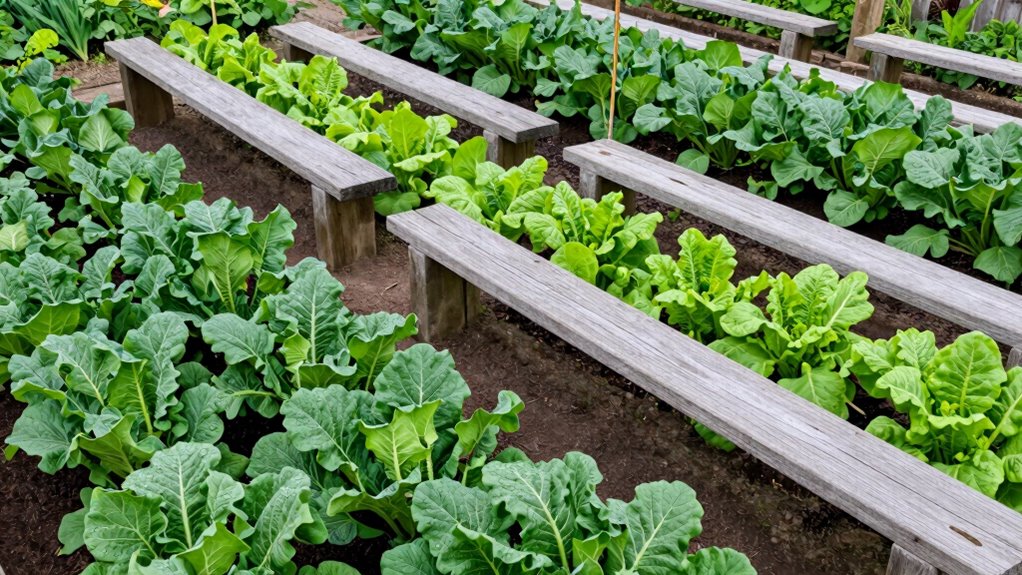
Planning your garden layout carefully is essential for maintaining healthy crops in the long run. To promote soil fertility and prevent disease spread, consider integrating vertical gardening, which saves space and improves air circulation. When designing your layout, balance crop spacing to reduce overcrowding, allowing airflow and sunlight penetration. Use a strategic arrangement to rotate crops and avoid soil depletion. Here’s a simple layout plan:
| Crop Type | Spacing Tip | Benefit |
|---|---|---|
| Leafy Greens | 12 inches apart | Prevents disease spread |
| Root Vegetables | 8-10 inches, layered vertically | Maximizes space |
| Herbs | 6 inches, vertical support structures | Enhances soil fertility |
This approach guarantees long-term crop health while optimizing space and soil use.
Frequently Asked Questions
How Does Bench Spacing Affect Overall Crop Yield Quality?
Proper bench spacing directly improves your crop yield quality by optimizing plant density and ensuring consistent crop uniformity. When you space benches correctly, plants receive better airflow and light, which reduces disease risk and encourages healthy growth. This prevents overcrowding, allowing each plant to develop fully. As a result, you’ll notice higher quality produce, better overall yield, and more efficient resource use, making your farming more successful.
Can Adjustable Bench Spacing Adapt to Seasonal Changes?
Yes, adjustable bench spacing allows you to make seasonal adjustments easily. You can increase spacing during peak growth periods for better airflow and disease prevention, then tighten it during slower seasons to maximize space. This spacing flexibility helps you optimize crop health and yield year-round, adapting quickly to changing conditions. By implementing seasonal adjustments, you guarantee your plants stay healthy, pests stay at bay, and your overall productivity improves.
What Are the Long-Term Cost Benefits of Proper Bench Spacing?
Imagine you’re in the 1800s and saving your gold coins—proper bench spacing leads to significant cost reduction over time. By preventing disease and pests, you cut down on treatments, crop loss, and labor costs. This long-term benefit boosts your farm’s profitability, making your investment in good layout pay off. Proper spacing isn’t just about health; it’s a strategic move that pays dividends for years to come.
How Does Bench Spacing Influence Irrigation Efficiency?
Proper bench spacing improves irrigation efficiency by allowing better water penetration and reducing water runoff. With adequate space, you can effectively use drip irrigation systems, ensuring water reaches roots directly without wastage. This setup minimizes runoff, conserves water, and prevents overwatering. As a result, your plants receive consistent moisture, promoting healthy growth and reducing water-related issues, making your irrigation more efficient and cost-effective over time.
Are There Specific Tools to Help Plan Optimal Bench Layouts?
Yes, there are tools to help you plan ideal bench layouts for garden design and space optimization. You can use garden planning software like SketchUp, Garden Planner, or SmartDraw. These tools allow you to visualize your space, experiment with different bench arrangements, and guarantee proper spacing. By using these tools, you’ll maximize your garden’s productivity, reduce disease and pest risks, and create a more efficient layout tailored to your needs.
Conclusion
By mastering bench spacing, you’ll transform your garden into a fortress against disease and pests—more resilient than a knight’s armor. Proper layout not only boosts airflow and reduces humidity but also keeps your plants thriving longer than you ever imagined. Don’t let poor spacing turn your lush paradise into a battleground; instead, use these secrets to create a healthy, thriving crop that outshines even the brightest harvest. Your garden’s health depends on it—so get spacing smart!