To effectively exclude pests from your greenhouse, focus on installing high-quality, flexible door seals that fit snugly without gaps, and use fine-mesh screens at all entry points to prevent pest entry while allowing airflow. Adopt simple habits like checking shoes and tools before entering and ensuring doors stay closed. Regularly inspect and maintain barriers to fix any tears or gaps. Keep these strategies in mind, and you’ll strengthen your defenses against unwanted pests—more tips are just ahead.
Key Takeaways
- Use durable, flexible door seals like rubber or silicone to create a tight barrier against pest entry.
- Install fine-mesh screens at all openings to prevent pests while allowing airflow and beneficial insects.
- Check and maintain door seals and screens regularly, repairing tears or gaps promptly to ensure integrity.
- Minimize door open times and practice thorough cleaning of shoes and tools before entry.
- Develop consistent entry habits and conduct routine inspections to identify and eliminate potential pest entry points.
Understanding Why Pest Prevention Matters in Your Greenhouse
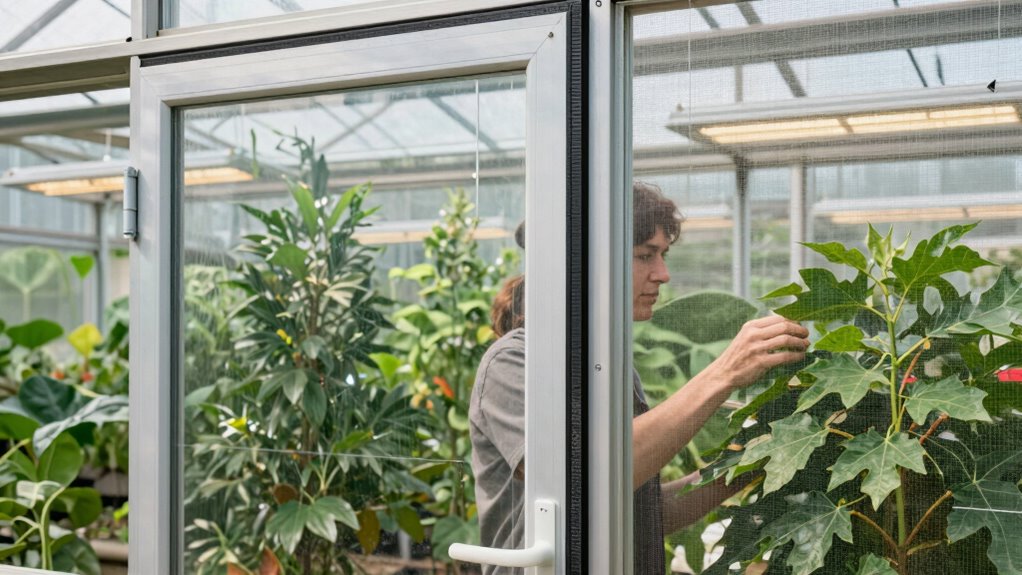
Pest prevention is essential in your greenhouse because pests can quickly damage or destroy your plants, leading to significant financial and crop losses. Understanding pest behavior helps you anticipate how pests invade and spread, enabling you to act before they cause harm. Many pests are attracted to specific plants or environmental conditions, so knowing their habits allows you to implement targeted, eco-friendly solutions. Using eco-friendly methods, like beneficial insects or organic barriers, minimizes chemical use and benefits your plants and the environment. Preventing pests from entering your greenhouse saves you time and money, reducing the need for extensive treatments later. Incorporating integrated pest management techniques into your pest prevention strategy can further enhance your defenses. By understanding pest behavior and adopting sustainable practices, you create a healthier, more resilient growing space. Additionally, employing pest exclusion measures such as door seals and screens can significantly reduce pest entry points and improve overall effectiveness. Integrating smart monitoring technology, such as AI-enabled cameras and sensors, can also help you detect pest activity early and respond promptly.
How to Choose the Best Pest-Resistant Door Seals
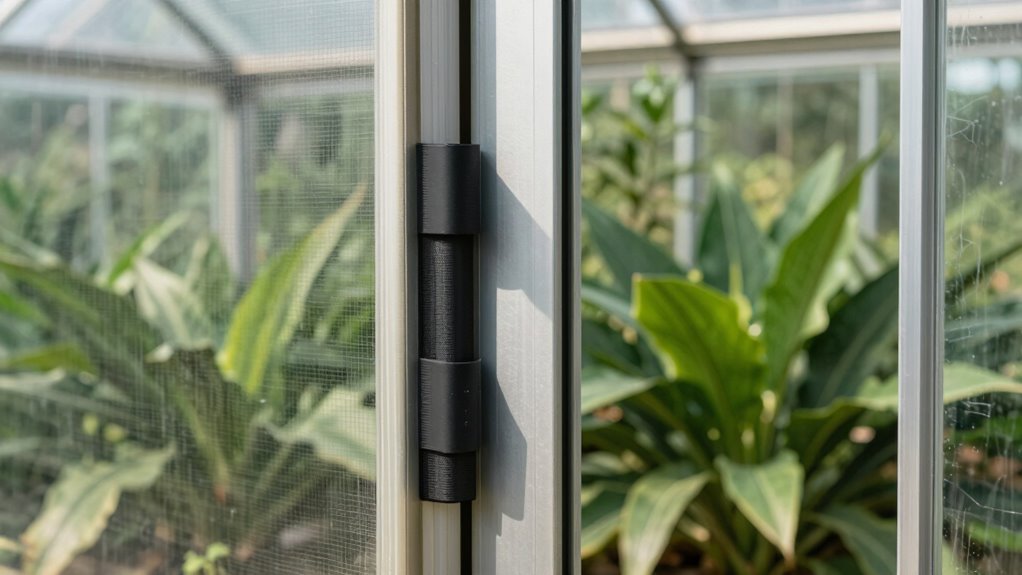
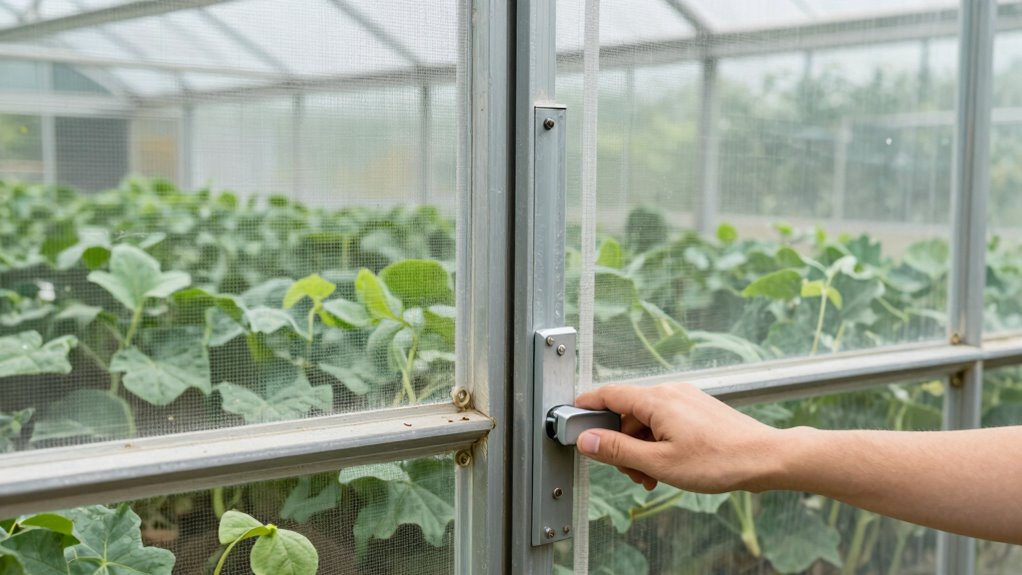
Selecting the right pest-resistant door seals is a key step in preventing unwanted invaders from entering your greenhouse. Focus on seal materials that are durable, flexible, and pest-proof, such as rubber, silicone, or EPDM. Proper installation techniques are essential; guarantee seals fit snugly without gaps or overlaps. Consider the door’s size, shape, and frequency of use to choose a seal that maintains a tight barrier over time. Here are some tips:
- Choose seal materials that resist weather and pest damage
- Use installation techniques that create a seamless, gap-free seal
- Regularly inspect and replace worn or damaged seals
Selecting Greenhouse Screens That Keep Pests Out and Plants Healthy
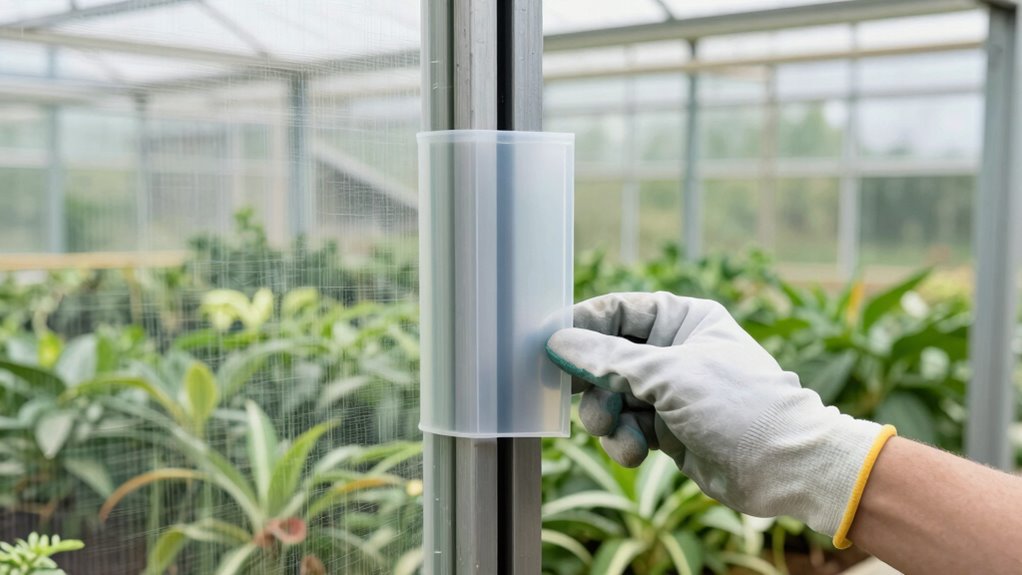
To effectively keep pests out and promote healthy plant growth, choosing the right greenhouse screens is essential. Look for screens with a fine mesh that blocks common pests while allowing beneficial insects to enter, supporting natural pest control. Properly selected screens facilitate pest monitoring by letting you observe pest activity without compromising protection. Consider the mesh size carefully; too large, and pests can get through, too small, and airflow or beneficial insect entry could be hindered. Durability matters too—opt for screens that resist tearing and weathering. Installing screens at all entry points ensures pests can’t sneak in when doors or vents are open. Selecting appropriate mesh sizes also helps maintain optimal airflow and prevents unwanted pests from entering. By selecting the right screens, you create a balanced environment that keeps pests out and plants thriving through effective pest monitoring and natural pest management. Pest exclusion is a crucial aspect of maintaining a healthy greenhouse ecosystem, and using durable materials can significantly extend the lifespan of your screens.
Simple Habits to Prevent Pest Entry When Coming and Going

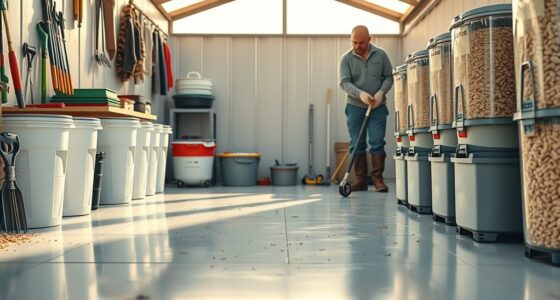
Even with well-chosen screens in place, pests can still find their way inside if proper habits aren’t followed when entering or exiting the greenhouse. Your greenhouse habits play a vital role in minimizing pest entry. To keep pests out, always check your shoes and tools for hitchhikers before entering. Avoid leaving doors open longer than necessary, and secure them quickly after passing through. These simple habits help prevent pests from hitching a ride inside. Incorporating cleaning procedures for tools and footwear further reduces the risk of pest transfer. Additionally, being aware of entry habits can significantly improve your pest exclusion efforts. Regularly inspecting and adjusting entry points ensures that pests cannot exploit small gaps or overlooked openings.
Maintaining Barriers and Troubleshooting Common Pest Exclusion Issues
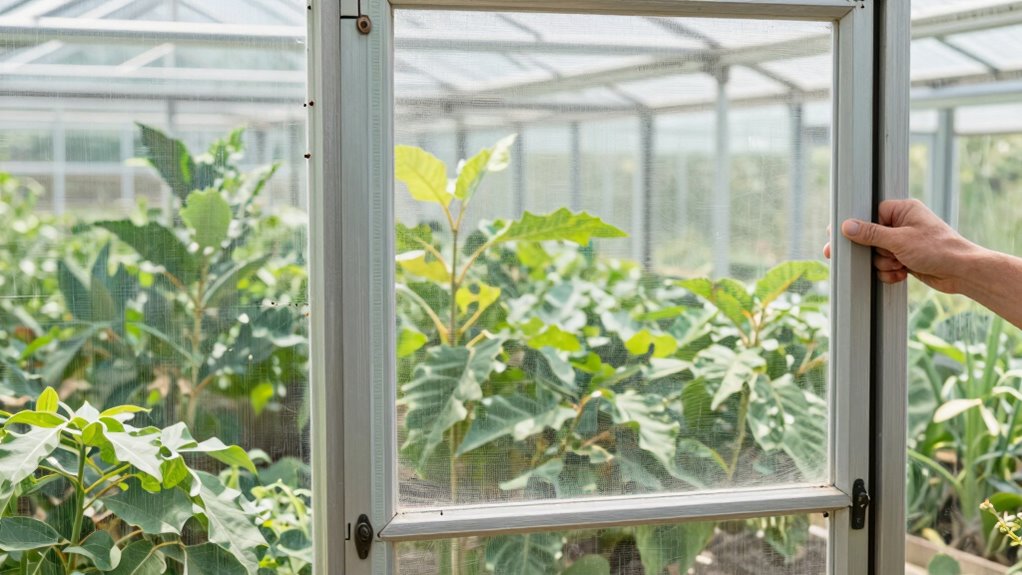
Maintaining effective barriers is essential for keeping pests out of your greenhouse, but over time, these barriers can develop issues that compromise their effectiveness. Pest entry points, such as gaps in door seals or torn screens, can allow unwanted insects inside. Regular seal integrity checks are crucial; inspect door seals, window screens, and vent covers for signs of wear or damage. If you notice gaps or tears, repair or replace the affected components promptly. Keep in mind that even small openings can serve as entry points for pests, so thorough inspections are vital. Additionally, understanding pest exclusion methods can help you implement more effective barrier strategies. Ensuring the integrity of seals and screens regularly can significantly reduce pest intrusion. By routinely maintaining your barriers and promptly troubleshooting issues, you ensure that your greenhouse remains a pest-free environment, protecting your plants and reducing the need for chemical controls.
Frequently Asked Questions
How Often Should I Inspect and Replace Greenhouse Door Seals?
You should inspect your greenhouse door seals at least once a month to guarantee they’re intact and effective. Look for signs of wear, tears, or gaps that could let pests in. If you notice any damage or if the seals no longer close tightly, it’s time for seal replacement. Regular inspection and timely seal replacement help maintain pest exclusion, keeping your greenhouse healthy and pest-free.
Which Materials Are Most Durable for Greenhouse Screens?
You should choose durable mesh like fiberglass or aluminum for greenhouse screens, as they resist tearing and weathering better than other materials. Vinyl-coated polyester is also a good option because it offers durability and insect resistance. These screen materials withstand constant exposure to sunlight and moisture, ensuring long-lasting pest exclusion. Regularly inspect your screens for damage and replace them promptly to maintain effective pest control and protect your plants.
Can Pest Exclusion Methods Affect Plant Growth Negatively?
You might worry that pest exclusion methods could cast a shadow over your plant health, but they often act like a gentle guardian, boosting pest resistance without harm. When properly installed, door seals and screens keep unwanted pests out, allowing your plants to thrive in a protected environment. As long as you balance pest control with ventilation and light, these methods won’t hinder growth—they’ll nurture a resilient, flourishing greenhouse.
Are There Specific Entry Habits That Attract Pests More?
Yes, certain entry habits can attract pests more. If you frequently leave doors or vents open or neglect to seal pest entry points, you create easy access for pests. Additionally, introducing pest attractants like stray plants, debris, or standing water near entry points draws pests closer. To minimize this, always close doors promptly, seal entry points tightly, and remove attractants from around your greenhouse.
How Do I Identify if Pests Are Bypassing My Barriers?
Think of your greenhouse as a fortress; if pests are sneaking in, your defenses might be compromised. Check for signs of pest activity around door seals, screens, and entry points. Look for tiny holes, torn screens, or debris that suggest barrier breaches. Regularly inspect these areas to catch any breaches early, ensuring pests aren’t bypassing your barriers and causing trouble inside. Staying vigilant keeps your greenhouse pest-free.
Conclusion
By choosing the right door seals, screens, and habits, you can keep pests at bay and protect your plants. Regular maintenance and mindful entry practices are key to a healthy greenhouse. Remember, an ounce of prevention is worth a pound of cure—staying vigilant now saves you trouble later. Keep these tips in mind, and your greenhouse will thrive pest-free, giving your plants the best chance to flourish.