To mosquito-proof your rain barrel, cover all openings with tight-fitting lids or fine mesh screens that can be inspected and replaced as needed. Route overflow safely away from your foundation using flexible pipes or splash blocks, ensuring water flows at least 3-4 feet from your home. Before winter, drain the barrel completely, insulate, and cover it to prevent freezing and debris buildup. If you keep these tips in mind, you’ll soon master effective mosquito prevention, overflow management, and winter prep.
Key Takeaways
- Install tight-fitting lids and screens on rain barrels to prevent mosquito entry and block breeding sites.
- Use downspout extensions and splash blocks to direct overflow safely away from foundations and prevent erosion.
- Regularly inspect and clean screens, covers, and overflow outlets to maintain effectiveness and water quality.
- Drain and empty rain barrels before winter, then insulate and cover them to prevent freezing and debris intrusion.
- Maintain proper stormwater management and landscape grading to reduce standing water and mosquito breeding opportunities.
How to Choose the Best Location for Your Rain Barrel

Choosing the right spot for your rain barrel is vital to maximize its efficiency and ease of use. You want to find an ideal placement that captures the most rainwater while keeping maintenance simple. Look for a location close to your downspout to minimize the need for extended hoses or piping. Shade considerations are important; placing your barrel in a shaded area helps prevent algae growth and keeps the water cooler, reducing evaporation. Avoid direct sunlight, which can lead to faster algae buildup and temperature fluctuations that may damage the barrel. Make sure the spot is level and stable to prevent tipping. Also, consider accessibility for regular inspection and maintenance. Proper placement makes your rain barrel more effective and easier to manage, saving you time and effort. Additionally, selecting a location with proper drainage ensures excess overflow is routed safely away from your foundation or walkways. Ensuring good water flow around the barrel can help prevent pooling and erosion issues. Furthermore, understanding rainwater harvesting principles can optimize the overall system performance. A well-chosen location can also help in mosquito-proofing, preventing standing water from becoming breeding grounds. Incorporating drainage systems can further enhance water management around your rain barrel, reducing potential issues with excess water pooling.
How to Mosquito-Proof Your Rain Barrel and Prevent Breeding
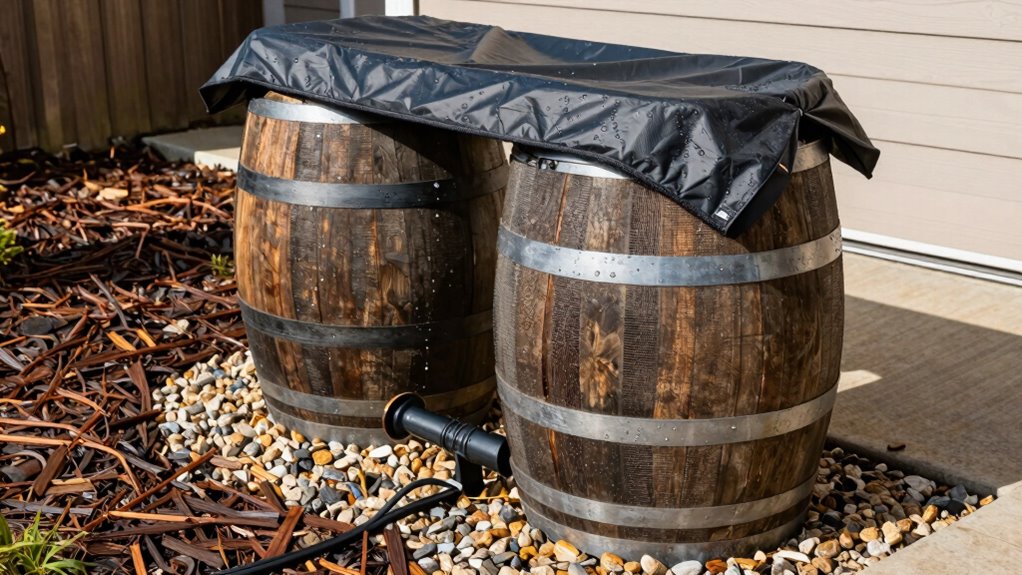
To keep mosquitoes out of your rain barrel, start by properly covering all openings to prevent them from laying eggs. Make sure to eliminate any standing water nearby that could attract mosquitoes. You can also add mosquito dunks to the water, which safely kill larvae and keep your barrel mosquito-free. Regularly inspecting and maintaining your rain barrel will help ensure it remains a mosquito-proof environment year-round. Additionally, installing a proper overflow routing system can prevent water from pooling around the barrel, reducing breeding sites. Using preventive maintenance practices is essential for ongoing mosquito prevention and maintaining a safe, mosquito-free setup. Incorporating filtering techniques can further improve water quality and reduce potential mosquito habitats.
Cover Openings Properly
Have you ever wondered how a simple cover can stop mosquitoes from breeding in your rain barrel? The key is ensuring your cover openings are properly sealed to prevent entry. Use a tight-fitting lid or screen that fits securely over the opening, making it mosquito-proof. Mesh screens with small holes are ideal because they allow water in while blocking insects. Check for gaps or loose fittings regularly and replace worn or damaged covers promptly. Cover openings thoroughly so no space remains for mosquitoes to lay eggs. Proper cover sealing not only prevents mosquito breeding but also keeps debris out. Regularly inspecting your outdoor water containers is essential to identify potential mosquito breeding sites. Additionally, understanding mosquito breeding habits can help you better prevent infestations. Maintaining the water chemistry and cleanliness of your rain barrel can also discourage mosquito larvae development. Ensuring proper filtration can further reduce the chances of mosquito larvae thriving in your water storage. Incorporating barrier methods such as biological control agents can provide an extra layer of protection. Taking these steps makes your rain barrel a mosquito-proof reservoir, reducing the risk of mosquito-borne diseases and keeping your yard safer.
Eliminate Standing Water
Properly sealing your rain barrel openings prevents mosquitoes from entering and laying eggs, but standing water can still pose a risk if it accumulates elsewhere. To reduce mosquito breeding, focus on effective stormwater management around your property. Regularly inspect and drain any puddles or containers holding water outside the barrel. Eliminating standing water also supports water conservation by minimizing unnecessary runoff and evaporation. Consider installing drainage solutions that direct excess water away from your yard and rain barrel area, preventing pooling. Keeping your landscape well-maintained helps reduce spots where water could stagnate. Additionally, understanding the life cycle of mosquitoes can help you target breeding sites more effectively. Managing stormwater runoff can significantly reduce mosquito habitats by directing water away from areas prone to pooling. Proper grading and the use of permeable surfaces can further improve water absorption and decrease standing water. Incorporating water management techniques into your landscape design can enhance the effectiveness of your mosquito-proofing efforts. By managing stormwater effectively, you not only prevent mosquito breeding but also promote sustainable water use, ensuring your rain barrel functions efficiently while protecting your health and environment.
Use Mosquito Dunks
Using mosquito dunks is an effective way to keep your rain barrel mosquito-free. These small, biodegradable tablets release a bacteria that targets mosquito larvae, preventing breeding. By adding dunks regularly, you support stormwater management and water conservation efforts, ensuring your rainwater stays safe and usable. To visualize, consider this table:
| Feature | How It Works | Benefits |
|---|---|---|
| Bacteria Release | Kills larvae on contact | Maintains a mosquito-free zone |
| Ease of Use | Drop into standing water | Simple, low-maintenance |
| Eco-Friendly | Biodegradable | Safe for environment |
| Timing | Reapply every 30 days | Continuous protection |
| Effectiveness | Prevents mosquito breeding | Promotes healthy water use |
Using dunks regularly helps you manage stormwater responsibly while conserving water resources.
How to Route Overflow Safely Away From Your Home

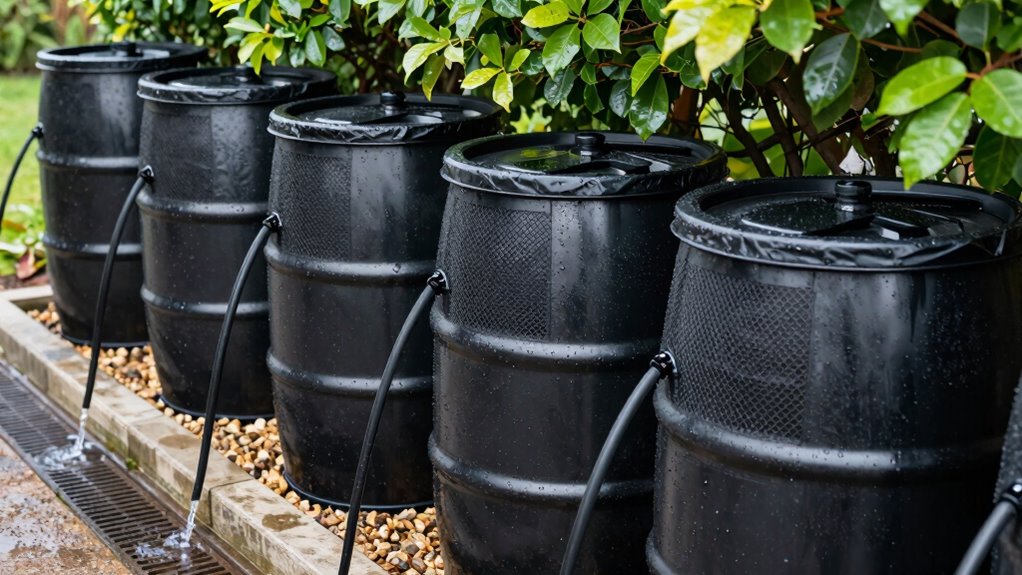
When your rain barrel overflows, directing the excess water away from your home is essential to prevent foundation damage and basement flooding. Proper overflow routing is a key part of stormwater management, ensuring that rainwater from your rainwater harvesting system doesn’t pool near your foundation. To do this, install a downspout extension or splash block that directs water at least 3 to 4 feet away from your house. Avoid directing overflow toward walkways or driveways, where it can cause erosion or pooling. Using flexible tubing or corrugated pipes helps manage water flow efficiently. Regularly check that overflow pathways are clear of debris. Proper stormwater management strategies can further protect your home during heavy rains. This simple step protects your home’s foundation and keeps your rainwater harvesting system functioning effectively during heavy rains, especially when combined with proper drainage solutions to prevent pooling. Additionally, incorporating french drains can help redirect excess water more effectively during severe weather conditions. Ensuring your stormwater system is well-maintained can reduce the risk of water damage and improve overall drainage efficiency. Maintaining a well-designed overflow system is crucial for adapting to changing weather patterns and ensuring long-term protection.
How to Clean and Maintain Your Rain Barrel Effectively
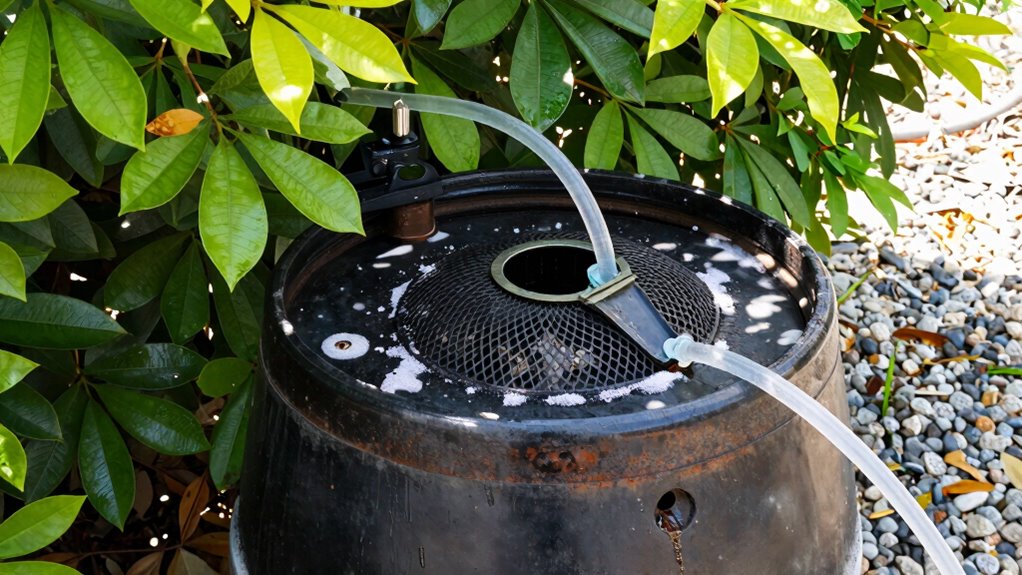
Regularly cleaning and maintaining your rain barrel guarantees it functions efficiently and prolongs its lifespan. Start by filtering debris from the water to prevent clogs and buildup that can hinder flow. Remove leaves, dirt, and other particles from the screen or lid regularly. Next, monitor water quality to catch any issues early; cloudy or foul-smelling water may indicate algae growth or bacteria. Use a scrub brush or sponge to clean the interior walls periodically, especially after heavy rains or long dry spells. Check the spigot and overflow outlet for obstructions, ensuring proper drainage. If sediment accumulates at the bottom, drain the barrel and rinse it out thoroughly. Consistent cleaning and monitoring keep your rain barrel working effectively and help prevent mosquito breeding or water stagnation. Proper maintenance practices are essential to ensure your rain barrel remains a safe and effective water collection system.
How to Prepare Your Rain Barrel for Winter

As winter approaches, you need to drain and empty your rain barrel to prevent freezing damage. Next, insulate and cover it to safeguard against cold temperatures. Taking these steps now will help guarantee your rain barrel stays in good shape for the seasons ahead.
Drain and Empty
Before winter sets in, it’s vital to drain and empty your rain barrel to prevent freezing and damage. Start by disconnecting the downspout to guarantee proper drainage flow. Follow an established emptying schedule to remove all water, reducing the risk of cracks caused by expanding ice. Use a hose or siphon if necessary to expedite the process. Regularly check the barrel’s interior for residual water and verify it’s fully drained. To add a touch of sophistication, consider this table outlining key steps:
| Step | Action |
|---|---|
| Drainage flow | Guarantee water exits freely |
| Emptying schedule | Complete before temperatures drop |
| Residual water check | Confirm no water remains inside |
| Final inspection | Make sure barrel is dry and empty |
Insulate and Cover
To protect your rain barrel from winter damage, insulating it and adding a cover is essential. Insulation helps prevent freezing, which can crack the barrel and damage its structure. Choose foam or bubble wrap to insulate without compromising rain barrel aesthetics. A sturdy cover keeps snow, debris, and critters out, maintaining rainwater quality and preventing mosquito breeding. When selecting a cover, guarantee it fits securely to avoid water pooling or drafts that could cause freezing. Insulating and covering your rain barrel also preserves its appearance, keeping it neat and unobtrusive in your yard. Proper winter prep ensures your rain barrel stays in good condition, ready to collect water efficiently when spring arrives. This simple step safeguards your investment and promotes healthy rainwater collection year-round.
How to Use Screens and Covers to Keep Debris and Mosquitoes Out
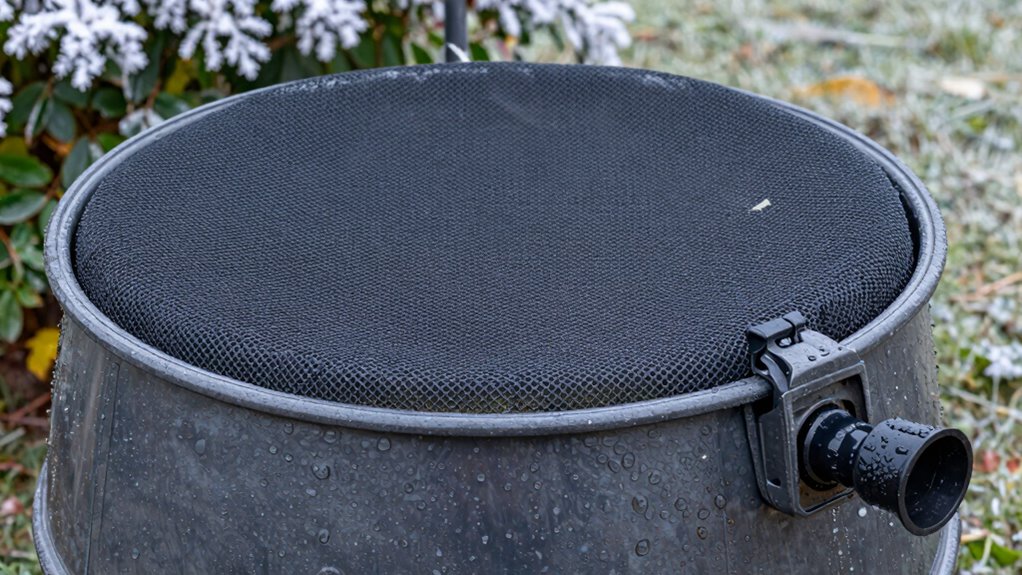
Wondering how to keep your rain barrel clean and mosquito-free? Using screens and covers effectively prevents debris buildup and stops mosquitoes from breeding. Select fine mesh screens that allow water flow but block insects and leaves. Ensure your cover fits snugly to prevent small debris from entering, which helps maintain garden aesthetics and promotes water conservation. Regularly inspect and clean the screens to keep your barrel functioning at its best. Consider installing a screened overflow outlet to divert excess water away from your foundation. For added protection, use a lid with a built-in screen. Here’s a quick overview:
| Idea | Benefit |
|---|---|
| Fine mesh screens | Keep out debris and mosquitoes |
| Secure covers | Prevent unwanted pests and debris |
| Overflows with screens | Manage excess water, avoid mosquito breeding |
| Regular inspections | Maintain effectiveness |
| Proper fit | Enhance garden aesthetics, water conservation |
How Often Should You Clean Your Rain Barrel?

How often you should clean your rain barrel depends on your local environment and how frequently it rains. Regular cleaning helps maintain rain barrel aesthetics and ensures rainwater quality stays high. If you notice debris, algae, or sediment buildup, it’s time for a thorough clean. In areas with heavy leaf fall or frequent storms, cleaning every few months is advisable. For cleaner rainwater, consider rinsing the barrel and removing any accumulated sediment or organic matter. Keeping the barrel tidy prevents unpleasant odors and reduces the risk of mosquito breeding. Even if your environment is less prone to debris, periodic cleaning guarantees your rainwater remains clear and safe for use. Consistent maintenance helps you maximize the benefits of your rain barrel while keeping it looking good.
Common Rain Barrel Problems and How to Fix Them
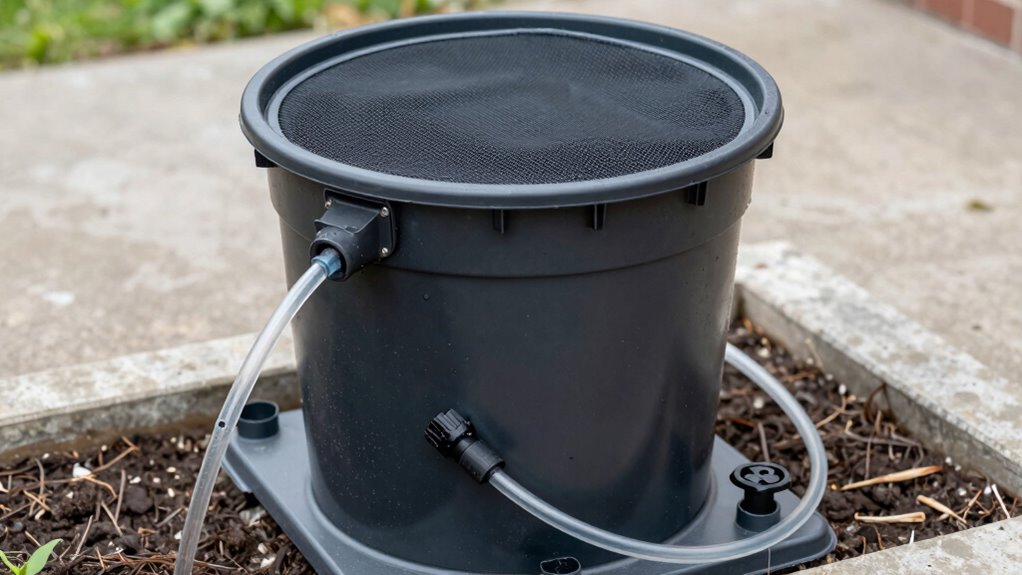
Regular cleaning helps keep your rain barrel in good shape, but even well-maintained units can encounter issues over time. Common problems include clogged outlets, algae buildup, and overflow issues that affect rain barrel capacity. These issues can also impact rain barrel aesthetics, making your setup less appealing. To fix these problems, start by clearing out debris from the spigot and inlet screens. If algae is visible, scrub the interior with a brush and rinse thoroughly. For overflow problems, check that your outlet is unobstructed and positioned correctly to prevent spillage. Regular inspections and maintenance help maintain rain barrel capacity and keep it looking good. Addressing these common problems promptly ensures your rain barrel functions efficiently and remains an attractive part of your landscape.
Frequently Asked Questions
Can Rain Barrels Be Used for Watering Edible Plants Safely?
Yes, you can use rain barrels for watering edible plants safely if you guarantee rain barrel safety. Use a clean, food-grade barrel and cover it properly to prevent mosquito breeding. Regularly clean the barrel to avoid algae and bacteria buildup. When watering edible plants, avoid using water that’s been standing for too long. With proper maintenance, rain barrel water is a safe, eco-friendly source for your edible garden.
Are There Specific Materials Best Suited for Mosquito-Proof Rain Barrels?
You should choose rain barrels made from UV resistant plastics, which withstand sun damage and keep water clean. To prevent mosquitoes, install fine mesh screens over all openings; these keep out insects while allowing water to flow. Mesh screens are essential because they block mosquitoes from breeding in the water. Using UV resistant plastics combined with mesh screens ensures your rain barrel stays mosquito-proof, durable, and safe for water storage.
How Long Can Water Safely Remain in a Rain Barrel Without Stagnation?
You can keep water in your rain barrel for about a week without risking stagnation or losing water freshness. Coincidentally, this timeframe aligns with natural cycles that prevent mosquito breeding, reminding you to check and refresh regularly. To maximize stagnation prevention, consider installing a lid, using a screen, or adding a natural larvicide. Regular maintenance guarantees your water stays clean, fresh, and mosquito-free longer.
Can Rain Barrels Be Integrated With Existing Irrigation Systems?
Yes, you can integrate rain barrels with your existing irrigation system. To do this, guarantee irrigation compatibility by using appropriate fittings and connectors. You might need a filter or a pressure regulator to maintain proper flow. System integration is straightforward if you follow manufacturer instructions and select compatible components. This setup helps you efficiently use harvested rainwater, saving water and reducing your utility bills while maintaining your garden’s health.
What Are Eco-Friendly Options for Managing Overflow Runoff?
Imagine gentle rain seeping into the earth, nourishing your landscape. You can manage overflow runoff eco-friendly with stormwater infiltration systems and green infrastructure. These options allow water to naturally absorb into the soil, reducing runoff and preventing erosion. By implementing permeable pavements, rain gardens, or vegetated swales, you create a sustainable way to handle excess water—protecting the environment while enhancing your property’s beauty and resilience.
Conclusion
Now that you know how to mosquito-proof, route overflow, and prep your rain barrel for winter, the next steps are essential. Will your careful maintenance and clever solutions hold up through unexpected challenges? Stay vigilant, because a small mistake could turn your rain barrel into a breeding ground or cause costly damage. Keep learning, stay proactive, and you’ll enjoy a safe, efficient rain harvesting system—just wait to see what surprises lie ahead.