To prevent overheating in your row cover tunnel, guarantee proper venting by using adjustable vents, roll-up sides, or fans to promote airflow. Open vents during the hottest times, position vents strategically at the top and sides, and regularly inspect for blockages or damage. Adding shade cloth can also help reduce heat buildup. Mastering these venting tricks keeps your plants cool and healthy, and you’ll discover even more tips to optimize your tunnel environment as you explore further.
Key Takeaways
- Use strategically placed vents on the top and sides to allow hot air to escape and promote airflow.
- Incorporate roll-up sides or adjustable vents for quick, seasonal temperature regulation.
- Regularly inspect and maintain vents to ensure unobstructed airflow and prevent overheating.
- Install fans or thermostats for automated ventilation control during peak heat periods.
- Shade cloths combined with early venting practices help diffuse sunlight and reduce internal temperature buildup.
Why Row Cover Tunnels Help Extend Your Growing Season

Row cover tunnels are an effective way to extend your growing season because they create a microclimate that protects plants from cold temperatures and harsh weather. By warming the soil, they help you get a head start on planting and prolong the harvest. Incorporating soil amendments before installing the tunnels boosts soil fertility, ensuring healthy growth even in cooler conditions. Additionally, row covers serve as a barrier against pests, reducing the need for chemical controls and keeping your crops healthier. This combination of temperature regulation and pest control means you can grow a wider variety of crops for longer periods. Proper hydraulics of your irrigation system can further optimize water delivery to your plants under cover. Utilizing climate control techniques can also help maintain ideal conditions inside the tunnels, enhancing crop success. Proper venting techniques is crucial, as it prevents overheating and allows for proper airflow, which is vital for crop health. Regular monitoring and adjustments based on weather conditions are essential to maintain optimal microclimate inside the tunnels. Implementing sustainable practices can also improve the overall efficiency and environmental impact of your growing system. Overall, row cover tunnels give you more flexibility and confidence to extend your growing season successfully.
Why Do Row Cover Tunnels Overheat? Causes and Factors

You might notice your row cover tunnels overheat more quickly than expected, especially when there’s not enough ventilation space. Excessive sun exposure also plays a big role, raising temperatures inside the tunnel. Understanding these factors helps you prevent overheating and protect your crops. Additionally, implementing systematic testing processes can help identify ventilation issues early and maintain optimal conditions inside the tunnels. Proper airflow management is essential for maintaining consistent temperatures and preventing heat buildup. Regularly monitoring climate control parameters can further assist in avoiding overheating and ensuring healthy plant growth. Incorporating thermal behavior principles can guide you in designing more effective ventilation strategies that respond dynamically to changing conditions. Applying environmental monitoring tools, such as sensors, can provide real-time data to optimize ventilation and temperature regulation.
Insufficient Ventilation Space
Insufficient ventilation space in row cover tunnels often leads to overheating because it restricts airflow around the plants. When the space between the cover and the plants is too tight, it hampers proper airflow management. Without enough room for air to circulate, heat becomes trapped inside, causing temperatures to rise quickly. This lack of ventilation not only increases the risk of plant stress and disease but also accelerates heat buildup during sunny days. To prevent overheating, guarantee there’s adequate ventilation space, allowing proper airflow management to occur freely. Proper airflow management helps regulate temperature, reduces humidity, and keeps your plants healthy. Adjusting the tunnel’s height or using vent openings can improve ventilation space, making it easier to control heat and protect your crops. Additionally, understanding sleep hygiene principles can help you plan better environmental controls for your gardening space. Ensuring good air circulation is essential for maintaining healthy plant growth and preventing heat stress. Incorporating ventilation techniques such as adjustable vents or fans can further enhance airflow and temperature regulation. Creating a balanced environment within your tunnels is crucial for optimal plant development and avoiding overheating issues.
Excessive Sun Exposure
Excessive sun exposure is a primary factor causing row cover tunnels to overheat. When your tunnels are exposed to intense sunlight, temperatures can spike rapidly, stressing plants and reducing yields. To mitigate this, consider using shade cloth to diffuse harsh rays and lower heat buildup. Additionally, poor fan circulation can trap hot air inside, worsening the problem. Without proper airflow, heat accumulates quickly, creating a stifling environment. Be mindful of these factors to prevent overheating and protect your crops.
- Feel the frustration of scorching temperatures threatening your harvest
- Witness your plants wilt under the relentless sun
- Experience the relief of effective shade cloth shielding your crops
- Enjoy fresh, healthy produce thanks to proper ventilation and shade
How to Recognize When Your Plants Are Overheating in a Tunnel
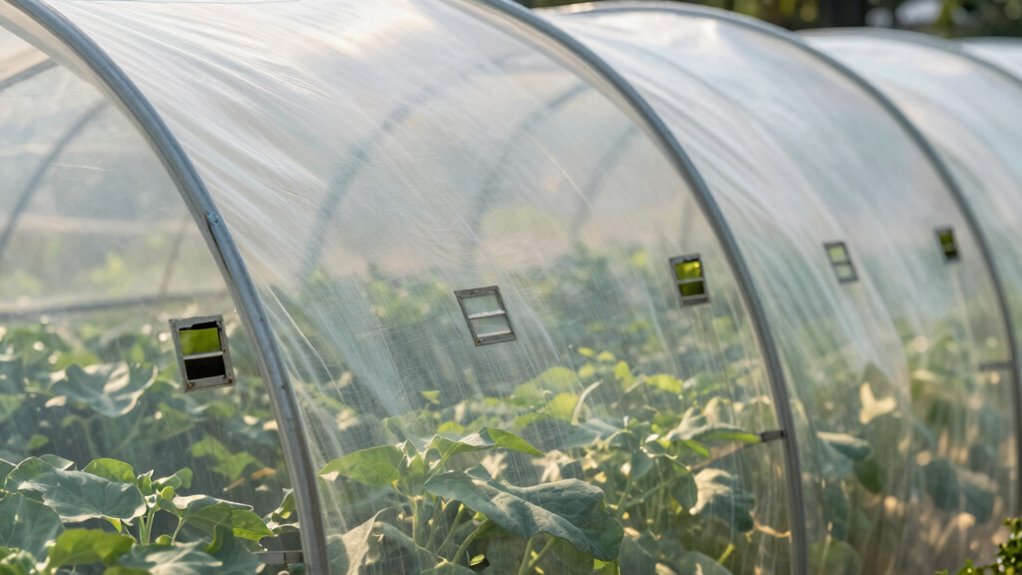
When temperatures inside a tunnel rise too high, plants can quickly become stressed or damaged. You’ll notice leaves curling or wilting, which indicates the plant is struggling to regulate its temperature. Look for signs of leaf scorch or discoloration, especially on the topmost leaves. If your plants are seeking plant shade by stretching upward or leaning, it’s a sign they’re trying to escape excessive heat. Additionally, pay attention to moisture control; overheating can cause rapid soil moisture loss, leading to drought stress. If the soil feels very dry despite regular watering, your plants may be overheating. Recognizing these signs early helps you take action before damage occurs, ensuring your plants stay healthy and productive in the tunnel. Monitoring internal temperature regulation is essential to prevent overheating and maintain optimal growing conditions. Being aware of environmental stress factors can also help in implementing timely cooling strategies, such as venting techniques that can effectively reduce internal temperatures. Proper venting not only cools the tunnel but also improves airflow, which is critical for healthy plant growth. Incorporating consistent monitoring of conditions allows you to respond promptly to rising heat levels and protect your crops.
Simple Venting Techniques to Keep Your Tunnel Cool
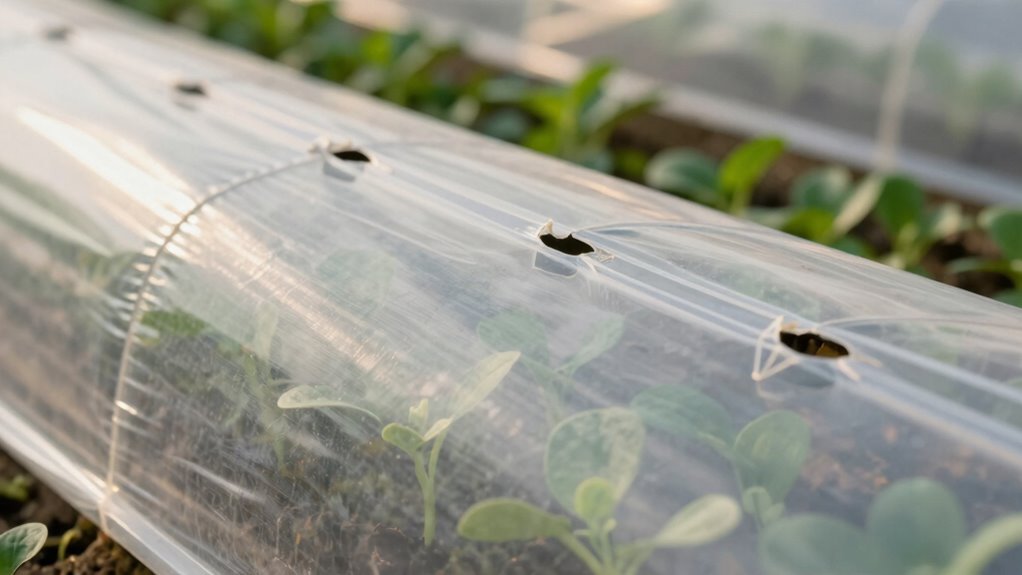
Keeping your tunnel cool is essential for healthy plant growth, and simple venting techniques can make a big difference. Proper ventilation helps regulate temperature, preventing overheating that can stress plants. It also aids in pest control by reducing humidity and discouraging pests from settling inside. To achieve effective temperature regulation, consider these techniques:
- Open vents during the hottest part of the day to release excess heat
- Use roll-up sides to quickly adjust airflow as needed
- Install adjustable vents for precise control over ventilation
- Regularly inspect vents to ensure they function smoothly and maintain airflow
- Incorporate climate control devices like fans or thermostats to automate and optimize venting. Proper airflow management is crucial for maintaining consistent environmental conditions in your tunnel. Additionally, understanding the role of ventilation in plant health can help you tailor your approach for optimal results.
These small adjustments can dramatically improve your tunnel’s environment, ensuring your plants stay healthy, pest-free, and thriving. Proper venting doesn’t just cool your tunnel—it creates an ideal space for your crops to flourish.
How to Install and Position Vents for Better Cooling

Properly installing and positioning vents is essential for maximizing cooling efficiency in your tunnel. Start by placing vents at strategic locations, such as the top and sides, to promote effective airflow. Proper vent placement ensures hot air escapes and fresh air circulates, preventing overheating. When it comes to vent sizing, choose vents that are large enough to allow adequate airflow but not so big that they compromise the tunnel’s structure or insulation. Smaller vents can be effective if positioned correctly, while larger vents help improve ventilation during hot days. Make sure vents are secure and airtight around the edges to prevent unwanted pests or drafts. Regularly check and adjust vent placement and sizing based on seasonal changes and weather conditions for ideal cooling performance. Understanding wood movement can help you design vent openings that accommodate expansion and contraction without causing damage or leaks. Additionally, considering venting principles can optimize airflow patterns and prevent stagnation inside the tunnel.
DIY Venting Solutions to Prevent Overheating Today

If your tunnel is overheating, creating DIY venting solutions can effectively improve airflow and prevent temperature spikes. Proper venting helps avoid pollination issues caused by excessive heat and humidity, ensuring healthy fruit and vegetable development. You can also use simple methods to regulate temperature without costly equipment. Consider adding adjustable vents or temporary openings with easily removable covers to boost airflow during peak heat. These solutions allow you to fine-tune conditions, reducing stress on plants. Additionally, improving ventilation helps maintain balanced soil amendments, preventing overheating-related root issues. By taking these straightforward steps, you’ll protect your crops from heat stress, promote better pollination, and enhance overall plant health. These DIY fixes empower you to take control of your tunnel environment today.
Troubleshooting Common Venting Problems and Fixes

Venting problems can lead to overheating or poor airflow in your row cover tunnels. Recognizing common challenges is the first step toward fixing them quickly. Here are some effective troubleshooting tips to keep your tunnels ventilated and plants healthy.
Common Venting Challenges
Venting problems can considerably impact the success of your row cover tunnels, leading to poor plant growth or even crop loss. Improper venting can cause overheating, humidity buildup, and pest issues. You might struggle with inconsistent airflow, making it difficult to regulate temperature and humidity effectively. Sometimes, clogged or blocked vents prevent proper air exchange, risking diseases or mold. Other times, poor soil amendments can weaken plant resilience, making pest management more challenging under overheated conditions. You may also face frustration when vents are too open, letting in pests or cold drafts. Addressing these challenges requires careful monitoring of airflow and temperature. Ensuring vents are correctly positioned and maintained helps prevent overheating and creates a healthier environment for your crops.
Effective Troubleshooting Tips
To keep your row cover tunnels functioning properly, effective troubleshooting is key. If you notice pests still getting through, check for tears or gaps in the fabric and seal them promptly. Proper venting prevents overheating, so ensure vents are unobstructed and adjustable to maintain airflow. Poor soil management can also cause issues; overly moist or compacted soil can attract pests or promote mold, so regularly aerate and monitor soil health. If temperatures fluctuate excessively, adjust your vents or add supplemental shading. Always inspect for damage or blockages that hinder airflow. Keeping vents clear and sealing any fabric tears helps prevent pest intrusion and keeps your soil in ideal condition. Regular maintenance and quick fixes ensure your tunnels stay effective against pests and temperature swings.
Tips for Keeping Your Tunnel Cool and Plants Healthy

Keeping your tunnel cool is essential for healthy plant growth, especially during hot weather. When temperatures rise, plants can quickly become stressed, affecting soil moisture and increasing pest activity. To keep your tunnel comfortable, regularly monitor soil moisture levels to prevent overheating and dehydration. Proper venting and shading help regulate temperature and airflow, reducing the risk of pests that thrive in warm, humid environments.
- Use shade cloths to block excess heat and protect soil moisture.
- Vent early in the day to release trapped heat and maintain airflow.
- Keep a close eye on pests, removing them before they cause damage.
- Maintain consistent watering to support healthy roots and prevent stress.
Following these tips will help keep your plants healthy, vibrant, and productive all season long.
Frequently Asked Questions
Can Venting Increase Airflow Without Losing Heat in Cold Weather?
Yes, venting can increase airflow without losing heat if you use the right venting materials and airflow design. By selecting adjustable vents or breathable materials, you allow fresh air in while retaining warmth. Properly placed vents ensure good airflow, preventing overheating, yet keep heat in during cold weather. Focus on a smart airflow design that balances ventilation with insulation, so your plants stay cozy without getting too hot.
How Often Should I Check for Overheating Signs During Hot Days?
On hot days, you should check for overheating signs every hour, like wilting leaves or excessive humidity inside your tunnel. Imagine the tunnel as a cozy greenhouse, gradually heating up like a summer afternoon. Regular temperature monitoring and adjusting ventilation frequency keep your plants cool and healthy. Stay vigilant, and don’t hesitate to open vents more often if you notice any stress signs—your plants will thank you!
Are There Specific Venting Tools Recommended for Different Tunnel Sizes?
You should choose venting tools based on your tunnel’s vent size and placement. For smaller tunnels, simple adjustable vents work well, while larger tunnels benefit from larger, more durable vents with better airflow. Proper vent placement is key—place vents near the top for hot air escape and on sides for fresh air intake. Select tools that fit your tunnel dimensions and guarantee easy adjustment for ideal temperature control.
What Safety Precautions Are Needed When Installing Vents or DIY Solutions?
When installing vents or DIY solutions, you should wear gloves and eye protection to prevent injuries. Guarantee proper vent installation to avoid gaps that could let pests in or cause overheating. Secure vents firmly and check for stability regularly. Avoid sharp tools or hardware that could cause cuts. Properly sealing around vents helps with pest prevention and maintains ideal airflow. Always follow safety instructions and double-check your work to keep your tunnel safe.
How Do I Prevent Pests From Entering Through Vents?
Think of your vents as guarded gateways for your plants. To prevent pests from sneaking in, use pest exclusion methods like fine mesh or vent screening. Make sure the screens fit snugly without gaps, and check regularly for tears or holes. This keeps unwanted critters out while still allowing airflow. Proper pest exclusion and vent screening are your best defenses against pests invading through your vents.
Conclusion
By mastering venting techniques, you can keep your row cover tunnels cool and your plants thriving, even in the heat of summer. Think of it as giving your garden a gentle nudge, much like the clever use of a fan in a Victorian parlour. With simple DIY solutions and a keen eye, you’ll prevent overheating and extend your growing season, ensuring a bounty that would make even the most discerning Victorian gardener proud.