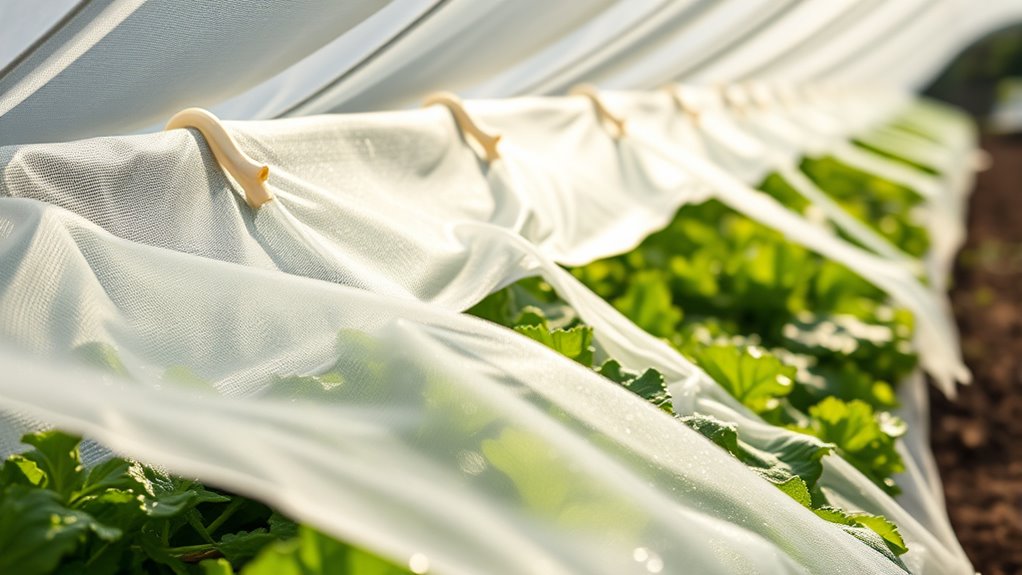

To get the best results with row covers, install them early as seedlings emerge to protect against pests, insects, and cold weather. Venting during warm parts of the day helps prevent overheating and humidity buildup, reducing mold and pest issues. Don’t wait too long or remove covers prematurely, as it may expose plants to frost or pests. Maintaining proper timing and venting keeps crops healthy and thriving—something you’ll uncover more about if you keep exploring this topic.
Key Takeaways
- Install row covers early when seedlings emerge to protect against pests and frost.
- Remove covers gradually as weather warms to prevent overheating and promote airflow.
- Vent covers during warm parts of the day to regulate temperature and humidity.
- Monitor weather forecasts and pest activity to determine optimal installation and removal timing.
- Regularly inspect and repair covers to maintain pest barriers and prevent damage.

Have you ever wondered how to protect your plants from pests and harsh weather? Row covers offer an excellent solution, but knowing when to put them on and how to vent them properly makes all the difference. Timing is essential because the right application can shield your plants during vulnerable periods, while improper timing might stunt growth or fail to prevent pests effectively. Generally, you want to install row covers early in the season, just as seedlings emerge, to provide immediate protection from insects, birds, and frost. If you wait too long, pests might already have taken hold, or chilly weather could damage delicate plants. Conversely, removing the covers too early can expose your crops to pests and cold snaps, so staying attentive to weather forecasts and pest activity is key.
Temperature regulation is a significant benefit of using row covers. They act as a barrier that traps heat, creating a microclimate that keeps plants warmer during cool nights and early mornings. This warmth accelerates growth and extends your growing season. However, as daytime temperatures rise, the covers can cause excessive heat buildup, risking heat stress or leaf scorch. That’s where venting comes into play. By opening or partially removing the covers during the warmest parts of the day, you allow excess heat and humidity to escape, maintaining a stable environment that promotes healthy growth. Proper venting also enhances airflow, which reduces the risk of fungal diseases and pest infestations that thrive in stagnant, humid conditions.
Pest control is another major advantage of row covers, especially when you position them early and keep them on during vulnerable periods. They create a physical barrier that stops insects like aphids, beetles, and cabbage worms from reaching your plants. This non-chemical approach minimizes pesticide use, making your garden safer for pollinators and beneficial insects. However, it’s essential to monitor your covers regularly. Over time, pests might find small gaps or damage in the fabric, so repairing tears and adjusting the covers ensures continuous protection. Venting also helps prevent mold and mildew, which pests often attract, by reducing moisture accumulation underneath the covers.
Frequently Asked Questions
How Do I Store Row Covers During Off-Season?
When storing row covers during the off-season, start by cleaning them thoroughly to remove dirt and debris. Fold them neatly to prevent wrinkles and store in a cool, dry place away from direct sunlight. Use plastic storage bins or a breathable container to safeguard them from pests and moisture. Proper off-season maintenance ensures your row covers stay in good condition, ready for use next season.
Can Row Covers Be Reused for Multiple Growing Seasons?
Ever wondered if your row covers can serve you multiple seasons? Yes, they can, if you consider their cover durability and follow proper reuse tips. Inspect for tears or weakened fabric, clean them gently, and store them in a dry, protected area. By taking these steps, you guarantee your covers stay effective and ready for next season, saving you money and effort while protecting your crops efficiently.
Are There Specific Pests That Row Covers Do Not Protect Against?
Row covers do not guard against every pest; some, like root maggots or underground pests, can still attack your plants. While they excel at pest exclusion, their coverage limitations mean pests that enter from below or through small openings might still get in. To maximize protection, use row covers alongside other pest control methods. Regular inspection and proper installation help guarantee you’re covering as many pests as possible.
How Does Weather Affect the Longevity of Row Covers?
Weather’s a wild card, but it definitely impacts your row covers’ longevity. Harsh sun can weaken cover material durability, causing tears over time, while heavy rain or snow creates microclimate effects that might lead to mold or sagging. You might think your cover is invincible, but extreme weather tests its resilience. To keep your plants protected, choose weather-resistant materials and monitor conditions regularly—your row cover’s lifespan depends on it.
What Are the Environmental Impacts of Using Row Covers?
Using row covers helps reduce your reliance on pesticides by protecting plants naturally. They also modify the microclimate around your crops, maintaining warmth and humidity, which can boost growth. However, consider the environmental impacts, like potential plastic waste and energy use for production and disposal. By managing covers responsibly, you can enjoy these benefits while minimizing negative effects on the environment.
Conclusion
Think of row covers as your garden’s undercover guardian, silently working beneath the surface. By timing their placement just right and venting them properly, you’re guiding your plants through unpredictable weather like a skilled conductor leading an orchestra. When used thoughtfully, row covers become a seamless extension of your garden’s rhythm, protecting delicate life while allowing it to flourish. Mastering their timing and venting turns your garden into a resilient symphony of growth and abundance.