To sanitize your tools between plants, start by cleaning off dirt and plant residue with a stiff brush or cloth, removing debris that can harbor germs. Next, disinfect your tools using a solution like diluted bleach or alcohol-based sanitizer, following the manufacturer’s instructions for proper contact time. Allow tools to air dry completely before moving on. Maintaining regular cleaning routines and storing tools properly helps keep your plants healthy; learn more about effective sanitation practices below.
Key Takeaways
- Clean tools immediately after use with a stiff brush or cloth to remove dirt and plant debris.
- Disinfect tools using diluted bleach, alcohol-based sanitizers, or commercial disinfectants, following manufacturer instructions.
- Submerge tools fully in disinfectant for the recommended contact time to effectively kill pathogens.
- Allow tools to air dry completely before storing or reusing to prevent microbial growth.
- Regularly inspect and maintain tools, repairing damage and sharpening blades to ensure effective sanitation.
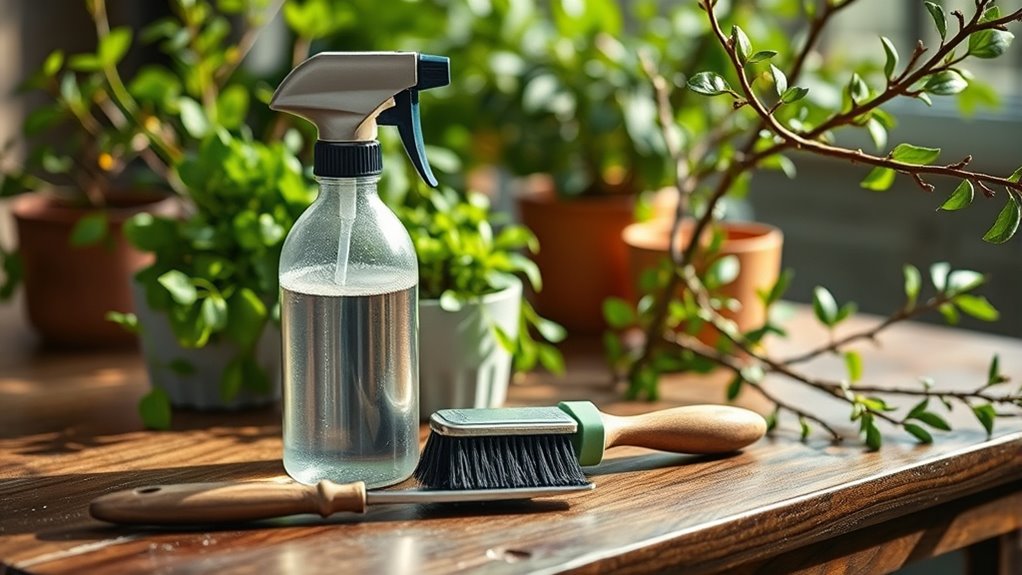
To prevent cross-contamination, it is essential to sanitize your tools thoroughly between plants. This step is critical to protect your crops from diseases, pests, and any potential pathogens that could spread from one plant to another. Implementing proper disinfection protocols ensures that your gardening or farming process remains safe and productive. You should start by cleaning your tools immediately after use, removing any dirt or plant residue that might harbor harmful microorganisms. Use a stiff brush or cloth to wipe off debris, then move on to disinfect the tools effectively.
Sanitize tools thoroughly between plants to prevent disease and ensure healthy, productive gardening.
When it comes to disinfection protocols, choosing the right disinfectant is key. You might consider using solutions like diluted bleach, alcohol-based sanitizers, or commercial disinfectants designed for agricultural tools. Make sure to follow the manufacturer’s instructions for dilution and contact time, as improper use can reduce effectiveness or damage your equipment. Submerging tools in disinfectant for the recommended period is often the most dependable way to kill pathogens. After soaking, allow the tools to air dry thoroughly before storing or reuse. This extra step helps eliminate any residual bacteria or fungi that might survive initial cleaning.
Equipment maintenance plays an indispensable role in keeping your tools in prime condition and ensuring effective sanitation. Regularly inspecting your tools for signs of wear, rust, or damage helps prevent issues that could compromise disinfection efforts. Sharp or broken tools can harbor bacteria in cracks or crevices, making thorough cleaning more difficult. Sharpening blades and repairing handles not only prolongs the lifespan of your equipment but also ensures that cleaning and disinfection are more efficient. Clean tools are easier to disinfect thoroughly, reducing the risk of cross-contamination.
Additionally, establishing a routine schedule for equipment maintenance and sanitation minimizes the chances of oversight. Keep disinfectants in a designated, easily accessible area so you can quickly sanitize your tools between plants. Remember to use separate tools for different plant species when possible, especially those susceptible to specific pests or diseases. Proper storage after cleaning is equally important; store sanitized tools in a clean, dry environment to prevent recontamination. Consistency in following these disinfection protocols, combined with diligent equipment maintenance, helps maintain healthy plants and a productive growing environment. By paying close attention to these details, you guarantee your tools remain reliable, safe, and effective for every planting session.
Frequently Asked Questions
How Often Should Tools Be Sanitized Between Plant Uses?
You should disinfect your tools after each plant use to prevent cross-contamination. Proper tool storage, like storing sanitized tools in a clean, dry place, helps maintain their cleanliness. Follow a regular sanitization frequency, ideally every time you finish working with a plant, especially if working with different varieties. This practice keeps your tools fresh, reduces disease spread, and ensures healthy plants. Consistent sanitization is key to effective plant care.
What Cleaning Agents Are Most Effective for Sanitizing Tools?
You should use chemical disinfectants like bleach solutions or commercial disinfectants for effective sanitizing, as they kill most bacteria and viruses. Natural sanitizers such as vinegar or hydrogen peroxide also work well, especially for eco-friendly practices. Make sure to thoroughly clean tools first, then apply your chosen agent, guaranteeing full coverage. Allow the disinfectant to sit for the recommended contact time before rinsing or drying to ensure proper sanitization.
Are There Tools That Do Not Require Sanitizing?
Some tools act like loyal soldiers and don’t need sterilization if stored properly. Tools used for light tasks or single use, like disposable gloves or plastic trowels, don’t require sterilization methods. Keep them in tool storage that’s clean and dry, and they’re ready for the next job. For reusable tools, always follow sterilization methods to prevent cross-contamination, but some items naturally stay cleaner and don’t need constant sanitizing.
How Long Should Tools Be Disinfected Before Reuse?
You should disinfect tools for at least 30 seconds to 1 minute using effective disinfection methods like alcohol-based solutions or bleach. This guarantees proper sanitization, preserving tool longevity while preventing cross-contamination. Always follow the manufacturer’s instructions for specific products. After disinfecting, let the tools air dry, and avoid touching non-sanitized surfaces. Regularly sanitizing tools with proper methods keeps your equipment in good condition and maintains a safe environment.
What Are the Risks of Inadequate Tool Sanitization?
Did you know that 48% of foodborne illnesses are linked to cross contamination? Inadequate tool sanitization puts you at risk of spreading harmful microbes between plants, leading to microbial growth and contamination. If you skip proper cleaning, you could unknowingly cause health hazards, product spoilage, and costly recalls. To prevent this, always sanitize tools thoroughly between uses, reducing the risk of microbial growth and ensuring food safety.
Conclusion
By sanitizing your tools between plants, you prevent cross-contamination and protect your crops’ health. For example, imagine working on two different tomato varieties—skipping sanitation could spread diseases, ruining both. A simple wipe-down or disinfectant spray can save you from costly setbacks. Stay vigilant, keep your tools clean, and your plants will thank you with healthier yields and fewer problems. It’s a small step that makes a big difference in your gardening success.