
Chipped wood mulch effectively suppresses weeds when applied 2–3 inches thick, blocking sunlight and preventing weed seeds from germinating. However, if you use too much or keep the mulch too moist, it can create a damp environment that attracts pests and diseases, and cause the mulch to break down faster. Knowing when and how to use it properly helps you enjoy its benefits and avoid common troubles—keep exploring to learn more.
Key Takeaways
- Chipped wood mulch effectively suppresses weeds when applied 2–3 inches thick and kept free of weeds beforehand.
- It prevents weed germination by blocking sunlight, especially in the initial months after application.
- Overly thick mulch or excessive moisture can accelerate decomposition and create conditions favorable for pests and diseases.
- Poor drainage and overwatering can lead to mold, fungal growth, and attract pests like termites and beetles.
- Regular maintenance, including replenishing mulch and monitoring for mold or pests, ensures long-term weed suppression without causing trouble.
What Is Chipped Wood Mulch and How Does It Work?
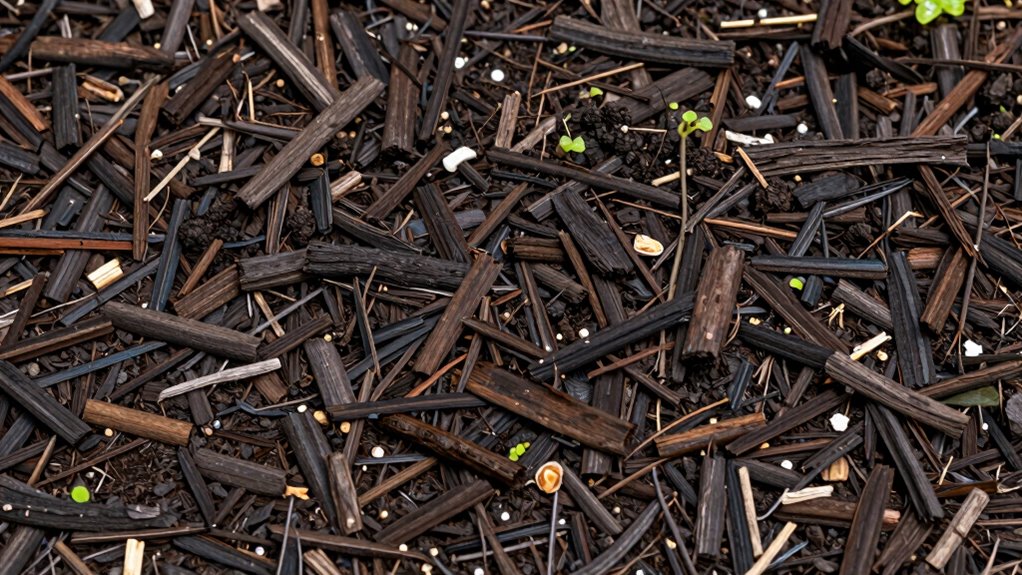
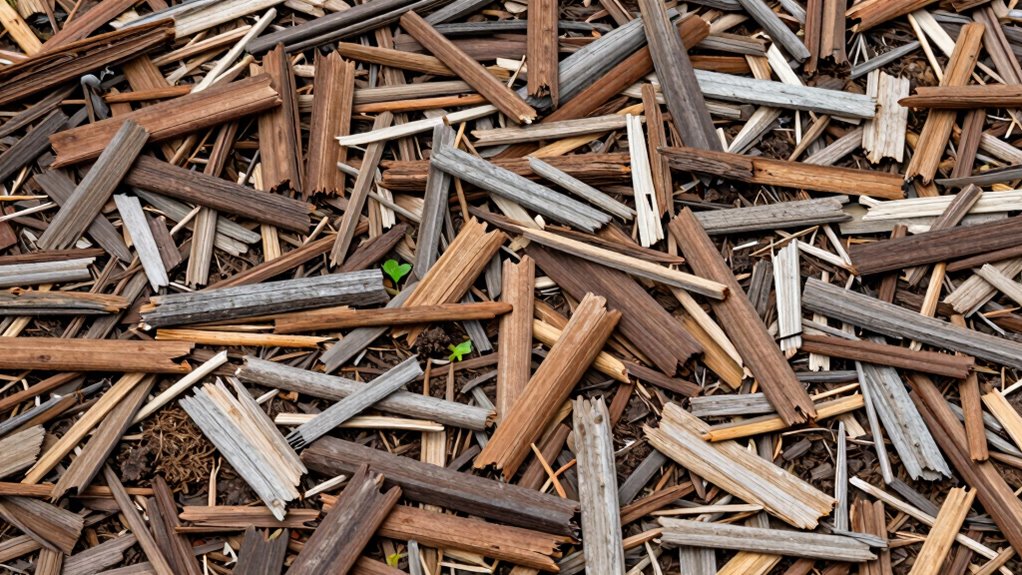
Chipped wood mulch is a popular landscaping material made from shredded or chipped branches, logs, and other woody debris. It enhances mulch aesthetics by providing a natural, uniform appearance that blends well with garden beds and landscapes. As it settles, the mulch gradually decomposes, enriching the soil with organic matter through wood decomposition. This process helps improve soil structure and nutrient content over time. The mulch acts as a protective layer, suppressing weeds and retaining moisture, while also adding visual appeal. When applied correctly, chipped wood mulch remains effective for months, breaking down slowly and continuously supporting plant health. Proper mulch application ensures you maximize its weed-suppressing and soil-enhancing effects. Additionally, understanding its decomposition process can help you anticipate when to replenish or replace the mulch for optimal gardening results, and monitoring its breakdown can inform adjustments to mulching techniques for better outcomes. Recognizing the decomposition rate of wood mulch allows gardeners to plan for timely reapplication and maintain an effective weed barrier. Regular inspection and maintenance can further enhance its benefits and longevity.
Benefits of Using Wood Mulch in Your Garden
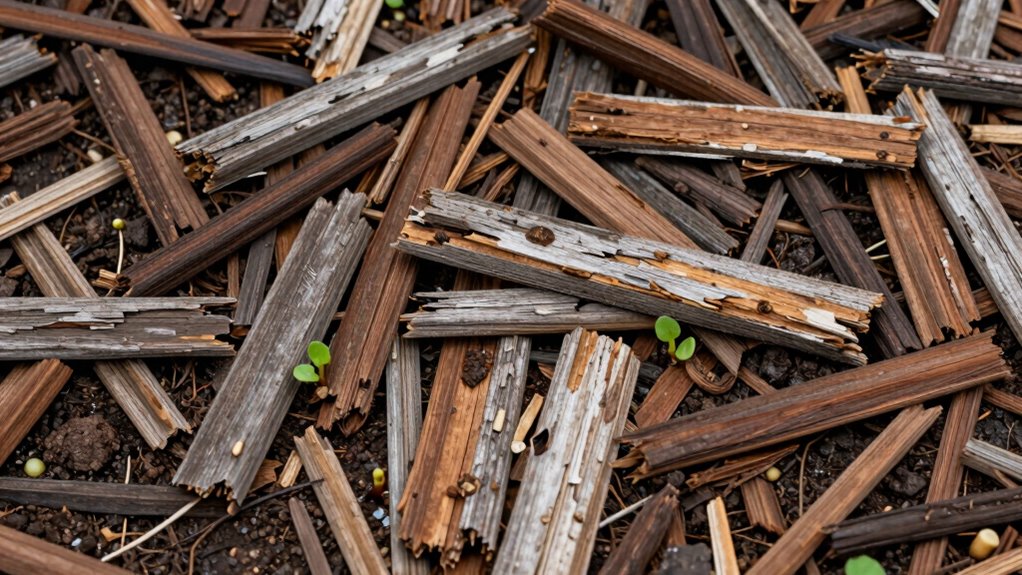
Using wood mulch in your garden offers numerous advantages that can considerably enhance plant health and landscape appearance. It helps you create a cohesive and attractive garden design by adding a natural, finished look. Mulch also plays a crucial role in soil enrichment; as it decomposes, it releases essential nutrients that improve soil structure and fertility. This encourages healthier root growth and promotes vigorous plant development. Additionally, wood mulch conserves moisture by reducing evaporation, which means you spend less time watering. It also moderates soil temperature, protecting roots from extreme heat or cold. Proper application of mulch involves understanding attention to detail to avoid common issues such as pests or mold. Being aware of appropriate mulch depth helps ensure optimal benefits and prevents problems like rot or pest infestation. Furthermore, selecting the right type of wood mulch can also help reduce the likelihood of introducing unwanted pests or diseases into your garden by choosing quality mulch. Regularly monitoring your mulch layer can prevent mold growth and ensure it remains beneficial rather than a problem. Also, understanding time for decomposition helps you know when to replenish mulch layers to maintain their effectiveness. Overall, incorporating wood mulch streamlines your gardening efforts while supporting a thriving, visually appealing landscape. It’s a simple, effective way to boost your garden’s vitality and aesthetic appeal simultaneously.
How Wood Mulch Suppresses Weeds Effectively

Because wood mulch forms a dense, natural barrier on the soil surface, it effectively blocks sunlight from reaching weed seeds, preventing germination. The mulch’s color contrast with the soil helps you identify areas needing coverage or replenishment, enhancing weed suppression. Organic mulch types like shredded bark, wood chips, and composted wood not only smother weeds but also add nutrients to your soil over time. The thick layer deprives weeds of light and hampers their growth, reducing the need for chemical controls. Properly applied, wood mulch creates a uniform, dark mat that discourages weed emergence. Mulch thickness and consistent replenishment ensure the mulch remains effective, keeping weeds at bay and promoting healthier garden beds. Additionally, free floating mulch allows water to penetrate easily, supporting plant health and reducing runoff. This natural method makes weed control sustainable and visually appealing.
When Does Mulch Encourage Pests or Diseases?
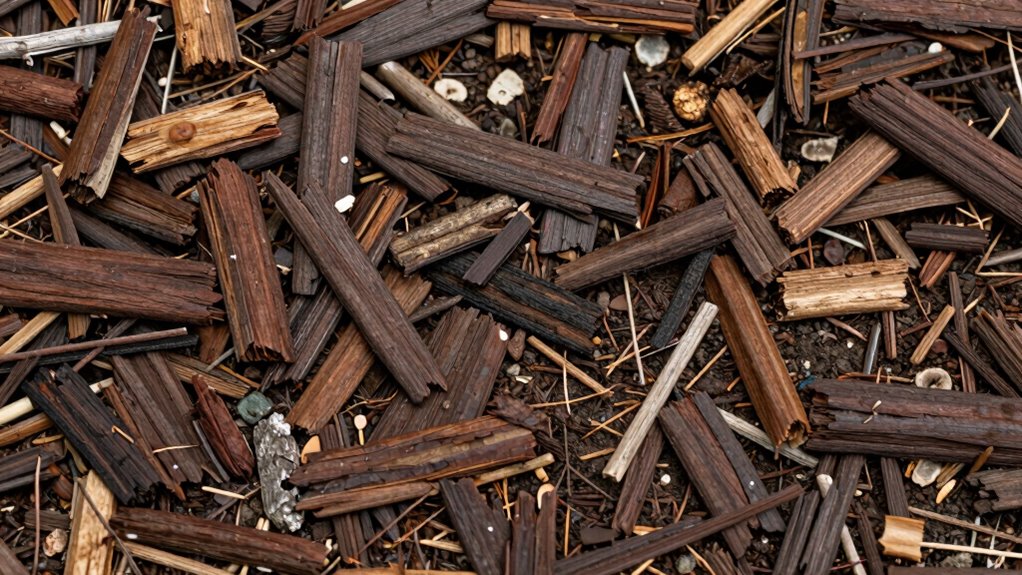
While mulch offers many benefits, it can sometimes create conditions that encourage pests or diseases. Mulch that stays moist and poorly aerated fosters pest attraction and fungal growth. Pests like termites or beetles may be drawn to damp, decaying wood, while fungi thrive in humid environments. To visualize this, consider the table below:
| Condition | Pest Attraction | Disease Risk |
|---|---|---|
| Excessive moisture | Termites, beetles | Fungal infections |
| Poor drainage | Slugs, snails | Root rot |
| Organic buildup | Molds, mildews | Fungal pathogens |
Maintaining proper airflow and avoiding overly wet mulch reduces these risks, keeping your garden healthier. Additionally, understanding the transparent fee structure of your mulch supplier can help you make informed decisions and avoid hidden costs.
Signs Your Mulch Is Breaking Down Too Fast

If your mulch starts to disintegrate quickly, you might notice it breaking down faster than usual. Excess moisture in the soil can accelerate this process, making your mulch decay prematurely. Keep an eye out for signs like rapid decay and soggy conditions to prevent issues before they worsen. Additionally, improper mulch application or using organic mulch that decomposes too rapidly can contribute to this problem. Understanding the benefits of proper mulch use can help you maintain a healthy garden environment. For more effective mulch management, consider how different materials and techniques can influence decomposition rates and soil health. Using chipped wood mulch specifically can sometimes speed up decomposition if moisture levels are high, so adjusting your watering habits may be necessary.
Rapid Decay Indicators
How can you tell if your chipped wood mulch is breaking down too quickly? One clear sign is increased fungus growth on the surface, which indicates rapid decomposition. If you notice a fuzzy or moldy layer, your mulch might be decaying faster than it should. Another warning sign is nutrient depletion; as the mulch breaks down swiftly, it can deplete essential nutrients in the soil, leading to poor plant health. This rapid decay often results from improper moisture balance or overly fine wood chips that decompose quickly. If you see these signs, your mulch isn’t providing the long-lasting weed suppression or soil benefits you expect. Instead, it’s likely causing more harm than good by hastening nutrient loss and fostering fungal issues. Additionally, proper mulch depth and composition are crucial factors that can influence the rate of decay and overall effectiveness.
Excessive Soil Moisture
Excessive soil moisture can quickly signal that your mulch is breaking down too fast. When the soil stays overly wet, it increases the risk of soil erosion, washing away valuable topsoil and exposing roots. You may notice your chipped wood mulch turning into a soggy mass, losing its structure and effectiveness. This excessive moisture can also cause nutrient leaching, where essential nutrients drain away before plants can absorb them. As the mulch decomposes rapidly, it offers less weed suppression and fails to protect the soil properly. To prevent this, guarantee proper drainage and avoid overwatering. Monitoring soil moisture levels helps you catch early signs of breakdown, maintaining a healthy balance that supports plant growth and reduces the risk of erosion and nutrient loss. proper drainage is essential to maintain mulch longevity and soil health. Additionally, using mulch materials that are resistant to rapid decomposition can help extend its protective qualities.
How to Apply Wood Mulch Safely and Effectively
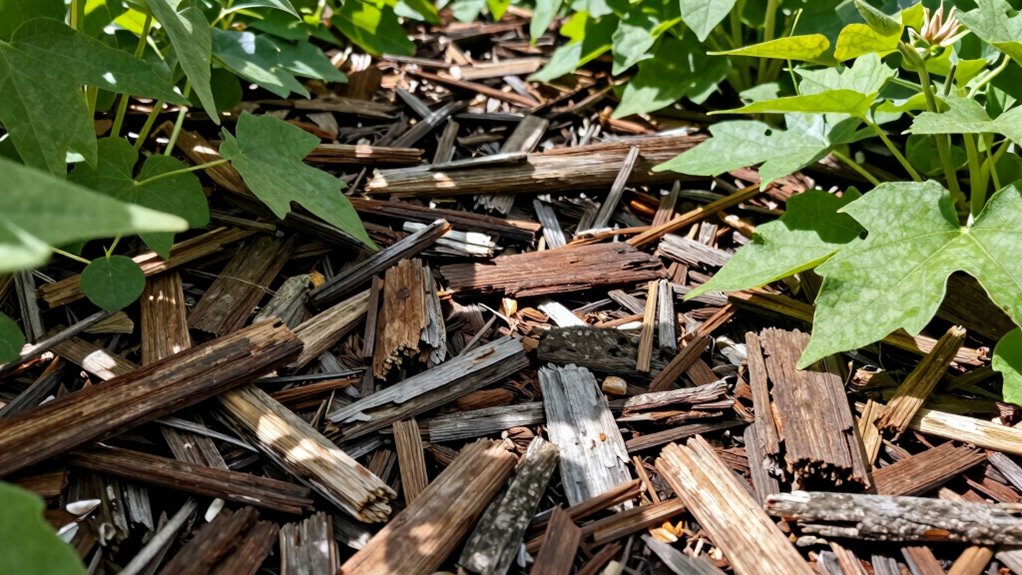
Applying wood mulch safely and effectively begins with preparing the area properly. Clear away weeds, dead plants, and debris to guarantee a clean surface. Spread a layer of mulch about 2 to 3 inches deep, avoiding direct contact with plant stems to prevent rot. Proper mulch maintenance involves periodically checking for compaction or displacement and replenishing as needed to maintain an even appearance. When applied correctly, wood mulch enhances garden aesthetics by creating a tidy, uniform look. Be mindful not to pile mulch against tree trunks or plant crowns, as this can cause problems like rot or pests. Consistent application and maintenance help you enjoy the benefits of mulch while minimizing potential issues, ensuring your garden stays healthy and attractive.
Tips to Minimize Problems With Wood Mulch
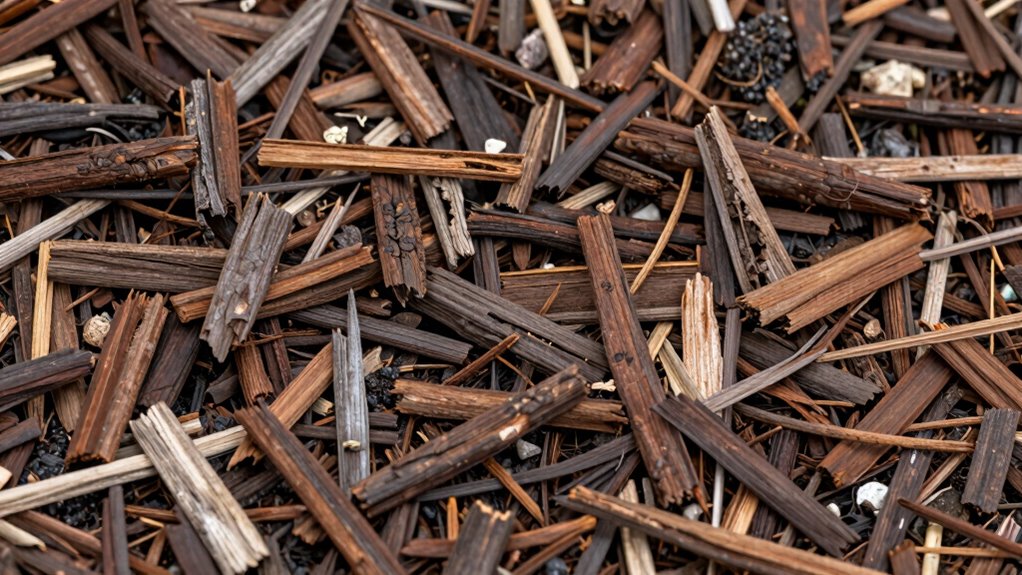
To keep your wood mulch looking its best and prevent common problems, regular inspection and maintenance are key. Start by choosing the right mulch color—darker shades tend to decompose faster, so consider color selection based on how long you want the mulch to last and its aesthetic appeal. When deciding between organic vs. inorganic mulch, remember organic options enrich the soil but may decompose quickly, requiring more frequent replenishment. Inorganic mulches, like rubber or plastic, last longer but don’t improve soil health. Regularly check for signs of compaction, mold, or pest activity, and replenish mulch as needed. Properly layered mulch minimizes weed growth and prevents moisture issues, ensuring your garden stays healthy and attractive. Incorporating essential oils for plant health can also help deter pests and promote a thriving garden environment. Additionally, understanding the decomposition process of organic mulch can help you plan your mulching schedule more effectively, especially since mulch breakdown influences how often you need to refresh your mulch layer. Monitoring soil moisture levels regularly can further prevent issues caused by improper mulch application. Moreover, considering the impact of mulch on soil temperature can help optimize plant growth and prevent overheating during hot months.
Is Wood Mulch Right for Your Garden? Factors to Consider
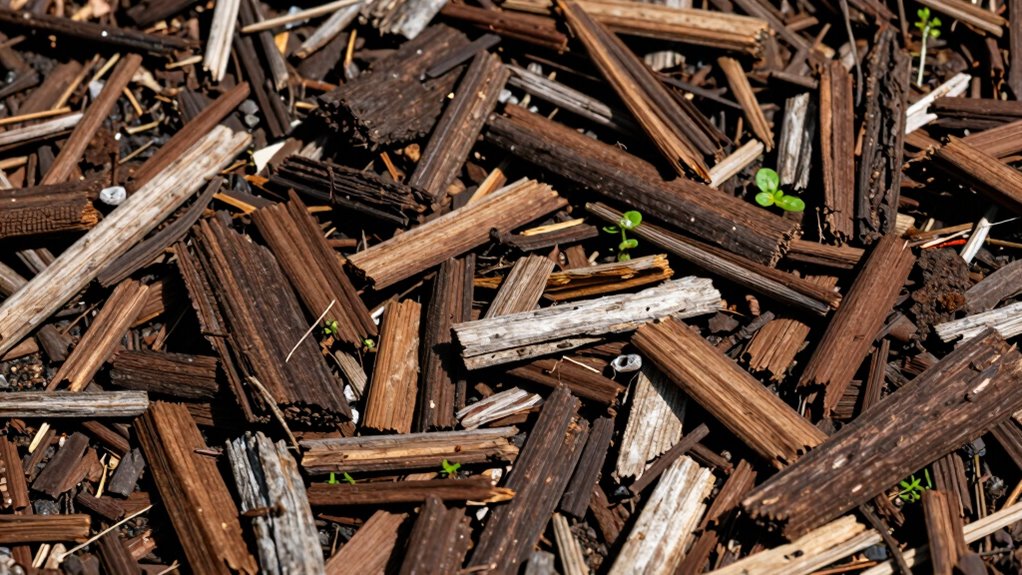
Deciding whether wood mulch is right for your garden depends on several factors, including your soil type, climate, and gardening goals. If you value garden aesthetics, consider how mulch color choices complement your plants and landscape design. Some mulches provide a natural look, while others add vibrant contrast. Temperature and moisture retention are essential in dry or cold climates, influencing your decision. The table below highlights key considerations:
| Factor | Impact |
|---|---|
| Soil Type | Affects mulch decomposition and nutrient release |
| Climate | Determines mulch longevity and pest activity |
| Garden Aesthetics | Guides mulch color choices and style |
| Gardening Goals | Influences whether weed suppression or soil health is prioritized |
Use this guide to decide if wood mulch aligns with your garden’s needs.
Frequently Asked Questions
How Long Does Chipped Wood Mulch Typically Last Before Needing Replacement?
Chipped wood mulch typically lasts about 1 to 3 years before you need to replace it, depending on its decomposition rate. You’ll notice it breaks down faster in moist, warm conditions and with a lighter layer. To maintain its mulch longevity, top it off annually and replenish as needed. Regularly check for signs of decomposition, like reduced thickness or exposure of soil, to keep your garden protected and weed-free.
Can Chipped Wood Mulch Be Used Around Vegetable Gardens Safely?
In the age of dial-up internet, you might hesitate to use chipped wood mulch around vegetable gardens. Rest assured, it’s safe if you apply it properly. It helps with soil enrichment and moisture retention, but avoid overly thick layers to prevent nitrogen depletion. Keep the mulch a few inches away from plant stems, and use compost or organic amendments underneath for best results. This way, your garden stays healthy and productive.
What Are the Environmental Impacts of Using Wood Mulch Long-Term?
Using wood mulch long-term can benefit soil health by improving moisture retention and organic matter, but it also has environmental impacts. As it decomposes slowly, it releases carbon, which may influence soil acidity and microbiomes. Over time, it could alter decomposition rates and affect plant growth. Be mindful of potential nutrient imbalances and avoid excessive application to maintain soil health and minimize negative environmental effects.
How Can I Tell if My Mulch Has Attracted Pests or Diseases?
You can tell if your mulch has attracted pests or diseases by looking for pest signs like chewed leaves, holes, or insects around the mulch. Also, watch for disease symptoms such as discolored, rotting, or moldy spots on nearby plants. If you notice these signs, remove affected mulch and treat your plants accordingly. Regular inspection helps catch issues early and keeps your garden healthy.
Are There Specific Types of Wood That Are Better or Worse for Mulch?
Deciding on the best wood for mulch depends on your desires. Hardwoods like oak and hickory last longer because of their slower decay rate, meaning they resist rotting and pests longer. Softwoods like pine break down faster but can attract insects and fungi more easily. You want a wood type that balances longevity with safety, so choose hardwoods for durability or softer woods for quick, temporary cover.
Conclusion
Using chipped wood mulch can be a wonderful way to nurture your garden, as long as you keep an eye on its balance. When applied thoughtfully, it helps keep weeds at bay and adds natural charm. Just remember, a little attentiveness goes a long way—like tending a good friendship. With the right care, your mulch will work harmoniously with your plants, making your garden a cozy, thriving haven for years to come.