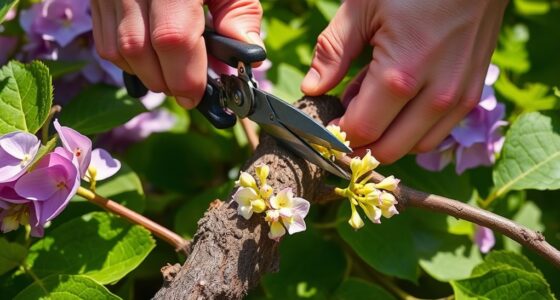
To propagate with hardwood cuttings, select healthy, mature stems during dormancy, ideally with nodes. Cut stems at an angle just below a node and remove the leaves from the lower half. Dip the cut ends in rooting hormone, then plant them into well-draining medium covering at least one or two nodes. Keep the environment humid and monitor for signs of rot or disease. For detailed steps and tips on successful propagation, explore the process further.
Key Takeaways
- Select healthy, mature woody stems during dormancy with at least one or two nodes.
- Cut stems at an angle below a node, remove lower leaves, and dip in rooting hormone.
- Plant cuttings into well-draining medium, burying nodes, and water thoroughly.
- Cover with plastic to maintain humidity, ensuring proper airflow and regular monitoring for mold.
- Transplant rooted cuttings once a strong root system develops, gradually acclimating them to outdoor conditions.
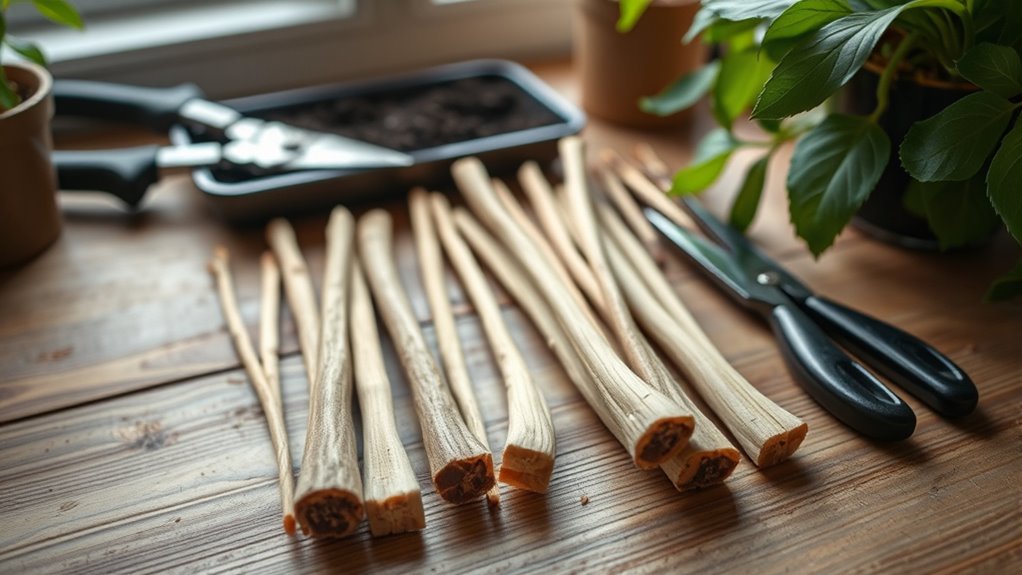
Hardwood cuttings are a popular and effective way to propagate many woody plants, including trees and shrubs. This method involves taking mature, woody stems during their dormant season and encouraging them to develop roots, enabling you to grow new plants with the same characteristics as the parent. Before you start, it’s important to understand how proper pruning techniques can improve your success rate. Pruning helps remove any damaged or diseased wood, reducing the risk of plant disease spreading during the rooting process. Using clean, sharp tools minimizes injury to the plant, which further decreases the chance of infections. When preparing your cuttings, make sure to select healthy, disease-free stems from the current season’s growth that have matured enough but aren’t too woody or old.
Next, you’ll need to cut your chosen stems at an angle just below a node, where leaves or buds emerge. This increases the surface area for root development. Remove any leaves from the bottom half of the cutting to prevent rot and improve aeration. Dip the cut end into rooting hormone to promote root growth, especially if you’re dealing with plants that are more difficult to propagate. Be mindful of avoiding plant disease; never use cuttings from plants showing signs of disease or pest infestation. Proper sanitation of your tools and workspace is essential for preventing the spread of pathogens, which can compromise your cuttings’ health and hinder rooting success.
Once prepared, insert the cuttings into a well-draining rooting medium, such as a mix of sand and peat or perlite and compost. Ensure that at least one or two nodes are buried underground, as roots typically emerge from these points. Water the medium thoroughly, but avoid overwatering, which can lead to rot and promote plant disease. Cover the cuttings with a plastic bag or propagation chamber to maintain humidity, but make sure there’s adequate airflow to prevent fungal issues. Regularly check your cuttings for signs of mold, rot, or other disease, and remove any compromised plants immediately.
As the roots develop over several months, continue to monitor the environment, adjusting watering and ventilation as needed. Once the cuttings have established a healthy root system, you can gradually introduce them to outdoor conditions or transplant them into larger containers. By following these steps—carefully selecting healthy material, practicing good pruning techniques, and maintaining cleanliness—you’ll improve your chances of successful propagation through hardwood cuttings. Patience and attention to detail are key, but with proper care, you’ll soon be growing new, vigorous plants from your hardwood cuttings.

Hormex Rooting Powder #16 (1.60% IBA) for Difficult Hardwood Plants & Trees – Maximum Strength Root Powder, Root Stimulator for Plants, Rooting Hormone for Cuttings, Cloning, & Propagation
PLANT GROWTH HORMONE FOR HARDWOOD CUTTINGS – Our rooting powder accelerates root development in difficult hardwood cuttings. Made…
As an affiliate, we earn on qualifying purchases.
As an affiliate, we earn on qualifying purchases.
Frequently Asked Questions
When Is the Best Time to Take Hardwood Cuttings?
You should take hardwood cuttings during late fall or winter, when plants are dormant. This seasonal timing helps guarantee the cuttings root successfully. Check weather considerations; avoid taking cuttings during freezing or extremely wet conditions, as these can harm the cuttings or delay rooting. By choosing the right time based on season and weather, you give your cuttings the best chance to develop strong roots and grow into healthy plants.
How Long Do Hardwood Cuttings Take to Root?
Like a patient gardener waiting for seeds to sprout, your hardwood cuttings usually take 8 to 12 weeks to root. During this time, seasonal timing plays a vital role—spring and fall are ideal, offering cooler, moist conditions. Boost your success by using rooting hormones, which act as a gentle nudge, encouraging quicker root development. Keep the cuttings in a stable environment, and you’ll see roots emerge like new life breaking through the soil.
Do All Trees Propagate Successfully via Hardwood Cuttings?
Not all tree species propagate successfully via hardwood cuttings. Your success depends on the specific tree species, as some trees, like oaks and maples, have high propagation success with hardwood cuttings, while others, such as pines or firs, may be less receptive. To improve your chances, research the best propagation methods for each species and verify you follow proper techniques, including timing and cutting preparation.
What Are Common Issues Faced During Hardwood Propagation?
You might face issues like disease, poor rooting, or uneven growth during hardwood propagation. To prevent diseases, guarantee proper sanitation and use disease-resistant stock when possible. Pruning techniques are vital; prune correctly to promote healthy, vigorous cuttings and improve airflow. Keep cuttings in ideal conditions, avoid overwatering, and monitor regularly. Addressing these common issues early helps increase your success rate and produces healthier, more resilient hardwood plants.
How Should I Care for Hardwood Cuttings After Planting?
Think of your hardwood cuttings as fragile dreams taking root. You should care for them by preparing well-draining soil, providing consistent moisture without overwatering. Water your cuttings when the soil feels dry, typically once a week, adjusting for weather conditions. Keep them in a sheltered spot, away from harsh sun, allowing roots to grow strong. With patience and gentle nurturing, your cuttings will blossom into thriving plants.

Bluepro 36 Packs 5/4/3.5 Inch Reinforced Clear Nursery Pots with Drainage Hole, Transparent Variety Pack Plastic Plant Pot Seedling Planter for Vegetable Propagation, Root Cutting, Seed Starting
【 What You Get 】12pcs 5" plastic plant pots, 12pcs 4" plastic plant pots, 12pcs 3.5" plastic plant…
As an affiliate, we earn on qualifying purchases.
As an affiliate, we earn on qualifying purchases.
Conclusion
Now that you know the straightforward steps for hardwood cuttings, you’re well on your way to growing gorgeous greenery. With patience, practice, and a bit of perseverance, your plants will prosper and produce stunning splendor. So, seize the season, stay steady, and succeed with your skilled slicing and stirring. Remember, diligent digging and daring decisions deliver dazzling, durable delights. Happy hacking, and here’s to your flourishing forest of fabulous foliage!

Bluepro 30 Packs 4 Inch Reinforced Clear Nursery Pots with Humidity Dome, Transparent Plastic Plant Pot Seedling Planter with Drainage Holes for Vegetable Propagation, Root Cutting, Seed Starting
【 Humidity Dome 】Clear nursery pots with a humidity dome can prevent outside interference and adjust the moisture…
As an affiliate, we earn on qualifying purchases.
As an affiliate, we earn on qualifying purchases.

Fiskars Bypass Pruning Shears, 5/8-Inch Cut Capacity Garden Clippers, Gardening Scissors with Sharp, Rust Resistant Steel Blade
GARDENING ESSENTIAL: Steel blade plant shears ideal for a variety of pruning tasks like cutting flower stems; gardening…
As an affiliate, we earn on qualifying purchases.
As an affiliate, we earn on qualifying purchases.