Root pruning before transplanting encourages healthier, denser roots that help reduce transplant shock and improve water and nutrient uptake. Timing it a few weeks in advance during active growth periods, like early spring, allows the plant to recover and develop new roots. Proper soil preparation and careful coordination facilitate a smooth transition and faster establishment in the new location. Keep going to discover how to optimize this process for the best planting success.
Key Takeaways
- Schedule root pruning a few weeks before transplanting during active growth periods.
- Use clean, sharp tools to prune roots evenly, promoting healthy root development.
- Combine root pruning with soil preparation to ensure optimal conditions for transplant success.
- Prune to encourage dense, healthy roots that facilitate better water and nutrient uptake.
- Proper timing minimizes stress and accelerates recovery post-transplant.
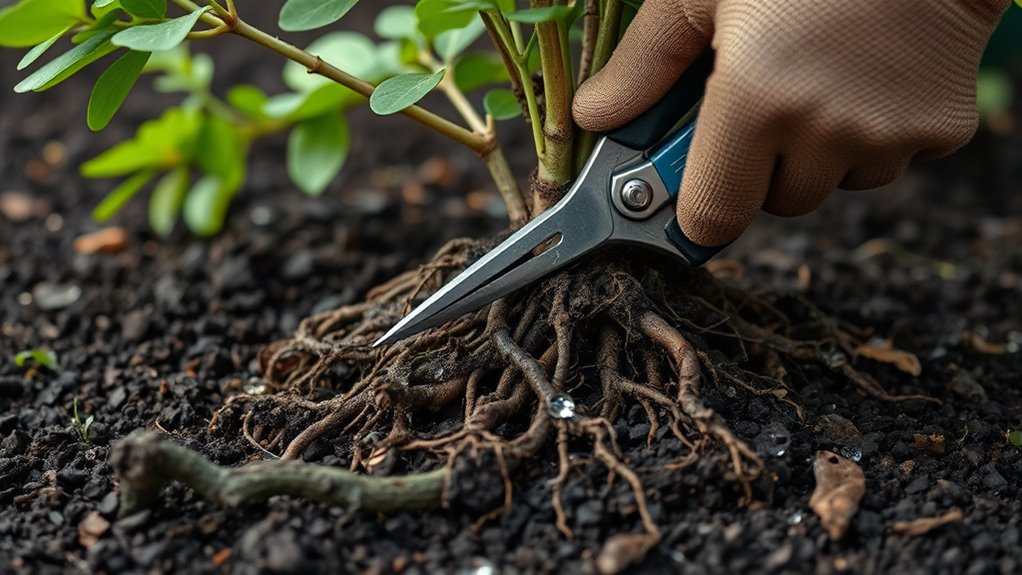
Have you ever wondered why root pruning is essential before transplanting a plant? The answer lies in how it affects soil preparation and transplant timing. When you prepare to move a plant, you want to guarantee it adapts quickly and thrives in its new location. Root pruning helps you achieve that by encouraging healthier, more compact roots, which makes transplanting less stressful for the plant. Proper soil preparation plays a vital role here because it guarantees that the roots are introduced to ideal conditions right after pruning. For example, loosening and enriching the soil beforehand helps the roots establish faster, reducing transplant shock. When you prune the roots, you’re fundamentally encouraging the plant to develop a denser root system, which allows for better water and nutrient uptake once transplanted. That’s why timing is key: you should schedule root pruning a few weeks before the actual move. This window gives the plant time to recover and produce new, healthy roots that are better suited for the transplant. Additionally, understanding the importance of root health helps you optimize your pruning and transplant process.
Transplant timing is critical because root pruning requires some planning. If you prune too early, the roots might become overgrown or suffer from environmental stress, making the plant vulnerable during the actual move. If you wait too long, the roots may become too large or damaged, complicating the transplant process. Ideally, you want to prune when the plant is actively growing, often in early spring or late winter, depending on your climate. This period allows the roots to recover and develop new growth before the actual transplant. By aligning the pruning schedule with the plant’s growth cycle, you give it the best chance to adapt quickly and minimize stress afterward.
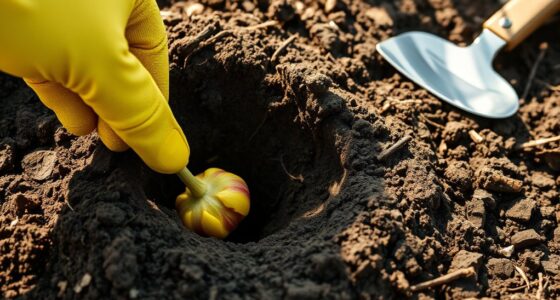
Additionally, soil preparation complements your timing strategy. When preparing the new site, you should loosen the soil, remove weeds, and incorporate organic matter to create a rich environment for the roots. This enhances the benefits of root pruning because the roots, once transplanted, will encounter less resistance and more nutrients, promoting rapid establishment. Proper soil preparation also guarantees that the roots don’t have to work as hard to find water and nutrients, which is especially important right after pruning when the plant is vulnerable. Combining well-timed root pruning with thoughtful soil preparation creates a seamless transition for your plant, reducing recovery time and increasing its chances of thriving in its new spot. So, understanding the relationship between soil preparation, transplant timing, and root pruning makes all the difference in successful transplantation.

Fiskars Steel Garden Knife, Multi-Purpose Weed Puller Gardening Tool for Planting, Weeding, Digging, and Cultivating with Hanging Hole
GARDENING ESSENTIAL: Fiskars Big Grip Multi-purpose Planting Tool is ideal for digging, weeding, splitting seedlings, breaking up growth,…
As an affiliate, we earn on qualifying purchases.
As an affiliate, we earn on qualifying purchases.
Frequently Asked Questions
How Do I Determine the Best Time for Root Pruning?
You determine the best time for root pruning by considering seasonal timing, ideally during dormancy in late winter or early spring. This allows your plant’s root system to recover and maintain root health before active growth begins. Avoid pruning during active growth or extreme weather, as stress can harm the plant. Timing it correctly guarantees healthier roots and a smoother transplant process, giving your plant the best chance to thrive.
Can Root Pruning Damage the Plant if Done Improperly?
Yes, improper root pruning can cause root damage and plant stress. If you cut too aggressively or at the wrong time, you risk damaging delicate roots, which can hinder nutrient uptake. To avoid this, prune carefully and gradually, especially if the plant is stressed or during critical growth periods. Proper technique minimizes root damage and helps your plant adjust smoothly after transplanting, ensuring healthier growth.
What Tools Are Recommended for Effective Root Pruning?
You should use sharp, clean root pruning tools like pruning shears or a saw for effective root pruning. These tools help you make precise cuts without damaging the plant. Pruning shears are ideal for smaller roots, while a saw works better for thicker, tougher roots. Always guarantee your tools are sterilized to prevent infections. Proper tools make the process smoother and help promote healthy root growth after transplanting.
How Long Before Transplanting Should Root Pruning Be Done?
You should prune roots about 4 to 6 weeks before transplanting to allow the plant to recover. During this time, prepare the soil by improving drainage and nutrients, and adjust your watering schedule to keep the roots healthy. This gap helps roots heal and reduces transplant shock. Make sure to keep the soil moist but not waterlogged, supporting healthy root growth and a smoother transplant process.
Are There Specific Species That Benefit Most From Root Pruning?
Imagine a delicate dance where some species, like fruit trees and woody shrubs, sway perfectly with root pruning. You’ll find that plants with compatibility to controlled root growth and those in active growth stages benefit most. These species respond well, with stronger roots and healthier transplants. When you choose the right plant at the right growth stage, root pruning becomes a powerful tool for a successful transplant, ensuring your garden thrives.
Transplant Fertilizer – Liquid Plant Food for Faster Root Establishment, Reduced Transplant Shock & Healthy New Growth, 8 oz
Designed to support newly transplanted or repotted plants
As an affiliate, we earn on qualifying purchases.
As an affiliate, we earn on qualifying purchases.
Conclusion
By root pruning before transplanting, you give your plant a stronger start in its new location. Some worry it might stress the plant, but if you do it carefully, it actually encourages healthier root growth and reduces transplant shock. Remember, a little extra effort now leads to a more vigorous, thriving plant later. So don’t hesitate—your plant will thank you for the extra care and attention you provide during this essential step.

Farmer’s Secret Soil Revitalizer (32oz) – Organic (OMRI Listed) Dirt Health Booster – Liquid Compost Soil Amendment – Activated Humic Acid – Great for Fall/Spring Application
Feed the soil not the plants – stimulate microbial activity in your soil and boost probability of success…
As an affiliate, we earn on qualifying purchases.
As an affiliate, we earn on qualifying purchases.

DECERK® 8.5" Professional Pruning Shears – Cuts 4X Easier with Ultra Sharp Japanese Steel Titanium Blade, Arthritis Friendly Garden Scissors & Plant Clippers, Effortlessly Prunes 3/4" Branches
Unbreakable sharpness! Japanese SK5 steel blade with titanium coating endures 100,000 cuts. Built for lifelong clean cuts
As an affiliate, we earn on qualifying purchases.
As an affiliate, we earn on qualifying purchases.