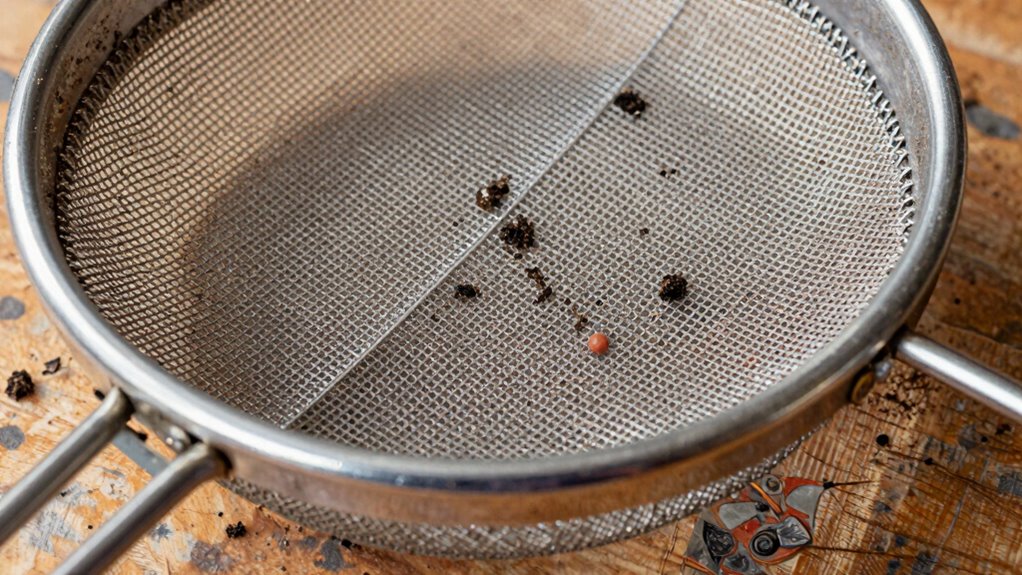

Choosing the right soil sifter mesh size depends on your seed type and soil goals. Use a fine mesh (~1/16 inch) for delicate seeds and seed-starting mixes to guarantee uniform germination and remove small debris. For larger plants or quick soil preparation, coarser mesh (1/4 inch or larger) helps sift out big debris and boosts aeration. To optimize your garden’s success, explore different mesh sizes and techniques tailored to your seedling needs.
Key Takeaways
- Use fine mesh (~1/16 inch) for seed-starting mix to ensure uniformity, proper moisture retention, and small debris removal.
- Choose coarser mesh (1/4 inch or larger) for soil aeration, removing large debris, stones, and creating well-draining planting beds.
- Match mesh size to seed size: delicate seeds need fine mesh, larger seeds or seedlings benefit from coarser screens.
- Regularly clean and maintain your soil sifter to prevent clogs and ensure consistent, effective sifting results.
- Select durable materials like stainless steel or nylon mesh to withstand repeated use and maintain mesh integrity over time.
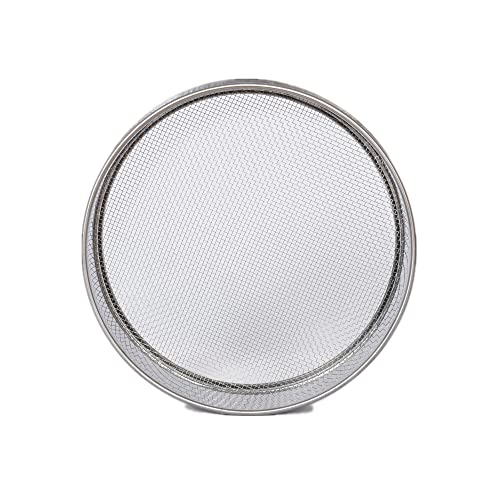
Garden Soil Sifter -10" Sifting Pan-Sieve for Sand Rocks Dirt Compost (1/16”Mesh Screen)
The size is 10 inches and the mesh is 1/16inch
As an affiliate, we earn on qualifying purchases.
As an affiliate, we earn on qualifying purchases.
What Soil Sifter Mesh Sizes Do You Need for Seed Starting?
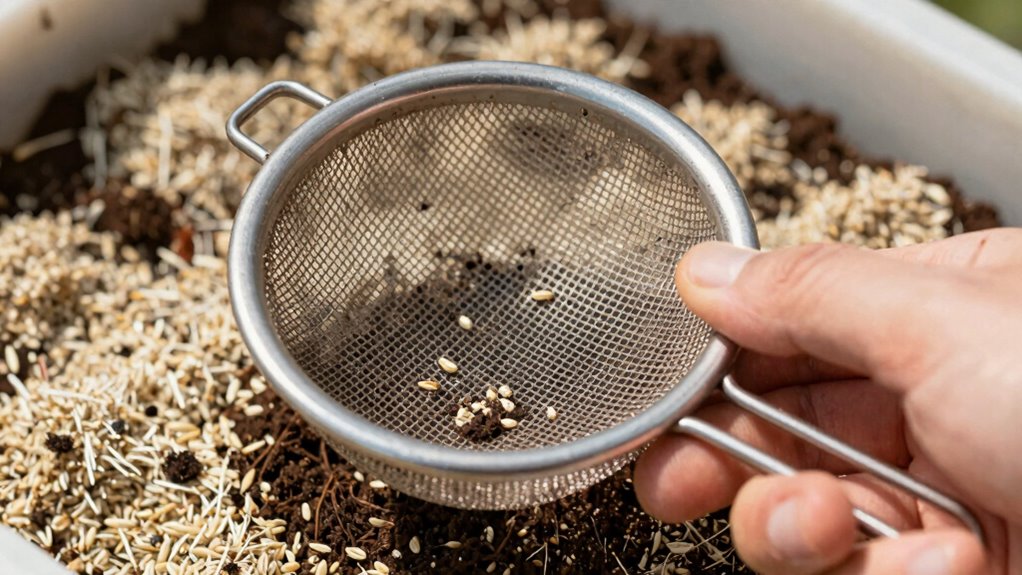
When starting seeds, choosing the right soil sifter mesh size is essential to guarantee proper seed-to-soil contact and healthy growth. A fine mesh, around 1/16 inch, allows you to sift compost and soil efficiently, helping with compost sorting and removing larger debris that could cause soil erosion. Using the correct size ensures you create a smooth, uniform seed-starting mix that promotes even moisture retention and root development. If the mesh is too coarse, you risk leaving behind larger particles that hinder seed contact and increase erosion risks. Conversely, overly fine mesh may clog easily, making siftings difficult. Select a mesh size that balances particle size and ease of use, ensuring your seed starting mix is optimized for healthy germination and growth. Proper soil preparation with the right mesh size can significantly improve seedling success rates. Additionally, understanding mesh sizing helps you choose the most effective screen for your specific gardening needs. Choosing the appropriate mesh size also affects the seedling health by providing consistent, well-prepared soil for optimal growth. In addition, selecting the correct mesh size can help prevent soil compaction, which can impede root growth and water infiltration. Being aware of gardening techniques related to soil sifting can further enhance your planting results.

Sifter.Size 1/4" Mesh Soil Sifter Sieve – Heavy Duty Galvanized Screen for Compost, Dirt, Rocks, Gravel & Garden – Fits 5 Gallon Bucket, Rust-Resistant – Composting & Sifting Tool
Precision Screening for Various Materials Featuring a durable 6mm (1/4 inch) galvanized iron mesh, this sifter effortlessly separates…
As an affiliate, we earn on qualifying purchases.
As an affiliate, we earn on qualifying purchases.
Common Soil Sifter Mesh Sizes and Their Uses

Different mesh sizes serve different purposes when sifting soil. Fine mesh is perfect for seed starting, while coarser mesh works best for separating larger soil particles. You’ll also find specialty options designed for specific tasks, making it easier to choose the right sifter for your project. Incorporating smart appliances and connected tools can further optimize your soil preparation process. Understanding soil composition helps in selecting the most effective mesh size for your needs, ensuring healthier plant growth and more efficient gardening. Recognizing the importance of mesh size in soil sifting can lead to better results and improved crop yields, especially when tailored to the specific gardening goals you aim to achieve. Moreover, utilizing automated soil analysis devices can provide real-time data to refine your sifting process and enhance overall productivity.
Fine Mesh for Seeds
Fine mesh sizes are essential for sifting seeds because they guarantee only the smallest debris and unwanted material pass through, leaving you with clean, uniform seeds. Using a fine mesh helps in seed bed preparation by removing tiny stones, chaff, and broken seed pieces, ensuring ideal germination conditions. It’s also invaluable for compost screening, where it separates fine compost from larger particles for a smooth seed-starting mix. Additionally, selecting the appropriate mesh size can optimize sleep hygiene, enhancing overall seedling health and growth. Proper mesh selection can also improve air circulation around the young seedlings, promoting healthier development. Choosing the right mesh size can also facilitate art care by maintaining the quality and integrity of delicate seeds during handling. Moreover, using the correct mesh size can prevent damage to seeds, ensuring higher germination rates and healthier sprouts. Selecting the appropriate mesh size also helps in maintaining consistent seedling quality, which is crucial for successful gardening.
Coarse Mesh for Soil
Coarse mesh is essential for soil sifting because it effectively separates larger debris, clumps, and stones from your soil, ensuring a more workable and aerated mixture. Use this mesh size when preparing organic compost or garden soil, especially if it contains large pieces or stones. It helps create a loose, well-draining soil ideal for planting. Additionally, coarse mesh allows you to sift soil for pH testing, removing debris that could interfere with accurate results. This mesh size is perfect for initial screening when you want to remove unwanted materials before finer sifting or mixing with other amendments. By using coarse mesh, you streamline soil preparation, making it easier to achieve a consistent, healthy environment for your plants. Choosing the right mesh size is crucial for effective soil screening and optimal plant growth. Understanding soil particle sizes and their impact on plant roots can help you select the best mesh for your specific gardening needs. Incorporating professional services can further optimize your soil preparation process and ensure the best results for your garden.
Specialty Mesh Options
Specialty mesh options offer tailored solutions for specific soil sifting needs, helping you achieve ideal results in your gardening or landscaping projects. These meshes are designed with unique mesh sizes and materials to handle particular tasks, such as seed starting or removing tiny debris. When choosing specialty meshes, consider mesh durability and material options, like stainless steel for longevity or nylon for lightweight use. These materials guarantee your sifter withstands frequent use and tough conditions. Additionally, selecting the appropriate mesh can improve creative storytelling by making the process more efficient and satisfying. In addition, understanding the specific mesh size requirements ensures you select the most effective screen for your particular seed or soil type. – Fine mesh screens for tiny seed separation or delicate soil – Rust-resistant stainless steel for durability in wet environments – UV-treated nylon for lightweight, portable sifting – Custom mesh sizes for specialized gardening needs. Selecting the right specialty mesh enhances efficiency and ensures your soil is perfectly prepared, while paying attention to piercing materials can also contribute to the longevity of your tools and accessories.
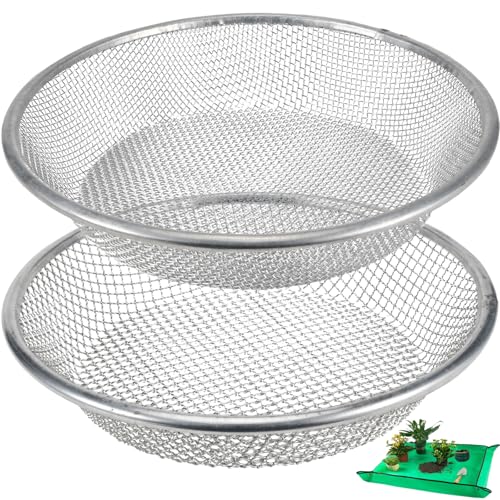
Svincolare 2 Pack Soil Sifter for Gardening – Rock Compost Sand Sifter Fits 5-Gallon Buckets 1/4 Inch & 1/8 Inch Mesh Sifting Screen Sieve for Gravel, Dirt, Sawdust with Repotting Mat
✅【Perfect Fit for 5-Gallon Buckets】Specially designed to sit securely on standard 5-gallon buckets, this soil sifter features a…
As an affiliate, we earn on qualifying purchases.
As an affiliate, we earn on qualifying purchases.
How to Choose the Right Mesh Size for Your Seeds and Soil
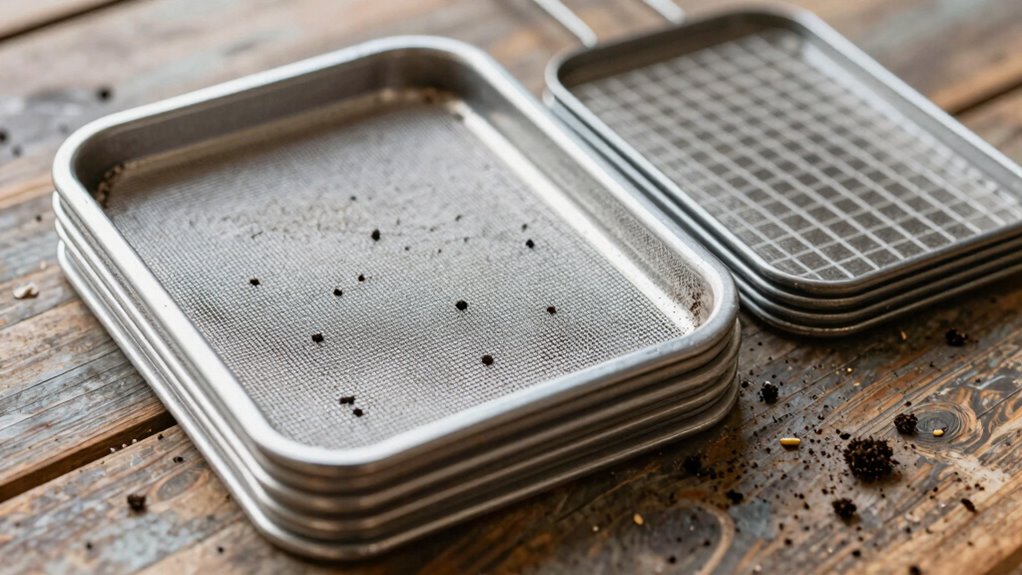
Choosing the right mesh size for your seeds and soil depends on understanding how different sizes impact planting and soil preparation. A finer mesh improves water retention by preventing soil from draining too quickly, helping seedlings stay moist longer. It also acts as a barrier for pests, reducing the chance of eggs or larvae reaching your plants. Conversely, coarser screens allow larger debris and roots to pass through, making soil finer or more uniform. Consider seed size when selecting mesh; small seeds need finer screens to prevent loss, while larger seeds can be sifted with coarser mesh. Balancing your needs for water retention and pest control with the specific requirements of your plants is crucial to soil particle size and choosing the most effective mesh size for your soil sifting. Understanding soil texture can help you select the optimal mesh for your gardening goals, and choosing the appropriate mesh is essential for achieving successful seed germination.

Soil Sieve Set Garden Soil Sifter Stainless Steel Mesh Sifter,Compost Sifter with 1,3,6,9,12mm Sieve Mesh and Bonsai Soil Scoop
✨️【Durable Sturdy】Soils sifter screen is made of 304 steels,High hardness,Impact resistance,Not easy about deformation,Corrosion resistance,Oxidation resistance,Easy to clean.
As an affiliate, we earn on qualifying purchases.
As an affiliate, we earn on qualifying purchases.
Fine vs. Coarse Mesh Screens: Pros and Cons
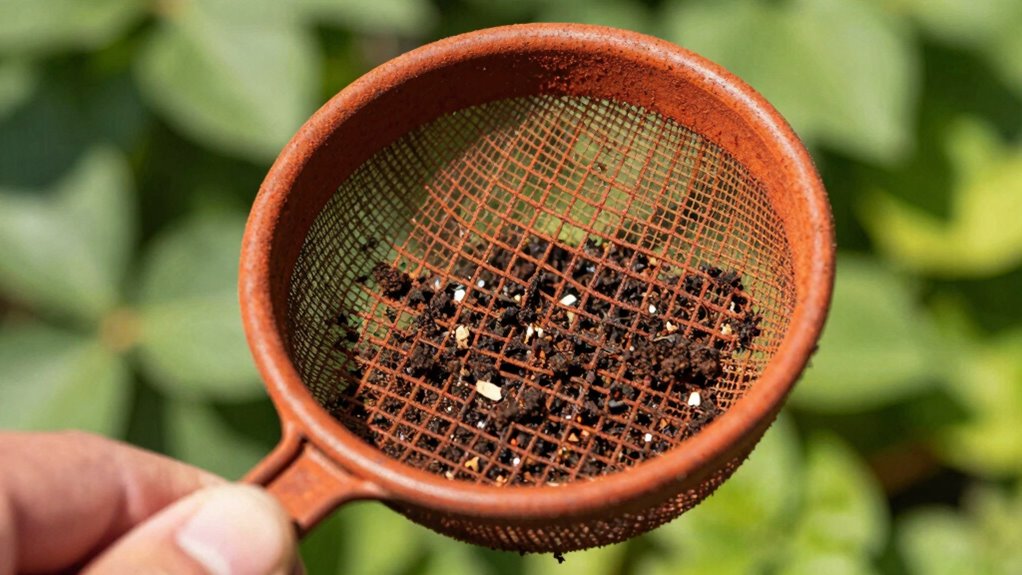
When deciding between fine and coarse mesh screens, understanding their respective advantages and disadvantages is essential for effective soil sifting. Fine screens produce a smoother seed-starting mix, promoting uniform seed germination, but may clog easily and require more effort. Coarse screens allow larger debris to pass through quickly, making harvesting techniques faster and reducing strain on mesh durability, but they can leave unwanted debris that affects seedling health. Fine meshes are ideal for delicate seeds needing precise soil texture, while coarse meshes suit tougher materials and quicker sifting. Consider your specific needs, the durability of your mesh, and how much effort you’re willing to invest in sifting. Choosing the right mesh size ensures efficient work and healthier seedlings.
Tips for Using Soil Sifter Meshes Effectively
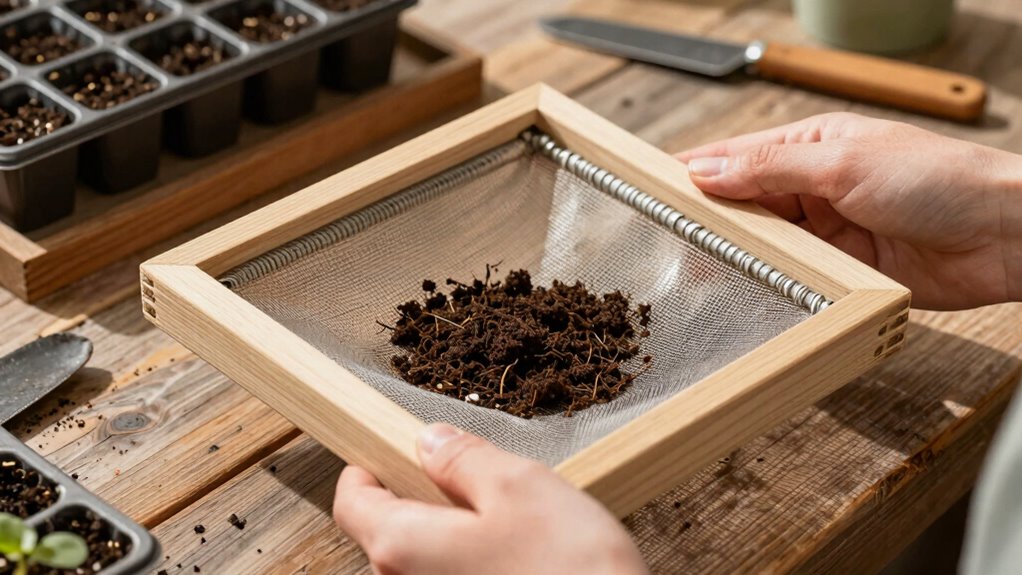
To get the best results, start by choosing the right mesh size for your soil type and project needs. Keep the screen surface clean to prevent clogs and guarantee smooth operation. Finally, adjust your sifting technique to match the mesh size for more efficient separation.
Choose Proper Mesh Size
Selecting the right mesh size is essential for effective soil sifting, as it directly impacts the quality of your results. The proper mesh guarantees you achieve the ideal soil texture, promoting healthy seed germination and strong seedlings. To choose the best mesh size, consider the seed types you’re starting and the desired soil consistency. A finer mesh (around 1/16 inch) removes debris and creates a smooth seed-starting mix, while a coarser mesh (1/4 inch or larger) allows larger particles for better aeration. Keep these tips in mind:
- Match mesh size to seed smallness for optimal germination
- Use finer mesh for delicate seeds and seedlings
- Opt for coarser mesh when preparing for larger plants
- Test different sizes to find what works best for your soil and seeds
Maintain Clean Screen Surface
Maintaining a clean screen surface is crucial for ensuring efficient soil sifting and preventing blockages. Regularly clear debris like roots, leftover soil, or compost particles to keep the mesh unobstructed. This not only speeds up your work but also improves soil sterilization, reducing the risk of pests or diseases in your seed starting mix. When compost mixing, guarantee the mesh isn’t clogged to avoid uneven particle sizes. Use a stiff brush or a scraper to remove stuck material after each use, and rinse the screen with water if necessary. Keeping the surface clean prevents buildup that could compromise mesh integrity or cause contamination. A well-maintained screen results in smoother sifting, cleaner soil, and healthier seedlings.
Adjust Shifter Technique
Properly adjusting your shifter technique can make a significant difference in the effectiveness of soil sifting. Ensuring proper mesh tension keeps the screen frame stable, preventing tears and uneven sifting. Hold the screen frame firmly but gently, applying consistent pressure to avoid slack that hampers performance. Use smooth, controlled motions to push soil through the mesh, reducing frustration and increasing efficiency. Regularly inspect the mesh for tears or looseness and tighten or replace as needed. Adjust your technique based on soil consistency, whether moist or dry, to optimize flow.
- Keep the mesh tension tight for better soil flow
- Maintain a steady, even pressure on the screen frame
- Use small, consistent motions to sift effectively
- Replace worn or damaged screens promptly
When and Why to Adjust Your Mesh Size

Adjusting your mesh size is essential when you notice the quality or consistency of your sifted material isn’t meeting your expectations. If your soil contains pests or weed seeds, changing the mesh size can improve pest prevention by removing larger debris and pests. Similarly, if you’re sterilizing soil, a finer mesh ensures you eliminate pathogens and weed seeds more effectively. You might need to switch to a coarser mesh if you want larger particles for better drainage or aeration. Conversely, a finer mesh helps create a smooth seed-starting mix. Regularly assess your soil’s needs; adjusting mesh size allows you to target specific issues like pest control or sterilization, guaranteeing your soil is best suited for healthy seedling growth.
Final Tips for Maintaining Your Soil Sifter Mesh for Healthy Seedlings

To keep your soil sifter mesh functioning effectively and guarantee healthy seedlings, regular inspection and cleaning are key. Over time, soil composition can cause debris buildup, which affects mesh durability. Check for tears or warping frequently to prevent compromised screening. Clean the mesh after each use with a soft brush or water to remove stubborn dirt, ensuring it stays clear and efficient. Proper storage in a dry, protected area helps maintain mesh integrity. Additionally, consider occasional light lubrication of moving parts to reduce wear.
- Inspect for tears or warping regularly
- Clean with a soft brush or water after use
- Store in a dry, protected spot
- Replace damaged mesh promptly
Frequently Asked Questions
Can Soil Sifter Mesh Sizes Affect Seed Germination Rates?
Yes, soil sifter mesh sizes can affect seed germination rates by influencing seedling success. If the mesh permeability is too fine, it may restrict airflow and water movement, hindering seed growth. Conversely, larger mesh sizes allow better drainage and aeration, promoting healthy seedlings. Choosing the right mesh size guarantees ideal seedling success, providing a balanced environment for germination and early growth.
What Materials Are Best for Durable Soil Sifter Screens?
They say, “A chain is only as strong as its weakest link,” and that’s true for soil sifter screens. For durability, opt for stainless steel or aluminum, which offer excellent metal durability. These materials also provide good mesh flexibility, making your sifter last longer and work more efficiently. Avoid plastic screens—they tend to break or warp over time. Choose quality materials to guarantee your seed starting process stays smooth and reliable.
How Often Should I Replace or Repair My Soil Sifter Mesh?
You should inspect your soil sifter mesh regularly for damage or wear. Typically, plan for mesh repair or replacement every 1 to 2 years, depending on usage frequency and material quality. If you notice tears, holes, or decreased effectiveness, replace the mesh promptly to maintain proper sifting. Following a consistent replacement schedule guarantees your sifter works efficiently, saving you time and effort during seed starting or soil preparation.
Are There Eco-Friendly Options for Soil Sifter Mesh Materials?
You’ll find eco-friendly soil sifter mesh options using biodegradable mesh or recycled materials, which coincidentally reduce environmental impact. These sustainable choices break down naturally or repurpose waste, making them ideal for eco-conscious gardeners. By selecting mesh made from recycled plastics or biodegradable fibers, you help protect the planet while maintaining effective soil screening. It’s a smart, environmentally responsible way to support healthy gardening practices that align with your green values.
Can Mesh Size Influence Soil Aeration and Drainage?
Yes, mesh size can influence soil aeration and drainage. A finer mesh creates smaller particles, which can lead to soil compaction, reducing airflow and drainage. Conversely, a larger mesh allows bigger particles to pass through, promoting better aeration and preventing moisture retention issues. Choosing the right mesh size helps balance soil structure, preventing excess moisture and ensuring proper airflow for healthy seed starting conditions.
Conclusion
Choosing the right soil sifter mesh size might seem tricky at first, but it’s worth it for healthy seedlings. Don’t worry if your first try isn’t perfect—just adjust the mesh as needed. Imagine effortlessly preparing your soil, free of debris and clumps, giving your seeds the best start. With a little practice, you’ll find the perfect balance, making seed starting easier and more successful than ever. Happy gardening!