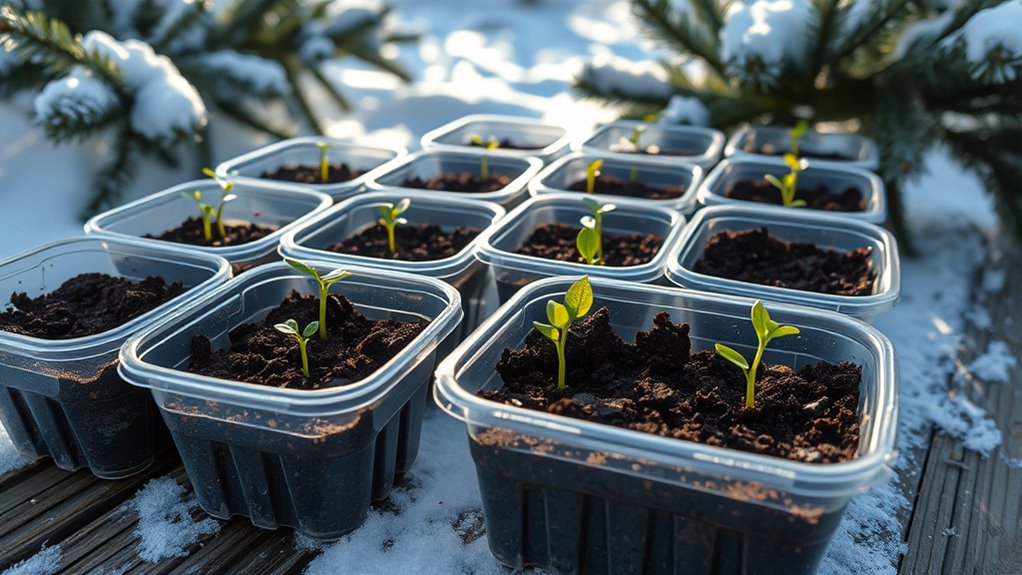
Winter sowing in containers lets you start plants outdoors during winter by using natural cold conditions to break seed dormancy and encourage germination. You’ll need durable containers with drainage, filled with quality seed-starting mix, and proper labeling. Place them in sheltered outdoor spots where they can experience winter temperatures. This method extends your growing season and reduces indoor fuss. Stay with us to discover detailed tips for successful winter sowing and nurturing strong seedlings.
Key Takeaways
- Use well-draining containers like clear plastic tubs or recycled food containers with drainage holes.
- Fill containers with quality seed-starting mix and plant seeds at the recommended depth.
- Position containers outdoors in sheltered, cold spots to simulate winter conditions and promote stratification.
- Water regularly to keep soil moist but not waterlogged, ensuring proper drainage to prevent mold.
- Allow seeds to undergo natural cold exposure, then transplant seedlings outdoors in spring for healthy growth.
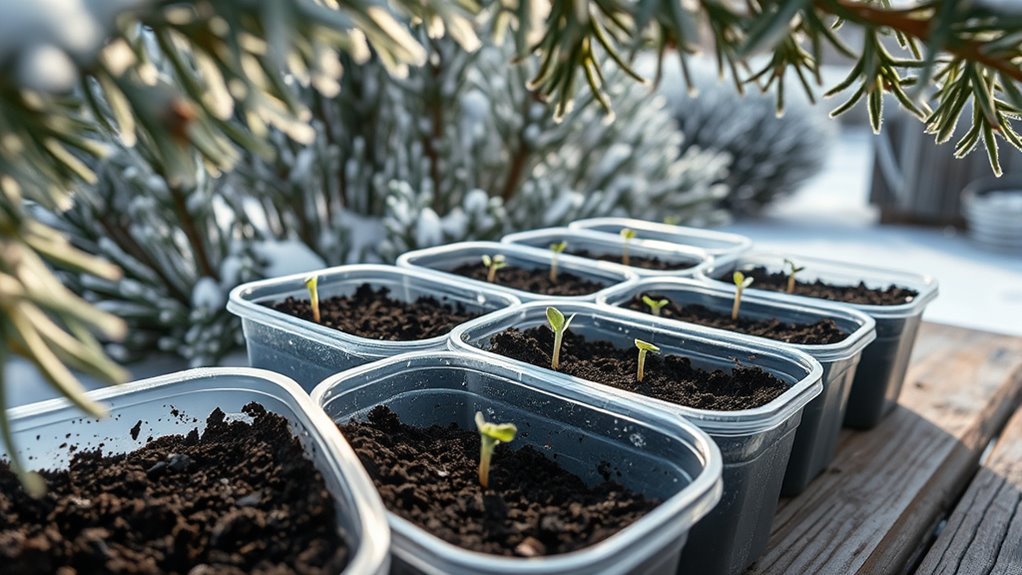
Have you ever considered starting your garden during winter? It might seem unconventional, but winter sowing is an effective way to get a jump on the growing season without the fuss of indoor lights or heat mats. The key to successful winter sowing lies in understanding seed stratification and choosing the right containers. Many seeds require a period of cold, known as stratification, to break dormancy and germinate properly. This process mimics the natural winter conditions that seeds experience outdoors, signaling them that it’s safe to sprout in spring. By allowing your seeds to undergo stratification, you increase germination rates and promote healthier, stronger plants. Incorporating community engagement by sharing your progress can also enhance your gardening experience and provide valuable tips from fellow enthusiasts.
Starting your garden in winter with proper seed stratification boosts germination and promotes stronger plants.
When it comes to container selection, you want to pick containers that can withstand outdoor conditions and provide adequate drainage. Clear plastic containers with lids are popular because they create a mini greenhouse effect, trapping moisture and warmth, which encourages seed germination. You can also use recycled food containers or nursery pots, as long as they have drainage holes. Avoid containers that are too shallow, as roots need room to grow and stable moisture levels. It’s best to select containers that are at least four inches deep, giving your seeds enough space to develop roots without becoming waterlogged. Remember to punch or drill holes at the bottom for drainage, because excess water can lead to mold or rot.
Before planting, sterilize your containers to prevent fungal infections and pests. Fill them with a quality seed-starting mix that drains well but retains enough moisture to keep seeds consistently damp. When sowing, follow the specific depth instructions for each seed type, and label your containers clearly to keep track of different varieties. Once filled, water the soil gently but thoroughly. This initial watering kick-starts the stratification process, especially if you keep the containers outside where they’ll experience natural cold conditions.
Position your containers in a protected outdoor spot, such as against a wall or under a tree, where they’ll get some shelter from harsh winds but still experience winter temperatures. During the cold months, periodically check moisture levels and add water if the soil becomes dry. Unlike indoor sowing, you don’t need to worry about providing supplemental heat, as the winter chill is often necessary for certain seeds. As days lengthen and temperatures rise, you’ll notice sprouts emerging, ready to be transplanted into your garden come spring. Winter sowing in containers is a practical, rewarding way to extend your growing season and enjoy the satisfaction of nurturing plants from seed right through the coldest months.
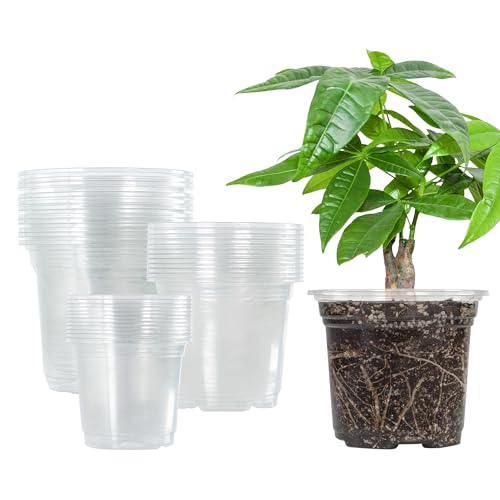
Bonviee 36 Packs 3.5/4/5 Inch Clear Nursery Pots, Transparent Plastic Planter with Drainage Holes, Seed Starting Pot Flower Plant Container -Clear
【Variety Size Combo】These plastic nursery pots includes 36 packs in 3 different sizes, which are suitable for planting…
As an affiliate, we earn on qualifying purchases.
As an affiliate, we earn on qualifying purchases.
Frequently Asked Questions
What Types of Containers Are Best for Winter Sowing?
You should choose containers with good drainage to prevent waterlogging, which can harm your plants. Plastic or recycled containers work well because they’re durable and lightweight, while wooden or metal options add aesthetic appeal. Make sure the material you select permits excess water to escape, and consider drilling drainage holes if needed. This ensures your winter sowing success by protecting roots from excess moisture and providing proper aeration.
How Do I Prevent Mold and Rot in Containers?
To prevent mold and rot, you should start by sterilizing your containers with a solution like diluted bleach or vinegar to eliminate spores. Enhance airflow by poking small holes in the lids or sides, which helps prevent excess moisture buildup. Regularly check your containers, and if you notice mold, remove affected plants and improve ventilation. Proper container sterilization and airflow enhancement are key to keeping your winter sowing successful.
When Is the Optimal Time to Start Winter Sowing?
Think of winter sowing as planting the seeds of spring’s promise. You should start when natural conditions align, typically late winter to early spring, around February or March, depending on your region. Timing considerations are key, so seasonal planning helps you hit the right window. Keep an eye on the weather forecast and soil temperatures; waiting for consistent freezing nights guarantees your seeds receive the cold stratification they need.
Can Winter Sowing Be Done Indoors or Only Outside?
You can do winter sowing indoors, which allows for better indoor germination and protection from harsh weather. To succeed, place your containers in a bright spot with indirect sunlight and maintain consistent moisture. Indoor container placement helps monitor temperature and humidity, giving your seedlings a stable environment. Just remember, outdoor winter sowing is traditional, but indoor sowing offers more control and flexibility, especially in colder climates.
What Are Common Pests or Diseases to Watch For?
You should watch for common pests like aphids, spider mites, and fungus gnats, which can damage your plants. Regular pest identification helps you catch problems early. Keep an eye out for diseases such as mold or damping-off, especially in humid conditions. To prevent diseases, make sure proper air circulation and avoid overwatering. Consistent monitoring and quick action will keep your container winter sowing healthy and productive.

Miracle-Gro Indoor Potting Mix for Seed Starting, For Starting Vegetable, Flower, and Herb Seeds Indoors, Excellent for Cuttings, 8 qt. (2-Pack)
Miracle-Gro Indoor Potting Mix for Seed Starting grows stronger roots for seeding success (vs unfed when used as…
As an affiliate, we earn on qualifying purchases.
As an affiliate, we earn on qualifying purchases.
Conclusion
So, there you have it—winter sowing in containers, the *lazy gardener’s* secret weapon. Who needs warm soil and endless patience when you can toss seeds in a container, forget about them, and watch miracles happen? Embrace the frost, defy the seasons, and let nature do the work while you sit back with a cup of tea. After all, why bother with traditional planting when you can let winter be your gardening partner?

WandaQueen 30 Packs Clear Nursery Pots for Plants, 3.5/4/5 Inch High Transparency Plastic Seedling Plant Pot with Drainage Holes, Includes 20 Labels
VISUALIZED CLEAR NURSERY POTS: The Clear Nursery Pots features a mirror-like transparency, facilitating easy monitoring of water levels…
As an affiliate, we earn on qualifying purchases.
As an affiliate, we earn on qualifying purchases.

Disposable Burger Paper Clam Shell 100pcs 6" X 6" X 3" Takeaway Container with Flip Lid, Microwave/Frozen Food Grade sugarcane bagasse material, Served In Burger Cakes, Sandwiches, Desserts, Salads,
6" Clamshell Container: Serve full Meals in Convenient Style Compostable Food Containers. Perfect to serve a Main Dish…
As an affiliate, we earn on qualifying purchases.
As an affiliate, we earn on qualifying purchases.