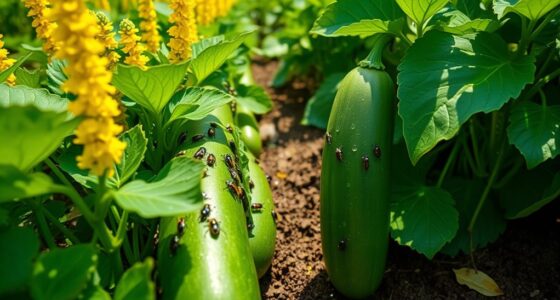
Flea beetles can quickly damage eggplants and mustard greens by chewing tiny holes in the leaves, leading to rapid defoliation if you don’t act fast. You’ll notice small pits and hopping insects on your plants, signaling an infestation. To control them naturally, use beneficial predators like ladybugs, apply organic pesticides such as neem oil, and practice crop rotation. Keep an eye on early signs to minimize damage and explore more effective strategies to protect your garden.
Key Takeaways
- Look for small holes and shot holes on eggplant and mustard leaves as signs of flea beetle activity.
- Use natural predators like ladybugs and lacewing larvae to biologically control flea beetle populations.
- Apply organic pesticides such as neem oil or insecticidal soaps directly to leaf undersides to repel and disrupt beetles.
- Combine biological control, organic pesticides, crop rotation, and monitoring for an effective integrated pest management strategy.
- Early detection and intervention help prevent severe damage and reduce crop yield loss.
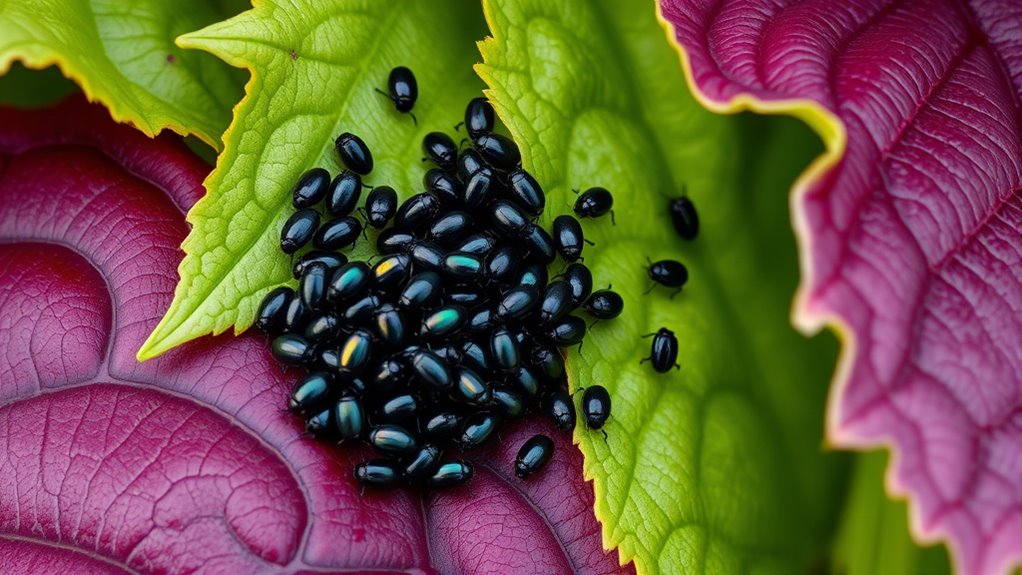
Flea beetles are a common pest that can quickly damage eggplants and mustard greens if left unchecked. These tiny insects hop onto your plants, chew small holes in the leaves, and can cause significant defoliation in a short period. If you notice tiny pits or shot holes on your plant’s foliage, it’s a sign these pests are active. To manage them effectively, you need a strategic approach that minimizes chemical use and promotes natural control methods.
One effective way to combat flea beetles is through biological control. This involves introducing natural predators or parasites that keep the beetle population in check without harming your plants or the environment. For instance, beneficial nematodes or certain predatory insects like ladybugs and lacewing larvae can prey on flea beetles at various life stages. You can also consider releasing or encouraging these helpful insects around your garden, creating an ecosystem that naturally suppresses pest numbers. Biological control is sustainable and reduces the reliance on chemical pesticides, making it ideal for organic gardening.
In addition to biological control, organic pesticides can be a useful tool to deter flea beetles. Products containing neem oil, pyrethrin, or insecticidal soaps work by either repelling the pests or disrupting their feeding habits. When applying organic pesticides, ensure you cover the undersides of leaves where flea beetles often hide and feed. Regular applications can help keep populations low, especially during peak activity periods. Be cautious to follow the instructions carefully, as overuse or incorrect application can harm beneficial insects or cause plant stress.
Integrating pest management strategies such as monitoring and crop rotation can further enhance your control efforts, reducing the likelihood of infestations becoming severe. Combining biological control with organic pesticides provides a holistic approach to managing flea beetles. For example, you might release beneficial insects first, then use organic sprays as a supplementary measure. This integrated pest management strategy minimizes chemical exposure and promotes healthy plant growth. Keep a close eye on your plants, and early intervention is key. If you spot the first signs of damage, act promptly to prevent the beetle population from exploding.
Frequently Asked Questions
How Can I Prevent Flea Beetle Infestations Early?
To prevent flea beetle infestations early, start with crop rotation to disrupt their lifecycle and avoid planting susceptible crops in the same spot each year. Use trap cropping by planting resistant plants nearby to lure beetles away from your main crops. Keep the garden tidy, remove weeds, and apply row covers early to block beetle access. These proactive steps help reduce infestations before they become serious.
Are There Natural Predators for Flea Beetles?
Yes, beneficial insects like ladybugs and predatory beetles naturally prey on flea beetles, helping control their populations. You can attract these helpful predators by planting flowering cover crops and providing habitat. Additionally, practicing crop rotation disrupts flea beetle life cycles, reducing infestations over time. Combining these methods creates a balanced ecosystem, lowering your reliance on chemical controls and keeping your plants healthier.
What Are the Long-Term Effects of Flea Beetle Damage?
You might notice long-term effects like reduced plant resilience and compromised soil health if flea beetle damage persists. Continuous feeding can weaken plants, making them more susceptible to diseases and stress. Over time, soil quality may decline due to increased plant debris or pest activity. To protect your garden’s future, it’s essential to manage infestations early, promote healthy soil, and encourage natural predators that keep flea beetles in check.
Can Organic Methods Fully Control Flea Beetles?
Think of organic methods like a gentle but persistent gardener tending your garden. They can substantially reduce flea beetles, but may not fully eliminate them. You should combine strategies like companion planting and crop rotation, which act like a shield and a dance, confusing and deterring pests. Regular monitoring and organic treatments keep infestations at bay, helping your plants thrive while respecting nature’s balance.
When Is the Best Time to Apply Insecticides?
You should apply insecticides during early infestation, when flea beetles are most active, to maximize effectiveness. Timing considerations are vital, so monitor your plants closely and act promptly. Use application strategies like targeting the undersides of leaves and applying during cooler parts of the day to reduce runoff. Regular inspections and timely treatments ensure better control and help protect your crops from extensive damage.
Conclusion
So, now you know how to spot and manage flea beetles on your eggplants and mustards. With vigilant care and timely action, you can keep these pests at bay and protect your garden’s bounty. Remember, an ounce of prevention is worth a pound of cure—stay proactive, and you’ll prevent small problems from snowballing. Keep your plants healthy and thriving, and your garden will flourish like a well-oiled machine.