
If you’re seeking the best reverse osmosis system for hydroponics, the Aquatic Life RO Buddie stands out as a reliable all-around choice, offering high efficiency and straightforward setup. For those prioritizing advanced filtration, the Waterdrop G3P600 provides 8-stage purification with smart features, making it ideal for tech-savvy growers. The main tradeoffs involve balancing cost, complexity, and water waste; more advanced systems tend to be pricier and generate more drain water. Keep reading to see how these options compare and find the best fit for your hydroponic setup.
Key Takeaways
- Higher GPD ratings, like the Hydro-Logic Evolution, are better for large-scale or continuous watering needs.
- Systems with additional stages, such as remineralization or UV sterilization, deliver cleaner, more mineral-balanced water for sensitive plants.
- Countertop and portable models provide convenience but may lack the capacity and durability of under-sink or high-flow systems.
- Efficiency varies significantly; systems with a 1:1 or better waste ratio save water and reduce runoff issues.
- Certifications like NSF/ANSI 58 and 42 ensure the system meets safety and performance standards, critical for healthy hydroponic environments.


More Details on Our Top Picks
Aquatic Life RO Buddie 3-Stage Hydroponic Reverse Osmosis Water Filter System RO Filtration Unit, 75 GPD
This compact 3-stage system stands out for its simplicity and effective removal of up to 98% of TDS, making it ideal for hobbyist hydroponic growers who need reliable water without complexity. Compared to the more advanced Waterdrop G3P600, the RO Buddie offers a lower capacity at 75 GPD, which is sufficient for small operations but less suited for larger or commercial setups. Its sediment and carbon filters ensure good pre-treatment, but it lacks features like real-time TDS monitoring or high capacity, which can be critical for intensive hydroponics. The tradeoff here is a straightforward, budget-friendly unit that’s easy to maintain but limited in scalability. Overall, this makes the most sense for growers starting out or with modest water demands.
Pros:- Simple 3-stage design for easy installation and maintenance
- Removes up to 98% of TDS for clean, safe water
- Affordable option for small hydroponic systems
Cons:- Limited capacity at 75 GPD may slow larger operations
- No real-time TDS or filter life monitoring
Best for: Small-scale hydroponic growers or hobbyists who prioritize ease of use and affordability.
Not ideal for: Larger commercial growers or those needing continuous high-volume filtration without frequent maintenance.
- GPD Capacity:75
- Filtration Stages:3
- Removes TDS:up to 98%
- Filters Included:Sediment, Carbon block, RO membrane
- Dimensions:Not specified
- Material:Standard plastic housing
- Ideal Use:Small hydroponic systems
Bottom line: This unit is best for small-scale hydroponic growers prioritizing simplicity and cost-effectiveness.
Waterdrop G3P600 Reverse Osmosis System, 8 Stage Tankless Reverse Osmosis Water Filter, NSF/ANSI 42 & 53 & 58 & 372 Certified, Under Sink RO System, 2:1 Pure to Drain, Smart LED Faucet
This 8-stage tankless system offers a significant upgrade over basic units like the Aquatic Life RO Buddie, with a capacity of 600 GPD and advanced features such as real-time TDS monitoring and a filter life tracker. Compared to the Bluevua ROPOT-UV, the Waterdrop G3P600 provides a higher flow rate and lower waste ratio, making it suitable for larger hydroponic setups that demand more water and consistent quality. Its smart faucet with LED display makes it easy to track water quality and filter status, reducing guesswork. The main tradeoff is the higher upfront cost and slightly more complex installation, which may be overkill for small or hobbyist growers. Overall, this pick makes the most sense for serious hydroponic growers who need high volume and real-time data.
Pros:- High filtration capacity at 600 GPD
- Tankless design saves under-sink space
- Smart LED faucet displays water quality and filter status
- Low drain ratio at 2:1 reduces water waste
Cons:- Higher initial purchase price
- Requires electrical connection under sink
- More complex installation than basic models
Best for: Medium to large hydroponic growers wanting high capacity and detailed water quality insights.
Not ideal for: Small-scale growers or those seeking the cheapest, simplest solution.
- GPD Capacity:600
- Filtration Stages:8
- Pure to Drain Ratio:2:1
- Certification:NSF/ANSI 42, 53, 58, 372
- Material:Stainless steel and BPA-free components
- Flow Rate:Fast, 8 seconds for 8 oz
- Design:Tankless
Bottom line: Ideal for larger hydroponic systems requiring high flow and smart monitoring features.
Bluevua RO100ROPOT Countertop Reverse Osmosis Water Filter System, Portable RO Filtration with Remineralization, No Installation, WQA Certified – ROPOT, 5-Stage RO
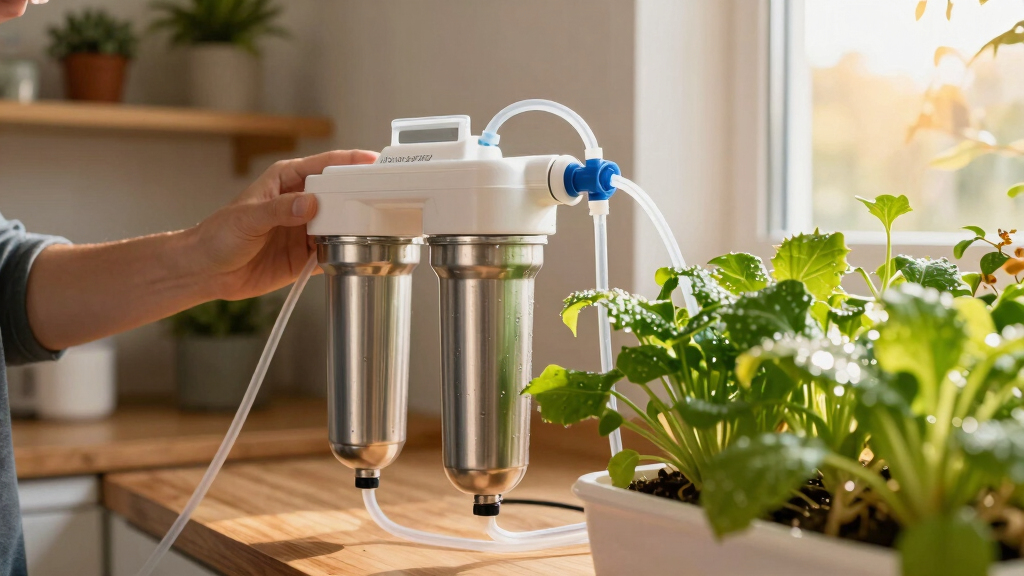
This 5-stage countertop system combines portability with effective filtration, removing a broad range of contaminants including TDS, fluoride, arsenic, and lead, while also remineralizing water for better taste. Compared to the Bluevua ROPOT-UV, the ROPOT-UV features an additional UV stage and more filtration layers for even cleaner water, but the ROPOT without UV is more portable and easier to set up, making it perfect for temporary or small-scale hydroponics. Its high borosilicate glass carafe reduces secondary pollution risk, and the water-saving 2:1 ratio minimizes waste. The main drawback is its limited capacity and the need for electricity for operation, which may be inconvenient for some growers. Nonetheless, this makes sense for growers who need flexibility and frequent repositioning.
Pros:- No installation required, portable design
- Remineralization for balanced taste and health
- High borosilicate glass carafe reduces secondary pollution
- Water-saving ratio (2:1) minimizes waste
Cons:- Limited capacity for large hydroponic setups
- Requires electrical power
- Less suited for high-volume continuous use
Best for: Growers needing portable, space-saving solutions for small hydroponic systems or experimental setups.
Not ideal for: Large-scale operations or those requiring continuous high-volume filtration.
- GPD Capacity:Not specified but suitable for small use
- Filtration Stages:5
- Remineralization:Included
- Water Ratio:2:1
- Power Source:Electric
- Material:Borosilicate glass
- Dimensions:10.9″L x 15.4″W x 14.3″H
Bottom line: A great portable option for small hydroponic growers who want effective filtration without installation fuss.
SimPure T1-400UV Tankless Reverse Osmosis Water Filter System with UV, 8-Stage Filtration
The SimPure T1-400UV offers near 0 PPM water through its advanced 8-stage filtration, including UV sterilization, making it suitable for growers who demand the highest purity and microbial safety. It outperforms basic models like the Aquatic Life RO Buddie by providing a higher capacity of 400 GPD and UV treatment, essential for preventing microbial contamination in sensitive hydroponic systems. Its tankless design saves space and the 1.5:1 pure-to-drain ratio is efficient, but the installation process is more involved, often requiring professional help. The higher cost and complexity might deter casual growers, but for those prioritizing contaminant-free water, this is a strong choice.
Pros:- Removes over 99.99% of contaminants including heavy metals
- UV technology ensures microbial safety
- High capacity at 400 GPD
- Tankless, space-efficient design
Cons:- Higher initial cost
- Complex installation process
- Requires electrical power
Best for: Hydroponic growers who need maximum contaminant removal and microbial safety at high volume.
Not ideal for: Small-scale growers or those with limited budget or installation space.
- GPD Capacity:400
- Filtration Stages:8
- TDS Removal Rate:99.99%
- UV Sterilization:Included
- Material Safety:BPA-Free
- Pure to Drain Ratio:1.5:1
- Certification:NSF/ANSI 58
Bottom line: Designed for large hydroponic systems requiring the highest water purity and microbial safety.
Bluevua RO100ROPOT Countertop Reverse Osmosis Water Filter System, Portable RO Filtration with Remineralization, No Installation, WQA Certified – ROPOT-UV, 6-Stage RO
This 6-stage countertop system with UV sterilization and remineralization offers a comprehensive solution for small to medium hydroponic growers who want high-quality water on demand. Its 0.0001μm RO membrane, combined with UV light, effectively reduces a wide array of contaminants, while the remineralization step improves taste and mineral content. Compared to the simpler 5-stage ROPOT, this unit adds UV for microbial safety, making it more suitable for nutrient-sensitive systems. The portable design and high borosilicate glass carafe make it ideal for growers who need flexibility and want to avoid installation complexity. A minor drawback is the limited capacity, which may not meet the needs of larger operations, and the need for electrical power. Overall, a versatile choice for quality-conscious small-scale hydroponics.
Pros:- 6-stage filtration with UV sterilization
- Remineralization for improved taste
- No installation required, portable design
- High borosilicate glass carafe reduces secondary pollution
Cons:- Limited capacity for large systems
- Requires electrical power
- Higher cost than basic models
Best for: Small to medium hydroponic growers seeking portable, multi-stage filtration with UV sterilization.
Not ideal for: Large commercial growers or those needing continuous high-volume filtration.
- GPD Capacity:Not specified but suitable for small to medium use
- Filtration Stages:6
- Remineralization:Included
- UV Light:Included
- Water Ratio:2:1
- Material:Borosilicate glass
- Dimensions:10.9″L x 15.4″W x 14.3″H
Bottom line: Best suited for small-to-medium hydroponic growers needing high-quality, portable filtration with microbial safety.
Aquatic Life 4-Stage Hydroponic Reverse Osmosis Water Filter System RO Filtration Unit, High Efficiency, 150 GPD
This Aquatic Life 4-Stage RO system stands out for its high efficiency and tailored filtration for hydroponic needs, providing up to 150 GPD of reliably clean water. Compared with the iSpring RCC7AK, it offers simpler installation and effective chloramine removal, though it lacks the alkalinity remineralization feature. Its robust sediment and carbon filters ensure removal of chlorine, chloramines, and heavy metals, translating into healthier plant environments. The included accessories and wall-mount bracket make setup straightforward, and the built-in pressure gauge helps optimize performance. However, it’s less suited for very high-volume applications or where mineral content balancing is desired, as it doesn’t add back minerals. This pick makes the most sense for dedicated hydroponic growers needing consistent, contaminant-free water with minimal fuss.
Pros:- High 150 GPD production rate for steady water supply
- Effective removal of chlorine, chloramines, and heavy metals
- Includes detailed manual and easy wall-mount setup
Cons:- No mineral re-addition or remineralization options
- Performance depends on water pressure above 40 PSI, requiring additional equipment in low-pressure areas
Best for: Hydroponic growers needing reliable, high-efficiency filtration for moderate water demands
Not ideal for: Large-scale agricultural operations or growers seeking mineral remineralization features
- Capacity:150 Gallons per Day
- Filtration Stages:4
- Installation Type:Under Sink
- Supported Water TDS Level:Maximum 2000 PPM
- Dimensions:14″L x 5″W x 14.5″H
- Material Type:Plastic
Bottom line: Ideal for hydroponic users prioritizing contaminant removal and ease of installation over remineralization features.
Max Water 6 Stage Aquarium System/RO Water Filtration System with Deionization Filter RO Water Purifier 100 GPD Hydroponics RODI System (Clear Housing System with TDS Meter)
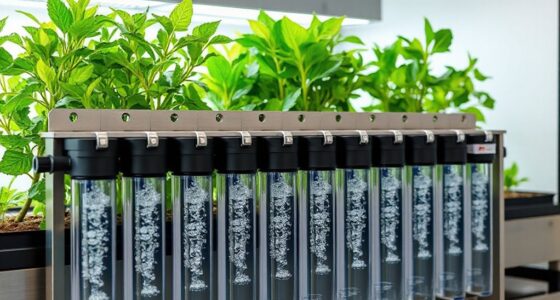
This Max Water 6-stage RO/DI system offers impressive impurity removal, including chloramines and heavy metals, at a budget-friendly price point. Compared with the iSpring RCC7AK, it provides a deionization stage that reduces TDS to near-zero, making it especially suitable for sensitive hydroponic applications. The clear canister housings allow easy monitoring of filter life, and the included TDS meter helps track water purity. Its straightforward, color-coded quick-connect fittings simplify installation, even for beginners. However, it has a lower capacity at 100 GPD, which might be limiting for larger setups, and the absence of remineralization means additional steps are needed for mineral balancing in hydroponic water. This system is best for users who want reliable, low-cost high-quality water with minimal maintenance.
Pros:- Includes deionization stage for ultra-pure water
- Clear housing for easy filter monitoring
- Simple, color-coded quick-connect fittings for quick setup
Cons:- Limited to 100 GPD output, less suited for high-volume needs
- No remineralization stage, requiring additional mineral balancing
Best for: Home hydroponic enthusiasts with moderate water needs and budget constraints
Not ideal for: Large-scale growers or those needing mineral re-addition for plant health
- Capacity:100 Gallons per Day
- Filtration Stages:6
- Installation Type:Canister
- Supported Water TDS Level:Maximum 1000 PPM
- Material Type:Polyresin
- Includes TDS Meter:Yes
Bottom line: Best suited for hobbyists needing affordable, ultra-pure water with easy installation and maintenance.
iSpring RCC7AK, NSF Certified, 75 GPD, Alkaline 6-Stage Reverse Osmosis System, pH+ Remineralization RO Water Filter System Under Sink, Patented Top-Mounted Faucet Design
This NSF-certified iSpring RCC7AK excels in providing high-quality, remineralized water with a balanced pH, making it ideal for hydroponics that benefit from mineral content. Compared to systems like the Aquatic Life 4-Stage, it adds a dedicated alkaline stage that restores essential minerals and enhances water alkalinity, promoting healthier plant growth. Its top-mounted faucet simplifies installation, and transparent first-stage housings allow easy filter monitoring. The system reduces TDS by 93-98%, removing common contaminants with high efficiency. However, its 75 GPD capacity may be limiting for large hydroponic operations, and the remineralization stage may require occasional replacement to maintain mineral levels. This model makes perfect sense for growers seeking balanced, mineral-rich water directly from their filtration system.
Pros:- NSF/ANSI 58 certified for comprehensive filtration
- Includes mineral boost for healthy plant growth
- Top-mounted faucet for easy installation
Cons:- Capacity limited to 75 GPD
- Replacements for remineralization filters needed periodically
Best for: Hydroponic growers requiring mineral and pH balancing directly from their filtration system
Not ideal for: High-volume operations or growers seeking only basic contaminant removal without mineral enhancement
- Capacity:75 Gallons per Day
- Filtration Stages:6
- Supported Water TDS Level:Maximum 98 PPM
- Installation Type:Under Sink
- Material Type:Acrylonitrile Butadiene Styrene
- Remineralization:Yes, pH+ stage
Bottom line: Perfect for hydroponic users who want balanced, mineralized water with simple installation and NSF certification.
Aquatic Life 5-Stage Hydroponic Reverse Osmosis Water Filter System RO Filtration Unit, High Efficiency, 200 GPD
This Aquatic Life 5-Stage system offers a substantial 200 GPD flow, making it suitable for large or high-demand hydroponic setups. Compared with the Max Water 6-Stage, it provides a comparable but slightly higher flow rate, ideal for continuous water needs. Its multi-stage filtration effectively reduces chlorine, chloramines, and heavy metals, ensuring optimal water quality. The included pressure gauge and detailed manual simplify setup and monitoring. However, it lacks remineralization or pH balancing features, which might require additional steps for complete plant health optimization. Its capacity and high flow rates make it best for serious growers or commercial applications, but it could be overkill for small-scale hobbyists.
Pros:- High 200 GPD flow rate for large operations
- Effective reduction of chlorine, chloramines, and heavy metals
- Includes detailed manual and pressure gauge for monitoring
Cons:- No remineralization or pH balancing features
- Potentially higher initial cost with overcapacity for small setups
Best for: Large-scale hydroponic growers or commercial setups needing high-flow, contaminant-free water
Not ideal for: Small home growers or those seeking mineral re-addition in their water
- Capacity:200 Gallons per Day
- Filtration Stages:5
- Supported Water TDS Level:Maximum 1000 PPM
- Dimensions:16″L x 6″W x 21″H
- Material Type:Polyethylene
- Includes Pressure Gauge:Yes
Bottom line: Ideal for large hydroponic systems requiring rapid, high-volume filtration without mineral re-addition features.
Hydro-Logic Purification Systems HydroLogic Evolution RO High Flow Reverse Osmosis System 1,200 GPD HL 31023 Hydroponic Water Filtration for Gardening
This Hydro-Logic Evolution RO system delivers an astonishing 1,200 GPD, making it the top choice for large-scale or commercial hydroponic farms. Compared with the iSpring RCC7AK, it offers unmatched flow capacity, ideal for continuous, high-volume water production. Its advanced filtration stages reduce over 95% of TDS, chlorine, and heavy metals, ensuring the water remains pristine. The inclusion of a KDF/catalytic carbon filter provides additional reduction of chloramines, sulfur, and iron. Setup is straightforward with all necessary components included, and its durable construction supports long-term use. The primary tradeoff is its size and cost; it’s less suitable for small or hobbyist growers. This makes it perfect for growers with demanding water needs looking for maximum capacity and reliability.
Pros:- Massive 1,200 GPD flow capacity
- Effective TDS, chloramine, and heavy metal removal
- Includes advanced KDF/catalytic carbon filter
Cons:- Large size and higher cost limit suitability for small setups
- Requires space and potentially additional infrastructure
Best for: High-volume commercial hydroponic farms or large-scale gardening operations
Not ideal for: Small hobbyists or growers with limited space and budget constraints
- Capacity:1200 Gallons per Day
- Filtration Stages:Multiple including KDF
- Supported Water TDS Level:Maximum 1000 PPM
- Dimensions:Variable, large footprint
- Material Type:Durable plastic
- Warranty:3 years
Bottom line: Best for large-scale growers needing maximum water flow and contaminant removal at a commercial level.
Hydro-Logic Evolution RO High Flow Reverse Osmosis System 1,200 GPD HL 31023 Hydroponic Water Filtration for Gardening
This Hydro-Logic Evolution RO system delivers an astonishing 1,200 GPD, making it the top choice for large-scale or commercial hydroponic farms. Compared with the iSpring RCC7AK, it offers unmatched flow capacity, ideal for continuous, high-volume water production. Its advanced filtration stages reduce over 95% of TDS, chlorine, and heavy metals, ensuring the water remains pristine. The inclusion of a KDF/catalytic carbon filter provides additional reduction of chloramines, sulfur, and iron. Setup is straightforward with all necessary components included, and its durable construction supports long-term use. The primary tradeoff is its size and cost; it’s less suitable for small or hobbyist growers. This makes it perfect for growers with demanding water needs looking for maximum capacity and reliability.
Pros:- Massive 1,200 GPD flow capacity
- Effective TDS, chloramine, and heavy metal removal
- Includes advanced KDF/catalytic carbon filter
Cons:- Large size and higher cost limit suitability for small setups
- Requires space and potentially additional infrastructure
Best for: High-volume commercial hydroponic farms or large-scale gardening operations
Not ideal for: Small hobbyists or growers with limited space and budget constraints
- Capacity:1200 Gallons per Day
- Filtration Stages:Multiple including KDF
- Supported Water TDS Level:Maximum 1000 PPM
- Dimensions:Variable, large footprint
- Material Type:Durable plastic
- Warranty:3 years
Bottom line: Best for large-scale growers needing maximum water flow and contaminant removal at a commercial level.
Home Master TMAFC-ERP Artesian Full Contact Reverse Osmosis System, 7-Stages, Patented 2-Pass Alkaline Remineralization, Fast 4.5s Fill Rate, 1:1 Waste Ratio, 8.5” Catalytic Carbon, 5-Yr Limited Parts

Best Overall for High-Quality, Mineral-Rich Water with Efficiency and Ease of Maintenance
View Latest PriceThe Home Master TMAFC-ERP stands out for its comprehensive 7-stage design that not only purifies water effectively but also reintroduces vital minerals using a patented 2-pass remineralization system. Compared to systems like the Waterdrop G3P600, which offers a tankless, space-saving setup, this model emphasizes water quality and ease of filter changes, making it ideal for those who prioritize taste and mineral content. Its integrated permeate pump reduces water waste by up to 80%, a significant advantage over traditional RO units, though this adds complexity and a slightly larger footprint. The modular, plug-and-play filters simplify maintenance, but the system’s size and initial cost are higher. If you seek reliable, high-quality water with minimal waste and straightforward upkeep, this pick makes the most sense.
Pros:- Excellent mineral remineralization that enhances water flavor
- High water efficiency with non-electric permeate pump
- Modular, easy-to-maintain filter design
Cons:- Higher initial cost compared to basic RO systems
- Larger physical size may not fit in very compact spaces
- Installation complexity for some users
Best for: Homeowners who want premium mineral-rich water, reliable performance, and easy filter replacements.
Not ideal for: Small kitchens or tight under-sink spaces due to its larger size and higher price point.
- Number of Stages:7
- Fill Rate:4.5 seconds (8oz)
- Waste Ratio:1:1
- Remineralization System:Patented 2-pass alkaline
- Water Production Capacity:2000 gallons
- Filter Replacement Interval:Once a year or 2000 gallons
- Dimensions:20″L x 16″W x 12″H
- Power Source:Non-electric permeate pump
- Warranty:5 years limited
Bottom line: This system suits those who prioritize superior water quality, mineral content, and long-term efficiency over initial simplicity or compactness.

How We Picked
The products in this roundup were selected based on a combination of performance metrics, build quality, ease of use, and suitability for hydroponic applications. Priority was given to systems with high water flow rates, reliable filtration stages, and durability for long-term use. We also considered features like remineralization, UV sterilization, and smart technology, which can improve water quality for sensitive plants. Each product was evaluated for value, maintenance needs, and how well it balances efficiency with complexity. The ranking reflects a mix of performance, price, and user convenience, ensuring options for different grower needs.Factors to Consider When Choosing Best Reverse Osmosis System For Hydroponics
Choosing the right reverse osmosis system for hydroponics requires understanding several key factors. Beyond filtration capacity, considerations like water waste, system size, and mineral content are vital. Making informed choices can help you avoid common pitfalls such as underestimating water needs or installing systems that lack necessary mineralization features. This guide covers critical factors to help you select a system that balances performance, cost, and ease of maintenance for your hydroponic setup.Water Flow Rate and Capacity
For hydroponics, a system’s GPD (gallons per day) rating determines how much water it can produce consistently. Larger setups with multiple plants benefit from higher flow rates, such as 100 GPD or more, ensuring you won’t run short during peak growth periods. However, high-capacity systems tend to be more expensive and complex. Smaller setups or hobby growers can opt for lower GPD models that are easier to maintain but may require more frequent refilling or water storage. Consider your daily water needs to choose a system that balances capacity with cost and space constraints.
Water Waste Ratio
Water waste, or drain ratio, measures how efficiently a system converts tap water into purified water. For hydroponics, systems with a 1:1 or better waste ratio are preferable because they minimize water runoff and reduce environmental impact. More waste means more water is discarded, which can be costly and environmentally unfriendly over time. Be aware that higher-capacity and more advanced systems often have higher waste ratios, so weigh this factor if water conservation is a priority for your operation.
Filtration Stages and Mineral Content
Beyond basic reverse osmosis, additional stages such as remineralization or UV sterilization can improve water quality by restoring essential minerals or eliminating bacteria. For hydroponics, mineral-rich water supports plant health and nutrient uptake. Systems with 6 or more stages tend to produce cleaner, better-balanced water but often come with higher upfront costs and maintenance complexity. Balance your needs for purity with your willingness to handle additional system features and upkeep.
Ease of Installation and Maintenance
Some systems are designed for quick, plug-and-play setup, ideal for hobbyists or small-scale growers. Others may require plumbing, additional fittings, or professional installation, which adds to the initial effort and cost. Maintenance frequency varies; systems with replaceable filters or membranes need regular attention to maintain performance. Consider your technical comfort level and available space to select a system that fits your skills and workflow, avoiding frustration or downtime.
Certifications and Build Quality
Look for certifications like NSF/ANSI 58, 42, or 53, which verify safety and performance standards. High-quality materials, corrosion-resistant components, and a solid construction increase system longevity and reliability. Investing in a well-built system reduces long-term replacement costs and ensures consistent water quality, essential for sensitive hydroponic plants. Skimping on quality may save money upfront but can lead to frequent repairs or subpar water production.
Frequently Asked Questions
How often should I replace the filters and membranes in my RO system for hydroponics?
Filter and membrane replacement schedules depend on usage and water quality, but generally, pre-filters should be replaced every 6-12 months, and membranes every 2-3 years. For hydroponic applications, consistent water quality is key, so regular maintenance ensures your plants receive nutrient-rich, contaminant-free water. Monitoring TDS levels can help determine when replacements are needed, preventing declines in filtration performance. Proper upkeep extends the lifespan of your system and maintains optimal water conditions for your crops.
Can I use a standard RO system for hydroponics, or do I need a specialized one?
Most standard RO systems can serve hydroponic needs effectively, provided they meet your capacity and water quality requirements. However, systems with additional features like remineralization or UV sterilization offer advantages by producing water with balanced minerals and bacteria-free water—both beneficial for plant health. Specialized systems designed for gardening or hydroponics often include these features, simplifying setup and ensuring consistent results. Assess your plant’s sensitivity and water demands to determine if a specialized system offers tangible benefits over basic models.
Is it worth investing in an under-sink RO system versus a countertop model for hydroponics?
Under-sink systems generally provide higher capacity, better durability, and lower maintenance costs, making them suitable for larger or more demanding hydroponic setups. Countertop models are portable, easy to install, and ideal for small-scale or temporary gardening needs. However, they typically have lower flow rates and may require frequent refilling. If your hydroponic operation is expanding or requires a steady, high volume of purified water, investing in an under-sink system makes more sense. For hobbyists or small gardens, a countertop model offers convenience with some performance tradeoffs.
What additional features should I consider for my hydroponic RO system?
Features like remineralization help restore essential minerals, improving plant nutrient absorption. UV sterilization can eliminate bacteria and viruses, safeguarding delicate plants. Smart technology, such as leak detectors or filtration monitors, adds convenience and peace of mind. Drip or flow restrictors can optimize water efficiency, especially in limited water supply scenarios. Prioritize features that align with your garden size, plant sensitivity, and environmental goals to make the most of your investment and maintain healthy, productive crops.
Conclusion
The best overall choice for most growers is the Aquatic Life RO Buddie because of its balance of performance, ease of use, and affordability. Those seeking maximum filtration capacity and advanced features might prefer the Hydro-Logic Evolution, ideal for large-scale or professional setups. For beginners, a simple countertop model like the Bluevua ROPOT offers straightforward installation. Budget-conscious growers should consider models with high efficiency but lower upfront costs, while those with specific needs, such as remineralization or UV sterilization, should select systems that include these features. Tailoring your choice to your garden size, water quality, and maintenance willingness ensures the best results for your hydroponic success in 2026.