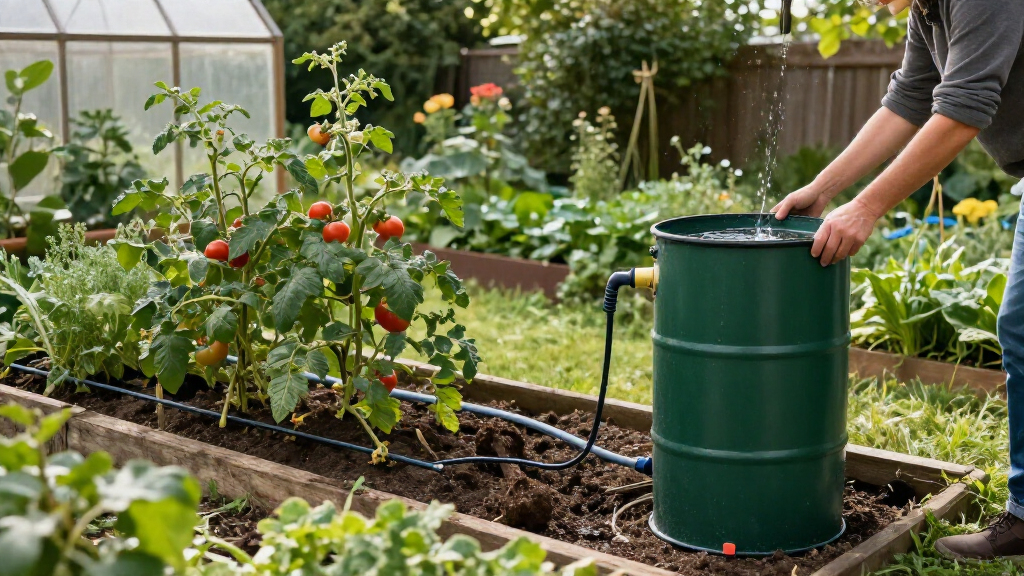
The best future-proof garden products are the ones that make a garden easier to adapt, maintain, and expand—not simply the ones with the most technology. My best overall pick is the GoveeLife Smart WiFi Sprinkler Timer for app-based watering control, while the Garden In Minutes Garden Grid stands out for a ready-made irrigation layout and the Growchum modular raised bed for a growing space that can change with your needs. The main tradeoff is between connected convenience and simpler solar or manual systems that rely less on apps, batteries, or network access. Garden size, water access, and the type of plants you grow all affect which option makes sense. Read on for the full breakdown and a guide to choosing a setup that can serve your garden as it changes.

Get garden gear delivered free with Prime
- Fast, free delivery on millions of items
- Prime Video, Amazon Music and more included
- Member-only deals all year
Complete the kit


Key Takeaways
- Connected control is most useful when it solves a real routine problem: the GoveeLife timer offers WiFi scheduling, while the solar kits avoid dependence on a home network.
- Irrigation layout matters as much as automation: the Garden In Minutes Grid offers a structured 4-by-8-foot watering arrangement, while drip kits suit pots and more varied placements.
- Modularity supports changing garden plans: the Growchum bed can be reconfigured, a different kind of flexibility from the fixed footprint of the Keter Urban Bloomer.
- Small-space growing calls for vertical or indoor systems: the 28-site tower and Ahopegarden hydroponic system save ground space, but each adds its own upkeep and growing constraints.
- Not every future-ready tool needs an app: the EDGEVEIL meter and Omont hose can support informed, adaptable care without adding a connected control system.


More Details on Our Top Picks
Ahopegarden 12-Pod Hydroponic Growing System with LCD Control Panel
For a future-proof garden that can keep producing when outdoor conditions or available sunlight change, I’d pick the Ahopegarden 12-Pod Hydroponic Growing System. Its full-spectrum light has two modes, and the adjustable panel accommodates plants up to 17 inches tall, giving it more room to adapt than a fixed-height countertop setup. The 12 planting sites and 5-liter tank make it a more productive indoor choice than the Keter Urban Bloomer, which depends on an outdoor spot and soil. The automatic pump circulates water on a 30-minute cycle, reducing routine watering tasks, though it does not make growing maintenance-free: users still need to manage nutrients and plant growth. Its 18-inch depth also takes up meaningful counter space, and the supplied nutrient solution is listed as one set. Choose this for indoor harvests; skip it if you want a low-tech planter.
Pros:- Grows up to 12 plants in a controlled indoor setup.
- Full-spectrum light offers two modes for year-round growing without relying on a sunny window.
- Adjustable light height accommodates plants up to 17 inches tall.
- Quiet, timed pump circulation reduces manual watering.
Cons:- The 18-inch depth takes up noticeable counter space.
- The included nutrient solution is listed as one set, so ongoing growing requires replenishment.
Best for: Apartment gardeners who want to grow herbs or leafy greens indoors through changing seasons and have room for a dedicated countertop system.
Not ideal for: Gardeners seeking a large outdoor planting bed or a low-maintenance soil planter; this system needs counter space and ongoing nutrient and crop care.
- Brand:Ahopegarden
- Model:HSXC4
- Planting capacity:12 pods
- Grow light:Full-spectrum panel with two light modes
- Maximum plant height:17 inches
- Water tank capacity:5 liters
- Dimensions:18 x 9 x 6 inches
- Water pump:Ultra-quiet; 30-minute circulation cycle
Our verdict“Choose this if indoor, year-round herb and greens production matters more than counter space or the simplicity of the Keter Urban Bloomer.”
49FT Solar Drip Irrigation System Kit, Auto Watering for 15 Pots
I’d choose the HEKIWAY 49FT Solar Drip Irrigation System for a mixed group of potted plants that needs scheduled watering across a patio, balcony, or indoor growing area. Its 25 timer modes, 50 feet of tubing, and 15 stakes let buyers distribute water across more containers than the HEYRSUN kit, whose listed hose is 10 meters. Solar power supports warm-season outdoor use, while USB-C charging gives the pump another power option when sunlight is limited. That flexibility suits changing locations and seasons, but the system still depends on a water reservoir and a layout that can be adjusted to each plant’s needs; preset schedules are not a substitute for checking soil moisture. The blockage and low-water alarms are useful prompts, though a dirty sensor can trigger a false alert. This is a practical choice for many pots, not a set-and-forget solution.
Pros:- 25 timer modes allow watering durations from 3–20 minutes and intervals from 12–96 hours.
- Includes 50 feet of tubing, 15 stakes, and 15 T-joints for a customizable layout.
- Solar and USB-C charging support use across outdoor seasons and indoor settings.
- Blockage and low-water alerts can flag common system interruptions.
Cons:- Needs a separate water container and careful setup to match different plant needs.
- Dirt on the water-level sensor may cause false low-water alerts.
- The listed maximum flow rate does not itself indicate how evenly water will reach every pot.
Best for: Balcony and patio gardeners with up to 15 container plants who want configurable irrigation and both solar and USB-C charging options.
Not ideal for: Gardeners who need a simple, fixed hose timer or do not want to arrange tubing, maintain a reservoir, and monitor watering results.
- Brand:HEKIWAY
- Hose length:About 50 feet (15 meters)
- Watering capacity:Up to 15 pots
- Timer settings:25 modes
- Watering duration:3–20 minutes
- Watering interval:12–96 hours
- Maximum flow rate:Up to 900 ml/min
- Power:Solar and USB-C charging
- Included components:15 watering stakes, 15 T-joints, and a filter
Our verdict“Pick this for a spread-out collection of container plants that needs flexible scheduling and a longer hose than the HEYRSUN system.”
Keter Urban Bloomer 12.7 Gallon Raised Garden Bed and Outdoor Herb Garden Planter with Self Watering Gauge and Drainage Plug, Dark Grey
The Keter Urban Bloomer is my pick for gardeners who want a durable outdoor growing station without batteries, apps, or irrigation tubing. Its elevated design puts herbs and small crops within easier reach than a ground-level bed, while the water gauge and reservoir help manage moisture between visits. A drainage plug gives the grower more control than a sealed self-watering setup, and the resin construction is described as fade-resistant and resistant to rust and rot. Compared with the Ahopegarden hydroponic system, this planter offers a larger soil-based outdoor format but cannot create its own indoor light or regulate nutrients. It also needs soil and an outdoor location, and its 32.3-inch length takes more space than a compact pot. I’d favor it for straightforward patio growing; skip it if you need a portable or fully automated system.
Pros:- Elevated design provides easier access than a ground-level garden bed.
- Water gauge and reservoir support more informed moisture management.
- Drainage plug allows water release when growing conditions call for it.
- Resin construction is described as fade-resistant and resistant to rust and rot.
Cons:- Requires an outdoor location and does not provide grow lighting for indoor cultivation.
- At 32.3 inches long, it occupies more floor space than a small pot or countertop system.
- The planter needs soil and manual care; it does not offer the scheduled irrigation of the HEKIWAY kit.
Best for: Patio and balcony gardeners who want an elevated soil planter for herbs or small crops, with a water gauge and controllable drainage.
Not ideal for: Indoor growers, gardeners with very limited floor space, or buyers seeking programmed watering and lighting.
- Brand:Keter
- Model:Urban Bloomer 12.7 Gallon
- Dimensions:32.3 x 14.7 x 30.7 inches
- Stated soil capacity:12.7 gallons
- Material:Resin
- Watering features:Reservoir and water gauge
- Drainage:Openable drainage plug
- Color:Dark grey
- Warranty:2-year limited
Our verdict“Choose this if you want a simple elevated outdoor soil bed; pick the Ahopegarden instead for indoor growing or HEKIWAY for scheduled watering across multiple pots.”
HEYRSUN Solar Automatic Drip Irrigation System with Timer
For buyers who want automatic watering without a complex smart-home setup, the HEYRSUN Solar Automatic Drip Irrigation System keeps the essentials together: a programmable timer, a 10-meter hose, solar charging, and USB charging. Its 2200 mAh rechargeable battery offers stored power when sunlight is unavailable, while the IPX5 rating makes it suitable for indoor or outdoor use according to the product data. Compared with the HEKIWAY kit, HEYRSUN is the more compactly specified option, but the supplied information does not list a pot count, timer range, or flow rate, so buyers have less detail for planning a larger layout. The plastic construction and battery-life claim based on five minutes of daily watering also call for realistic expectations. I’d choose it for a modest setup where straightforward scheduled watering matters more than detailed app features.
Pros:- Solar and USB charging provide two ways to power the system.
- Programmable timer supports scheduled automatic watering.
- IPX5 waterproof rating supports indoor and outdoor placement.
- Includes a 10-meter hose for routing water to plants.
Cons:- The product data does not state how many plants the system can water.
- Battery-life claim depends on watering for five minutes per day.
- Plastic construction may be less reassuring to buyers seeking metal components.
Best for: Gardeners with a modest group of indoor or outdoor plants who want solar or USB charging and programmable drip watering without Wi-Fi controls.
Not ideal for: Buyers planning irrigation for a large collection of pots or needing a clearly specified capacity, flow rate, or phone-based control.
- Brand:HEYRSUN
- Power source:Solar and USB
- Battery capacity:2200 mAh
- Hose length:10 meters (33 feet)
- Water resistance:IPX5
- Material:Plastic
- Weight:1.4 pounds
- Warranty:1 year
Our verdict“Choose HEYRSUN for a straightforward, compact solar watering setup, but choose HEKIWAY if you need a stated 15-pot capacity and more timer details.”
GoveeLife H5901 Smart WiFi Sprinkler Timer with Gateway, 1 Outlet
The GoveeLife H5901 Smart WiFi Sprinkler Timer earns its place for gardeners who want watering schedules to respond to weather rather than run on a fixed routine. App controls, watering charts, and Alexa or Google Assistant support make it the most connected option here; the HEKIWAY and HEYRSUN kits focus on direct drip delivery and solar power instead. Its brass inlet and IP67 rating are useful choices for an outdoor connection, while three modes and up to 10 schedules provide room to manage different watering patterns through one outlet. The tradeoff is compatibility: it needs 2.4 GHz Wi-Fi at the gateway, a 3/4-inch threaded connection, and adequate water pressure. Unlike the solar drip kits, it is not a self-contained reservoir pump for pots without a tap. I’d choose it for a connected hose or sprinkler setup, not an off-grid balcony.
Pros:- Weather-adaptive scheduling can adjust watering around rain and local conditions.
- App controls, watering charts, and Alexa and Google Assistant support add remote management.
- Three watering modes and up to 10 schedules support varied routines.
- Brass inlet and IP67 waterproof rating suit outdoor installation.
Cons:- Gateway Wi-Fi supports 2.4 GHz only.
- Requires a compatible 3/4-inch threaded connection and water pressure between 7.25 and 116.03 PSI.
- One outlet limits it to a single connected watering line at a time.
Best for: Gardeners with a 3/4-inch tap and reliable 2.4 GHz Wi-Fi who want app-managed, weather-adaptive watering for a hose or sprinkler.
Not ideal for: Balcony gardeners without a tap, users seeking solar-powered reservoir irrigation, or households that cannot meet the Wi-Fi and water-pressure requirements.
- Brand:GoveeLife
- Model:H5901+H5044
- Water outlets:1
- Gateway-device range:Up to 1,640 feet
- Gateway Wi-Fi:2.4 GHz
- Watering modes:Continuous, intermittent, and custom
- Maximum schedules:10
- Inlet and connection:Brass inlet; 3/4-inch threaded
- Operating water pressure:7.25–116.03 PSI
Our verdict“Choose this for connected, weather-responsive watering from a compatible tap; opt for HEKIWAY or HEYRSUN if you need solar-powered drip irrigation from a separate reservoir.”
Growchum 48-Inch Modular Self-Watering Raised Garden Bed, Gray
I’d choose the Growchum when a garden layout may need to change over time. Its three separate planters can stand alone or join into different arrangements, including an elevated setup, giving it more flexibility than the fixed footprint of the Garvee Galvanized Raised Garden Bed. Each planter’s water reservoir and level indicator also make routine watering easier to track, while drainage plugs let growers release excess water. Tool-free assembly and weather-resistant polypropylene suit a low-maintenance outdoor setup. The tradeoff is that plastic may not hold up like metal over years of exposure, and the combined arrangement still needs space at roughly 47 inches long. Unlike the Garvee, it offers modular placement rather than a broad, bottomless planting area; I’d favor this for adaptable layouts, not maximum bed capacity.
Pros:- Three planters can be separated or combined into different layouts
- Built-in reservoirs and level indicators help track watering needs
- Elevated configuration can reduce kneeling and bending
- Tool-free assembly and weather-resistant polypropylene suit outdoor use
Cons:- Polypropylene may be less durable over time than metal or solid wood
- The assembled footprint may be too large for narrow balconies or small patios
Best for: Gardeners who want to rearrange planters, reduce bending with an elevated setup, and simplify watering on a patio or in a small yard
Not ideal for: Growers seeking a long-lasting metal bed or a large, open-ground planting area; its plastic construction and 47-inch footprint may not fit those needs
- Material:Polypropylene
- Dimensions:47.24 × 15.75 × 24.41 inches
- Capacity:140 liters
- Number of planters:3
- Number of levels:3
- Watering system:Built-in reservoirs with water level indicators
- Drainage:Drainage plug
- Assembly:Tool-free
Our verdict“Choose the Growchum if flexible layouts and easier watering matter more than the long-term toughness and broad planting area of a metal bed.”
IPOW Solar Automatic Drip Irrigation System for 20–30 Pots
For a balcony or greenhouse crowded with containers, I’d pick the IPOW over a hose-connected setup such as the Garden In Minutes Garden Grid: it is designed for 20–30 pots and delivers water to plant roots, rather than covering a fixed bed. Solar power and up to 50 days of standby time reduce dependence on a nearby outlet, while 12 timing modes give owners room to adjust schedules for different routines. Its low-water and clogged-pump alarms are useful safeguards, but they do not remove maintenance: an alert still means refilling the source or cleaning probes. Compared with the smaller 15-pot solar kit in this roundup, IPOW suits a larger collection, though the source water and pump still need attention. I’d skip it if you need a fully hands-off system or prefer watering by hand.
Pros:- Designed to serve 20–30 potted plants
- Solar power supports operation without a nearby electrical outlet
- Twelve timing modes allow schedule adjustments
- Low-water and clogged-pump alarms flag common watering interruptions
Cons:- Alerts still require manual refilling or probe cleaning
- Performance depends on maintaining the water source and keeping the pump clear
Best for: Owners of 20–30 indoor or outdoor pots who want scheduled, solar-powered root watering while away from the garden
Not ideal for: Gardeners with only a few plants, no suitable water reservoir, or no appetite for responding to low-water and clogged-pump alerts
- Power source:Solar
- Plant capacity:20–30 pots
- Standby time:Up to 50 days
- Timing modes:12
- Special features:Anti-siphoning; low-water and clogged-pump alarms
- Applications:Indoor and outdoor plants, balconies, gardens, and potted plants
- Model number:automatic-lawn-drip-irrigation-kits
- Part number:BSV-IC021
Our verdict“Choose IPOW for scheduled watering across a large pot collection, but not if you want a system that needs no monitoring or upkeep.”
Garvee Galvanized Raised Garden Bed with Mesh Cover and Irrigation
The Garvee is the strongest fit here for gardeners who want to grow a substantial outdoor bed and add a physical barrier against birds and insects. Its 96 × 48-inch growing area dwarfs the modular Growchum, while the included mesh cover has a zipper door for harvesting and routine access. An irrigation system is part of the package, and the bottomless design allows roots to reach the ground and excess water to drain. Galvanized metal, rolled edges, and crossbars support a more substantial structure than a plastic planter, though the open base means it cannot be placed on a deck without a surface or liner that holds soil. The size also demands a dedicated outdoor footprint. Compared with the Garden In Minutes grid, this is a full growing bed with cover, not just an irrigation upgrade for an existing bed.
Pros:- Large 96 × 48-inch area provides room for vegetables, herbs, and flowers
- Mesh cover with zipper door helps protect plants while allowing access
- Bottomless structure supports drainage and root growth into the ground
- Galvanized metal, rolled edges, and reinforcing crossbars add structural support
Cons:- Large footprint is unsuitable for many patios and compact gardens
- Open bottom does not contain soil on decks or other hard surfaces
- Mesh cover adds a layer to access when tending or harvesting plants
Best for: Backyard growers who have a spacious, ground-level area and want a large bed with mesh protection and included irrigation
Not ideal for: Balcony gardeners, deck users who need a contained base, or anyone with limited room for a 96 × 48-inch bed
- Material:Galvanized metal
- Bed dimensions:96 × 48 × 12 inches
- Capacity:12 cubic feet
- Design:Bottomless
- Included component:Mesh cover with zipper door
- Special features:Irrigation system, UV resistance, reinforcing crossbars, and rolled edges
- Weight:39.5 pounds
- Usage:Outdoor
Our verdict“Choose the Garvee if you have ground space and want a protected, large-format bed; skip it if you need a compact or bottomed planter.”
Garden In Minutes Garden Grid 4×8 Pre-Assembled Irrigation System
I’d put this grid first for owners who already have a 4 × 8-foot bed and want to improve watering without replacing it. The pre-assembled layout connects to a standard garden hose and sends water to all 32 planting squares, avoiding the cutting and emitter placement required by a custom drip setup. Its soil-level streams pair naturally with square-foot gardening, and UV-resistant tubing with POM fittings is intended to stay in place through the growing season. Unlike the IPOW system, it is designed around a fixed bed, not a flexible collection of pots; unlike the Garvee, it does not provide the bed or plant protection itself. Cold weather is a real limit: the grid needs to be disconnected before freezing temperatures. Its dimensions also restrict it to beds close to the stated 4 × 8-foot format.
Pros:- Waters all 32 planting squares with 16 streams per square
- Pre-assembled design avoids cutting tubing and installing emitters
- Connects to a standard garden hose
- UV-resistant LLDPE tubing and POM fittings are designed for seasonal outdoor use
Cons:- Must be disconnected during freezing temperatures
- Designed for beds close to 4 × 8 feet, limiting use with other layouts
- Does not include a garden bed, so it only upgrades an existing setup
Best for: Square-foot gardeners with a 4 × 8-foot bed who want broad, soil-level watering from a standard hose connection
Not ideal for: Owners of differently sized beds, container gardens, or gardens where the irrigation grid cannot be removed before freezing weather
- Size:4 × 8 feet
- Dimensions:44 × 88 × 0.75 inches
- Planting squares:32
- Water streams:16 per planting square
- Maximum pressure:60 psi
- Material:UV-resistant LLDPE tubing and POM fittings
- Setup:Pre-assembled; connects to a standard garden hose
- Weight:3 pounds
Our verdict“Choose this grid to simplify even watering in a matching 4 × 8-foot bed, but choose IPOW for pots or the Garvee for a complete bed-and-cover setup.”
Large Vertical Planter Tower, 4 Tier Stackable Garden Planter, 28 Plant Sites, Heavy Duty Strawberry Planter, Vertical Growing System with Center Hole, Made in USA (Desert Sand)
Where the Garvee uses a wide ground-level footprint, this tower concentrates up to 28 plant sites in a vertical arrangement. That makes it a useful fit for gardeners short on bed space who want to grow strawberries or other suitable plants in a compact area. Watering from the top lets gravity carry moisture through the tiers, and the center hole for a support pipe offers a way to add stability for larger or more demanding installations. The listing describes thicker construction intended to resist outdoor wear, but it does not provide material or complete dimensional details, so I’d be cautious about treating its durability claims as directly comparable to the Garvee’s specified galvanized metal. It also requires attention to water distribution between tiers; a high plant count does not guarantee identical needs for every site.
Pros:- Provides up to 28 plant sites in a vertical arrangement
- Top-down watering uses gravity to distribute moisture through tiers
- Center hole allows a support pipe to be installed
- Designed for indoor or outdoor use and described as heavy duty
Cons:- Product data does not state material or complete assembled dimensions
- Shared top-down watering offers less direct control for individual plants
- Vertical planting may require checking moisture across different tiers
Best for: Space-limited gardeners seeking many planting sites in a vertical tower, especially for strawberries and similar crops
Not ideal for: Growers who need a clearly specified bed footprint, want individual watering control for each plant, or prefer a metal structure with stated material details
- Plant sites:Up to 28
- Number of tiers:4
- Capacity:51.2 quarts
- Watering system:Top-down, gravity-fed watering
- Support feature:Center hole for support pipe installation
- Weight:2.5 pounds
- Mounting type:Floor standing
- Usage:Indoor and outdoor
Our verdict“Choose the tower when planting density and vertical use of space matter most, but prefer the Garvee if you need a defined, broad bed with specified metal construction.”
Omont 50 ft Stainless Steel Garden Hose with 8-Pattern Spray Nozzle
The Omont suits gardeners who want a hose built to handle rougher storage and outdoor conditions, rather than an automated watering setup. Its 304 stainless steel outer layer is designed to resist punctures and abrasion, while the flexible, kink-resistant construction is meant to make coiling and day-to-day handling easier. The included nozzle adds eight patterns, so one hose can cover gentle plant watering as well as pet washing and cleanup.
Compared with the GoveeLife Smart WiFi Sprinkler Timer or the solar drip systems in this roundup, this is a hands-on tool: it does not schedule watering or reduce the need to stand at the tap. Its 50-foot reach may also fall short across larger yards, though compatible hoses can connect for added length. At 2.81 kg, it is not weightless, and buyers should decide whether its protective outer layer matters more than carrying ease.
Pros:- 304 stainless steel outer layer is designed to resist punctures and abrasion
- Flexible, kink-resistant design is described as easy to coil for storage
- Eight nozzle patterns cover plant watering and general cleaning
- Compatible hoses can be connected to extend the reach
Cons:- The 50-foot length may not reach across larger yards without an added hose
- Listed weight of 2.81 kg may be a drawback for frequent carrying
- Manual watering offers less hands-off control than the roundup’s timer-based systems
Best for: Gardeners who want a puncture- and abrasion-resistant hose for routine watering, washing, and cleanup around a small or medium yard
Not ideal for: People seeking unattended watering or a very long single-hose reach; this model requires manual use and may need a compatible extension for larger spaces
- Length:50 ft
- Outer layer material:304 stainless steel
- Other materials:ABS, brass, metal, PET, plastic
- Weight:2.81 kg
- Outside diameter:0.91 in
- Nominal wall thickness:0.08 in
- Spray patterns:Center, Mist, Shower, Rinse, Flat, Soaker, Cone, Jet
- Included components:Garden hose, spray nozzle
Our verdict“Choose the Omont if a durable, multi-purpose manual hose matters more than automated watering or a longer reach from one hose.”
EDGEVEIL 4-in-1 Wireless Soil Moisture Meter with Temperature, Light, and Clock Display
The EDGEVEIL is the most information-focused pick here: its display combines soil moisture, temperature, light, and time, while a low-moisture alert can prompt a check before plants dry out. A triple-probe sensor stays in the soil for continuous monitoring, and the stated wireless range of up to 328 feet gives the display flexibility across a home or garden. One display can pair with as many as 12 sensors, making it more adaptable as a plant collection grows.
Unlike the 49FT Solar Drip Irrigation System or the GoveeLife sprinkler timer, this meter reports conditions rather than watering plants for you. That makes it useful for deciding when to act, but it does not replace an irrigation system for buyers who need automatic watering. The additional-sensor capacity also depends on buying extra sensors, and the display requires two AAA batteries. Its broad monitoring is a stronger fit for attentive plant care than for a simple, set-and-forget garden.
Pros:- Combines soil moisture, temperature, light level, and time on one display
- Low-moisture alert helps flag when plants may need attention
- Wireless range is specified at up to 328 feet
- Waterproof, corrosion-resistant probe is designed for continuous soil monitoring
Cons:- Requires two AAA batteries
- Monitoring more plants requires additional sensors
- Measures conditions but does not water plants automatically
Best for: Plant owners who monitor several indoor or outdoor growing areas and want remote readings to guide watering decisions
Not ideal for: Gardeners who want automatic watering or a complete multi-plant setup from one purchase; extra sensors are needed to monitor additional locations
- Measurements:Soil moisture, temperature, light level, and time
- Wireless range:Up to 328 ft
- Sensor capacity:Up to 12 sensors per display
- Probe:Triple-probe TDR; waterproof and corrosion-resistant
- Dimensions:1.5 x 3.9 x 8.4 inches
- Item weight:9.1 ounces
- Batteries:2 AAA batteries, included
- Model:HG01
Our verdict“Choose the EDGEVEIL if you want remote, multi-reading plant monitoring and are willing to manage watering yourself.”

How We Picked
I ranked these products by how well their design can keep serving a garden as routines, planting plans, and available space change. I weighed the practical value of their main feature—such as expandable beds, scheduled irrigation, water-level visibility, or vertical growing—against setup effort, ongoing maintenance, and reliance on power, an app, or a network. I also looked at whether a product solves a distinct problem rather than duplicating another option in the lineup.
The ranking favors useful flexibility and clear buyer fit over feature count alone. The GoveeLife timer earns the top spot for buyers who want connected scheduling, while products such as the solar drip kits rank better for gardens where simple placement and reduced wiring matter more. Raised beds, indoor hydroponics, and hand tools serve different needs, so their positions reflect how much each can adapt within its intended role—not a claim that one product suits every garden.
Factors to Consider When Choosing Best Future-proof Garden Products
Future-ready gardening is less about predicting every change than avoiding purchases that lock you into the wrong layout or routine. Before choosing a product, I would map the garden’s water source, sunlight, growing space, and likely maintenance demands. These broader checks can help distinguish genuinely useful flexibility from extra features that add little to your day-to-day care.
Match automation to the water source and garden layout
Start by tracing how water will reach each plant, rather than choosing a timer first. A single-outlet smart timer can fit a hose-connected zone, while drip lines are more suited to distributing water among pots or beds. Solar-powered kits may reduce the need for an electrical outlet, but their placement and sun exposure can affect how reliably they operate. Check connector sizes, hose routing, and whether the system can serve the number of containers you actually have. A common mistake is buying for a future garden expansion before confirming the current water pressure and layout. Pick a system that can be adjusted or extended without forcing you to rebuild the whole setup.
Choose flexibility you are likely to use
Modular beds, stackable planters, and adjustable irrigation can accommodate changing space or planting plans, but flexibility has little value if assembly and reconfiguration are a burden. Think about whether you may move, add beds, change crops, or rearrange containers over the next few seasons. A fixed-format planter can be a better choice when its footprint already fits the space and simple upkeep matters more than expansion. Look for clear information about compatible parts and how sections connect before assuming a product will grow with your garden. Avoid buying a large system solely for theoretical future capacity. The best adaptable option is one you can use in its current form and modify when a real need appears.
Treat app dependence as a maintenance decision
Connected controls can make scheduling easier, but they also add dependencies: WiFi coverage, app support, power, and device setup. Before choosing a smart product, decide whether remote access or schedule changes would meaningfully improve your routine. For a garden far from the home network, a solar or manual alternative may be more dependable in practice. Check what happens when a connection drops and whether controls remain available at the device. Keep a straightforward backup plan for watering during outages or travel. Paying for connectivity makes most sense when it removes a recurring task, not just because an app is available.
Plan for upkeep, cleaning, and seasonal storage
Every system creates some maintenance, even when it reduces another chore. Drip emitters can clog, reservoirs need cleaning, and indoor growing systems require attention to water and growing components. Raised beds and metal structures also need suitable placement and seasonal care for their materials and surroundings. Check whether parts that contact water are easy to reach and whether replacement components are available. Consider where hoses, meters, and seasonal equipment will live when they are not in use. A less automated product may be a better long-term fit if it is easier to inspect, repair, and store.
Size the system for the plants, not the headline capacity
Plant-site counts and container capacity are useful starting points, but they do not tell you how much room mature plants need or whether their watering needs match. Crowded planting can reduce airflow and make care harder, particularly in vertical systems. Different crops may also need different watering schedules, so one timer or irrigation zone may not suit every bed. Sketch the mature plant spacing and group crops with similar water needs before buying. Leave room to reach the back of a bed, refill a reservoir, or inspect irrigation connections. A smaller, well-planned system can be easier to maintain than a larger one filled to capacity.
Spend more where failure would disrupt the whole routine
When deciding where to invest, focus on the component that would create the most trouble if it failed or proved awkward. Reliable access to water, durable connectors, and a bed that suits the site can matter more than extra displays or control features. For a small container garden, a basic hose or moisture meter may be enough; a larger garden may benefit more from planned irrigation and accessible controls. Compare the cost of replacing or repairing parts, not just the initial feature list. Avoid paying for a premium system that depends on infrastructure you do not have. Spend on adaptability and serviceable construction when those qualities address a real limitation in your garden.
Frequently Asked Questions
Should I choose a WiFi sprinkler timer or a solar drip irrigation kit?
Choose based on the water source and how you want to control watering. A WiFi timer is a natural fit when a hose-fed zone and reliable network access are already in place and you value app-based scheduling. A solar drip kit can suit pots spread across a patio or garden where wiring is inconvenient. Check the kit’s stated coverage and confirm it matches your container count and layout rather than relying on a broad capacity claim. If you need separate schedules for plants with different watering needs, neither option may replace dividing the garden into zones.
Can one automatic watering system handle both raised beds and individual pots?
It can, but only if the tubing, emitters, and controls can be arranged for both areas without leaving some plants too wet or too dry. Pots and beds may drain at different rates, and sun exposure can change how quickly they dry out. A single schedule is easiest when the plants have similar water needs and conditions. For mixed planting, consider separate zones or a layout that lets you adjust flow to individual sections. Test the setup across several watering cycles before relying on it during an absence.
Is a modular raised bed a better long-term choice than a fixed planter?
A modular bed is a better fit when you may change the garden’s size or layout and are willing to handle the assembly involved. A fixed planter can be the simpler choice when you already know where it will sit and want a contained growing area. Before choosing modular construction, check how sections join, what space each arrangement needs, and whether the maker offers compatible components. Also account for access around the bed and the surface beneath it. Expandability is useful only if the revised layout remains practical to reach and water.
Will a soil moisture meter replace a watering schedule?
A meter can help you check local conditions, but it does not water plants or account for every difference across a bed. Readings can vary with soil type, probe placement, and the specific plant’s needs. Use the tool as one input alongside weather, drainage, and visible plant condition rather than treating a single reading as a command. For a large garden, sample more than one area because a sunny edge may dry faster than shaded soil. If you automate watering, occasional checks can help reveal when the schedule no longer fits changing conditions.
What should I prioritize if my garden may move or expand?
Prioritize equipment that can be moved, reconfigured, or used in a smaller setup without losing its purpose. Consider the weight and assembly of beds, the reach of hoses, and whether irrigation parts can be rerouted to a new layout. Avoid committing to a permanent watering arrangement before you know where the next garden will be. Portable planters and flexible drip lines may be easier to adapt than fixed infrastructure. Keep an inventory of connectors and instructions so you can rebuild the setup without replacing compatible parts.
Conclusion
For the strongest all-around mix of control and routine support, I recommend the GoveeLife Smart WiFi Sprinkler Timer as best overall, provided your garden has reliable WiFi and a compatible hose setup. The 49FT Solar Drip Irrigation System is my best-value direction for buyers who want to water several pots without adding a connected controller, while the Garden In Minutes Garden Grid suits gardeners who want a more structured bed irrigation layout. Beginners may prefer the Keter Urban Bloomer for a contained planter with a self-watering gauge, rather than starting with a multi-part automated system. For small spaces, consider the Large Vertical Planter Tower or the Ahopegarden hydroponic system; for adaptable bed layouts, choose the modular Growchum. I would select the option that solves your current constraint first, then favor products whose parts and layout can accommodate a change in the garden later.