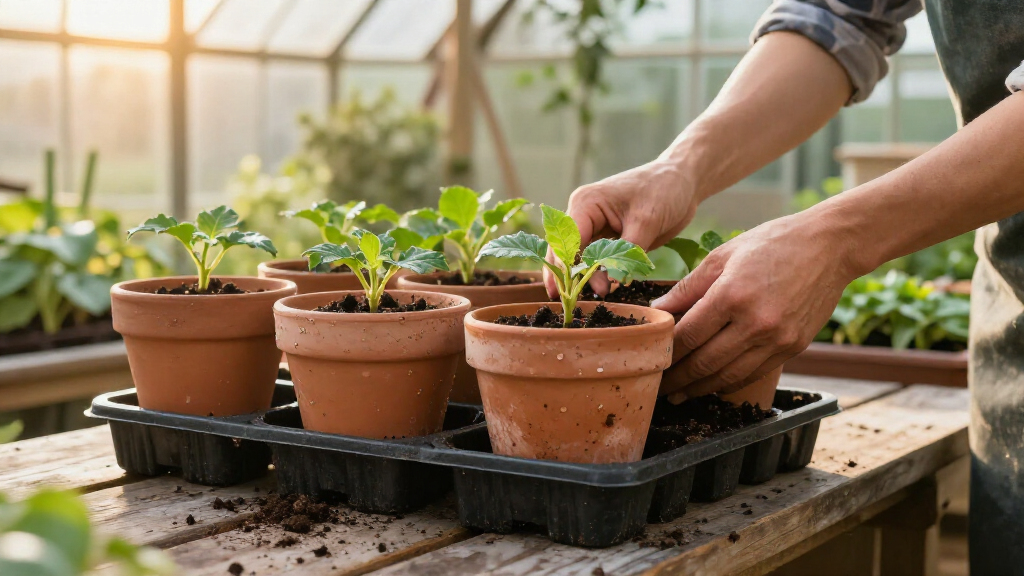
The best sustainable garden pots and trays balance less waste with reliable seed starting, easy transplanting, and a suitable size for your space. I name the Burpee SuperSeed Reusable 36-Cell Tray my best overall pick for gardeners who want a reusable alternative, while the Loongesho 120-cell biodegradable trays suit high-volume sowing and the Gardzen fabric grow bags offer a reusable option for larger plants. The main tradeoff is between disposable biodegradable pots that can go into the ground, reusable trays that need cleaning and storage, and fabric bags that take more room but serve a different growing purpose. Cell count, pot size, material, and drainage all affect how much work a setup will take. Read on for the full comparison and guidance on which style fits your garden.

Get garden gear delivered free with Prime
- Fast, free delivery on millions of items
- Prime Video, Amazon Music and more included
- Member-only deals all year
Complete the kit


Key Takeaways
- Reusable construction is the clearest waste-reduction advantage in this lineup: the Burpee tray is designed for repeated seed-starting seasons, while biodegradable pots are intended for transplanting with the plant.
- High cell counts favor batch sowing, not every gardener: the 240-cell DANALLAN kit and 240-cell tray kit suit large sowing plans but may be excessive for a small household garden.
- Biodegradable pots differ by plant size: the 3.15-inch and 4-inch options suit smaller starts, while Vayantgo‘s 5-inch pots give larger seedlings more room but take more storage space.
- Fabric grow bags fill a different role from seed trays: Gardzen and VIVOSUN are for growing larger plants in containers, not starting many small seeds.
- Included labels and tools can simplify setup, but material and sizing matter more: accessories are useful only if cell dimensions, transplant plans, and available growing space match the gardener’s needs.
| 60-Pack 3.15-Inch Biodegradable Peat Pots with Plant Labels |  | Best for High-Volume Small Seedlings | Quantity: 60 pots | Pot diameter: 3.15 inches | Pot dimensions: 3.15 x 2 x 3.15 inches | VIEW LATEST PRICE | See Our Full Breakdown |
| Loongesho Biodegradable Seedling Starter Trays, 120 Cells, 10-Pack with 20 Labels and 2 Transplant Tools |  | Best for Organized Batch Seed Starting | Brand: Loongesho | Material: Biodegradable paper | Cell count: 120 | VIEW LATEST PRICE | See Our Full Breakdown |
| Omitgoter Biodegradable Seed Starter Tray with Peat Pots, Labels, and Tools |  | Best for Flexible Tray Sections | Brand: Omitgoter | Material: Natural pulp | Included components: T-type labels and starter tools | VIEW LATEST PRICE | See Our Full Breakdown |
| Vayantgo 5-Inch Biodegradable Peat Pots with Plant Labels, 10-Pack |  | Best for Roomier Seedling Starts | Brand: Vayantgo | Quantity: 10 pots | Pot dimensions: 5.1 x 3.94 x 5.1 inches | VIEW LATEST PRICE | See Our Full Breakdown |
| Dalzom Biodegradable Peat Pots with Plant Labels, 60 Pots |  | Best Matched Pot-and-Label Set | Pot quantity: 60 | Label quantity: 60 | Pot top diameter: 3.1 inches (80 mm) | VIEW LATEST PRICE | See Our Full Breakdown |
| 120 Pack 4-Inch Peat Pots – Garden Germination Nursery Pots |  | Best for Larger Individual Seedlings | Count: 120 pots | Pot diameter: 4 inches | Material: Recycled pulp paper, biodegradable | VIEW LATEST PRICE | See Our Full Breakdown |
| DANALLAN Biodegradable Seed Starter Tray Kit, 240 Cells, 20 Trays |  | Best for High-Volume Seed Starting | Total cells: 240 | Tray count: 20 | Cells per tray: 12 | VIEW LATEST PRICE | See Our Full Breakdown |
| Gardzen 10-Pack 5-Gallon Fabric Grow Bags with Heavy-Duty Handles |  | Best Reusable Outdoor Grow Bags | Quantity: 10 bags | Capacity: 5 gallons per bag | Material: 300G thick nonwoven fabric | VIEW LATEST PRICE | See Our Full Breakdown |
| 240-Cell Seed Starter Tray Kit, 24 Pack |  | Best for Smaller, Variety-Based Sowings | Total cells: 240 | Tray count: 24 | Cells per tray: 10 | VIEW LATEST PRICE | See Our Full Breakdown |
| Doubleggs 120-Cell Seed Starter Tray Kit, 10 Pack |  | Best Starter Kit with Accessories | Number of trays: 10 | Total cells: 120 | Cell dimensions: 1.6 x 1.6 x 2 inches | VIEW LATEST PRICE | See Our Full Breakdown |
| VIVOSUN 5-Pack 5-Gallon Fabric Grow Bags with Handles |  | Best for Reusable Outdoor Containers | Quantity: 5 bags | Capacity: 5 gallons (20 liters) each | Material: 300 g nonwoven fabric | VIEW LATEST PRICE | See Our Full Breakdown |
| Burpee SuperSeed Reusable 36-Cell Seed Starting Tray |  | Best for Reusable Seed Starting | Cell count: 36 | Cell material: Food-grade silicone | Tray dimensions: 11.5 × 10⁻³/8 × 2-1/4 in | VIEW LATEST PRICE | See Our Full Breakdown |
| sustainable garden pots and tray | Material |
|---|---|
| 60-Pack 3.15-Inch Biodegradabl | Peat, recycled pulp, and plant fibers |
| Loongesho Biodegradable Seedli | Biodegradable paper |
| Omitgoter Biodegradable Seed S | Natural pulp |
| Vayantgo 5-Inch Biodegradable | Pulp and plant fibers |
| Dalzom Biodegradable Peat Pots | 100% recycled pulp |
| 120 Pack 4-Inch Peat Pots | Recycled pulp paper, biodegradable |
| DANALLAN Biodegradable Seed St | Biodegradable paper |
| Gardzen 10-Pack 5-Gallon Fabri | 300G thick nonwoven fabric |
| 240-Cell Seed Starter Tray Kit | Paper pulp |
| Doubleggs 120-Cell Seed Starte | Wood pulp |
| VIVOSUN 5-Pack 5-Gallon Fabric | 300 g nonwoven fabric |
| Burpee SuperSeed Reusable 36-C | — |
More Details on Our Top Picks
60-Pack 3.15-Inch Biodegradable Peat Pots with Plant Labels
For a large batch of compact seedlings, this set pairs 60 plantable pulp pots with four drainage holes per pot, so growers can move starts into soil without first removing the container. Its 3.15-inch diameter suits herbs, flowers, and young vegetables, but leaves less room for roots than the Vayantgo 5-Inch Biodegradable Peat Pots. The recycled pulp and plant fibers offer a lower-plastic alternative to reusable plastic trays, though these pots are intended to break down rather than serve season after season. One small organizational compromise is the label count: 50 labels for 60 pots means some seedlings will need another way to stay identified. I’d choose this over a smaller starter set when quantity matters more than giving each plant a larger nursery pot.
Pros:- 60 pots support a sizable batch of seedlings
- Can be planted directly into soil to limit root handling
- Four drainage holes per pot help excess water escape
- Plant labels are included for organizing most of the pots
Cons:- The 3.15-inch diameter is limiting for seedlings that need a longer nursery period
- Only 50 labels are provided for 60 pots
- Biodegradable pots are not designed for repeated seasonal use
Best for: Gardeners starting many herbs, flowers, or vegetable seedlings in compact pots for direct planting outdoors
Not ideal for: Growers raising seedlings that need extra root room or anyone who wants a label for every pot
- Quantity:60 pots
- Pot diameter:3.15 inches
- Pot dimensions:3.15 x 2 x 3.15 inches
- Material:Peat, recycled pulp, and plant fibers
- Drainage:4 holes per pot
- Included labels:50
- Shape:Round
- Intended use:Outdoor nursery pots
Our verdict“Choose this set for a large run of small seedlings, but pick the Vayantgo pots if your plants need more growing room.”
Loongesho Biodegradable Seedling Starter Trays, 120 Cells, 10-Pack with 20 Labels and 2 Transplant Tools
The Loongesho kit is the most organized option here for sowing lots of different seeds in a modest footprint: 10 trays hold 120 individual cells, with labels and transplant tools included. Unlike the single-pot format of the 60-Pack 3.15-Inch Biodegradable Peat Pots, its small cells keep separate seedlings grouped while they sprout. The paper trays can be cut apart, which helps when only part of a tray is ready to plant, and the biodegradable material can go into the ground with the starts. That convenience comes with a limit: each tray’s 12 cells are small, so plants may outgrow them before transplanting, and paper can soften over time in damp conditions. I’d favor this for succession sowing and mixed varieties, not for keeping seedlings in their containers for long stretches.
Pros:- 120 cells across 10 trays accommodate many seed starts
- Biodegradable paper trays can be planted with seedlings
- Trays can be separated or cut into individual pots
- Includes 20 labels and 2 transplant tools
Cons:- Small cells can restrict seedlings that need more root space
- Paper can break down during prolonged contact with moist soil
- 20 labels do not provide one for each of the 120 cells
Best for: Seed starters growing many varieties at once who want labeled, separable groups of small seedlings
Not ideal for: Gardeners who need large cells or expect seedlings to remain in trays for an extended period
- Brand:Loongesho
- Material:Biodegradable paper
- Cell count:120
- Tray count:10
- Included components:20 plant labels and 2 transplant tools
- Dimensions:6.5 x 4.9 x 2.05 inches
- Shape:Rectangular
- Usage:Indoor and outdoor
Our verdict“Pick Loongesho for neatly grouped batches of small starts; choose larger individual pots when seedlings need more time or room.”
Omitgoter Biodegradable Seed Starter Tray with Peat Pots, Labels, and Tools
Omitgoter’s main distinction is the ability to divide its pulp sections into smaller planting units, giving it more layout flexibility than the fixed 12-cell Loongesho trays. The product data lists a 10-cell configuration and a 200-count unit quantity, but does not clarify how those figures relate, so I would check the package details before planning a precise planting schedule. Natural pulp, airflow, and bottom drainage make this a soil-friendly choice for indoor or outdoor starts, while the included T-type labels and starter tools add useful organization. Compared with the larger batch of individual pots in the 60-count Dalzom set, this format groups seedlings together until sections are separated. The tradeoff is limited scale per tray: a substantial sowing plan may require multiple units, and the listed dimensions give little detail about individual cell size.
Pros:- Natural pulp offers a biodegradable alternative to plastic trays
- Airflow and bottom drainage support seedling growing conditions
- Sections can be cut into smaller planting units
- Includes T-type labels and starter tools
Cons:- A 10-cell tray may require multiples for larger planting batches
- The relationship between the listed 10-cell configuration and 200-count unit count is unclear
- Individual cell dimensions are not provided
Best for: Gardeners who want to split pulp seed-starting sections to match staggered planting or transplanting needs
Not ideal for: Buyers planning a large, precisely sized sowing batch who need clear cell dimensions and an unambiguous unit count
- Brand:Omitgoter
- Material:Natural pulp
- Included components:T-type labels and starter tools
- Cell configuration:10 cells per tray
- Unit count:200 count
- Dimensions:2 x 10 x 2 inches
- Item weight:2 pounds
- Usage:Indoor and outdoor
Our verdict“Choose Omitgoter for adaptable, cut-apart pulp sections, but verify the pack configuration before relying on it for a set number of starts.”
Vayantgo 5-Inch Biodegradable Peat Pots with Plant Labels, 10-Pack
These are the roomiest pots in this batch, making the Vayantgo set a better fit for seedlings that need more space before they go outdoors. At about 5 inches across, each pot offers a clear step up from the compact Dalzom and 3.15-inch peat pots, while 10 matching labels keep the small batch easy to identify. The breathable pulp and drainage holes support growing and transplanting directly into soil, which avoids pulling roots from a pot. The tradeoff is quantity: 10 pots are a focused starter set, not a substitute for the 60-pot options when sowing broadly. Their oval shape may also fit less neatly in standard square tray layouts, and they are disposable rather than reusable. I’d choose them when seedling size matters more than maximizing the number of starts.
Pros:- Larger 5-inch size gives seedlings more room than the 3.1-inch Dalzom pots
- Direct planting can reduce root disturbance during transplanting
- Breathable pulp and drainage holes support airflow and water escape
- Includes one plant label for each pot
Cons:- Only 10 pots are included, limiting batch size
- Oval shape may not fit every tray or growing setup
- Disposable pulp pots are not intended for repeated use
Best for: Gardeners raising a small number of larger vegetable or flower seedlings that need extra room before planting out
Not ideal for: Growers starting dozens of compact seedlings or those who need pots to fit a uniform square-cell tray
- Brand:Vayantgo
- Quantity:10 pots
- Pot dimensions:5.1 x 3.94 x 5.1 inches
- Pot shape:Oval
- Material:Pulp and plant fibers
- Included components:10 plant labels
- Color:Brown
- Usage:Indoor and outdoor
Our verdict“Choose Vayantgo for a small number of seedlings that need room to grow, rather than a high-volume seed-starting batch.”
Dalzom Biodegradable Peat Pots with Plant Labels, 60 Pots
Dalzom earns its place for pairing 60 recycled-pulp pots with 60 labels, a useful one-to-one setup for growers keeping many varieties organized. That match gives it an advantage over the similar 60-pot B0DZ5Y4XZJ set, which includes only 50 labels. At a 3.1-inch top diameter, these pots suit young herbs, flowers, and vegetable starts, but they are not a roomy choice for plants that need extended time before transplanting; the Vayantgo 5-inch pots are better for that job. Drainage holes and direct planting can simplify moving seedlings into the ground, though the pulp containers are intended to break down, not be reused. I’d choose Dalzom when complete labeling matters more than extra pot capacity or long-term container durability.
Pros:- 60 labels match the 60-pot quantity
- Made from 100% recycled pulp
- Pots can be planted directly into the ground
- Drainage holes support water flow
Cons:- 3.1-inch top diameter limits space for larger seedlings
- Pulp pots are not intended for repeated seasonal use
- No label-size or pot-capacity advantage for growers who need roomier containers
Best for: Gardeners starting up to 60 small seedlings who want a dedicated label for every pot
Not ideal for: Growers raising large seedlings or anyone seeking durable pots for repeated growing seasons
- Pot quantity:60
- Label quantity:60
- Pot top diameter:3.1 inches (80 mm)
- Pot bottom diameter:2 inches (50 mm)
- Pot height:3 inches (76 mm)
- Label size:4 x 0.8 inches (100 x 20 mm)
- Material:100% recycled pulp
- Shape:Round
- Usage:Indoor and outdoor
Our verdict“Choose Dalzom for an organized batch of small starts with one label per pot; pick Vayantgo when individual seedlings need more room.”
120 Pack 4-Inch Peat Pots – Garden Germination Nursery Pots
For gardeners who want roomier biodegradable pots rather than densely packed cells, this 120-pack of 4-inch pots offers more growing space for each seedling. The recycled-pulp paper pots have four drainage holes, and they can go straight into the ground at planting time, reducing root disturbance. Compared with the DANALLAN 240-cell kit, this pack gives each plant more room but holds fewer seedlings per package and includes no planting tools or labels. The paper construction supports a lower-waste transplant routine, though it is still a single-use option rather than a durable reusable pot. These are best for seedlings that need extra room before planting out; keep watering measured, since overwatering can soften or break down the pots before they are ready for the garden.
Pros:- Biodegradable recycled-pulp pots can be planted directly in soil.
- Four drainage holes support water escape and airflow.
- Four-inch diameter gives seedlings more room than small-cell trays.
- Pack of 120 suits larger planting batches.
Cons:- Takes more shelf or windowsill space than multi-cell starter trays.
- Paper may soften or disintegrate if kept too wet.
- No labels or transplanting tools are included.
Best for: Home gardeners raising vegetables, herbs, or flowers that benefit from more room per seedling before transplanting.
Not ideal for: Seed starters growing hundreds of small plants in limited space, or anyone who needs pots that can withstand prolonged wet conditions.
- Count:120 pots
- Pot diameter:4 inches
- Material:Recycled pulp paper, biodegradable
- Shape:Round
- Drainage:Four holes per pot
- Color:Brown
- Weight:8 ounces
- Dimensions:11 x 3.9 x 7 inches
Our verdict“Choose these if you want many individually planted, roomier biodegradable pots and can manage watering carefully.”
DANALLAN Biodegradable Seed Starter Tray Kit, 240 Cells, 20 Trays
The DANALLAN kit is the high-capacity choice here: 240 cells across 20 trays let gardeners organize a broad sowing without filling the bench with individual pots. Its breathable paper trays have drainage holes and are designed to go into the soil with seedlings, which can reduce root disturbance compared with removing plants from a conventional tray. Against the Sayehuanye 240-cell kit, DANALLAN divides the same total cell count into fewer, larger 12-cell trays, a useful format for grouping varieties. It also includes a fork, dibble, and labels. The tradeoff is that 12 cells per tray still constrain root space, so these suit early-stage seedlings better than plants that need a long indoor growing period. The supplied dimensions are listed as 1 x 1 x 1 inch, which is not useful for judging the trays’ actual footprint.
Pros:- 240 cells support large batches of seed starting.
- Twenty 12-cell trays make it easier to group plant varieties.
- Biodegradable paper trays are intended for direct planting.
- Includes a fork, dibble, and plant labels.
Cons:- Small cells may limit seedling growth before transplanting.
- Paper trays can lose strength when kept consistently wet.
- Listed dimensions do not provide a reliable guide to the actual tray footprint.
Best for: Gardeners starting many vegetable or flower seeds at once who want labeled, grouped paper trays for transplanting.
Not ideal for: Growers keeping seedlings indoors for an extended period or buyers who need clearly specified tray dimensions and generous cell space.
- Total cells:240
- Tray count:20
- Cells per tray:12
- Material:Biodegradable paper
- Included accessories:Fork, dibble, and plant labels
- Use:Indoor and outdoor
- Color:Brown
- Weight:0.22 kg
Our verdict“Pick DANALLAN for organized, high-volume sowing when seedlings can be moved outdoors while still young.”
Gardzen 10-Pack 5-Gallon Fabric Grow Bags with Heavy-Duty Handles
Unlike the paper seed pots elsewhere in this roundup, Gardzen’s five-gallon fabric bags are designed for growing plants through the season, then washing, folding, and storing for another round. The breathable, BPA-free nonwoven fabric supports drainage and airflow, while air pruning can help limit circling roots. Reinforced handles make the bags easier to move than a rigid container of similar capacity, though moving a fully loaded bag will still take effort. Compared with the VIVOSUN five-pack of five-gallon bags, Gardzen supplies ten bags, making it a better fit for a larger outdoor setup; the tradeoff is that this set is still limited to outdoor use and the bags stand only 10 inches tall. These are a stronger sustainability choice for repeat use than disposable peat pots, provided they are cleaned and stored between seasons.
Pros:- Washable, foldable design supports repeated seasonal use.
- Ten bags provide more planting capacity than the VIVOSUN five-pack.
- Breathable fabric promotes drainage and airflow around roots.
- Reinforced handles aid movement, and the fabric is BPA-free.
Cons:- Designed for outdoor use, limiting its fit for indoor growing.
- Ten-inch height may not suit plants that need deeper containers.
- Filled bags can still be heavy and awkward to relocate.
Best for: Outdoor growers who want reusable containers for several vegetables or other plants and need bags that can be moved and stored between seasons.
Not ideal for: Indoor seed starters or gardeners needing tall containers for deep-rooted plants.
- Quantity:10 bags
- Capacity:5 gallons per bag
- Material:300G thick nonwoven fabric
- Dimensions:12.8 inches diameter x 10 inches high
- Features:Aeration, drainage, and air pruning
- Handles:Reinforced
- Use:Outdoor
- Weight:16 ounces
Our verdict“Choose Gardzen for a reusable outdoor planting setup with more bags than the VIVOSUN alternative, as long as 10-inch depth suits your plants.”
240-Cell Seed Starter Tray Kit, 24 Pack
Sayehuanye spreads 240 cells across 24 separate trays, each with 10 cells, which can make small batches of different varieties easier to keep apart. The paper-pulp pots are designed for direct planting, and the kit adds 24 labels plus two transplanting tools. Compared with DANALLAN’s 20 trays of 12 cells, this set offers more individual groups but fewer seedlings per group—handy when you want to separate varieties, less convenient if you prefer fewer trays to handle. Each tray has one drainage hole, so the drainage setup is less extensive than the four-hole JNYONG pots. Paper pulp can also soften as it absorbs water, making careful watering and timely transplanting important. This is a practical paper-based starter kit, but it is not a sturdy, season-after-season alternative to reusable fabric bags.
Pros:- 240 cells provide capacity for a sizable seed-starting batch.
- Twenty-four 10-cell trays help separate plant varieties.
- Biodegradable paper-pulp pots can be planted directly.
- Includes 24 labels and two transplanting tools.
Cons:- One drainage hole per tray offers less drainage provision than the JNYONG pots.
- Paper-pulp pots may soften when they stay wet.
- Ten cells per tray means handling more separate trays for a large sowing.
Best for: Gardeners sowing several varieties in modest batches who value separate trays and included labels.
Not ideal for: Growers seeking large individual cells, robust trays for repeated use, or many drainage points per tray.
- Total cells:240
- Tray count:24
- Cells per tray:10
- Material:Paper pulp
- Dimensions:4.13 x 10 x 2 inches
- Drainage:One hole per tray
- Included components:24 labels and 2 transplanting tools
- Use:Indoor and outdoor
Our verdict“Choose this kit when keeping smaller groups of seed varieties separate matters more than having larger trays or reusable construction.”
Doubleggs 120-Cell Seed Starter Tray Kit, 10 Pack
Doubleggs takes a smaller-batch approach: its 10 wood-pulp trays hold 120 cells, with cells measuring 1.6 x 1.6 x 2 inches. That is half the capacity of the DANALLAN and Sayehuanye kits, but it gives beginners a more manageable number of seedlings to label and transplant. The kit also includes 100 labels, two transplanting tools, and a foldable sprayer, so fewer supplies need to be gathered separately. Like the other paper-based options, these cells can go into the ground and degrade as roots grow through. Compared with the JNYONG four-inch pots, Doubleggs saves space through grouped small cells but offers much less room for each plant. Compact cells are the main limitation: they suit early starts, not seedlings left to grow large before planting out.
Pros:- 120 cells provide a manageable capacity for smaller sowing plans.
- Biodegradable wood-pulp pots are intended for direct planting.
- Includes 100 labels, two transplanting tools, and a foldable sprayer.
- Cells can be cut into smaller sections.
Cons:- Cells are only 1.6 x 1.6 x 2 inches, restricting seedling growth time.
- Offers half the cell capacity of the DANALLAN and Sayehuanye kits.
- Paper-based cells may require careful watering to retain their shape.
Best for: New seed starters or gardeners sowing a moderate number of herbs, vegetables, and flowers who want tools and labels in one kit.
Not ideal for: Gardeners raising large seedlings indoors or anyone who wants roomy individual pots rather than compact cells.
- Number of trays:10
- Total cells:120
- Cell dimensions:1.6 x 1.6 x 2 inches
- Tray dimensions:6.29 x 4.3 x 4.72 inches
- Material:Wood pulp
- Included accessories:100 labels, 2 transplanting tools, and 1 foldable sprayer
- Use:Indoor and outdoor
Our verdict“Pick Doubleggs for a modest first seed-starting setup with useful accessories, but choose larger pots for seedlings that need more growing time indoors.”
VIVOSUN 5-Pack 5-Gallon Fabric Grow Bags with Handles
Reusable fabric construction gives these bags a different purpose from the peat pots and seed-starting trays elsewhere in this roundup: they’re for growing established plants, not starting seeds. Each bag holds 5 gallons, and the breathable, 300 g nonwoven fabric lets excess water drain while helping reduce circling roots. Reinforced, serger-stitched handles also make a soil-filled bag easier to reposition than a rigid pot without handles.
The tradeoff is that drainage can mean more frequent watering, especially outdoors in warm or windy conditions. Unlike peat pots, these bags are intended for repeated use, but the description ties that longevity to proper root pruning and care. Choose them over the Burpee SuperSeed tray when you need room for larger plants; skip them if you want a moisture-retaining container or a small-cell setup for seedlings.
Pros:- Breathable fabric drains excess water.
- Five-gallon capacity suits larger plants than seed-starting cells.
- Reinforced, stitched handles are designed to help move full bags.
- Reusable with proper root pruning and care.
Cons:- Fast drainage may require more frequent watering than moisture-retaining containers.
- The cylindrical bags may be less convenient to arrange than rigid, stackable pots.
- Long-term reuse depends on proper root pruning and care.
Best for: Gardeners growing larger plants indoors or outdoors who want reusable containers they can move by the handles.
Not ideal for: Gardeners who need pots that hold moisture longer, or who are starting many small seedlings in individual cells.
- Quantity:5 bags
- Capacity:5 gallons (20 liters) each
- Material:300 g nonwoven fabric
- Shape:Cylindrical
- Handle design:Reinforced, serger-stitched handles
- Usage:Indoor and outdoor
- BPA-free:Yes
- Color:Black
Our verdict“Choose these VIVOSUN bags for movable, reusable space for larger plants, but not if you want a container that reduces watering frequency.”
Burpee SuperSeed Reusable 36-Cell Seed Starting Tray
The Burpee SuperSeed is the seed-starting choice for gardeners who want a reusable alternative to the roundup’s biodegradable peat pots. Its 36 flexible silicone cells release seedlings for transplanting, while drainage slots and watering channels help manage excess water. That flexibility can make transplanting less of a struggle than removing a seedling from a firmer cell, and the raised edge helps contain water on an indoor surface.
Compared with the large-cell peat pots, this tray gives you more individual starts in one footprint, but it is still an indoor starting system: seedlings need later transplanting, and seeds, mix, and grow lights are not included. The silicone cells are top-rack dishwasher safe, a practical cleanup advantage over disposable starters, though the tray’s 36-cell capacity is smaller than the 120- and 240-cell kits elsewhere in the roundup. Pick it for reusable, manageable batches rather than high-volume propagation.
Pros:- Flexible food-grade silicone cells help release seedlings for transplanting.
- Drainage slots and watering channels support water management.
- Raised perimeter edge helps contain excess water indoors.
- Reusable tray is top-rack dishwasher safe.
Cons:- Seed starting mix, seeds, and grow lights are not included.
- Seedlings must be transplanted after starting.
- Its 36 cells hold fewer starts than the 120- and 240-cell kits in the roundup.
Best for: Home gardeners starting moderate batches of vegetables, flowers, or herbs indoors who want flexible cells and easy cleanup.
Not ideal for: Gardeners raising large numbers of seedlings at once or seeking pots that can stay with plants through transplanting.
- Cell count:36
- Cell material:Food-grade silicone
- Tray dimensions:11.5 × 10⁻³/8 × 2-1/4 in
- Color:Blue
- Water management:Drainage slots and watering tray channels
- Tray features:Raised perimeter edge, side handles, alphanumeric row labels
- Care:Top-rack dishwasher safe
- Included components:Instruction manual and Plant-o-Gram diagram
Our verdict“Choose the Burpee tray for reusable, easy-to-clean indoor seed starting in moderate batches, not for high-volume starts or plants that need a permanent pot.”
How We Picked
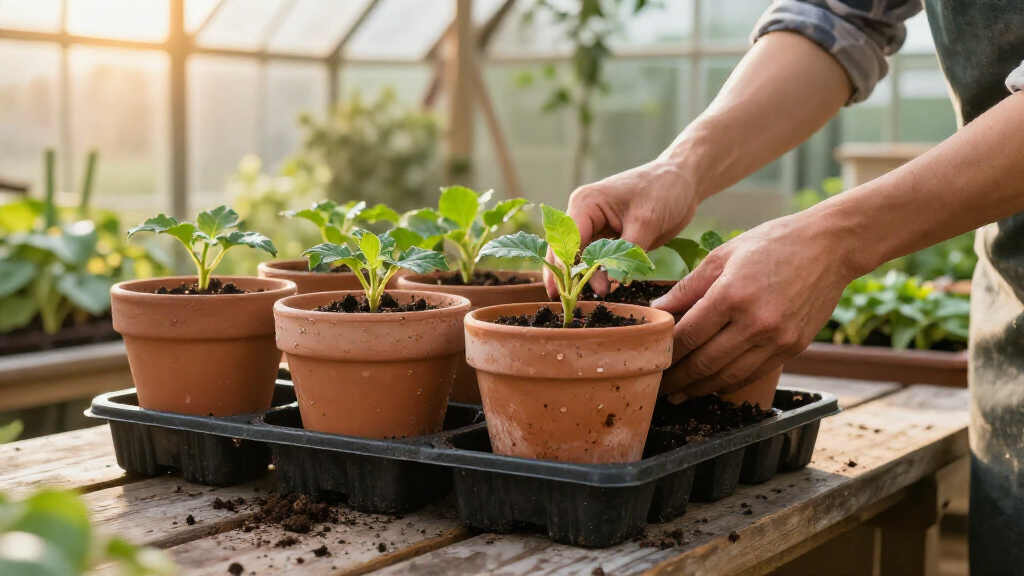
I compared these products on material and potential for repeated use, suitability for sowing or growing, capacity, and the practical work involved in transplanting, cleaning, and storage. I also weighed whether a product’s format serves a distinct need: peat pots are planted out with seedlings, cell trays organize batches of seeds, and fabric bags support larger container-grown plants. Product names and listed features can indicate intended use, but they do not establish independent environmental certifications or a verified composting outcome.
The order reflects usefulness across common home-gardening needs, not cell count alone. Reusable options rank well when they plausibly reduce replacement needs, while biodegradable sets earn a place for gardeners who value direct transplanting and batch kits. Larger quantities are not automatically better: I rank them lower for buyers who may not use the capacity or have room to manage it. Since the lineup spans different growing stages, each pick is judged against its intended role rather than treated as a direct substitute for every other product.
Factors to Consider When Choosing Best Sustainable Garden Pots And Trays
Before choosing a pot or tray, match the format to what happens after germination. The most sustainable choice for one gardener may be the one that lasts for years; for another, it may be a pot that can be planted with the seedling. These broader tradeoffs can help you avoid buying capacity or materials that do not fit your routine.
Choose a reuse strategy you can maintain
A reusable tray can reduce the need for repeated purchases, but only if you have room to store it and are willing to clean it between seasons. Soil residue and moisture can carry pests or disease, so reusable containers need rinsing and suitable sanitation before reuse. Biodegradable pots reduce transplant handling, though their environmental value depends on what they are made from and how they break down after planting. Avoid treating the word biodegradable as proof that a pot will compost in every home compost system or garden soil. Decide which routine you are more likely to follow year after year, then choose the material around that habit.
Match capacity to your actual sowing plan
Cell counts can make a kit look versatile, but a full tray requires enough seed, light, water, and space to care for every start. Sow only what you can transplant or share; overcrowded seedlings compete for light and become harder to handle. Small cell trays are efficient for many seeds but may require earlier potting up than larger containers. If you grow a few varieties in modest quantities, a smaller reusable tray may create less waste than buying a large kit you rarely fill. For succession sowing, several manageable batches can be easier to track than one oversized planting.
Size pots for the time seedlings will spend in them
Small pots save shelf space and growing medium, but they can restrict roots if seedlings remain in them too long. Larger pots hold more medium and allow a longer interval before transplanting, at the cost of taking up more room and requiring more water per container. Consider both the mature seedling size and your local planting schedule, not just the size of the seed. A pot that can be planted directly into the ground may reduce root disturbance, but its walls must break down readily enough for roots to grow through. Follow the product’s planting guidance and avoid burying any rim that could wick moisture away from the root zone.
Check drainage and watering demands
Container material changes how quickly a growing medium dries. Porous peat and fabric can lose moisture faster than less permeable containers, which may mean more frequent checks, especially in warm rooms or sunny outdoor spots. Cell trays make group watering convenient, but water can pool if drainage and the surface beneath the tray are poorly managed. Avoid keeping seedlings constantly wet in an effort to compensate for fast drying; that can create conditions for weak growth and disease. Plan where excess water will go and choose a watering routine suited to your climate and time at home.
Account for storage, cleaning, and transplant work
The footprint of a tray matters before and after sowing: a large kit needs a stable surface under grow lights and a place to dry and store it between seasons. Biodegradable pots can simplify transplanting because the seedling stays in its container, but handling dry pots roughly may damage them before planting. Fabric bags fold more readily than rigid pots, yet they still need cleaning or drying and a place to store them out of season. Labels and tools can help keep a large planting organized, but they do not replace a clear map of what was sown where. Choose the setup that reduces work at your least convenient stage, which may be watering, transplanting, or end-of-season cleanup.
Look beyond material claims when judging sustainability
A material label alone cannot tell you the full environmental cost of a product. Lifespan, how far it travels, how often it must be replaced, and whether it fits your local disposal options all affect the practical choice. A reusable tray that is abandoned after one season may offer less benefit than its design suggests, while a biodegradable pot is not useful if it fails during handling or does not suit the plant. Check product details for material composition and care instructions rather than assuming all products in a category behave alike. Buy the smallest quantity that suits your plan, since unused pots and trays add material without helping your garden.
Frequently Asked Questions
Are biodegradable peat pots a better choice than reusable seed trays?
They suit different priorities rather than offering a universal environmental win. Peat pots let you transplant the container with the seedling, which can reduce root handling, while a reusable tray can serve across seasons if you clean and store it properly. A peat pot’s breakdown depends on its composition, soil conditions, and planting method, so do not assume every pot will disappear quickly. If repeated use matters most and you can maintain the tray, choose reusable; if direct planting matters more, biodegradable pots may better fit your routine. Check the product material details and local composting options before deciding.
Should I choose a 120-cell or 240-cell seed starter kit?
Start with the number of seedlings you can realistically light, water, and transplant rather than the largest capacity available. A 240-cell kit can help gardeners sow many varieties or larger batches, but filling it all at once creates more seedlings to manage and more risk of waste. A 120-cell set is easier to fit into a smaller setup, though it may limit batch planting. Also check cell dimensions, since cell count alone does not indicate how long seedlings can stay in the tray. If you are unsure, sow in stages and use only the capacity your space can support.
Can I plant a seedling directly into a peat pot?
Many peat pots are intended for planting with the seedling, but the product’s instructions should guide how to prepare them. A rim left above the soil can draw moisture from the root area, so gardeners commonly make sure the pot is fully covered when planting. Water the pot before transplanting if it has dried out, and handle it gently to limit cracking. The pot must stay moist enough to break down while the plant establishes. If your soil or growing conditions are very dry, a reusable container that you remove at transplant time may be easier to manage.
Are fabric grow bags a substitute for seed-starting trays?
No. Fabric grow bags are designed to hold growing medium for larger plants, while seed-starting trays organize small seeds and young seedlings. You can start a plant in a small container and later move it into a grow bag, but the two products serve different stages and need different amounts of space and medium. Fabric bags can be useful when garden beds are unavailable, though they may dry faster than some rigid containers and need regular watering checks. Choose them for container growing, not as a replacement for a compact propagation setup.
What should I prioritize if this is my first seed-starting season?
Prioritize a manageable cell count, clear labeling, and a format that fits your available light and watering routine. A very large kit can be difficult to track when you are still learning how many seeds to sow and when to transplant them. A reusable tray may be a practical starting point if you are comfortable cleaning it, while peat pots are appealing if you want to avoid removing seedlings from their containers. Check drainage and cell size before buying, and leave room to pot up seedlings if they outgrow their first container. Starting with fewer varieties usually makes it easier to learn what works in your space.
Conclusion
For the broadest fit, I recommend the Burpee SuperSeed Reusable 36-Cell Tray as best overall: its reusable format and moderate capacity suit gardeners who want a repeatable seed-starting setup. For best value in high-volume sowing, compare the Loongesho 120-cell set and the larger DANALLAN or 240-cell kits against the number of seedlings you can actually grow; the largest count is only useful if you can manage it. The best premium-style choice for container growing is the Gardzen fabric grow bag set, while VIVOSUN is a smaller alternative for buyers who need fewer bags. For beginners, the Omitgoter or Loongesho kits offer an organized starting format with accessories; pick based on the cell capacity you can support. For direct transplanting, choose among the peat pots by size and quantity: 3.15-inch pots for smaller starts, 4-inch pots for a middle ground, or Vayantgo’s 5-inch pots when seedlings need more room. The right choice is the one that matches your growing stage, storage space, and willingness to reuse or transplant.